Moving to Germany from the Netherlands: Groupage and Van Load Options
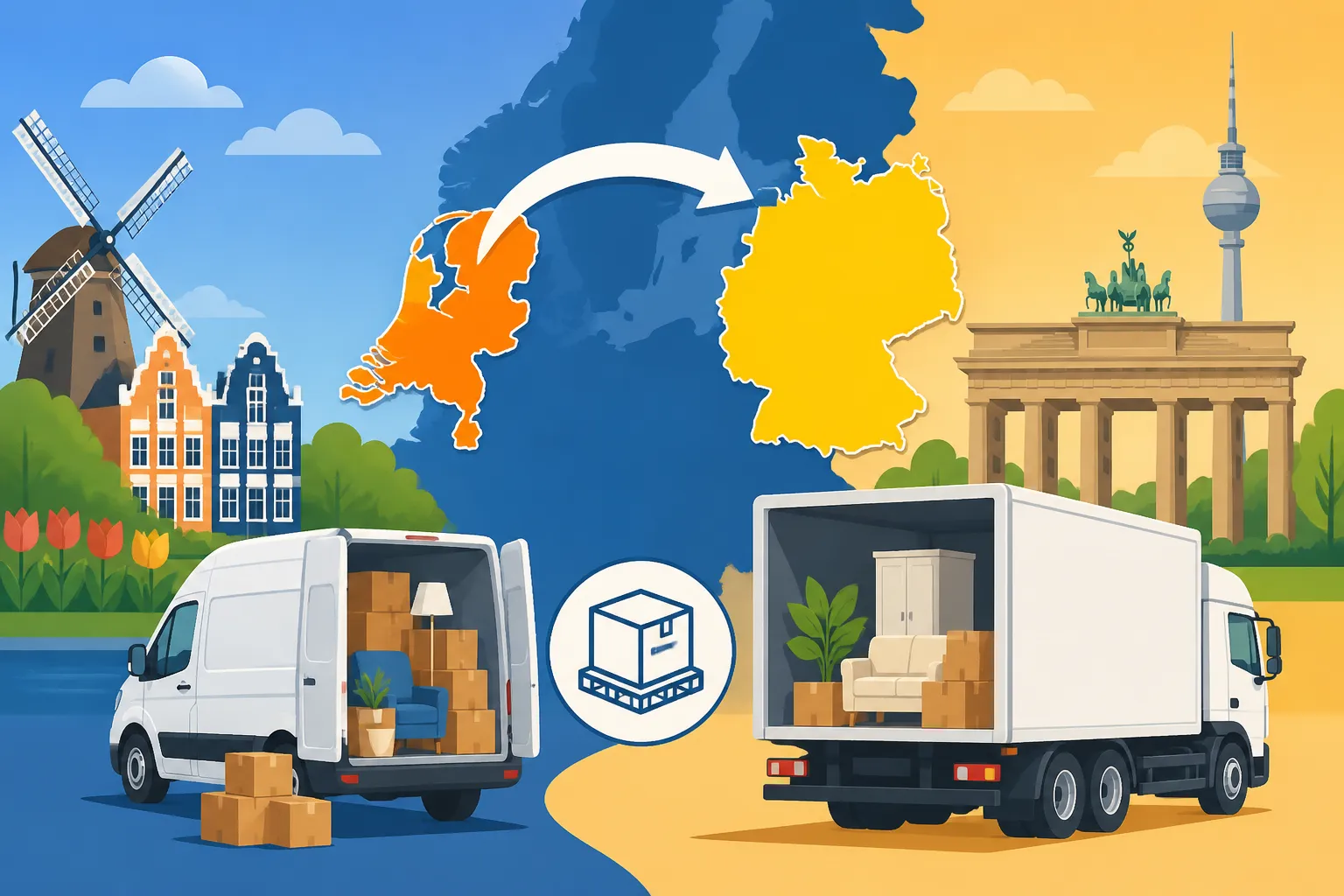
Moving from the Netherlands to Germany might seem like a hop, skip, and a jump – they're neighboring countries, after all, and both part of the EU. But don't let the short distance fool you; packing up your entire life and relocating across a border, even a close one, comes with its own unique set of headaches, especially when it comes to figuring out how to get all your belongings from A to B. This guide is here to untangle the complexities of international moving, specifically focusing on the most common shipping methods, groupage and dedicated van loads, to help you make an informed decision and ensure a smoother transition to your new life in Germany. We’ll even point you to fantastic resources like Sirelo to help you compare moving companies and get the best deal.
Disclosure: This post may contain affiliate links. We may earn a commission at no extra cost to you if you make a purchase through these links. Read full disclosure.
Understanding Your Moving Options from the Netherlands to Germany
When you're facing an international move, even one as seemingly straightforward as from the Netherlands to Germany, one of the first big decisions is how your cherished possessions will actually get there. It's not just about throwing things into boxes; it's about cost, timing, and how much control you want over the process. Let's delve into the two main options you'll encounter.
Groupage Shipping: Cost-Effective for Smaller Moves
Imagine a big moving truck making its way from the Netherlands to Germany, but it's not just filled with your belongings. That, my friend, is the essence of groupage shipping, also known as shared container or consolidated shipping. Instead of hiring an entire truck or container for your move, your items are loaded alongside other people's belongings who are also moving along a similar route. It's like carpooling for your furniture!
The biggest draw of groupage is, without a doubt, the cost. Because you're sharing the space and the fuel expenses with other customers, the price tag for your move can be significantly lower than a dedicated service. This makes it a fantastic option if you're a student moving a few boxes and a bicycle, a young professional with a studio apartment's worth of stuff, or simply someone who has done a serious declutter and only has essentials to transport. It's also an environmentally friendlier choice, as it maximizes cargo space and reduces the number of vehicles on the road. Many reputable moving companies offer groupage services, and finding the right one to compare quotes from is where a service like Sirelo really shines, as they aggregate options from various trusted movers.
However, groupage isn't without its trade-offs. The main one is flexibility. Since the truck needs to be filled and follow a specific, optimized route to pick up and drop off various shipments, your delivery dates might be less precise. You'll typically be given a delivery window rather than a fixed date, which means you need to be flexible with your arrival and accommodation in Germany. Transit times can also be longer because of the multiple stops. If you're someone who needs their items delivered on a very specific day or within a tight timeframe, this might not be your ideal solution. You'll also have slightly less control over the exact handling of your items, though professional movers are, of course, trained to handle all cargo with care.
Dedicated Van Load: Speed and Control for Larger Moves
Now, if groupage is carpooling, then a dedicated van load is like hiring your own private chauffeur for your belongings. With this option, an entire moving truck or van is reserved exclusively for your possessions. From the moment the movers pack up your Dutch home to when they unpack in your German abode, your items are the sole focus of that vehicle and crew.
The advantages here are clear: speed and control. You get to dictate the moving dates and times (within reason, of course, and subject to the mover's availability), meaning you can often arrange for direct delivery with minimal stops. This can drastically cut down on transit time, which is invaluable if you're trying to set up your new life quickly or have sensitive items that need immediate attention. For families with a lot of furniture, a full house of belongings, or individuals with high-value items that require extra attention and less handling, a dedicated van load often provides peace of mind. The process is typically more streamlined, with less risk of delays due to other customers' schedules. When comparing dedicated van services, you can easily use Sirelo to get quotes from various companies specializing in this express, personalized service.
The main drawback, as you might guess, is the cost. Since you're paying for the entire truck and crew exclusively, a dedicated van load is a significantly more expensive option than groupage. It's a premium service, and the price reflects the convenience, speed, and tailored experience. While it's ideal for larger moves, if your budget is tight, you might need to seriously consider if the benefits outweigh the higher expense.
The Hybrid Approach: When to Mix and Match
Sometimes, the perfect solution isn't one or the other, but a clever combination. Imagine you're moving your whole family, but you absolutely need your children's beds, a few essential kitchen items, and important documents to arrive on day one in Germany. However, your extensive book collection, winter clothes (if you're moving in summer), and decorative items can wait a few weeks. In such a scenario, a hybrid approach could be your best bet.
You could opt for a smaller, dedicated express service for your absolute must-have items – perhaps even just a van for a few crucial boxes – ensuring they arrive quickly. Then, the bulk of your non-essential furniture and less urgent belongings could go via groupage shipping. This strategy allows you to balance the need for immediate essentials with the cost-saving benefits of shared transport for the rest. Discussing these kinds of flexible options with moving companies is crucial, and a platform like Sirelo can help you articulate your needs and find movers willing to work with a customized plan. This approach is all about smart planning and prioritization, ensuring you don't break the bank but also don't find yourself sleeping on the floor waiting for your bed.
Navigating the Logistics of an International Move
Moving, especially internationally, is more than just packing boxes; it's a symphony of planning, paperwork, and precise execution. Even though you're moving within the EU, there are still crucial logistical steps to consider to prevent unnecessary stress and ensure everything goes smoothly.
Planning and Packing for Germany
The planning phase is where moves are won or lost. Start by decluttering mercilessly. Germany generally has smaller apartments, and storage can be expensive, so bringing only what you truly need is wise. Make a detailed inventory of everything you plan to move. This isn't just for your own peace of mind; it's vital for insurance purposes and for getting accurate quotes from moving companies.
When packing, remember that most apartments in Germany are rented unfurnished, and I mean unfurnished. This often includes no kitchen cabinets, appliances, or even light fixtures! So, if you plan to bring your own kitchen, ensure it's carefully packed. For everything else, use sturdy boxes, clearly label each one with its contents and the room it belongs to, and pack fragile items with extra care. Don't forget to prepare a "first-night box" with essentials like toiletries, a change of clothes, important documents, device chargers, and snacks. This box should travel with you, not in the moving truck.
Gather all your essential documents long before your move. This includes passports, visas (if applicable, though generally not for Dutch citizens), birth certificates, marriage certificates, university diplomas, and any job offer letters. You'll need these for various bureaucratic hurdles in Germany, like registering your address. Finding a reliable moving company to handle your items means you can focus more on these administrative tasks, and Sirelo can connect you with movers who understand the nuances of moves within Europe.
Customs and Import Regulations Between EU Countries
One of the great reliefs of moving from the Netherlands to Germany is the relative simplicity of customs and import regulations. Since both countries are part of the European Union, the principle of free movement of goods generally applies. This means you typically won't face duties, taxes, or complex customs declarations for your personal belongings. It’s not like moving from, say, the US to Germany, where you’d need to meticulously list every item and prove its origin.
However, "generally applies" isn't "always applies." While your furniture, clothes, and personal effects will sail through, there are still restrictions on certain items, even within the EU. Prohibited items usually include illegal substances, firearms, and endangered species products. Restricted items might include certain plants, animal products, or oversized items that require special permits or declarations. It’s always best to check the latest regulations, especially if you have anything unusual. For instance, bringing certain types of antique weapons or large amounts of alcohol/tobacco (beyond personal consumption limits) could still trigger questions. Always be transparent with your moving company about what you’re transporting; they can advise on any potential issues. Most movers found via Sirelo are well-versed in these cross-border specificities.
Insurance for Your Valuables
This is not an optional extra; it's a non-negotiable must-have for any international move. While professional movers take every precaution, accidents can happen – a box could get dropped, or a van could be involved in an unforeseen incident. Having adequate insurance coverage provides a critical safety net.
Typically, moving companies offer different levels of insurance. The most basic is usually "limited liability" or "standard protection," which often covers items based on weight (e.g., €0.60 per kilogram) rather than their actual value. For obvious reasons, this is almost never enough. Your priceless antique vase weighing 1 kg would hardly be covered adequately.
The smarter choice is "full value protection" or "all-risk insurance." This ensures that if an item is lost, damaged, or destroyed, the moving company will either repair it, replace it, or reimburse you for its current market value. Read the fine print carefully: understand what's covered, what's excluded (e.g., self-packed boxes might have different coverage), and the claims process. Documenting your items with photos or videos before the move can be invaluable if you ever need to file a claim. Many moving companies sourced through Sirelo will offer various insurance options, so make sure to discuss them thoroughly when getting your quotes. Don't skimp on this; it’s a small investment for massive peace of mind.
Making Your Move Smooth with the Right Provider
Choosing the right moving company is paramount. It’s not just about finding someone who can haul your stuff; it’s about entrusting your entire life’s possessions to a team of professionals. A good mover can turn a stressful ordeal into a well-orchestrated relocation.
How to Compare Moving Companies
This is where a little homework goes a long way. Don’t just jump at the first quote you receive. Start by looking for companies with a strong track record of international moves, especially those with experience moving from the Netherlands to Germany. Check their credentials, licenses, and insurance policies. Any reputable mover should be able to provide these without hesitation.
Next, dive into reviews. What are other expats saying about their experience with these companies? Look beyond just the star ratings; read the comments to understand the nature of any complaints or praises. Did they handle unforeseen issues well? Were they punctual? Was the communication clear? Platforms like Sirelo are incredibly useful here because they allow you to compare multiple vetted moving companies side-by-side, often including customer reviews and ratings specifically for international moves. This saves you the headache of hunting down individual companies and cross-referencing their services. It’s a real time-saver in the often-overwhelming world of relocation.
Consider the range of services offered. Do they provide packing and unpacking services? Disassembly and reassembly of furniture? Storage solutions if there’s a gap between leaving your old home and moving into your new one? The more comprehensive their service, the less you'll have to worry about yourself.
The Quote Process and What to Look For
Getting a quote should be a detailed process. A reliable moving company will likely offer a virtual or in-person survey of your belongings to provide an accurate estimate. Be wary of quotes given solely over the phone without any assessment of your inventory. What might seem like a great deal upfront could quickly escalate with hidden fees.
When comparing quotes, don't just look at the bottom line. Scrutinize what's included and what's not. Is packing material included? What about dismantling and reassembling furniture? Are there extra charges for stairs, long carries (distance from truck to door), or shuttle services if a large truck can't access your street? Is insurance clearly outlined? Ask about their cancellation policy and what happens if there are delays on either side. A good quote will be transparent, breaking down costs clearly so you understand exactly what you’re paying for.
Also, compare the terms and conditions. What are their payment schedules? Are there any clauses that seem unfair or vague? If something seems too good to be true, it probably is. This is another area where a platform like Sirelo simplifies things; by getting multiple quotes through one portal, you can more easily identify discrepancies and get clarification from various providers. They encourage transparency, which is exactly what you need when planning such a significant logistical undertaking.
Timing Your Move for Optimal Results
Timing can significantly impact both the cost and the stress level of your move. Like most service industries, moving companies have peak seasons. Typically, late spring, summer (especially June, July, and August), and the end of the month are the busiest and most expensive times to move. This is often due to school holidays, lease cycles, and the generally nicer weather. If you have flexibility, consider moving during the off-peak season (mid-autumn to early spring, excluding holidays) or mid-month, when demand is lower, and you might secure better rates and more flexible scheduling.
Booking your moving company well in advance is always a good idea, regardless of the season. For international moves, I’d suggest at least 2-3 months out, especially if you’re aiming for a dedicated van load during a popular time. For groupage, a bit less lead time might be acceptable, but planning ahead always gives you more options and less last-minute panic. Being flexible with your exact moving dates can also sometimes lead to better deals, as movers might offer discounts to fill their trucks on less popular days. Having a clear timeline will also help with other critical aspects of your relocation, such as arranging your new home and sorting out bureaucracy.
Beyond the Boxes: Settling into Germany
Once your belongings are on their way, or even better, safely delivered, the next phase of your expat journey truly begins: settling into your new life in Germany. It’s a marathon, not a sprint, and there are crucial administrative steps you’ll need to tackle almost immediately.
The Initial Bureaucracy: Anmeldung and Bank Accounts
Germany is famous for its bureaucracy, and rightly so. The very first thing you need to do upon arrival, usually within 14 days of moving into your permanent accommodation, is register your address, a process known as the Anmeldung. This is absolutely critical because you cannot do anything else without it – no bank account, no internet, often no health insurance. It’s the cornerstone of your official existence in Germany. You'll need documents like your passport, rental agreement, and a Wohnungsgeberbestätigung (a confirmation from your landlord). For a deeper dive into this initial hurdle, check out our guide on The Anmeldung: Registering Your Address in Germany.
Right after your Anmeldung appointment, you'll need to open a German bank account. While you might be able to use your Dutch account for a short while, a local account (Girokonto) is essential for receiving your salary, paying rent, and managing everyday expenses. Many banks, both traditional like Sparkasse or Deutsche Bank, and online-only options like N26 or Revolut, cater to expats. We've got a comprehensive step-by-step guide to help you navigate this: Opening a Bank Account in Germany: Step-by-Step for Newcomers. Getting these two items squared away swiftly will unlock everything else.
Finding Your New Home in Germany
Finding an apartment in Germany, especially in popular cities like Berlin, Munich, or Hamburg, can be incredibly competitive and, frankly, frustrating. It's a completely different ball game from the Netherlands, and often involves multiple viewings, extensive paperwork (including your Schufa credit report, which you can only get after Anmeldung), and strong applications. You'll encounter terms like Kaltmiete (cold rent) and Warmmiete (warm rent), and often have to deal with the famous "empty kitchen problem," where the apartment comes completely bare.
Start your search early, use popular German rental portals like Immobilienscout24, WG-Gesucht, and eBay Kleinanzeigen, and be prepared to act fast. Having all your documents ready, including proof of income and a positive Schufa, will give you an edge. Patience and persistence are key. For detailed advice, our guide on Finding an Apartment in Germany: Best Websites and Tips for Expats is a lifesaver.
Adapting to German Life and Culture
Beyond the practicalities, integrating into German life also involves understanding and adapting to the local culture. From the renowned German punctuality and direct communication style to the sanctity of Ruhezeit (quiet hours) and the importance of proper waste sorting, there are many unspoken rules and customs to learn. While your Dutch background might give you a slight head start with some similarities, there are distinct differences that can lead to delightful (or sometimes baffling) cultural surprises.
Don't be afraid to embrace the learning curve. Participate in local events, try to learn some German phrases (even a little goes a long way!), and connect with other expats and locals. Being open-minded and curious will make your transition much smoother and more enjoyable. To help you navigate the social landscape, check out our insights in German Culture & Etiquette: A Guide to Social Life and Customs. Germany offers a rich, diverse experience, and the more you engage, the more at home you’ll feel. Remember, your journey doesn't end when the boxes are unpacked; it's just beginning!
| Feature | Groupage Shipping (Shared Load) | Dedicated Van Load (Exclusive) |
|---|---|---|
| Cost | Lower (shared truck space and fuel) | Higher (you pay for the entire truck and crew) |
| Delivery Speed | Slower (multiple stops, longer transit window) | Faster (direct delivery, specified dates) |
| Flexibility | Less flexible (dependent on other shipments) | Highly flexible (you set dates/times) |
| Suitability | Small moves, few items, budget-conscious, not time-critical | Large moves, full households, urgent, high-value items |
| Control | Less direct control over specific delivery | More control over timing and handling |
| Eco-Friendliness | More environmentally friendly (optimized loads) | Less eco-friendly (potential for partially empty trucks) |
| Example Use | Student moving to a shared flat, small apartment furniture | Family moving a full house, immediate job relocation |
Disclaimer
Please remember that while we strive to provide the most accurate and up-to-date information, rules and regulations in Germany, especially concerning visas, immigration, and moving logistics, can change. Always verify information with official German government sources, the relevant authorities (such as the Ausländerbehörde), and professional service providers. This guide is intended for informational purposes only and does not constitute legal, financial, or professional advice.