Finding an Apartment in Germany: Best Websites and Tips for Expats
Standing in a queue of fifty people for a one-bedroom apartment in Berlin while clutching a folder of documents is a uniquely humbling experience. I spent my first month in Munich refreshing housing portals every ten minutes, feeling the crushing weight of the legendary German housing crisis. This guide solves that frustration by detailing the best search platforms and insider strategies to secure your home.
Disclosure: This post may contain affiliate links. We may earn a commission at no extra cost to you if you make a purchase through these links. Read full disclosure.
The German Rental Landscape: What to Expect
The Competitive Reality of Major Cities
The German housing market, particularly in hubs like Berlin, Munich, Hamburg, and Frankfurt, is currently characterized by extreme demand and limited supply. For an expat, this means your search is not just about finding a place you like; it is a full-blown competition against hundreds of other qualified applicants. I vividly remember showing up to a “Massenbesichtigung” (mass viewing) where the line stretched around the block, and the landlord didn’t even look at my face—just my paperwork. If you are just starting your journey, reading Living in Germany: Essential Guide to Daily Life for New Expats will help you set realistic expectations for the first few months.
In these high-pressure zones, listings can be taken down within hours of being posted. It is common for landlords to receive 200 applications in the first 60 minutes. This speed requires you to be constantly connected and ready to respond in German. While it feels discriminatory, many landlords will simply ignore English inquiries because they have so many German-speaking options. To navigate this, you must understand the cultural nuances and German Culture & Etiquette: A Guide to Social Life and Customs to present yourself as the “ideal” reliable tenant.
Cold Rent versus Warm Rent
One of the most frequent points of confusion for newcomers is the distinction between Kaltmiete (cold rent) and Warmmiete (warm rent). The Kaltmiete is strictly the price for the space itself. The Warmmiete includes the Nebenkosten (additional costs), which typically cover building maintenance, waste disposal, water, and heating. However, “warm” does not always mean “everything included.” In many cases, you still need to set up your own contracts for electricity and internet.
It is vital to check the listing carefully to see what the Nebenkosten covers. Some landlords charge a Pauschale (flat rate), while others charge a Vorauszahlung (advance payment) that is settled at the end of the year based on actual usage. If you have been living in a temporary stay and are moving to your first long-term flat, refer to Settling in Quickly: A Newcomer’s Checklist for Your First Weeks in Germany to ensure you don’t miss the deadline for setting up your utility providers.
The Empty Kitchen Phenomenon
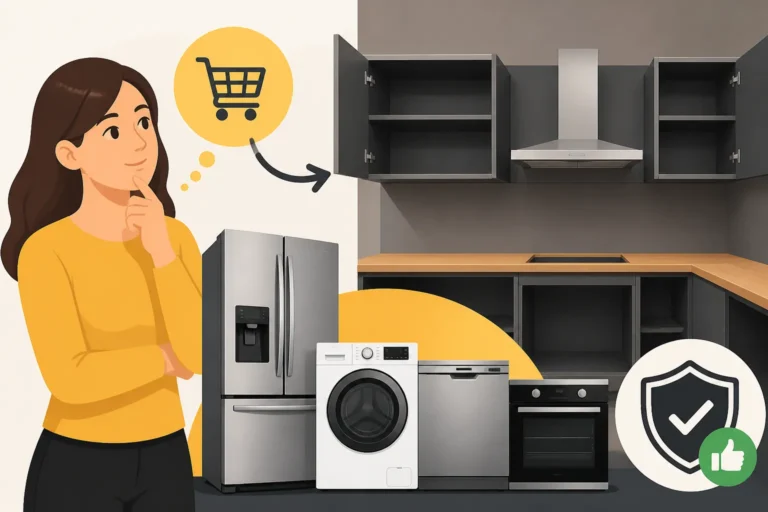
A shocking reality for many expats is that “unfurnished” in Germany often means truly empty—no light fixtures, no closets, and frequently, no kitchen. It is entirely standard to move into an apartment that is a shell, requiring you to buy and install your own cabinets, stove, and sink. This can add thousands of Euros to your initial moving costs. I spent my first week in a permanent flat eating takeout on the floor because my kitchen delivery was delayed.
To mitigate this, you can often buy the existing kitchen from the previous tenant (an Ablöse), which is usually a win-win. If you do find yourself in an empty shell, you will need to source everything from appliances to basic hardware. Most expats end up relying on Amazon Germany for the fast delivery of light fixtures, tools, and basic kitchen components to make the space livable during those first hectic weeks.
Essential Websites for Your Search
The Giants of the Market
The two undisputed leaders in the German housing market are ImmoScout24 and Immowelt. These platforms host the vast majority of listings from both private landlords and professional agencies. ImmoScout24 is the most popular, and in competitive cities, having a “MieterPlus” premium subscription is almost mandatory. This paid service puts your application at the top of the landlord’s inbox and provides you with a digital application folder that is pre-verified.
Immowelt and its subsidiary Immonet follow closely behind. While there is a lot of overlap, some landlords prefer one over the other. The pro of these sites is the sheer volume of listings; the con is the intense competition. You are effectively competing with the entire city.
| Platform | Best For | Typical Listing Type | Pro/Con |
| ImmoScout24 | Long-term rentals | Professional/Agency | Most volume / Extremely competitive |
| WG-Gesucht | Roommates/Students | Private flatshares | Community feel / High volume of scams |
| Wunderflats | Mid-term/Expat stays | Furnished apartments | Easy for foreigners / Higher price point |
| eBay Kleinanzeigen | Private deals | Individual landlords | Potential bargains / Higher risk of fraud |
Student Housing and Flatshares
For students, interns, or those on a budget, WG-Gesucht is the go-to platform. A Wohngemeinschaft (WG) is a flatshare where you have your own room but share the kitchen and bathroom. This is often the easiest way to enter the market because you are applying to the other roommates rather than a strict landlord. It is also a fantastic way to make friends and integrate.
However, WG-Gesucht requires a very personal approach. You aren’t just sending a CV; you are writing a “letter of motivation” explaining why you would be a good fit for their social dynamic. The competition is still fierce—popular WGs can receive 50 messages in an afternoon.
Mid-Term and Furnished Options
If you are moving from abroad, finding a long-term, unfurnished apartment is nearly impossible because landlords want to meet you in person. This is where mid-term, furnished providers like Wunderflats become a lifesaver. These platforms specialize in apartments that are ready for move-in, usually including furniture, internet, and utilities in the price. They are much more “expat-friendly” as they are used to dealing with international contracts and often don’t require a German credit score (SCHUFA) immediately.
It removes the panic of being “homeless” and allows you to conduct your long-term search from within Germany. This strategy is highly recommended because it provides the Anmeldung (Address Registration) vs Visa: Why Both Are Needed in Germany documentation you need to satisfy the authorities while you look for a permanent home.
The Application Folder: Bewerbungsmappe
Must-Have Documents
In Germany, you do not “apply” for an apartment; you present a dossier. This is non-negotiable. If you show up to a viewing without a completed Bewerbungsmappe, you have already lost. The folder must contain: a copy of your passport and residence permit, your last three months of German payslips (or your employment contract if you just started), a Mieterselbstauskunft (a self-disclosure form), and a Mietschuldenfreiheitsbescheinigung (a note from your previous landlord saying you don’t owe rent).
The most important document for many is the SCHUFA report. This is your German credit score. As a newcomer, you won’t have a history, which can be a massive hurdle. This is another reason why starting with a platform like Wunderflats is advantageous; they can help bridge the gap while you build your local credit history. Without a SCHUFA, many traditional landlords will simply discard your application unless you have a high-income contract or a local guarantor (Bürge).
Proving Your Financial Reliability
Landlords in Germany are extremely risk-averse because tenant protection laws are so strong—it is very difficult to evict someone. Therefore, they want absolute proof that you can afford the rent. The general rule is that your warm rent should not exceed 30-40% of your net household income. If you are a freelancer or a student without a steady salary, you might need to provide a Bankbürgschaft (bank guarantee) or have a parent or friend sign a Mietbürgschaft (guaranty).
If you are a high-earner or moving for a reputable company, ensure this is highlighted in your folder. Proving you have Healthcare in Germany: A Comprehensive Guide for Expats and the appropriate liability insurance (Haftpflichtversicherung) also signals that you are a responsible adult who understands the German system. Many landlords view liability insurance as a “must-have” because it covers accidental damage to the property.
The Importance of the Cover Letter
While the documents are the bones of your application, the cover letter is the soul. You should include a short, professional, and friendly introduction of yourself (and your family/partners). Mention what you do for work, that you don’t smoke, and that you don’t play loud instruments (unless you do, but maybe don’t lead with that). Adding a small photo can also help the landlord remember you among the sea of applicants.
Write this in German if possible. Even if it is basic, it shows effort and a desire to integrate. If you need to translate your professional references or university degrees to bolster your “quality” as a tenant, using a certified service is better than a messy self-translation. This level of preparation is what separates successful expats from those who spend six months in hotels. Once you are in, you’ll need to understand Health Insurance in Germany: Understanding Public vs Private Coverage to manage your ongoing costs in your new home.
Avoiding Scams and Navigating Viewings
Common Red Flags in Listings
The desperation of the housing market has created a breeding ground for scammers. The most common trick is the “I am currently abroad” scam. The “landlord” claims they live in the UK or Spain and can’t show you the flat, but if you transfer a deposit via Western Union or Airbnb, they will mail you the keys. Never, under any circumstances, transfer money before seeing an apartment and signing a contract.
Another red flag is a price that is “too good to be true.” If you see a beautiful two-bedroom in central Munich for €800, it is a scam. Check the local Mietspiegel (rent index) to see the average prices for the area. Scammers also love to pressure you, saying there are five other people ready to pay right now. If a listing on a site like eBay Kleinanzeigen seems suspicious, it’s better to stick to verified platforms like Wunderflats where the listings are vetted and your payments are secure.
Etiquette During the Viewing
A viewing in Germany is essentially a job interview. Dress “smart-casual,” be perfectly on time (prowess in punctuality is key), and be prepared to answer personal questions. Landlords or current tenants will often ask about your hobbies, your pets, and your long-term plans. They aren’t just looking for someone who can pay; they are looking for someone who will be a “quiet and clean” neighbor.
Do not be afraid to ask technical questions about the heating system, the Nebenkosten breakdown, or whether the internet connection is stable. This shows you are a serious and knowledgeable tenant. If the flat is currently occupied, be respectful of the current tenant’s space. Taking photos is usually okay, but always ask for permission first. If you see something broken, ask if it will be repaired before move-in—but don’t be too demanding, as there are ten people behind you who might not care about a cracked tile.
Managing the Follow-Up
If you like the apartment, tell the person showing it immediately. Hand them your Bewerbungsmappe in person if they are the decision-maker. If they ask you to email it, do so the moment you get home—ideally within the hour. Include a brief thank-you note mentioning a specific detail from the viewing to jog their memory.
In Germany, “no news” usually means you didn’t get it. Most landlords will not send rejection emails because they receive too many applications. If you haven’t heard back in three days, it is okay to send a polite follow-up email, but don’t call repeatedly. It is a numbers game; you should be applying for 5-10 apartments a day during your peak search period. Persistence is the only way to beat the “Schufa-loop” and eventually secure a Permanent Residence Permit (Niederlassungserlaubnis): How to Qualify in Germany by proving you are a stable resident.
Legal Rights and Contract Signing
The Resident Registration Requirement
Once you sign a lease and get your keys, your landlord is legally obligated to provide you with a Wohnungsgeberbestätigung (landlord confirmation form). This is the specific document you need for your Registering Your Address Anmeldung: Step-by-Step Guide. You cannot simply use your rental contract to register at the Bürgeramt. Some landlords might try to delay this, but you must insist, as you only have 14 days to register by law.
Registration is the key to your life in Germany. Without it, you cannot get a local mobile contract, open a full bank account, or even receive your tax ID. This is why the Anmeldung (Address Registration) vs Visa: Why Both Are Needed in Germany distinction is so important—one gives you the right to be in the country, the other gives you the right to exist in the system. If you are staying in a flat from Wunderflats, this document is typically provided as part of the service.
Understanding Your Lease Agreement
German leases (Mietverträge) are standardized but very detailed. Most are “unlimited,” meaning they have no end date and you can stay as long as you like. To cancel, the legal notice period is usually three months. Some contracts have a “Kündigungsverzicht,” which is a minimum stay period (e.g., you cannot cancel for the first 12 months). Read this carefully before signing.
Ensure the contract clearly lists the Kaltmiete, the Nebenkosten, and the deposit amount. It should also detail the condition of the apartment at handover. If you are moving into an empty flat, you will be spending a lot of time on Amazon Germany ordering everything from smoke detectors to cleaning supplies to satisfy the “handover protocol” (Übergabeprotokoll). This protocol is your protection; make sure every scratch on the floor is noted so you don’t lose your deposit later.
Dealing with Deposits and Utilities
The legal maximum for a rental deposit (Kaution) is three months’ net cold rent. This money must be held in a special escrow account separate from the landlord’s personal funds. You have the right to pay this in three installments over the first three months of your tenancy. Do not let a landlord tell you that you must pay it all upfront before getting the keys.
Utilities are the final step. You will usually need to register your own electricity and gas meters with a provider. If you don’t, you will fall into the “basic supply” (Grundversorgung), which is the most expensive rate. Use a comparison site to find a better deal. To keep your new home running efficiently, many expats buy smart-home energy-saving devices from Amazon Germany to keep those rising heating costs under control.
References
Primary sources (official)
- Deutscher Mieterbund (German Tenants’ Association): https://www.mieterbund.de/
- Federal Ministry of Justice – German Civil Code (BGB) on Tenancy Law: https://www.gesetze-im-internet.de/englisch_bgb/
- Make it in Germany – Housing Guide: https://www.make-it-in-germany.com/en/living-in-germany/housing-mobility/housing-registration
Other helpful sources
- Consumer Advice Center (Verbraucherzentrale) – Tenancy Rights: https://www.verbraucherzentrale.de/wissen/vertraege-reklamation/mietrecht
Disclaimer
The information provided in this guide is for informational purposes only and is based on personal expat experiences and publicly available administrative guidelines. The German housing market is subject to rapid changes in law and availability. This article does not constitute legal advice. Renting laws (Mietrecht) are complex; for specific disputes or contract reviews, it is highly recommended to join a local Mieterverein (Tenants’ Association) or consult with a qualified German lawyer.