Car-Sharing and Ride-Sharing in Germany: Alternatives to Owning a Car
Realizing the absurd cost of vehicle insurance and the impossibility of finding street parking in a German city is a harsh wake-up call for expats. I almost cried trying to decipher a €300 parking fine during my first month before I finally sold my vehicle. This guide decodes the extensive German car-sharing and ride-sharing networks, allowing you to navigate the country affordably without the massive burden of owning a car.
Disclosure: This post may contain affiliate links. We may earn a commission at no extra cost to you if you make a purchase through these links. Read full disclosure.
The Free-Floating Car-Sharing Revolution
If you are relocating from North America, you might be familiar with traditional rental agencies or highly restrictive peer-to-peer networks. Germany, however, has pioneered the “free-floating” car-sharing model, fundamentally changing how urbanites move.
How Free-Floating Networks Operate
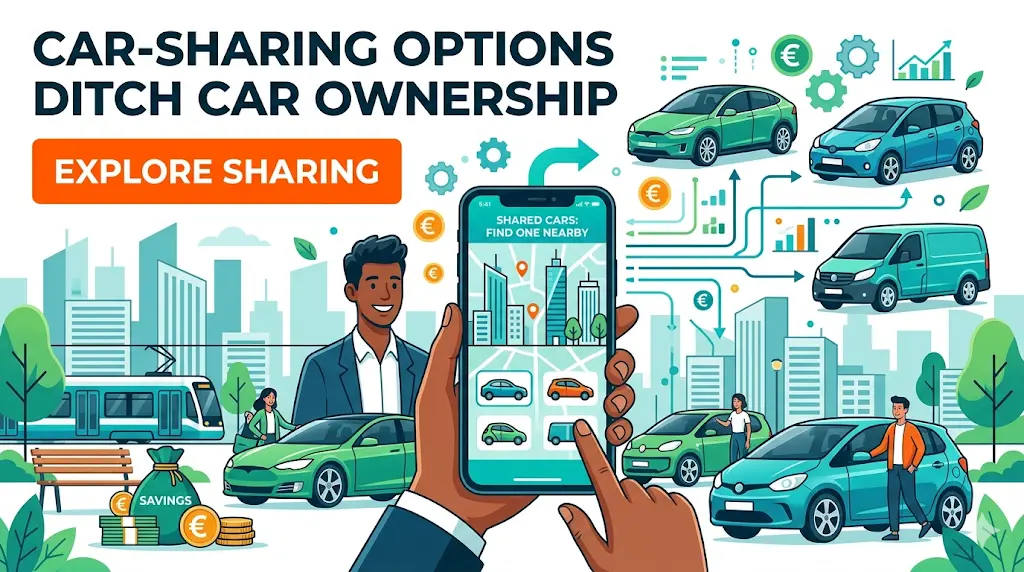
Companies like MILES, Share Now (now part of Free2Move), and Sixt Share dominate the streets of major German cities like Berlin, Munich, Hamburg, and Cologne. The concept is incredibly liberating: you open a mobile app, locate a car parked on the street a few blocks away, unlock it with your phone, and drive.
The magic of free-floating car-sharing is the parking. These companies have negotiated flat-rate parking agreements with municipal governments. When you finish your trip, you simply park the vehicle in any legal public parking spot within the designated “home area” (Geschäftsgebiet) and end the rental on your app. You do not pay for the parking meter, you do not pay for gas or charging, and you do not pay for insurance. It is all bundled into a per-minute or per-kilometer rate. By relying on this network, you completely avoid the massive maintenance and tax burdens explored in Car Ownership in Germany: Buying vs Leasing and Maintenance.
For example, MILES distinguishes itself by charging per kilometer rather than per minute. This is a massive psychological relief for expats who are still terrified of navigating aggressive German city traffic; you do not have to watch the meter tick up while sitting at a red light.
Validating Your Foreign Driving License
The biggest hurdle for expats attempting to join these platforms is the initial account validation. Car-sharing apps legally require you to upload your driving license and an ID card. If you have an EU driving license, validation takes three minutes via the app’s automated camera system.
If you hold a non-EU driving license, the automated system will almost certainly reject you. You must undergo a manual verification process, which often involves taking your physical passport, your residence permit, and your non-EU license to a partner verification station (like a local post office or specific Sixt rental counters). Furthermore, these apps strictly enforce the six-month legal limit for foreign licenses. Once you have lived in Germany for six months, your foreign license is considered invalid for domestic driving, and your car-sharing account will be suspended until you upload a German replacement. Understanding the precise timeline of this switch is crucial and is heavily detailed in Driving License Exchange: Which Countries’ Licenses Are Valid in Germany.
Station-Based Car-Sharing for Planned Trips
While free-floating cars are brilliant for spontaneous, one-way trips across the city, they are not economically viable or reliable for planned day trips, weekend getaways, or heavy logistical tasks. This is where station-based car-sharing steps in.
The Cambio and Flinkster Ecosystems
Station-based networks like Cambio, Stadtmobil, and Flinkster (operated by Deutsche Bahn) require you to pick up the vehicle from a specific, dedicated parking station and return it to that exact same station when you are done.
Because the logistics are highly predictable, the rates are significantly cheaper for long durations. You reserve these cars hours, days, or weeks in advance. If you decide to take a weekend hiking trip to the Black Forest or the Alps, reserving a station-based car for 48 hours is vastly cheaper than renting from a traditional agency. This model is exceptionally popular outside of the massive metropolises, offering a vital mobility lifeline for expats navigating the geographic realities decoded in Big City vs Small Town: Choosing the Right Environment in Germany.
Tackling Relocations and Heavy Shopping
When you move into a permanent, unfurnished German apartment, you will quickly realize that you need a way to transport heavy items. Most station-based and free-floating apps (specifically MILES) offer massive cargo vans. You can rent an XL van for a few hours to do an IKEA run or move boxes.
However, driving a massive, unfamiliar cargo van through tiny, cobblestone Altbau streets is a highly stressful experience that frequently results in scraped paint and massive insurance deductibles. To avoid this stress, veteran expats heavily rely on Amazon Germany. Instead of renting a shared van to buy microwaves, flat-pack wardrobes, and heavy bulk cleaning supplies, you can simply order them through Amazon Germany and have them delivered directly to your fifth-floor apartment. Furthermore, if you are regularly using shared cars for navigation, you should order a portable, magnetic phone mount from Amazon Germany to keep in your backpack. Since shared cars lack personal accessories, bringing your own reliable mount ensures you can navigate local streets safely without holding your phone, which is highly illegal.
Long-Distance Ride-Sharing Platforms
If you want to travel between German cities on a budget, and the legendary Deutsche Bahn train tickets are too expensive, the German commuter culture offers a phenomenal, deeply integrated alternative: long-distance ride-sharing (Mitfahrgelegenheit).
BlaBlaCar and the German Commuter Culture
BlaBlaCar is the undisputed king of European ride-sharing. It operates as an asset-light, peer-to-peer marketplace connecting drivers who have empty seats with passengers heading the same way.
If a local is driving from Berlin to Munich on a Friday afternoon, they will post their trip on BlaBlaCar, specifying the departure point, drop-off point, and the price per seat (which BlaBlaCar regulates to ensure it only covers gas and tolls, rather than generating profit). As a passenger, you book a seat, meet at the designated spot, and ride along. It is astonishingly cheap—often a third of the price of a last-minute high-speed train ticket. This makes it an incredible tool for expats who want to travel across the country to experience the profound regional differences detailed in Comparing Berlin vs Munich: Cost of Living and Lifestyle Differences.
Safety, Etiquette, and Payment Expectations
Expats are often initially skeptical about getting into a stranger’s car for a five-hour Autobahn journey. However, BlaBlaCar is incredibly safe. The platform requires identity verification, and it operates on a strict, transparent review system. You can see a driver’s rating, read reviews from past passengers, and even see their “BlaBla” rating, which indicates how talkative they are during the ride.
Etiquette is critical. German punctuality applies heavily here; if you are ten minutes late to the pickup spot, the driver will almost certainly leave without you. Payment is now largely handled securely through the app via credit card or PayPal, though some older drivers still prefer cash in hand at the end of the trip. To ensure you have the proper digital infrastructure to pay for these rides smoothly, setting up a localized bank account is mandatory, a process outlined in How to Pay Rent and Bills in Germany: Banking Tips for Expats.
Navigating Expat Logistics Without a Car
Choosing to live without a personal vehicle in Germany fundamentally alters how you approach your initial relocation and your daily habits. You must prioritize geography over square footage.
Seamless City Living and Temporary Relocations
If you decide to rely entirely on public transit and car-sharing, you must live inside the business area (Geschäftsgebiet) of the major car-sharing apps. If you rent an apartment just one street outside of this invisible digital boundary, you cannot end your rental there, defeating the entire purpose of free-floating mobility.
When you first arrive, securing an apartment centrally is vital. This is why incoming expats universally use Wunderflats. By booking your initial, temporary housing through Wunderflats, you can easily filter for central neighborhoods that have the highest density of shared cars and public transit stops. Furthermore, you cannot even register for German car-sharing apps or long-term public transit subscriptions without a local address. Properties listed on Wunderflats provide the legal Wohnungsgeberbestätigung (landlord confirmation letter), allowing you to immediately finalize your municipal registration. Securing this foundational document unlocks your entire digital mobility access, a bureaucratic milestone decoded in German Bureaucracy 101: Understanding the Anmeldung, Schufa, and Tax ID.
If you later decide to permanently relocate to an up-and-coming, highly bikeable city like those explored in Living in Leipzig: Up-and-Coming City Guide for Expats, you will find that a car-free lifestyle becomes even easier and more financially rewarding.
Outfitting Your Car-Free Lifestyle
Living without a trunk means you have to carry everything you buy. This requires a minor but important shift in your daily gear.
You will become intimately familiar with walking to the grocery store multiple times a week. Expats quickly realize that standard tote bags are miserable for carrying heavy German glass water bottles or bulk groceries. Investing in an ergonomic, heavy-duty commuter backpack and foldable shopping crates is essential. You can easily order high-quality, weather-resistant commuter gear via Amazon Germany, ensuring you are prepared to haul groceries home in the notoriously rainy German autumn. By outfitting yourself properly via Amazon Germany, you mitigate the physical strain of walking everywhere and keep your localized budget in check, effectively managing the financial balances outlined in Cost of Living in Germany: Breakdown of Expenses Rent Food Transport.
Comparison of German Mobility Options
To help you decide which mobility tool fits your specific scenario, here is a breakdown of the primary alternatives to ownership.
| Mobility Type | Leading Platforms | Best Use Case | Pricing Model | Key Advantage |
| Free-Floating Car-Sharing | MILES, Share Now, Sixt Share | Spontaneous urban trips, one-way rides | Per minute or per kilometer | Park anywhere in the city zone for free |
| Station-Based Car-Sharing | Cambio, Flinkster | Planned day trips, weekend getaways | Hourly + low mileage fee | Highly reliable; cheaper for long hours |
| Long-Distance Ride-Sharing | BlaBlaCar | City-to-city travel, cheap commuting | Fixed price per seat | Incredibly cheap cross-country travel |
| Personal Car Ownership | N/A | Deep rural living, large families | High fixed monthly/annual costs | Absolute 24/7 personal freedom |
References
Primary sources (official)
- Bundesverband CarSharing e.V. (bcs): The official federal association for car-sharing in Germany. They provide comprehensive statistics, policy updates, and clear definitions of the legal differences between free-floating and station-based models. https://www.carsharing.de/
- Federal Ministry for Digital and Transport (BMDV) – Carsharing Act: The official legal framework detailing how municipalities grant parking privileges and designated public spaces for car-sharing providers under the Carsharinggesetz (CsgG). https://www.bmvi.de/SharedDocs/DE/Artikel/G/carsharinggesetz.html
Other helpful sources
- MILES Mobility – Pricing and Cities: The official English-language portal for one of Germany’s largest free-floating providers, explaining their unique per-kilometer pricing structure and the exact municipal parking regulations for expats. https://www.miles-mobility.com/en-de/pricing
- BlaBlaCar Business Model and Expat Guide: An in-depth breakdown of how the BlaBlaCar peer-to-peer marketplace functions in Europe, detailing the identity verification processes and the environmental impact of ride-sharing. https://www.brineweb.com/blog/blablacar-business-model-how-blablacar-works-and-makes-money
Disclaimer
The information provided in this article is for general informational and educational purposes only and does not constitute professional legal, financial, or immigration advice. German traffic laws (StVO), parking regulations for free-floating car-sharing vehicles, and the legal grace periods for exchanging foreign driving licenses are strictly enforced by local authorities and the police. Utilizing car-sharing services with an expired or invalid foreign driving license is a criminal offense in Germany and completely voids all associated liability insurance. Always consult the specific terms and conditions of your chosen mobility provider before initiating a rental.