Learning German: Top Language Schools and Resources for Expats
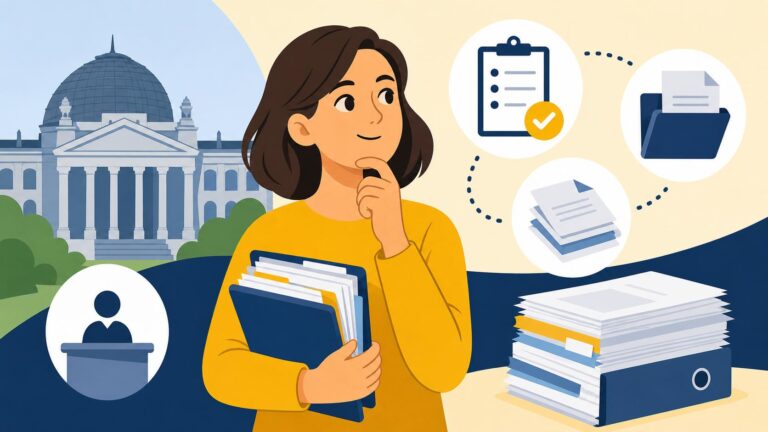
Staring at an official tax letter written in pure bureaucratic German and feeling entirely helpless is an incredibly demoralizing experience. I remember resorting to translating every single complex compound noun on my internet contract with a physical dictionary just to figure out my cancellation period. This guide breaks down the most effective language schools, resources, and strategies to conquer the German language and reclaim your independence.
Disclosure: This post may contain affiliate links. We may earn a commission at no extra cost to you if you make a purchase through these links. Read full disclosure.
The Reality of the German Language Barrier
Why “Everyone Speaks English” is a Dangerous Trap
When you first arrive in major metropolitan hubs like Berlin, Munich, or Frankfurt, you are immediately lulled into a false sense of linguistic security. You can order a flat white at a trendy third-wave coffee shop in perfect English, your tech startup operates entirely in English, and the locals you meet at international meetups switch seamlessly to your native tongue to accommodate you. This creates the illusion that learning German is an optional hobby rather than a survival necessity. It is a trap that many expats fall into, coasting for years without learning more than how to order a beer.
However, the moment you step outside the protective bubble of the international hospitality and tech sectors, the reality of the German infrastructure hits you like a ton of bricks. The official language of the country is German. When you have a dispute with your landlord, when you need to explain a complex medical symptom to a specialist, or when you are trying to understand why your train was suddenly rerouted in the middle of a snowy forest, English will not save you. Civil servants are legally bound to conduct official state business in German to avoid liability for misinterpretations.
Relying entirely on the goodwill of bilingual locals or translation apps for every single official interaction is exhausting and strips you of your autonomy. Accepting that the “everyone speaks English” myth only applies to your leisure time, not your legal or administrative life, is the vital first step in motivating yourself to enroll in a serious language program.
Understanding the CEFR Levels in Germany
Before you can choose a language school, you must understand the metric by which Germany judges your linguistic competence: the Common European Framework of Reference for Languages (CEFR). This system grades your proficiency on a scale from A1 (absolute beginner) to C2 (near-native mastery). Every language school in the country structures its curriculum around these exact levels, and every immigration officer uses them to determine your visa eligibility.
Levels A1 and A2 form the foundation. Here, you learn how to introduce yourself, navigate a supermarket, and speak in the present and past tense. While reaching A2 allows you to handle basic daily transactions, you are still largely incapable of having a nuanced conversation. B1 is the critical milestone for most expats. Reaching the B1 level signifies independent language use. You can express opinions, understand the main points of clear standard input, and deal with most situations likely to arise while traveling in an area where the language is spoken. More importantly, B1 is the mandatory legal requirement for securing permanent residency or German citizenship.
Moving beyond B1 into B2 and C1 is where the language becomes genuinely professional. A B2 certificate is often required to study at a German university or to work in a German-speaking corporate environment. C1 is the level required for highly regulated professions, such as practicing medicine or law. Understanding these benchmarks is crucial when Navigating the Ausländerbehörde: Tips for Dealing with German Immigration Offices, as showing up with an A2 certificate when a B1 is legally demanded will result in an immediate rejection of your application.
The Psychological Toll of Bureaucratic German
Learning conversational German to speak with your neighbors is one challenge; mastering Beamtendeutsch (civil servant German) or Juristendeutsch (legal German) is an entirely different beast. The German language is infamous for its ability to endlessly chain nouns together to create terrifyingly long, hyper-specific words. When you receive mail from the state, it will not be written in the conversational German you learned in your A1 class. It will be dense, passive, and filled with highly specific administrative jargon.
This linguistic density takes a severe psychological toll on newcomers. Opening your mailbox becomes a source of daily anxiety. You will stare at words like Steueridentifikationsnummer (tax identification number) or Rundfunkbeitrag (broadcasting fee) and feel completely overwhelmed. The grammar used in official letters often employs complex subordinate clauses that push the verb to the very end of a paragraph, meaning you have to read five lines of text just to find out what the actual action of the sentence is.
To survive this, you cannot simply rely on casual vocabulary apps. You need structured, rigorous grammatical training to untangle the sentence structures. Furthermore, you need to develop a highly specialized vocabulary toolkit specifically for dealing with the state.
Traditional Brick-and-Mortar Language Schools
The Goethe-Institut Experience: The Gold Standard
If budget is not your primary concern and you want the absolute highest quality, universally recognized German education, the Goethe-Institut is the undisputed gold standard. Funded partially by the German government to promote German culture and language abroad, the Goethe-Institut has branches in almost every major German city, as well as worldwide. Their certificates are accepted without question by every university, employer, and immigration office in the country.
The teaching methodology at the Goethe-Institut is highly communicative, rigorously structured, and immersive from day one. Even in an absolute beginner A1 class, the instructor will speak almost exclusively in German, forcing your brain to adapt rapidly through context and repetition. They utilize state-of-the-art digital boards, high-quality proprietary textbooks, and highly trained native-speaking instructors who must pass stringent pedagogical qualifications. You are not just learning grammar; you are learning cultural context, regional idioms, and proper pronunciation.
However, this premium experience comes with a premium price tag. Intensive courses at the Goethe-Institut can cost over a thousand euros per month. Furthermore, the pace is absolutely relentless. If you sign up for an intensive, four-week daytime course, you are expected to do several hours of homework each night. It is virtually impossible to maintain a full-time job while attending a Goethe intensive course. If you have the savings and the time, it is the fastest route to fluency, but it is an immense commitment of both finances and mental energy.
Volkshochschule (VHS) for Budget-Conscious Expats
For the vast majority of expats, paying premium prices for language courses is simply not feasible, especially when dealing with the incredibly high costs of initial relocation. The quintessential German solution to this is the Volkshochschule (VHS), which translates directly to “folk high school” but functions as a state-subsidized adult education center. Every single municipality in Germany, from massive cities to small rural districts, has a local VHS offering German as a Foreign Language (DaF) courses.
The absolute greatest advantage of the VHS is the price. Because they are heavily subsidized by the local government, a semester-long evening course might only cost a couple of hundred euros. This makes it the go-to option for newly arrived immigrants, students, and budget-conscious professionals. The VHS is also incredibly egalitarian. You will find yourself in a classroom with a deeply diverse mix of people from all over the world, which can be a fantastic way to begin Making Friends in Germany: Social Tips for Expats outside of your immediate professional circle.
The trade-off for this affordability is consistency and class size. VHS classes are often completely full, meaning you might be one of twenty-five students fighting for speaking time with a single instructor. The quality of the teachers also varies wildly; some are passionate, highly trained pedagogues, while others are simply native speakers looking for extra income. Additionally, the administrative process to sign up for a VHS course is notoriously analog. You often have to physically visit the office on a specific registration day, take a mandatory placement test on paper, and wait in long lines, which can be a deeply frustrating initiation into German bureaucracy.
Private Boutique Language Schools
Sitting squarely between the premium pricing of the Goethe-Institut and the budget-friendly but crowded VHS are private boutique language schools. In cities like Berlin, Hamburg, and Munich, you will find hundreds of these independent schools—such as GLS, Speakeasy, Expath, or Berlitz. These institutions often cater explicitly to the modern expat and tech-worker demographic.
Private schools generally offer a massive advantage in terms of flexibility. They understand that their clients work full-time, so they offer highly specific schedules: early morning classes before work, late evening sessions, or weekend crash courses. The class sizes are usually capped much lower than a VHS, typically around eight to twelve students, ensuring you get adequate speaking time and personalized correction from the instructor.
Furthermore, many of these boutique schools have modernized their administrative processes. You can register online, take digital placement tests, and receive customer support in English. The atmosphere is generally younger and more relaxed than the formal Goethe-Institut. While the certificates from these smaller schools are perfectly valid for proving your level to an employer, always double-check with your local immigration office if they accept a specific school’s internal certificate for visa purposes, or if you still need to sit for an official standardized test like the telc (The European Language Certificates) exam afterward.
Digital and Flexible Learning Solutions
Online Academies and Tutors
For expats who frequently travel for work, have irregular shift patterns, or simply live in a rural German village (Dorf) without access to a local language school, the digital learning revolution has been a massive equalizer. Platforms like Lingoda and iTalki have fundamentally changed how adults learn German, offering unprecedented flexibility without sacrificing the vital component of live human interaction.
Lingoda, a platform actually founded in Berlin, operates like a digital academy. You purchase a subscription of class credits and can book hour-long, small-group lessons 24/7. This means if you finish work at 10 PM, you can still log on and join a B1 grammar class with a certified native instructor. The curriculum is standardized, meaning you can jump between different teachers while still following a coherent path toward a CEFR certificate. iTalki, conversely, is a marketplace for private tutors. You can browse thousands of German teachers, read reviews, and hire them for one-on-one conversational practice via video chat.
The primary challenge with online learning is maintaining self-discipline. When you do not have to physically commute to a classroom, it is terrifyingly easy to cancel a lesson because you feel tired. Furthermore, if you are newly arrived in the country, you need a stable environment to focus on these digital classes. Navigating the brutal housing market can delay this. Utilizing a platform like Wunderflats allows you to bypass the immediate stress of the unfurnished housing hunt. Securing a fully equipped temporary apartment means you have an immediate, quiet workspace with high-speed internet, allowing you to begin your intensive online language classes on day one without waiting months for a permanent internet contract to be activated.
Self-Study Apps and Software
In the era of smartphones, almost every expat arrives in Germany with Duolingo, Babbel, or Memrise already installed on their device. These gamified apps are excellent tools for building foundational vocabulary, memorizing the gender of nouns (the dreaded der, die, das), and establishing a daily habit of engaging with the language. They utilize spaced repetition algorithms that are genuinely scientifically effective for burning new words into your long-term memory.
However, a massive misconception among expats is that you can achieve fluency, or even functional conversational ability, using these apps alone. You cannot. Apps are completely incapable of explaining the highly complex, mathematical rules of German grammar. They will not successfully teach you how to decline an adjective based on the accusative or dative case, nor will they explain the rigid rules of verb placement in subordinate clauses. If you rely solely on apps, you will end up speaking a broken, “Tarzan” version of German—you will know the words, but you will not know how to string them together legally.
Therefore, apps must be viewed strictly as supplemental tools. You use them while sitting on the U-Bahn during your morning commute to review vocabulary, but you must pair them with a structured curriculum that explains the ‘why’ behind the language. For a deeper look at balancing your digital life and finding the right supplementary tools, exploring the Top 10 Apps for Living in Germany: Navigating Daily Life with Your Smartphone is a highly practical step.
Leveraging Media and Workbooks at Home
To truly master the language outside of a formal classroom, you must actively convert your living space into a learning environment. Passive listening is not enough; you must engage with physical and digital media. Purchasing high-quality, standardized German grammar workbooks is essential. Publishers like Hueber, Klett, and Cornelsen produce the textbooks actually used in the integration courses. You cannot easily find these specific, localized workbooks in international bookstores. Ordering them directly through Amazon Germany ensures you have the exact, up-to-date editions required for self-study, complete with answer keys and audio CDs or download links.
Furthermore, typing in German presents a unique hurdle for expats using foreign laptops. Constantly copy-pasting umlauts (ä, ö, ü) or the sharp S (ß) slows down your digital communication and frustrates your attempts to write formal emails. While you can change your software settings, the keycaps will not match. Investing in an external, physical QWERTZ layout keyboard from Amazon Germany trains your muscle memory to type in German natively, an absolute necessity if you plan on working in a local office environment.
You must also consume native media. Do not watch dubbed American shows. Instead, watch German news broadcasts like the Tagesschau, which uses incredibly precise, high-level standard German (Hochdeutsch). Listen to German podcasts designed for learners, such as “Easy German,” which conducts street interviews in major cities, exposing you to the actual speed, slang, and dialect variations that real people use, which sounds entirely different from the sterile audio tracks in a textbook.
State-Funded Integration Courses
Who is Eligible for the Integrationskurs
The German government is acutely aware that a shared language is the foundation of a functioning society. To facilitate this, the Federal Office for Migration and Refugees (BAMF) heavily subsidizes a massive nationwide program known as the Integrationskurs (Integration Course). Understanding whether you are eligible for this program, or whether you are actually legally obligated to attend it, is a critical bureaucratic hurdle.
If you are an EU citizen, you are not legally required to take the course, but you can apply to the BAMF for a certificate of eligibility (Berechtigungsschein) if there are free spots available. If you are a non-EU citizen who has just been granted a residence permit for employment, family reunification, or humanitarian reasons, the Ausländerbehörde may actually issue you an obligation (Verpflichtung) to attend. This means your visa renewal is strictly contingent on you completing the course and passing the final exam.
The financial incentive is massive. If you are accepted into the program, the BAMF subsidizes the cost heavily. You only pay a small contribution per lesson hour (currently around €2.29 per hour), and if you pass the final exam within two years, the government will actually refund 50% of your out-of-pocket costs. If you are unemployed and receiving state benefits, the course is entirely free.
Structure and Content of the Course
The Integrationskurs is not a casual evening class; it is a massive, highly structured educational commitment. The standard course consists of exactly 700 instruction hours, divided into two distinct sections. The first 600 hours comprise the language course. This takes you from absolute zero (A1) up to the B1 level. It focuses heavily on the practical vocabulary needed for daily life: shopping, housing, health, and writing letters to authorities.
The final 100 hours are the “Orientation Course” (Orientierungskurs). This section does not focus purely on grammar, but rather on German history, culture, the legal system, and democratic values. You learn about the structure of the parliament, the rights and duties of residents, and recent historical events like the reunification of East and West Germany.
At the end of the 700 hours, you face two massive exams. First, the “Deutsch-Test für Zuwanderer” (DTZ), which tests your language skills to certify you at the B1 level. Second, the “Leben in Deutschland” (Life in Germany) test, a multiple-choice exam covering the cultural and legal topics from the orientation course. Passing both of these exams provides you with the “Zertifikat Integrationskurs,” which is the ultimate golden ticket required to eventually secure permanent residency or citizenship.
The Pros and Cons of State-Mandated Learning
The obvious pros of the Integrationskurs are the incredible cost savings and the guaranteed, structured path to the vital B1 certificate. It forces you into a daily routine of language learning, which is exactly what adult brains need to retain a complex new language. It also provides a comprehensive overview of how German society functions, which is invaluable for a newcomer trying to understand the cultural mechanics.
However, the cons are significant. The pacing of the course is notoriously slow because it is designed to accommodate learners from vastly different educational backgrounds. If you are a highly educated expat who already speaks three languages, sitting in a class where the instructor must spend a week explaining the concept of a verb conjugation to someone who has never been to a formal school can be deeply frustrating.
Furthermore, because it is heavily subsidized, the classes are almost always at maximum capacity (usually up to 25 people), and they are hosted at local VHS centers or certified private schools where the quality of the specific teacher dictates your entire experience. You must also commit to a rigid schedule; most Integrationskurse run for four to five hours every single weekday morning, making it nearly impossible to attend if you hold a standard 9-to-5 job.
Real-World Practice and Immersion Strategies
Language Tandems and Stammtisch Events
You can study grammar books for a decade, but until you actually open your mouth and attempt to speak to a real human being in real-time, you do not truly know the language. Overcoming the sheer terror of making mistakes in public is the final barrier to fluency. The most effective, low-pressure way to practice speaking is by finding a “Tandem Partner.”
A language tandem is a mutually beneficial exchange. You find a native German speaker who wants to improve their English, and you meet up for a coffee or a beer. You spend exactly 30 minutes speaking only in English, and then you switch and spend 30 minutes speaking only in German. It removes the fear of judgment because both of you are actively struggling in a foreign language. You can find tandem partners through university bulletin boards, dedicated apps like Tandem, or local Facebook groups.
For a group setting, you must seek out a Stammtisch (a regular, informal get-together). Almost every city in Germany has an international Stammtisch or a specific language exchange meetup held at a local pub. Going to these events forces you to practice conversational German in a loud, distracting environment, which perfectly mimics real-life situations. It also trains your ear to understand different accents and speech speeds, while simultaneously serving as a vital networking opportunity.
Navigating the “Expat Bubble” Trap
The greatest threat to your German language acquisition is not the complexity of the grammar; it is the comfort of the “Expat Bubble.” In cities like Berlin, it is entirely possible to live for ten years without ever speaking German. You work in an English-speaking office, your friends are all international expats, you go to English comedy nights, and you use apps to order food delivery so you don’t even have to speak to a waiter.
This bubble is incredibly comforting during your first year when everything is overwhelming, but it becomes a gilded cage. To truly integrate, you must force yourself out of it. This means making a conscious, highly uncomfortable effort to join German-speaking environments. Instead of joining the “International Football Meetup,” join a local German Sportverein (sports club). Instead of taking an art class in English, sign up for a pottery class at the local VHS where the instruction is strictly in German. You will be exhausted, you will feel foolish, and you will misunderstand instructions, but this forced immersion is the only way to crack the cultural and linguistic code.
Creating a German Micro-Environment at Home
If you cannot achieve total immersion outside, you must manufacture it inside your home. Changing the default language of your smartphone, your computer operating system, and your social media accounts to German is a brutal but effective shock to the system. Suddenly, you are forced to learn the German words for “settings,” “save,” “delete,” and “forward” simply to navigate your daily digital life.
When looking for housing, intentionally seek out a Wohngemeinschaft (WG – shared apartment) with native Germans rather than other expats. Living with locals forces you to negotiate chores, chat in the kitchen, and handle building administration in German. Ultimately, every small adjustment that replaces an English input with a German one compounds over time, slowly shifting your brain from translating to actually thinking in your new language.
Quick Comparison: Language School Options in Germany
| School Type | Average Cost (Monthly) | Class Size | Best Suited For | Key Drawback |
| Goethe-Institut | €800 – €1,200+ | 10 – 16 | Fast, premium learning; high standards. | Extremely expensive; rigid intensive schedules. |
| Volkshochschule (VHS) | €100 – €300 | 20 – 25+ | Budget learners; integration courses. | Crowded classes; analog registration. |
| Private Boutiques | €300 – €600 | 8 – 12 | Tech workers; flexible evening learners. | Quality varies wildly by individual school. |
| Online Tutors (iTalki/Lingoda) | €10 – €30 per hour | 1 – 5 | Shift workers; rural residents. | Requires immense self-discipline and quiet space. |
| Integrationskurs (BAMF) | Free to €230 | 15 – 25 | Long-term immigrants; PR seekers. | Very slow pace; huge time commitment. |
References
Primary sources (official)
- Goethe-Institut – Official Homepage: https://www.goethe.de/en/index.html
- Federal Office for Migration and Refugees (BAMF) – Integration Courses: https://www.bamf.de/EN/Themen/Integration/ZugewanderteTeilnehmende/Integrationskurse/integrationskurse-node.html
Other helpful sources
- Make it in Germany (Official Federal Government Portal) – Learning German: https://www.make-it-in-germany.com/en/living-in-germany/learn-german
Disclaimer
The pricing, course structures, and legal requirements surrounding the BAMF Integrationskurs mentioned in this guide are accurate at the time of writing but are subject to frequent legislative changes by the German government. Always verify your personal eligibility for state-funded courses directly with your local Ausländerbehörde or a certified migration counseling center. Furthermore, the effectiveness of any language school or digital platform is entirely dependent on your personal learning style and the amount of self-study you commit to outside of the classroom.