How to Find Family-Friendly Neighborhoods in German Cities
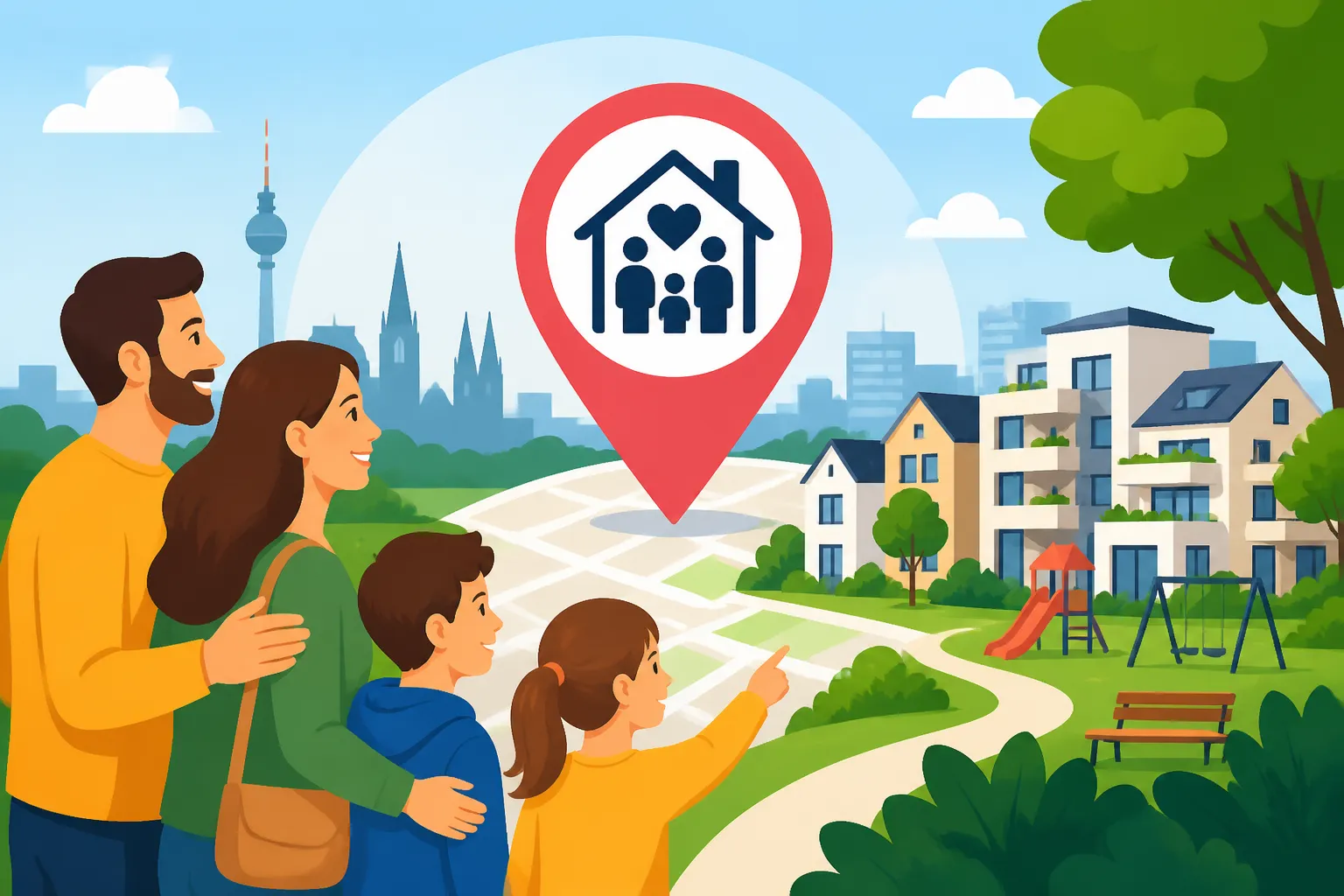
Finding a rental in a German city is a competitive sport, but trying to find one that welcomes sticky fingers and loud Sunday morning play sessions feels like an impossible task. I remember the exhaustion of dragging a stroller through three different U-Bahn transfers just to view a "family-friendly" flat that turned out to be on the fourth floor with no elevator and a neighbor who glared at my toddler’s shoes. This guide solves that struggle by showing you exactly how to identify truly welcoming neighborhoods and navigate the German rental market with your family’s needs first.
Disclosure: This post may contain affiliate links. We may earn a commission at no extra cost to you if you make a purchase through these links. Read full disclosure.
Decoding the German Family Friendly Blueprint
When you start your search, you need to look past the aesthetic of the buildings and focus on the hyper-local infrastructure. In Germany, a neighborhood isn't just a collection of streets; it is often referred to as a "Kiez" (in Berlin) or a "Viertel," and its suitability for children is defined by very specific urban planning markers. The most important thing to look for is the "Verkehrsberuhigter Bereich" or "Spielstraße." These are traffic-calmed zones where cars must drive at a walking pace and children are legally allowed to play in the street. Living on or near one of these is a game-changer for your peace of mind.
Another critical factor is the density of "Spielplätze" (playgrounds). Germany takes its playgrounds seriously—expect high-quality wooden structures, sandpits, and water features. A neighborhood with a high "playground-to-child ratio" usually indicates a local government that prioritizes family budgets and outdoor time. Before you commit to a long-term lease, you might want to use a service like Wunderflats to find a furnished apartment in a potential neighborhood. This allows you to live there for a few months and see if the local "Spielplatz" vibe actually suits your family's social needs before signing a multi-year contract.
Beyond the physical space, you have to consider the educational landscape. In many German states, your address dictates which primary school your child will attend. Therefore, researching the local "Grundschule" is non-negotiable. You should also check the proximity to "Kitas" (daycares), though be warned that a high density of families means more competition for spots. I highly recommend reading up on Finding a Kindergarten or Daycare in Germany: How to Enroll Your Child to understand how your neighborhood choice impacts your chances of finding childcare.
Infrastructure That Makes or Breaks Daily Life
A neighborhood might look charming with its cobblestone streets and cafes, but as an expat parent, your daily survival depends on specific services. First on that list is the "Kinderarzt" (pediatrician). Unlike some countries where you might see a general practitioner, German children almost exclusively see a specialist pediatrician for everything from the sniffles to mandatory check-ups. These offices in popular neighborhoods fill up fast. When you are scouting areas, check how many pediatricians are within a 15-minute radius. For more on this, look at Finding a Kinderarzt (Pediatrician) in Germany to see why local access is so vital for those inevitable winter fevers.
Public transport access is another pillar of family life here. You want a neighborhood served by elevators at every U-Bahn or S-Bahn station. Nothing drains your spirit faster than realizing your local station only has stairs, forcing you to carry a heavy "Kinderwagen" (stroller) up and down every day. While you are out exploring these stations and testing elevator reliability, having a stable data connection is essential. I suggest using Airalo to grab a local eSIM as soon as you land. It ensures you have maps and translation tools working perfectly while you’re standing on a windy platform trying to figure out which exit is stroller-accessible.
Finally, consider the "Bio-Laden" (organic grocery store) and pharmacy (Apotheke) presence. German parents are often very health-conscious, and neighborhoods like Prenzlauer Berg in Berlin or Eppendorf in Hamburg are packed with shops catering to organic baby food and homeopathic remedies. If you find yourself in a more residential area where specialized baby items are harder to find, you can always rely on Amazon Germany to ship bulk diapers, safety gates, and specialized strollers directly to your door, saving you from hauling heavy boxes on the bus.
Practical Strategies for the Neighborhood Hunt
Once you have a list of potential districts, you need a boots-on-the-ground strategy. The German rental market moves incredibly fast, and "family-friendly" flats are the first to go. One of the best ways to get a feel for a neighborhood's true character is to visit during "Ruhezeit" (quiet hours). In Germany, there are strict rules about noise, typically between 1:00 PM and 3:00 PM on weekdays and all day Sunday. Visit a potential street during these times. If the area feels overly "stiff" or if you see signs in windows complaining about noise, it might not be the place for a lively family. Understanding German Tenant Rights and Laws: What Expats Need to Know will help you navigate these cultural nuances.
When you go to an "Abnahme" (viewing), bring a folder with your "Bewerbungsunterlagen" (application documents) ready to hand over. Landlords in family-friendly areas want to see stability. Showing that you have already handled The Anmeldung: Registering Your Address in Germany for your temporary stay or that you have a solid "SCHUFA" (credit report) can put you ahead of other families. If you are still abroad or just arriving, using Wunderflats can give you that necessary "Anmeldung" address which is the key to opening bank accounts and proving residency to future landlords.
Don't forget the "Empty Kitchen" phenomenon. Many German apartments are rented without a kitchen—no stove, no cupboards, nothing. For a family, this is a massive logistical hurdle. When viewing flats in family-oriented suburbs, ask specifically if the "Einbauküche" (EBK) is included. If it isn't, you’ll need to budget both time and money to install one. You can find many of the necessary tools and even some modular cabinets on Amazon Germany to bridge the gap if you’re handy with a screwdriver. For more tips on managing this, check out How to Buy Appliances When German Kitchens Come Empty.
Comparative Overview of Family Neighborhoods by City
To help you narrow down your search, I’ve compiled a table of some of the most sought-after family districts in major German cities. These areas are known for their high safety ratings, excellent schools, and abundance of green space.
| City | Neighborhood | Vibe | Best For |
|---|---|---|---|
| Berlin | Prenzlauer Berg | "Stroller Central," high-end organic shops, endless playgrounds. | Young families with toddlers and a higher budget. |
| Berlin | Zehlendorf | Leafy, quiet, close to lakes (Schlachtensee) and international schools. | Families seeking a suburban feel within city limits. |
| Munich | Schwabing-West | Elegant, close to the Englischer Garten, very safe. | Families who want to be central but near massive parks. |
| Munich | Haidhausen | "French Quarter" feel, cozy streets, great local pediatricians. | Urban families who value a village-like community. |
| Hamburg | Eimsbüttel | Bustling, many "WGs" turning into family flats, great cafes. | Active families who love being part of a vibrant community. |
| Hamburg | Volksdorf | Very green, forest access, traditional family homes. | Older children who need space to roam and bike. |
| Frankfurt | Nordend | Beautiful Altbau buildings, highly walkable, many Kitas. | Professional families who work in the city center. |
| Cologne | Lindenthal | Close to the university and the Stadtwald park/zoo area. | Nature lovers who still want easy tram access to the city. |
While you are visiting these cities to compare these areas, remember to use Airalo to keep your navigation apps running. It's much easier to find that hidden park in Lindenthal when you aren't hunting for public Wi-Fi. If you find a neighborhood you love in this table, your next step is Understanding German Rental Costs: Kaltmiete, Warmmiete, Nebenkosten to ensure the area fits your monthly budget.
Navigating the Social Side of Family Living
Finding the right neighborhood is only half the battle; the other half is integrating into the local "Eltern-Community" (parent community). In Germany, a lot of socializing happens at the "Spielplatz." It is perfectly normal to strike up a conversation with other parents while your kids are trading sand buckets. However, be aware that German parenting can be quite direct. Don't be surprised if a local parent gives you "advice" on your child’s jacket or snack choice—it’s usually meant to be helpful, even if it feels like a critique!
To stay connected with local parent groups on Facebook or Telegram while you are out and about, having reliable mobile data via Airalo is a lifesaver. You’ll often find that "Flohmärkte" (flea markets) for baby clothes are advertised on local neighborhood apps or flyers at the "Kita." These markets are an essential part of German family culture and a great way to save money while meeting your neighbors. If you miss a market, you can always find great deals on European safety-standard car seats and strollers on Amazon Germany.
As your children grow, the neighborhood's role changes. You’ll want to look at Enrolling Your Child in a German School: What Foreign Parents Should Know to see how the secondary school system (Gymnasium vs. Realschule) works, as this might eventually prompt a move to a different district. In the meantime, focus on the immediate needs: a safe path to the bakery, a friendly "Kinderarzt," and a community that doesn't mind a little bit of noise.
If you find yourself overwhelmed, consider staying in a Wunderflats apartment in two different neighborhoods—perhaps one month in a busy urban center and one month in a quieter suburb. This "trial run" is the best way to see how your family actually functions in the German environment. Don't forget to look into Public Transport Tickets and Passes: Navigating German Transit Systems so you can move between these viewings and trials without overspending on individual tickets. Finally, if anyone gets sick during the transition, keep Taking Kids to the Doctor: How Pediatric Care Differs in Germany bookmarked so you know exactly what to expect from the medical system.
Important Disclaimer
The information provided in this guide is for general informational purposes only and does not constitute legal, financial, or professional real estate advice. While every effort has been made to ensure the accuracy of the details regarding German neighborhoods and rental practices, laws and market conditions in Germany change frequently. Always verify specific school catchment areas, rental contract terms, and local regulations with the relevant German authorities or a qualified professional before making any financial commitments or relocation decisions.