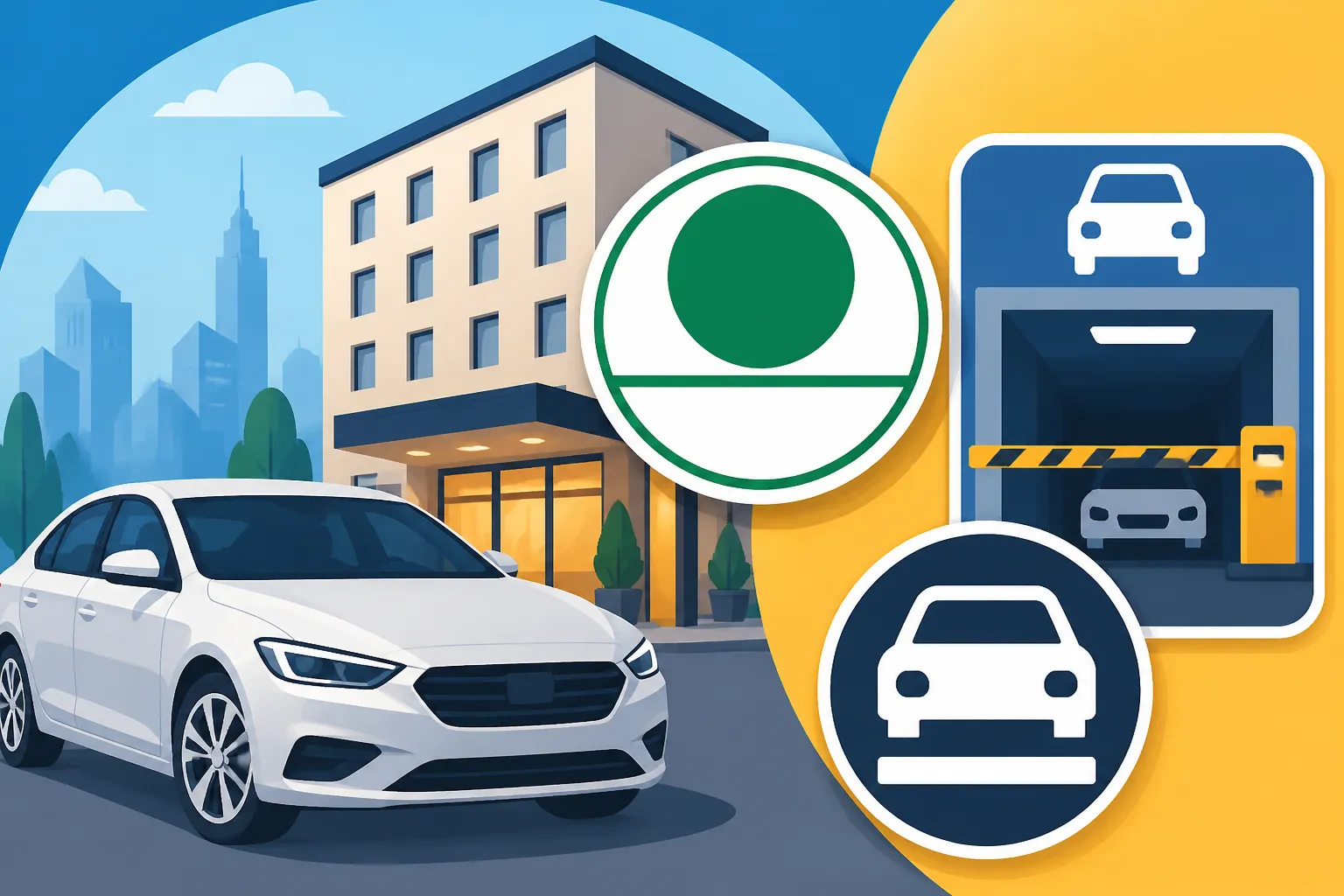
Parking at German Hotels: Umweltzone Stickers and Paid Garages
Oh, the joy of driving through Germany's picturesque landscapes, the Autobahn stretching before you… and then the sudden cold sweat when you realize you're pulling into a city and have absolutely no idea where to park your car, especially if you're staying at a hotel. Trust me, I've been there, circling for what feels like an eternity, muttering under my breath. This guide will walk you through the nuances of hotel parking in Germany, from environmental zones to hidden fees, ensuring you can book your stay with peace of mind.
Disclosure: This post may contain affiliate links. We may earn a commission at no extra cost to you if you make a purchase through these links. Read full disclosure.
The German Parking Puzzle: Why Hotel Parking Isn't Always Simple
You’ve pictured it: you arrive at your charming German hotel, pull up to the entrance, and effortlessly hand over your keys or slide into a conveniently located spot. The reality, especially in older, bustling cities like Berlin, Munich, or Cologne, can be a stark contrast. Germany’s urban planning, often centuries old, wasn't exactly designed for widespread car ownership, leading to some unique challenges for drivers.
The Reality of City Parking and Tight Spaces
Many of Germany's most beautiful and historic city centers, the ones we all flock to, are a labyrinth of narrow streets, pedestrian zones, and buildings that predate the automobile by centuries. This means that space for parking is inherently limited. Unlike in some countries where every hotel comes with a massive, free parking lot, German city hotels, particularly those nestled in the Altstadt (Old Town) or other central areas, simply don’t have that luxury. You might find a small courtyard, a tight underground garage, or nothing at all.
It's a frustrating dance, I know. You're tired from your journey, probably navigating unfamiliar streets with a GPS yelling instructions, and the last thing you want is a scavenger hunt for a parking spot. What looks like a convenient downtown hotel on the map can often mean an inconvenient parking situation, forcing you to park several blocks away or in a multi-story public garage. It’s a classic Germany experience, really – efficient in some ways, but surprisingly challenging in others when it comes to personal transport in urban areas. This is where planning ahead becomes not just helpful, but essential for a smooth trip.
Unpacking "Hotel Parking": On-site, Off-site, and Valet
When a hotel lists "parking available," it's easy to assume it means a spacious, free lot right outside your room. However, in Germany, this term can encompass a wide variety of arrangements, and understanding these distinctions is key to avoiding disappointment (and extra costs!). Sometimes, "parking" means a handful of spots in a tiny backyard that are always full, or a partnership with a public garage a 10-minute walk away.
On-site parking is the dream scenario, where your car is directly on the hotel premises, often in a dedicated garage or a small surface lot. This is usually the most convenient and secure option. Off-site parking, on the other hand, means the hotel directs you to a nearby public parking garage or an outdoor lot they might have a special rate with. While often perfectly safe, it requires you to walk to and from your car, which can be less appealing with luggage or in bad weather. Valet parking, while rarer in Germany outside of very high-end establishments, means a hotel staff member parks your car for you. Always clarify whether "parking" is guaranteed, if it needs to be reserved, and what the associated costs are. Don't be shy about asking specific questions before you commit to a booking.
Navigating Umweltzonen and Green Stickers
Before you even think about parking, there’s a crucial hurdle many first-time drivers in Germany overlook: the Umweltzone. This isn't just a recommendation; it's a mandatory system in many German cities that can result in hefty fines if you don't comply. And yes, it applies to all vehicles, foreign or local.
What is an Umweltzone and Why Does It Matter?
An Umweltzone, or "environmental zone," is a designated area, typically within a city center, where only vehicles meeting specific emission standards are allowed to enter. These zones are clearly marked with signs indicating the start and end of the zone, along with the type of sticker required (usually green). The goal is to reduce air pollution in urban areas. Driving into one of these zones without the correct sticker prominently displayed on your windshield is a violation, and local authorities are quite vigilant about enforcing these rules.
I remember my first time driving into an Umweltzone without knowing about it – luckily, I didn't get a ticket, but the close call sent me scrambling to understand the system. It's a classic German efficiency measure, designed to protect urban air quality, but it can be a real headache for unsuspecting tourists. Many German cities, including major destinations like Berlin, Munich, Hamburg (partially), Cologne, Düsseldorf, and Stuttgart, have established Umweltzonen. If your hotel is located within one of these zones, or if you plan to drive through one to reach your hotel, a green sticker is absolutely non-negotiable. Don't let a small oversight lead to an unnecessary fine that could easily be avoided.
Getting Your Green Sticker: Before You Travel
The good news is that obtaining an Umweltzone sticker, known as a grüne Plakette, is relatively straightforward. The crucial part is to do it before you drive into any German city with an Umweltzone. If you're renting a car in Germany, it will almost certainly already have the correct sticker. If you're driving your own car from another country, or renting from a neighboring country, you'll need to arrange for one.
You can purchase these stickers online from various service providers or directly from organizations like TÜV or Dekra. These inspection agencies have offices all over Germany, and you can usually get a sticker on the spot if you bring your vehicle registration documents. Some larger gas stations or car repair shops might also offer them. It's a small, one-time fee, and the sticker is valid for the lifetime of your vehicle (unless you change your license plate). Getting it sorted in advance saves you stress, potential fines, and ensures you can confidently drive to your chosen hotel, regardless of its location within an Umweltzone. Remember, ignorance of the law is no excuse, and German authorities don't make exceptions for tourists. For more detailed information, consider reading up on Driving in Germany: Rules, Road Signs, and Getting Your License Converted.
The Cost of Convenience: Paid Garages and Hotel Fees
Beyond the environmental zones, another common surprise for visitors is the cost associated with parking. Free hotel parking, while not unheard of, is often a rare commodity, especially in desirable urban locations. Prepare for parking to be an additional expense, and factor it into your travel budget.
Understanding Hotel Parking Fees
Even when a hotel proudly advertises "parking," it very frequently comes with a daily fee. These fees can vary significantly, from a modest amount per night to rates that rival the cost of a budget hotel room in some smaller towns. City center hotels, especially those with underground garages, often charge premium rates for the convenience and security they offer. It’s not uncommon to see daily parking fees ranging from a moderate amount to a significant sum, depending on the city and the hotel's prestige.
This is a point where many travelers feel a pang of frustration. You've already paid for your room, and then you're hit with another charge just to keep your car safe. However, view it as part of the urban experience. The land is expensive, maintaining a garage is expensive, and demand is high. Before finalizing your booking, always dig into the details or, if still unsure, send a quick email to the hotel to clarify the exact parking costs. This transparency upfront can prevent unwelcome surprises when you check out. Don't forget to check if there are any specific rules, like in-and-out privileges or limited access hours, which might impact your flexibility during your stay.
Public vs. Hotel Garages: Pros and Cons
When hotel parking is either unavailable or prohibitively expensive, you'll often find yourself weighing the pros and cons of using a public parking garage (Parkhaus) versus the hotel's dedicated option. Public garages are ubiquitous in German cities, often clearly signposted with a "P" symbol. They can sometimes be a more economical choice, especially for longer stays or if you plan to use your car sparingly.
The advantage of a hotel's private garage is typically convenience and security. Your car is likely in a more controlled environment, often directly accessible from the hotel, which is invaluable when dealing with luggage. On the flip side, public garages might be a bit further afield, requiring a short walk with your bags, and security levels can vary. However, they are generally well-maintained and secure in Germany. Always compare the daily rates, check the walking distance, and consider what level of convenience you prioritize. Some hotels might even offer a discounted rate for a nearby public garage, so it’s always worth asking at the front desk. For navigating the public transport options once you've parked your car, our guide on Getting Around German Cities: U-Bahn, S-Bahn, Trams, and Buses might come in handy.
Finding Your Parking Paradise: How Booking.com Helps
In the often-complex world of German hotel parking, platforms like Booking.com can be your best friend. They offer powerful tools to filter and find accommodations that meet your specific needs, taking much of the guesswork out of the equation. This makes Booking.com an invaluable resource for anyone traveling with a car in Germany.
Leveraging Booking.com's Filters for Parking
One of the greatest benefits of using a platform like Booking.com is its robust filtering system. When you're searching for hotels, you'll find a dedicated filter for "Parking." Activating this filter immediately narrows down your options to only those properties that explicitly offer some form of parking. This simple step can save you hours of trawling through individual hotel websites or worrying about where you'll stash your vehicle.
But don't stop there! Once you've applied the "Parking" filter on Booking.com, make sure to delve into the details of each property. Look for further descriptions within the amenities section or the specific room details. Some hotels will specify "private parking," "public parking available nearby," or "valet parking." This level of detail helps you understand exactly what kind of parking to expect. Leveraging Booking.com's comprehensive search capabilities ensures you can confidently find a hotel that not only fits your budget and style but also accommodates your car seamlessly, making it a top choice for stress-free travel planning. For more tips on making your journey smoother, consider our article on Travel Logistics in Germany: Money, Safety, and Connectivity.
Reading Between the Lines: Checking Parking Specifics
While Booking.com's filters are incredibly helpful, the devil is often in the details. After filtering for "Parking," you absolutely must click into individual hotel listings and read the fine print. Does it say "free parking" or just "parking available"? If it's the latter, assume there's a charge and look for it explicitly stated, often under "facilities" or in the small print under "important information." Also, keep an eye out for phrases like "reservation is needed" or "subject to availability." This means you might need to contact the hotel directly to secure a spot after booking on Booking.com, especially during peak season.
If, after reviewing the Booking.com listing thoroughly, you're still uncertain about parking specifics – perhaps the cost isn't clear, or you want to confirm if it's an Umweltzone-compliant area – don't hesitate to contact the hotel directly. Booking.com usually provides contact information, and a quick email or phone call can clear up any ambiguities. This proactive approach ensures you arrive prepared and avoid any unwelcome surprises, reinforcing Booking.com not just as a booking platform, but as a critical tool for detailed pre-trip planning. Knowing exactly what to expect, and that your parking needs are met, makes a world of difference for your peace of mind while exploring Germany.
| Feature | Umweltzone Sticker | Hotel Parking |
|---|---|---|
| Purpose | Allows entry into low-emission zones in many cities | Provides a place to leave your vehicle at your lodging |
| Requirement | Mandatory for driving in designated city areas | Varies by hotel; often limited or non-existent in cities |
| Cost | Small, one-time fee for the sticker (valid for vehicle lifetime) | Can range from free (rare) to €15-€40+ per night |
| Obtaining | Online, at TÜV/Dekra stations, some gas stations | Book directly with hotel, via reservation platform |
| Risk of Non-Compliance | Fines for driving without a valid sticker in an Umweltzone | No spot, expensive alternatives, or street parking fines |
| Checking Info | Check city regulations before travel | Look at hotel amenities, filter on Booking.com, contact hotel |
Navigating parking in Germany doesn't have to be a nightmare. By understanding the local rules, especially around Umweltzonen, and wisely using tools like Booking.com, you can find a hotel that offers convenient and suitable parking for your vehicle. Remember to always confirm the details, costs, and availability directly with the hotel if you have any lingering doubts. Happy travels, and may your parking always be plentiful!
Disclaimer
This article is for general informational purposes only and does not constitute professional advice. Laws, prices and regulations vary by location and change over time. Consult a qualified professional for guidance on your specific situation.