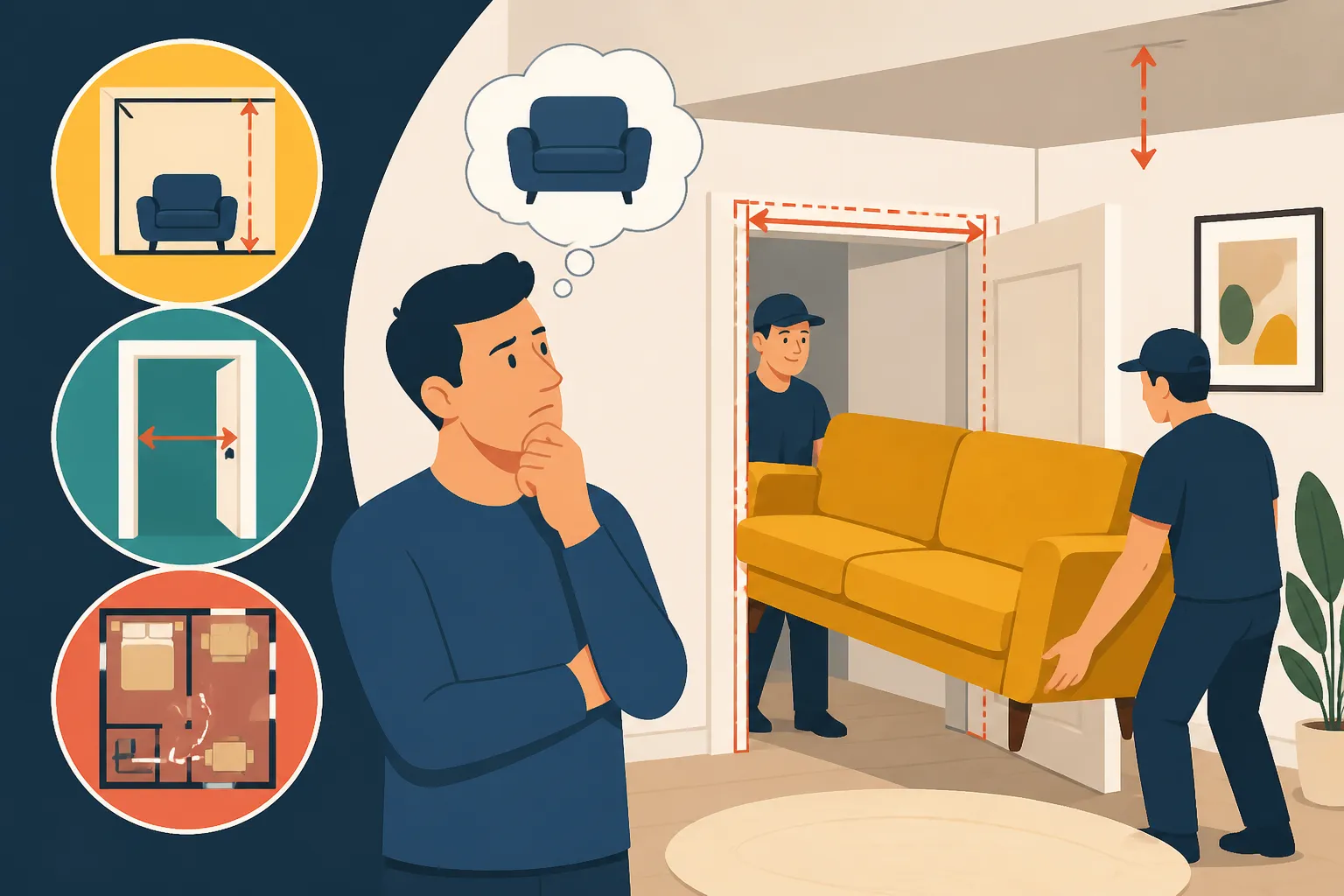
Will Your Furniture Fit a German Flat? Room Sizes, Doorways, and Ceiling Heights
Oh, the sheer excitement of landing that dream apartment in Germany! You’ve survived the Anmeldung, perhaps even wrestled with the Finanzamt, and now you’re ready to feather your new nest. But hold on a minute. Before you start fantasizing about recreating your perfectly curated living room from back home, let me warn you: German flats, particularly those charming Altbau ones, often have a mind of their own when it comes to dimensions. Your beloved sofa might gaze longingly at the narrow doorway it can't pass, and that stunning wardrobe could be inches too tall for the ceiling. This guide is here to save you from these infuriating, yet utterly common, expat moving woes, helping you measure up and plan your furniture strategy, and showing you how partners like Sirelo can make this whole process a lot less stressful.
Disclosure: This post may contain affiliate links. We may earn a commission at no extra cost to you if you make a purchase through these links. Read full disclosure.
The Quirks of German Architecture and Apartment Layouts
When you first arrive in Germany and start looking for a place, you quickly realize that what you call "standard" might not apply here. German apartments, whether they are in grand old buildings or sleek modern complexes, come with their own set of architectural peculiarities. These aren't just quirks for aesthetics; they deeply impact how you live in the space, and crucially, how your furniture fits.
Historical Context of German Wohnungen
Germany's building history is rich and varied, and it directly influences the structure of the apartments you'll find today. Many cities have a significant number of "Altbau" (old buildings) dating back to the late 19th or early 20th century, before the World Wars. These often boast high ceilings, intricate stucco work, and beautiful wooden floors, but also notoriously thick walls and quirky room shapes. They were designed for a different era, with less focus on standardized furniture sizes and more on bespoke, built-in solutions or modular pieces. These buildings were also often constructed with communal living in mind, meaning shared stairwells might be grand but not necessarily wide enough for a modern three-seater sofa.
Then you have the "Nachkriegsbau" (post-war buildings) and "Plattenbau" (prefabricated panel buildings, especially in the former East), which prioritize functionality and efficiency. While these might have more standardized rooms and lower ceilings, they can still present their own challenges, often with smaller overall footprints and a lack of the generous hallways you might be used to. Even modern new builds, while often more accommodating, still adhere to certain German building norms that might surprise you, such as the infamous "empty kitchen" concept (more on that later!). It's not just about age; it's about a fundamentally different approach to living spaces.
Typical Room Functions and Design Philosophy
Unlike some countries where open-plan living is the norm, traditional German apartments often feature distinct, separate rooms, each with a clear purpose. You’ll find designated kitchens, living rooms, bedrooms, and sometimes even a separate dining room or "Arbeitszimmer" (study). This means you'll have more walls and fewer sprawling open spaces. While this can be cozy and offer more privacy, it also means your furniture needs to fit within very specific, enclosed dimensions. That enormous sectional couch you adore might dominate a German living room, leaving no space for anything else, or worse, not even make it through the door.
The design philosophy also leans towards practicality and longevity. Furniture isn't seen as something to be constantly replaced; it's an investment. This sometimes translates into spaces designed for durable, often solid wood pieces, or built-in solutions that maximize space. When you're used to more flexible, modular furniture from places like IKEA (though IKEA is, of course, everywhere here now!), you might find yourself needing to re-evaluate what truly serves your new German space best. Think compact, adaptable, and robust rather than sprawling and disposable.
Understanding German Room Dimensions and Floor Plans
So, you've decided to take the plunge and commit to a German flat. The next step, before you even think about packing your furniture, is to meticulously understand the dimensions of your new space. Don't rely solely on floor plans; they can be deceiving. Always, always measure in person if you can, or ask a friend or the landlord to do it for you with a proper tape measure.
Common Room Sizes and Their Implications
Let's talk numbers. German apartments, particularly in city centers, are often more compact than what many expats are accustomed to. A typical living room might be around 15-25 square meters, a bedroom 12-18 square meters, and a kitchen perhaps 8-12 square meters. These aren't huge by North American or Australian standards, for example. What does this mean for your furniture?
- Living Rooms: That massive, comfy sofa you love might simply be too big. Three-seater sofas are common, but anything larger can quickly overwhelm the space. Consider modular sofas that can be reconfigured or even two smaller sofas. Also, pay attention to the depth of your sofa. A deep couch can make a narrow room feel even smaller, leaving little space to walk around.
- Bedrooms: European bed sizes differ slightly from other regions. While a "King" bed might be 180×200 cm (which is two 90×200 cm mattresses side-by-side), a Queen in Germany is often 160×200 cm. Your mattress might not fit a German frame, or your bed frame might be too wide for the room, especially once you account for bedside tables and wardrobe space. Remember, built-in closets are less common, so you'll need space for a freestanding wardrobe.
- Dining Areas: If you're lucky enough to have a dedicated dining room, it might accommodate a standard table and four to six chairs. However, many flats integrate dining into the living room or kitchen, meaning a smaller, extendable table is often a more practical choice.
Here's a quick comparison of average room sizes in Germany:
| Room Type | Average Size (Square Meters) | Common Furniture Fit | Potential Issues |
|---|---|---|---|
| Living Room | 18 – 25 | 2-3 seater sofa, armchair, TV unit | Oversized sectionals, very deep sofas may restrict movement or appear cramped. |
| Bedroom | 14 – 18 | 140/160×200 cm bed, 2-door wardrobe | King-sized beds (180×200 cm) might leave no space for walking or wardrobes. |
| Kitchen | 8 – 12 | Small table, fitted units | Large refrigerators, freestanding islands, or extensive dining sets are rarely possible. |
| Study/Guest Room | 10 – 15 | Desk, small sofa bed, bookcase | Large office desks, multiple storage units may feel overwhelming. |
| Bathroom | 4 – 8 | Standard fixtures, small storage | Double vanities, large freestanding tubs are uncommon; space for laundry machines is tight. |
The Unfurnished Reality: Why German Kitchens are Empty
This is perhaps one of the biggest culture shocks for many expats: the "empty kitchen" phenomenon. Unlike in many other countries where a rental apartment comes with a fully fitted kitchen, including cabinets, appliances, and sometimes even a fridge, many German rental flats are delivered completely bare. We're talking four walls, plumbing connections, and maybe a sink. This means you, the tenant, are responsible for installing your own kitchen, which often involves buying and assembling cabinets, a stove, an oven, a dishwasher, and a refrigerator. It's a huge undertaking!
This has massive implications for your furniture. If you’re bringing your existing kitchen from abroad, you’ll need to ensure every single cabinet and appliance fits perfectly into the designated space. And if you’re planning to buy new here, remember to factor in that significant cost and effort. This is where those precise measurements are absolutely critical. Even if the kitchen looks big enough, the plumbing and electrical outlets might dictate a very specific layout for your appliances. For a deeper dive into this unique challenge, you might find our guide on Furnishing a German Apartment and the Empty-Kitchen Problem particularly helpful.
The Challenge of German Doorways, Hallways, and Stairwells
You’ve got your room dimensions down, but don't pat yourself on the back just yet. The next, and often most frustrating, hurdle is getting your furniture into those rooms. German doorways, especially in older buildings, and the communal stairwells can be surprisingly restrictive.
Standard Door and Hallway Widths
While modern buildings tend to have wider doors (around 80-90 cm for interior doors), many Altbau apartments can have narrower ones, sometimes as little as 70 cm. Exterior apartment doors can also be smaller than you’d expect. This might seem like a small difference, but it's often the death knell for large furniture pieces. That beautiful, oversized headboard or that solid wood wardrobe that doesn’t disassemble could be stuck in the hallway forever.
Hallways within apartments can also be narrow, creating awkward angles for maneuvering. Imagine trying to pivot a large dining table around a tight corner with a wardrobe on one side and a shoe rack on the other. It’s a recipe for scratched walls, damaged furniture, and frayed nerves. This is why when you’re measuring furniture, it’s not just about length and width; it’s about depth and height, and how those dimensions interact when you’re trying to tilt or rotate a piece through an opening.
Tackling Tight Staircases and Altbau Entrances
This is where the real drama unfolds. Many German apartment buildings, especially in city centers, don't have elevators, or if they do, they are often tiny, barely fitting one person and a suitcase, let alone a washing machine or a large desk. This means your furniture will likely need to be carried up multiple flights of stairs. And these aren't just any stairs:
- Narrow Stairwells: Altbau stairwells can be incredibly narrow, with tight turns and landings that make it impossible to carry large, rigid items horizontally.
- Low Ceilings on Landings: Even if the stairwell seems wide enough, the ceilings on landings can be lower, preventing you from tilting a tall item upright.
- Winding Stairs: Some staircases are beautiful spirals, but they are a mover's nightmare.
- Steep Steps: Combine narrow and winding with steep, and you've got a challenge that mere muscle power might not overcome without specialized equipment.
I remember helping a friend move a standard-sized fridge into her Altbau flat, three flights up. We measured everything, or so we thought. The fridge fit through the apartment door, but the stairwell was so tight on a particular turn that we had to tie ropes around it, get three people on the floor above to pull, while two others pushed from below, carefully navigating it around the banister. It was a Herculean effort that left us all exhausted and slightly bruised.
This is precisely why professional moving services that understand German building quirks are invaluable. They often come equipped with special harnesses, straps, and even external furniture lifts (Möbellifte) that can hoist items up to higher floors via windows or balconies – a common sight in German cities! For stress-free moving solutions, I always recommend exploring options through platforms like Sirelo, who connect you with experienced movers who know the local challenges.
Ceiling Heights and Built-In Features
Beyond the horizontal constraints, German apartments also have vertical surprises. What you expect for ceiling height, or what you assume will be included, can be very different.
Altbau Charm vs. Modern Functionality
In an Altbau apartment, you'll often be greeted by glorious high ceilings, sometimes 3 to 4 meters high. This is fantastic for a sense of space and light, but it can make certain furniture pieces look tiny or disproportionate. More importantly, if you have very tall items – perhaps a custom-built bookshelf or a large piece of art – they might not reach the ceiling, which might be a aesthetic point, but at least they fit!
However, move into a more modern building (Post-war or new construction), and you'll typically find standard ceiling heights, usually around 2.40 to 2.50 meters. This is perfectly normal, but if you're bringing a towering wardrobe or a grand four-poster bed from a home with higher ceilings, you could run into problems. Imagine the frustration of having your new bed frame just graze the ceiling, making assembly impossible, or your favorite Armoire simply not standing upright.
Always double-check the ceiling height in every room where you plan to place tall furniture. This also extends to overhead fixtures like pendant lights, which can eat into precious vertical space.
Built-in Wardrobes, Nooks, and Crannies
Another feature that distinguishes German flats is the rarity of built-in wardrobes, especially in older buildings. In many countries, ample closet space is a given. In Germany? Not so much. Most apartments expect you to bring your own wardrobe (Schrank). This means you need to factor in space for a freestanding closet in your bedroom, which further emphasizes the need for accurate room measurements and careful planning. You'll often see three- or four-door wardrobes that are quite deep and tall, designed to maximize storage in smaller rooms.
You might also encounter charming but sometimes inconvenient nooks, alcoves, or sloped ceilings (Dachschrägen) in attic apartments. These add character but can severely limit where you can place furniture. That perfect bookshelf might fit width-wise, but then it’s too tall for the sloped wall. Or a corner might look ideal for a plant, but then you realize it’s an awkward angle that doesn't fit anything. These "character features" require creative problem-solving and often a willingness to compromise on certain furniture pieces.
Measuring Up: Your Furniture vs. German Spaces
Alright, enough with the warnings! Let's get down to how you actually prevent these nightmares. Accurate measurement is your absolute superpower here. This isn’t a task to rush or guesstimate.
Essential Measurements Before Your Move
Before you even book a moving company or start boxing things up, you need to create a detailed inventory of your current furniture with precise measurements. Don't just measure length and width; measure height, and crucially, measure diagonals.
For Every Piece of Furniture (Especially Large or Irregular Ones):
- Length (L): The longest dimension.
- Width/Depth (W/D): The shortest dimension, or how far it sticks out from a wall.
- Height (H): From the floor to the highest point.
- Diagonal Measurement (D1): For rigid items like sofas, measure from the bottom corner of the back to the top corner of the opposite armrest. This tells you if it can be tilted to fit through narrow openings.
- Disassembly Potential: Can it be taken apart? If so, what are the dimensions of the largest individual piece? Sofas that come apart, beds that dismantle, and modular shelving units are your best friends here.
For Your New German Flat:
- Room Dimensions: Measure the length, width, and ceiling height of every room you plan to furnish. Do this wall-to-wall and floor-to-ceiling.
- Doorways: Measure the width and height of every doorway your furniture will pass through, including the main building entrance, the apartment door, and internal room doors. Again, measure the actual clear opening, not just the frame.
- Hallways: Measure the width and height of all internal hallways. Also, measure the diagonal across any tight corners.
- Stairwells: This is tricky, but vital. If you can't measure it yourself, ask the landlord for precise dimensions or photos. Pay attention to:
- Width of the stairs (is there a banister eating into the space?)
- Height of the ceiling on each landing
- Length and width of the landings themselves
- Any obstructions like radiators or decorative elements.
- Windows/Balcony Doors: Measure the clear opening if you think a furniture lift (Möbellift) might be an option for very large items. This is a common solution for tricky Altbau moves.
Once you have these measurements, create a floor plan of your new apartment (even a rough sketch on graph paper will do) and start mapping out where each piece of furniture will go. Use paper cutouts scaled to your furniture dimensions to "test fit" everything virtually. This will highlight potential clashes long before moving day.
Professional Moving Services: Your Best Ally
Given the unique challenges of moving to Germany, especially when dealing with oddly sized apartments and difficult access, a professional moving service isn't just a luxury – it's often a necessity. These aren't just people who pack boxes; they're experts in logistics, planning, and problem-solving.
A reputable international moving company, like those you can find through Sirelo, brings a wealth of experience. They will:
- Assess Your Belongings: They can help you identify which items are likely to be problematic and advise on disassembly, specialized packing, or even suggest leaving certain pieces behind.
- Navigate German Regulations: They understand customs, insurance, and local moving permits (yes, sometimes you need a permit to block a street for a furniture lift!).
- Provide Specialized Equipment: As mentioned, they often have external furniture lifts (Möbellifte) or trained personnel who are adept at maneuvering large items through tight spaces, minimizing damage to both your furniture and the building.
- Handle Disassembly and Reassembly: Many services offer disassembly at your old home and reassembly at your new one, which is incredibly helpful, especially for those flat-pack nightmares.
Using a platform like Sirelo allows you to compare quotes from multiple trusted moving companies, ensuring you find one that not only fits your budget but also has experience with international moves to Germany and understands the local architectural quirks. Don't underestimate the value of professional help; it can save you immense stress, time, and potential damage to your valuable possessions. If you're pondering the wider move, a read through our Moving Your Belongings to Germany: Tips for an Easy Move to Germany guide might be useful.
Making the Tough Decisions: Keep, Sell, or Buy New?
After all that measuring and planning, you might come to a daunting realization: not everything will fit. This is the moment for tough decisions. It's often more economical and less stressful to sell certain pieces and replace them in Germany, especially if the cost of shipping, plus potential damage, outweighs their value or fit.
Assessing the Cost and Effort of Shipping vs. Replacing
This is a cold, hard financial and logistical calculation. Consider the following for each major piece of furniture:
- Monetary Value vs. Sentimental Value: Is it an heirloom, or is it a mass-produced item? Sentimental items might be worth the extra effort and cost.
- Shipping Cost: Get quotes from moving companies for individual items. Sometimes, shipping a single, heavy, awkward piece can cost more than buying a new, similar item in Germany. Sirelo can help you get detailed quotes, making this comparison easier.
- Disassembly/Reassembly Cost: Factor in labor if you can't do it yourself.
- Potential Damage Risk: Is the item fragile? Will it survive the journey and the maneuvering through tight spaces?
- Fit Probability: Based on your meticulous measurements, what's the likelihood it will actually fit? If it's a tight squeeze, calculate the risks.
For many items, especially large, inexpensive, or overly specific pieces, it often makes more sense to sell them before you move. You can recoup some costs, reduce your shipping volume (and thus costs), and simplify your move immensely. The peace of mind alone is often worth it.
Furnishing Your German Home: Local Options and Tips
If you decide to leave some furniture behind or your new apartment is completely unfurnished (like that German kitchen!), don't despair. Germany has excellent options for furnishing your home:
- New Furniture Stores: You'll find international giants like IKEA, but also popular German chains like XXXLutz, Roller, Poco, and Möbel Höffner, which offer a wide range of styles and prices. For something a bit more unique or higher quality, check out local furniture boutiques.
- Second-Hand Stores and Online Marketplaces: This is where expats truly shine. "Kleinanzeigen" (formerly eBay Kleinanzeigen) is the go-to platform for second-hand items, from entire kitchens to single lamps. You can find incredible deals, often from people moving out of their apartments who need to sell quickly. "Sozialkaufhäuser" (social department stores) are also great for budget-friendly finds, and many cities have regular "Flohmärkte" (flea markets).
- Temporary or Furnished Rentals: For your initial weeks or months, a short-term, furnished apartment can be a lifesaver. This gives you time to settle in, explore local furniture shops, and measure your permanent flat before making big purchases. For more on this, check out our guide on Short-Term Accommodation in Germany: Options for Your First Weeks.
- The "Empty Kitchen" Solution: For your kitchen, you can buy a new fitted kitchen (Einbauküche) from stores like IKEA, local kitchen studios, or even second-hand via Kleinanzeigen. Many people purchase the existing kitchen from the previous tenant for a reduced price, which can save a lot of hassle. If you're renting, remember to clarify what you're expected to provide. This detail, and more about How to Buy Appliances When German Kitchens Come Empty, are vital for smooth settling.
Remember, furnishing a new home takes time, especially in a new country. Don't feel pressured to get everything perfect on day one. Start with the essentials, live in the space, and let your new German home slowly evolve around you. Your personal touch, combined with smart decisions on what to bring and what to buy, will make it feel truly yours. For other general insights on Cost of Living in Germany: Budgeting Guide for Expats, check out our related article.
Ultimately, your success in making your furniture fit a German flat comes down to preparation, accurate measuring, and a realistic understanding of local architectural norms. Don't be afraid to ask for help, leverage professional services, and be open to adapting your expectations. Germany might present unique challenges, but it also offers incredible solutions.
Disclaimer
Please note that this guide provides general information based on common experiences of expats in Germany. Building codes, rental laws, and specific apartment dimensions can vary significantly by region, city, and even individual building. Always verify specific details with your landlord, building management, or a local expert before making any major decisions regarding your move or furniture purchases. This content is for informational purposes only and does not constitute professional advice.