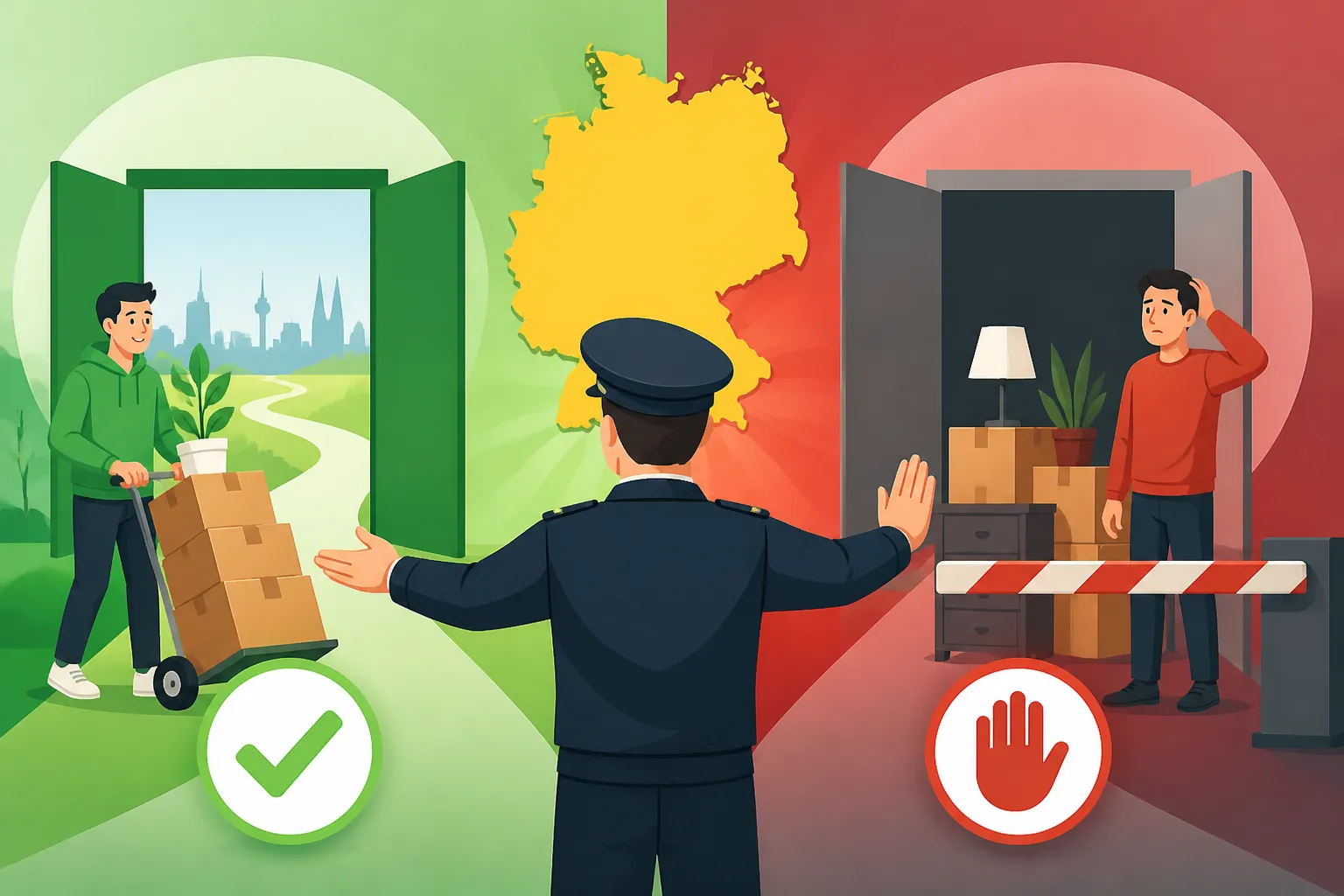
EU vs Non-EU Moves to Germany: Why Customs Treats Them Completely Differently
Oh, the joy of moving internationally! You pack up your entire life, dream of German efficiency, only to hit a wall of paperwork and regulations the moment your belongings cross a border. If you're pondering a move to Germany, one of the most perplexing and often anxiety-inducing aspects is navigating customs. It's not just about getting your stuff from point A to point B; it's about understanding the vastly different rules that apply whether you're moving from within the European Union or from a "third country" outside of it. This guide will meticulously break down these distinctions, helping you understand exactly what to expect, what documents you’ll need, and how a service like Sirelo can be your indispensable ally in this complex process.
Disclosure: This post may contain affiliate links. We may earn a commission at no extra cost to you if you make a purchase through these links. Read full disclosure.
The Fundamental Divide: EU vs. Non-EU Status
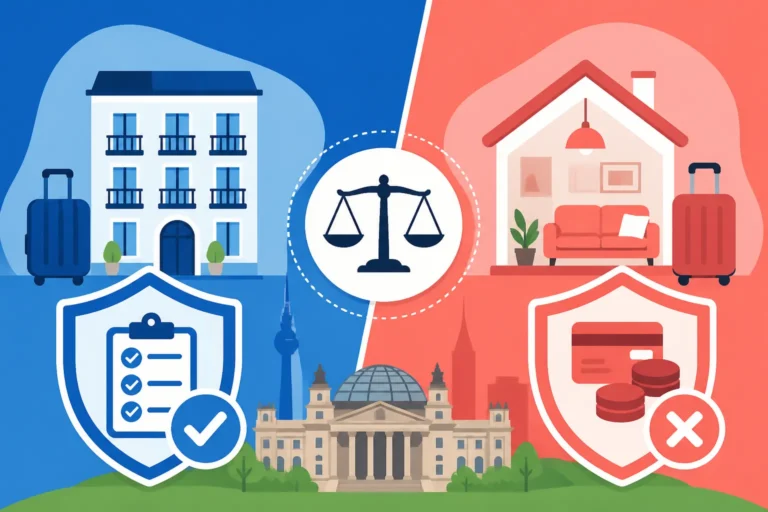
Let's get one thing straight from the start: for German customs, where you're moving from makes all the difference. It's not just a minor detail; it's the entire ballgame. The bureaucratic hurdles you'll face, the paperwork you'll need, and even the potential costs involved vary wildly depending on whether your current home is within the EU or outside of it. Trust me, many expats have learned this the hard way, assuming a simple move, only to find their possessions held up in customs limbo.
What "EU" Status Means for Your Belongings
If you're relocating from another member state of the European Union, congratulations, you've won the customs lottery! For all intents and purposes, your personal belongings are treated as if they're moving within a single country. This is thanks to the EU's single market and customs union, which ensures the free movement of goods. You won't face any customs checks on your personal effects when entering Germany, nor will you be subjected to import duties or Value Added Tax (VAT). It’s truly a breath of fresh air compared to the non-EU process.
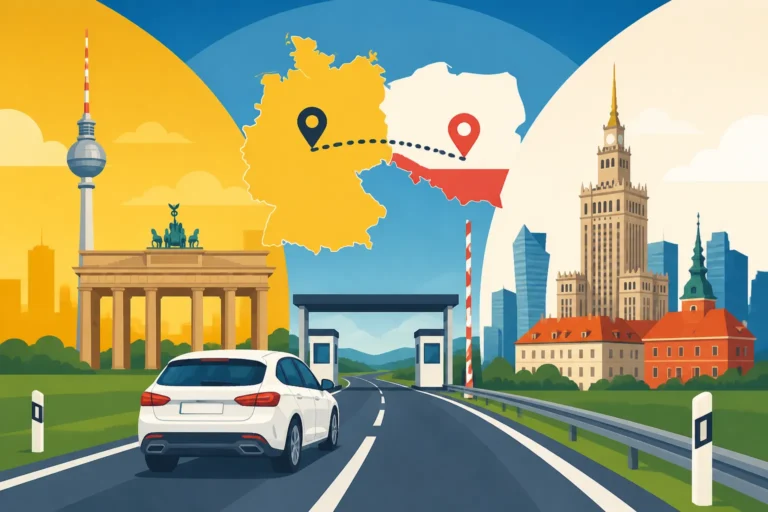
Imagine packing up your apartment in Paris or Rome: your furniture, clothes, books, kitchenware – everything you own. When you drive that moving truck across the border into Germany, it’s treated much like moving from Bavaria to Brandenburg. There’s no official stopping point to declare your goods, no customs agents scrutinizing your inventory, and certainly no unexpected taxes on your used sofa. The biggest headache will likely be the actual logistics of getting your items packed and unloaded, not the border crossing itself.
The "Third Country" Conundrum for Non-EU Movers
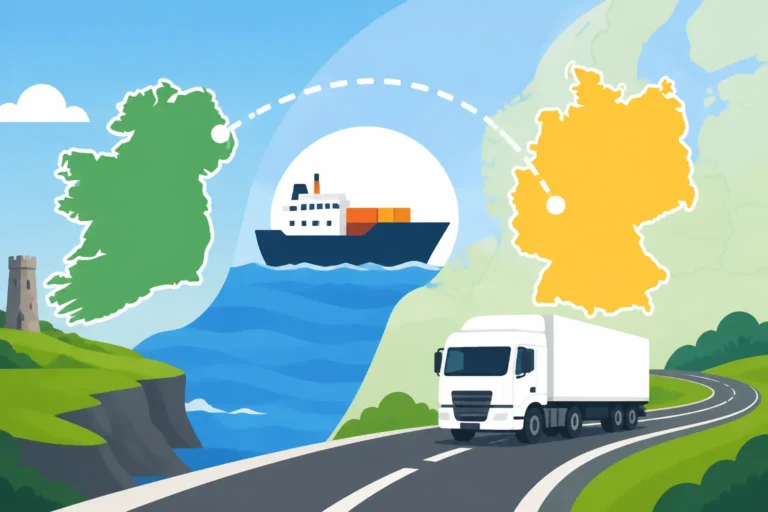
Now, if you're coming from a country outside the EU – say, the United States, Canada, the UK, or Australia – brace yourself. Germany views your belongings as imports from a "third country." This means your cherished possessions are subject to German and EU customs regulations, which can be stringent. The primary concern here is that Germany (and the EU) wants to prevent people from importing new goods without paying appropriate duties and taxes. Your personal effects, therefore, become a matter of import.
This isn't about penalizing you for moving; it's about controlling what enters the common market and ensuring fair trade. However, for the individual expat, it feels like a personal challenge from the German state. You'll need to prove that your items are indeed personal belongings, that you've owned and used them for a significant period, and that you're genuinely moving to Germany to establish a new residence. If you don't meet these criteria, your items could be subject to import duties and VAT, which can add a significant, unplanned cost to your move. This is where expert assistance, perhaps found through a platform like Sirelo, becomes not just helpful but often essential.
Moving from an EU Country: The Breezy Customs Experience
For those making the leap from an EU nation, the customs process – or rather, the lack thereof – is genuinely one of the easiest parts of your move to Germany. It's a logistical challenge, yes, but not a bureaucratic one in terms of customs.
Simplicity Itself: No Customs, No Duties
As mentioned, within the EU, the principle of free movement of goods means you can transport your personal effects to Germany without any customs declaration, duties, or import taxes. This is a huge relief compared to other international moves. You don't need to fill out complex forms for your household goods, nor do you need to worry about your possessions being held up at a border crossing for inspection. Your focus can remain squarely on finding your new home and settling in.
This seamless transfer allows you to move your entire household, from your grandmother's antique armoire to your collection of vinyl records, without any state interference beyond general transport regulations. This also extends to most personal vehicles, though there are still steps for Driving in Germany: Rules, Road Signs, and Getting Your License Converted and registration that need to be followed once you're on German soil, as well as specific requirements for Bringing Your Pet to Germany: Import Rules, Quarantine, and Vet Care. But for the actual customs aspect, it’s delightfully absent.
Practicalities of an EU Relocation: Logistics Over Bureaucracy
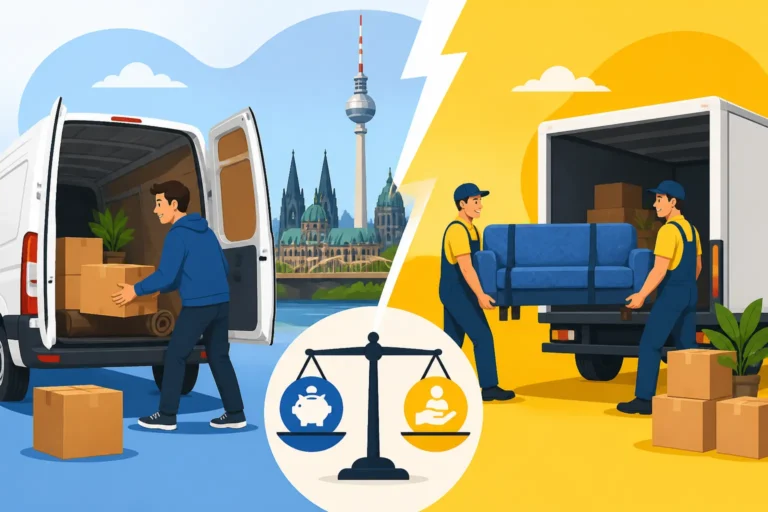
While customs might be a non-issue, the practicalities of an EU relocation still demand careful planning. You'll need to decide whether to hire a professional moving company or attempt a DIY move. For larger households, a professional mover often saves immense stress and time, even without customs hurdles. They can handle packing, loading, transport, and unloading, leaving you free to focus on other essential tasks like Registering Your Address (Anmeldung): Step-by-Step Guide and getting your Housing in Germany: Renting, Buying, and Finding Your Home as an Expat ready.
Even without customs to worry about, comparing quotes from various moving companies is a smart move to ensure you get the best value and service. This is where platforms like Sirelo come in handy, allowing you to easily compare vetted international movers. They can help you find companies that specialize in EU moves, ensuring your belongings are handled professionally and efficiently, even if the customs part is straightforward.
Moving from a Non-EU Country: Navigating German Customs Bureaucracy
This is where the real complexity kicks in. Moving from a non-EU country means your personal belongings are officially entering the EU customs territory. But don't despair entirely; there are provisions to allow you to import your used household goods duty-free, provided you meet specific criteria. This exemption is called "Übersiedlungsgut," or "transfer of residence goods."
The German Customs Code: Why You're Under Scrutiny
Germany, like all EU member states, adheres to the EU Customs Code. This code dictates that any goods entering the EU from a third country are subject to import duties and VAT. The purpose of the "Übersiedlungsgut" exemption is to prevent people from using a move as a loophole to avoid these taxes on new items. Therefore, the German customs authorities (Zoll) will want to see clear evidence that you are genuinely relocating and that the items you're bringing are indeed your used personal effects, not newly purchased goods intended for resale or quick profit.
This is why the paperwork is so stringent. They need to verify your residency status, how long you've owned your goods, and your intent to live in Germany. The process can feel intrusive, but it's a standard procedure to ensure compliance. If you've ever dealt with German bureaucracy for Visas and Residence Permits in Germany: Everything You Need to Know or any other official matters, you'll know they love their paperwork!
Applying for Duty-Free Import of Personal Belongings (Übersiedlungsgut)
To qualify for duty-free import under the "Übersiedlungsgut" regulation, you generally need to meet these conditions:
- Genuine Transfer of Residence: You must prove that you're genuinely moving your normal residence to Germany. This usually means having a valid Moving to Germany: Comprehensive Visa & Immigration Guide or residence permit.
- Previous Residence Outside the EU: You must have lived outside the EU for at least 12 consecutive months prior to your move. This prevents people from quickly moving in and out to import goods.
- Ownership and Use: You must have owned and used the personal goods for at least six months in your previous non-EU residence. This is critical to prove they aren't new purchases.
- No Immediate Sale: You cannot sell, rent, or pledge the imported goods for at least 12 months after their duty-free import. This is another measure to prevent tax evasion.
- Timely Import: Your personal effects must be imported within 12 months after you establish your normal residence in Germany. Ideally, it's best to have them arrive around the same time you do, or shortly after.
You'll need to submit a comprehensive inventory of your goods, along with various personal documents, to the local customs office at your point of entry (e.g., airport or port). This process demands precision, and any discrepancies or missing information can cause significant delays. Many expats find it incredibly helpful to use a moving company that specializes in international moves to Germany, especially those with good ratings on platforms like Sirelo, as they often have dedicated customs agents or partners who can guide you through every step.
What Happens if You Don't Qualify for Duty-Free Status?
If, for some reason, your personal belongings don't meet the stringent conditions for duty-free import (e.g., you haven't owned them long enough, or you're not moving to establish a long-term residence), you'll likely have to pay import duties and VAT. This can be a substantial cost, calculated on the value of your goods.
- Import Duties: These rates vary widely depending on the type of goods. Some categories have zero duty, while others can be upwards of 17%.
- Import VAT (Einfuhrumsatzsteuer): This is usually 19% of the value of the goods (including any applicable duties).
Imagine having to pay 19% on the declared value of your entire household! It’s enough to make anyone reconsider bringing that extra set of dishes. This is precisely why understanding the "Übersiedlungsgut" exemption is paramount, and why working with experienced professionals who can confirm your eligibility and handle the paperwork on your behalf, perhaps even directly through a trusted moving partner found via Sirelo, is highly advisable. Don’t gamble with this part of your move; the stakes are too high.
Required Documentation and What to Expect at the Border
For non-EU movers, assembling the correct documentation is probably the most critical part of the entire customs process. Without the right paperwork, your goods simply won't be released. It's a testament to the German appreciation for order and precision.
The Paper Trail: Essential Documents for Non-EU Moves
When your shipment arrives at a German port or airport, you (or your moving company acting on your behalf) will need to present a comprehensive set of documents to the customs office. Here’s a typical list:
- Valid Passport or ID: Proof of your identity.
- Proof of Residence in Germany: This is crucial. It could be your Moving to Germany: Comprehensive Visa & Immigration Guide (work visa, family reunification visa, etc.), a temporary residence permit (Aufenthaltserlaubnis), or even a lease agreement for your new home in Germany. Showing that you've completed your Registering Your Address (Anmeldung): Step-by-Step Guide is also a very strong indicator.
- Proof of Residence outside the EU for at least 12 months: Utility bills, previous rental contracts, bank statements, or employment contracts from your country of origin can serve this purpose.
- Comprehensive Packing List/Inventory: This needs to be extremely detailed, itemizing every box and piece of furniture. It should include descriptions (e.g., "used books," "kitchen utensils," "clothing") and ideally the approximate value of each item. This is not the time for vague descriptions.
- Statement of Transfer of Residence: A signed declaration stating that you are indeed moving your ordinary place of residence to Germany and that the goods are for your personal use.
- Power of Attorney (Vollmacht): If a moving company or customs broker is handling the clearance on your behalf, they will need a signed power of attorney from you.
- Bill of Lading or Air Waybill: The shipping document from your moving company.
Missing even one document can lead to significant delays, storage fees, and an endless stream of phone calls and emails. Your moving company, especially those with international expertise listed on platforms like Sirelo, can help you prepare this packet of documents correctly. Remember, the German authorities are not there to guess your intentions; you must provide clear, undeniable proof.
The Customs Declaration Form 0350
Specifically for importing household goods under the "Übersiedlungsgut" exemption, you'll need to complete and submit customs declaration form 0350 (Antrag auf Zollfreiheit für Übersiedlungsgut). This form outlines the conditions for duty-free import and asks for details about your move and your goods. It’s available in German, of course, and while your moving company can assist, it’s ultimately your responsibility to ensure the information is accurate.
This form, combined with your detailed inventory and proof of residency, forms the core of your application for customs relief. Don’t underestimate its importance; it’s the gateway to getting your possessions out of the customs warehouse and into your new home. This is where the minutiae of Required Documentation for German Visa Applications: Complete Guide will feel familiar, as the German state simply loves paperwork.
Customs Clearance Process: Arrival at the Port/Airport
When your shipment arrives in Germany, it will be held at a customs-bonded warehouse at the port of entry (e.g., Hamburg for sea freight, Frankfurt for air freight). Your moving company or customs broker will be notified of its arrival and will then initiate the customs clearance process. This involves submitting all the aforementioned documents to the local customs office responsible for that entry point.
A customs officer will review your application. They may request additional information, or in some cases, even physically inspect your goods to verify the inventory and ensure they match your declarations. If everything is in order and you meet all the criteria for "Übersiedlungsgut," your goods will be cleared for duty-free import. This process typically takes a few days, but could be longer if there are issues or during peak seasons. Once cleared, your moving company can arrange for the final delivery to your new address in Germany. The smooth operation of this phase is precisely why a seasoned international mover, perhaps vetted through Sirelo, is invaluable – they navigate this complex stage daily.
Here's a quick comparison of the customs treatment for EU vs. Non-EU moves:
| Feature | Moving from EU Country (e.g., France, Italy) | Moving from Non-EU Country (e.g., USA, UK, Canada) |
|---|---|---|
| Customs Declaration | Not required for personal effects. | Required (Form 0350 for duty-free). |
| Import Duties | Not applicable. | Potentially applicable if conditions aren't met. |
| Import VAT (Einfuhrumsatzsteuer) | Not applicable. | Potentially applicable if conditions aren't met. |
| Proof of Residence | Not required for customs. | Required (visa, permit, Anmeldung, lease). |
| Proof of Ownership | Not required for customs. | Required (goods owned & used for 6+ months). |
| Inventory List | Recommended for movers, but not for customs. | Mandatory and detailed for customs. |
| Customs Inspection | Rare, usually only for suspicious commercial activity. | Possible, especially if documentation is unclear. |
| Processing Time | Minimal (transport time). | Days to weeks (customs clearance + transport). |
| Complexity | Low, primarily logistical. | High, significant bureaucratic hurdles. |
| Professional Help | Recommended for logistics. | Highly recommended/essential for customs expertise. |
Bringing Your Car and Pets: Special Customs Considerations
It’s not just your household goods that need careful consideration; your beloved car and furry companions have their own set of rules when crossing international borders into Germany. These items are often subject to different regulations and require additional paperwork, regardless of whether you're coming from within or outside the EU.
Importing Your Vehicle: Registration, Taxes, and TÜV
Bringing a car from an EU country is generally simpler. You won't pay customs duties or import VAT on the car itself. However, you'll still need to register it in Germany, which involves proving ownership, getting a German insurance policy, and obtaining a Certificate of Conformity (COC) or individual approval if your car doesn't have one. Critically, your vehicle will need to pass the dreaded TÜV inspection (Technischer Überwachungsverein) to ensure it meets German safety and environmental standards. This can be a hurdle, as some minor differences in lights, tires, or emissions systems can require modifications.
For those importing a vehicle from a non-EU country, the process is significantly more complex.
First, if the car is genuinely part of your "Übersiedlungsgut" (i.e., you've owned and used it for at least 6 months, and it's for your personal use), it can be imported duty-free. However, if it doesn't meet these criteria, you'll pay import duties and VAT on its value.
Second, the TÜV inspection for non-EU vehicles can be an absolute nightmare. Standards vary widely, and cars from countries like the US often require substantial modifications (e.g., headlights, taillights, catalytic converters) to pass. This can be very costly, sometimes even making it more economical to sell your car abroad and buy one in Germany. You'll also need to get your foreign driving license converted, which can be done depending on your country of origin, as outlined in Driving in Germany: Rules, Road Signs, and Getting Your License Converted. Make sure to research the specific requirements for your make and model before shipping your car. Some international moving companies, especially those connected through a network like Sirelo, offer specialized services for vehicle transport and can advise on the customs and modification requirements.
Moving with Furry Friends: Pet Import Regulations
Bringing your pet to Germany, whether from an EU or non-EU country, requires strict adherence to EU pet travel regulations. This is paramount for the health and safety of both your pet and the wider animal population.
For pets from an EU country, they must:
- Be microchipped.
- Have a valid EU Pet Passport.
- Be vaccinated against rabies, with the vaccination recorded in the Pet Passport.
- Have waited at least 21 days after the primary rabies vaccination before travel.
For pets from a non-EU country, the requirements are even more rigorous:
- Microchip: Mandatory.
- Rabies Vaccination: Must be given after microchipping.
- Rabies Titre Test: A blood test to confirm the rabies vaccination was effective. This test must be performed at least 30 days after vaccination and at least three months before travel from an approved laboratory. This 3-month waiting period can be a significant planning factor.
- Veterinary Health Certificate: An official document issued by a licensed veterinarian in your country, endorsed by a government authority, confirming your pet is healthy and meets all import requirements.
- Entry Points: Pets from non-EU countries can only enter Germany via specific approved entry points, typically major international airports.
These regulations are serious, and non-compliance can result in your pet being quarantined at your expense, or even refused entry. Always check the latest official requirements from the German Federal Ministry of Food and Agriculture (BMEL) or consult with your veterinarian well in advance of your move. For the most up-to-date advice and to find movers experienced in pet relocation, a service like Sirelo can help you find reputable international moving companies that handle all aspects of pet transport.
Making Your Move Easier: Professional Help and Resources
Navigating the labyrinthine world of international moves to Germany, especially from a non-EU country, can be incredibly daunting. The sheer volume of information, the precise documentation required, and the potential for costly errors are enough to make anyone's head spin. This is precisely where professional help doesn't just simplify things; it can save you significant time, money, and emotional energy.
Why a Moving Company is Your Best Friend
A reputable international moving company does far more than just transport your boxes. They are experts in logistics, packing, and crucially, customs procedures. For non-EU moves, their knowledge of German customs regulations, the "Übersiedlungsgut" exemption, and the specific forms like 0350 is invaluable. They often have dedicated customs agents or partner with brokers who handle the submission of your documents directly with the German Zoll.
Imagine this scenario: your household goods arrive at Hamburg port, and a customs officer finds an ambiguity in your inventory. If you're managing this yourself, you're looking at phone calls across time zones, language barriers, and trying to decipher complex legalistic German emails. A professional moving company, on the other hand, can swiftly address these issues, often before they escalate, thanks to their experience and established contacts. They can advise you on what to declare, how to pack specific items, and ensure your paperwork is watertight from the outset. This peace of mind is truly priceless during an already stressful transition. They can also help you understand and comply with other post-arrival tasks, ensuring your transition to Germany is as smooth as possible.
How Sirelo Simplifies Your International Move to Germany
This is where Sirelo steps in as your guiding star. Sirelo is an online platform designed specifically to make international moving easier. It doesn't just connect you with movers; it empowers you with information and tools to compare reputable, vetted moving companies for your relocation to Germany, whether you're coming from the EU or a non-EU country.
Here's why Sirelo is your go-to solution:
- Compare Vetted Movers: Sirelo allows you to get multiple quotes from professional moving companies that specialize in moves to Germany. This means you can compare prices, services, and reviews, ensuring you pick a mover with a proven track record of handling complex international shipments, including customs clearance. This competition among movers often results in better pricing for you.
- Expert Guidance: Many of the movers on Sirelo’s platform have years of experience with German customs. They can provide essential advice on packing, documentation, and specific requirements for items like cars or pets, mitigating the risks of delays or unexpected costs. They understand the nuances that an average person wouldn't.
- Transparent Process: Sirelo promotes transparency, giving you a clear overview of what each moving service includes. This helps you understand where customs assistance is provided and what responsibilities remain yours.
- Peace of Mind: By using Sirelo, you're not just picking a random company from the internet. You're choosing from a curated list of professionals who understand the unique challenges of moving to Germany. This significantly reduces the stress associated with customs, allowing you to focus on adapting to German culture & etiquette: A guide to social life and customs and all the other exciting aspects of your new life.
Don't let the intricacies of German customs become a roadblock to your expat dream. Leverage the expertise of professionals found through Sirelo to ensure your personal belongings arrive smoothly, efficiently, and without unforeseen complications. Get your free moving quotes through Sirelo today and take the first stress-free step towards your new life in Germany!
Disclaimer
Please note that customs regulations are subject to change and can vary based on specific circumstances. While this guide provides comprehensive information, it is always advisable to consult the official website of German Customs (Zoll) or seek advice from a professional moving company or customs broker for the most current and personalized information regarding your specific move to Germany.