Germany to Poland: Berlin-Warsaw and Regional Border Crossings
Ah, the siren call of Poland from Germany! Whether it's for a weekend getaway to vibrant Kraków, a solemn visit to Auschwitz, or just connecting with family and friends, crossing the border between these two fascinating nations is a common journey for many of us expats. But let's be real, figuring out the best way to get there – comparing trains, buses, and even driving yourself – can feel like deciphering a particularly dense German bureaucratic form. It’s not always straightforward, especially when you're dealing with different transport providers and booking systems. This guide is here to cut through the confusion and show you how to effortlessly plan your trip, particularly focusing on the popular Berlin-Warsaw route and those crucial regional border crossings.
Disclosure: This post may contain affiliate links. We may earn a commission at no extra cost to you if you make a purchase through these links. Read full disclosure.
The Classic Route: Germany to Warsaw (and Beyond) by Train and Bus
When you think about traveling from the heart of Germany, specifically Berlin, to Poland's capital, Warsaw, trains and buses are often the first things that come to mind. And for good reason! They offer a comfortable, often scenic, and increasingly efficient way to traverse the distance, allowing you to relax, read, or catch up on podcasts rather than navigating traffic or parking.
Navigating the Berlin-Warsaw Express Train
The train journey from Berlin to Warsaw is a popular choice for many, and it's certainly one of the most comfortable. Deutsche Bahn (DB) and Polish Railways (PKP) operate direct connections, primarily the Eurocity (EC) "Berlin-Warszawa-Express". This train offers a pleasant ride, usually taking around 5.5 to 6 hours, directly connecting the city centers. It's a fantastic option if you value speed and comfort, with amenities like dining cars and often more spacious seating than a bus.
Booking these tickets can sometimes feel like a puzzle. You might find yourself hopping between the DB website and the PKP website, trying to compare prices and times, which can be a bit of a faff, especially if your German or Polish isn't quite up to scratch yet. This is precisely where a platform like Omio shines. Instead of juggling multiple tabs, Omio aggregates all the available train options from both operators in one place. You can easily compare departure times, journey durations, and prices side-by-side, making it incredibly simple to find the best train ticket that fits your schedule and budget. For those of us used to the fantastic network of the Deutsche Bahn Guide, switching to international journeys can feel a bit less intuitive, so having a centralized tool is a lifesaver.
Long-Distance Bus Options: Flexibility and Affordability
If you're looking for a more budget-friendly option or prefer more flexible departure times, long-distance buses are an excellent alternative. Companies like FlixBus offer numerous daily connections between major German cities like Berlin, Frankfurt, and Munich, directly to Polish cities such as Warsaw, Poznań, and Wrocław. The journey from Berlin to Warsaw by bus typically takes a bit longer than the train, usually between 7 to 8 hours, depending on traffic and stops. However, the price difference can be significant, especially if you book in advance.
Bus travel also has its unique perks. You often get free Wi-Fi, power outlets, and more generous baggage allowances than some budget airlines. Plus, some routes might take you through towns not directly served by trains, offering a different perspective of the landscape. Again, when it comes to comparing these various bus providers, especially for international routes, the convenience of a single booking platform cannot be overstated. Omio allows you to search for all available bus routes, providing a clear overview of the cheapest and fastest options, saving you the hassle of visiting each bus company's website individually. It truly simplifies the process of finding your perfect long-distance buses in Germany: FlixBus and Networks, and then extending that search right into Poland.
Seamless Booking Experience with Omio
Let's be honest, as expats, we often have enough bureaucracy to deal with on a daily basis without adding complicated travel planning to the mix. This is why I can't recommend Omio enough for planning your Germany to Poland journey. Whether you're after the speed of a train or the economy of a bus, Omio centralizes your search, showing you all possible combinations of transport methods to get you where you need to go.
Imagine you're trying to figure out if it's cheaper to take an early morning bus or a mid-day train. With Omio, you just put in your origin and destination (e.g., Berlin to Warsaw), and it pulls up all the train and bus options. You can filter by price, duration, and even provider, all within a clean, user-friendly interface. It's truly a game-changer for those of us who appreciate efficiency and clarity. It streamlines the entire process, from comparing High-Speed Trains in Germany (ICE) and regional options to finding the best bus deals, ensuring you get the most out of your travel budget and time. It's like having a personal travel agent who speaks all the languages of European transport companies, right in your pocket.
Hitting the Road: Driving from Germany to Poland
For those who love the freedom of the open road, driving from Germany to Poland is another fantastic option. It offers unparalleled flexibility, allowing you to stop whenever and wherever you please, explore smaller towns, and carry as much luggage as your car can hold. The journey is generally straightforward, with excellent road infrastructure on both sides of the border.
Important Considerations for Car Travel
Before you hit the Autobahn, there are a few things you absolutely need to consider. Firstly, if you're driving a rental car, make sure your rental agreement allows for international travel into Poland. Most major rental companies do, but it's always best to double-check to avoid any nasty surprises. You'll also need your valid driver's license (an International Driving Permit is recommended for non-EU licenses), vehicle registration documents, and proof of insurance. Ensure your car insurance coverage extends to Poland, as it's typically mandatory. For those who own a car in Germany, understanding Car Registration and Insurance in Germany: What Expats Need to Do is crucial for cross-border journeys.
Secondly, familiarize yourself with Polish road rules. While many are similar to Germany's, there are differences. For example, Poland generally has lower speed limits on certain roads, and daytime running lights are mandatory year-round. It's also worth noting that while Germany's Autobahn is famously toll-free in many sections, Poland has an extensive network of toll roads. You can usually pay by card or cash at toll booths, or via electronic systems like e-TOLL for longer journeys. Planning your route to understand potential tolls will save you time and unexpected costs.
Major Road Border Crossings
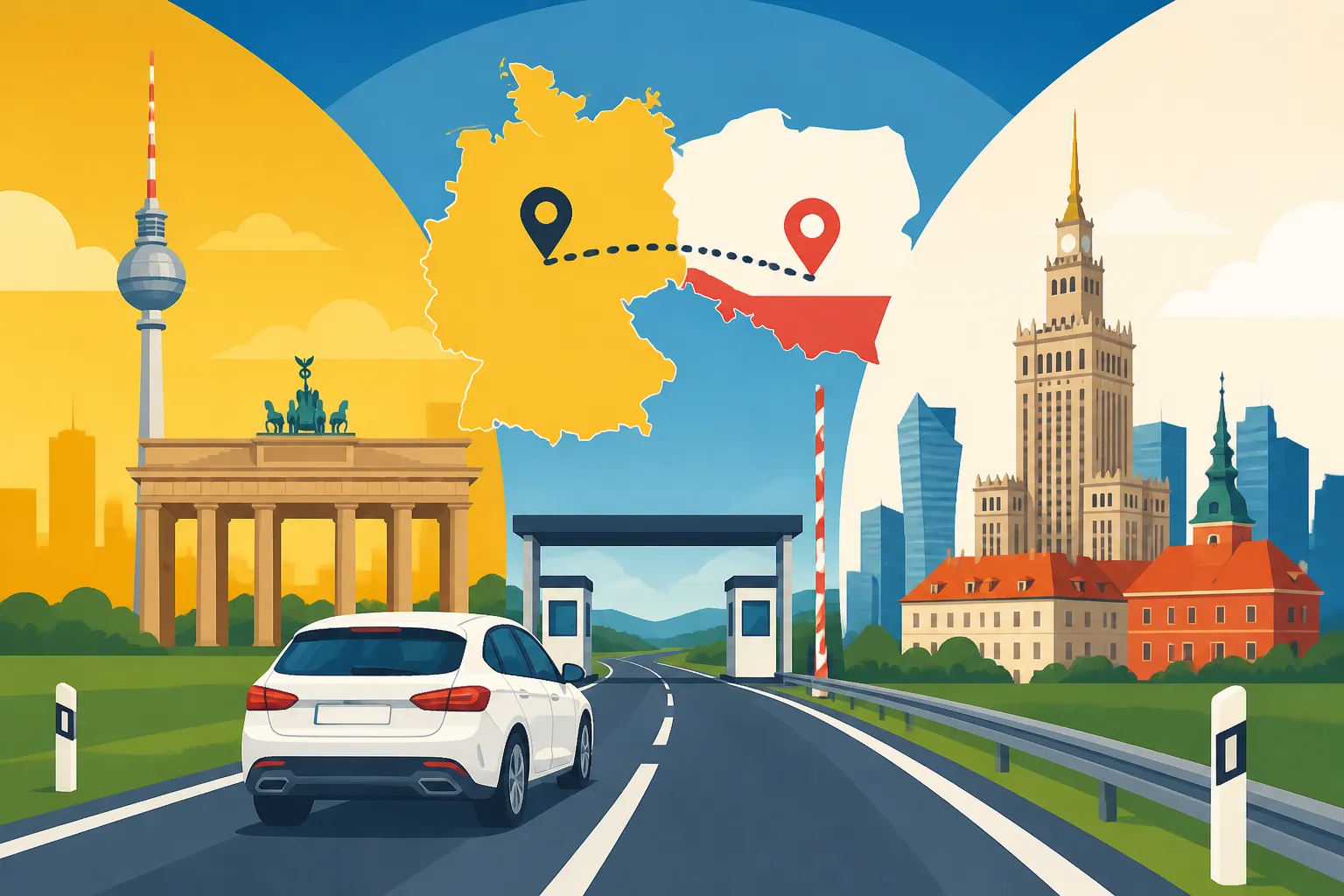
The primary road crossings between Germany and Poland are typically seamless, especially if you're an EU citizen. The days of lengthy border checks are mostly a thing of the past thanks to the Schengen Area. The most common crossings connect major routes:
- Frankfurt (Oder) / Słubice: This is perhaps the most well-known crossing, directly connecting the German A12 Autobahn with the Polish A2 motorway. It's the most direct route from Berlin to Warsaw and Poznań. The A2 is a modern, mostly tolled highway that will take you straight to the capital.
- Görlitz / Zgorzelec: Located further south, this crossing connects the German A4 Autobahn with the Polish A4 motorway, a vital artery for travel to Wrocław and further south into Poland, towards cities like Kraków.
- Schwedt / Krajnik Dolny: For those heading towards the Baltic coast or the western Pomerania region (e.g., Szczecin), this crossing provides a convenient route, often less congested than the larger ones.
When driving, it’s always a good idea to have a reliable navigation system. Google Maps or similar apps work well and can also provide real-time traffic updates, which can be invaluable, especially around the major border towns where local traffic can sometimes build up. Planning your route and considering potential alternatives is part of Renting a Car and Driving on the Autobahn wisely.
Regional Connections: Beyond the Main Hubs
While Berlin-Warsaw is a key corridor, Germany and Poland share a long border with numerous smaller towns and regions that are incredibly well-connected, often catering to local commuters, cross-border shoppers, and those exploring less-trodden paths. This is where the magic of regional transit and exploring the Oder-Neisse line truly comes alive.
Border Towns and Local Transit
Beyond the major motorways, there are many smaller towns straddling the Oder and Neisse rivers that offer unique cross-border experiences. Take Görlitz and Zgorzelec, for instance. These two cities are literally one city split by the border, connected by several bridges. You can walk or cycle freely between them, experiencing the distinct German and Polish atmospheres in a matter of minutes. Public transport, often local buses, seamlessly connects these twin cities. Similarly, the local train lines, sometimes run by regional operators, will take you from smaller German towns directly into their Polish counterparts.
These regional connections are fantastic for shorter trips, market visits, or just experiencing the cultural blend. For instance, you could take a regional train from Cottbus in Germany to Zielona Góra in Poland, or from Pasewalk to Szczecin. While these tickets might not always appear on major international booking sites, sometimes even Omio can pull up some regional bus options, and local transport websites (which might require a bit of German or Polish know-how) are your best bet. Remember, even in these smaller towns, having your passport or national ID card readily available is wise, just in case. For expats, getting a feel for the local vibe beyond the big cities can be very rewarding.
Cycling Across the Oder-Neisse Line
For the adventurous and eco-conscious traveler, cycling across the border is a delightful experience. The Oder-Neisse Cycle Path (Oder-Neiße-Radweg) is a renowned long-distance route that runs along the German-Polish border for hundreds of kilometers, from the Baltic Sea down to the Czech Republic. It offers a unique way to experience the landscapes, historical sites, and quiet villages on both sides of the rivers.
Many smaller border crossings are perfectly suited for cyclists and pedestrians, allowing for easy transitions without the traffic of the larger road crossings. Imagine cycling through picturesque scenery, stopping for coffee in a German village, and then, a few kilometers later, enjoying pierogi in a Polish town. It’s a truly immersive way to travel and see the immediate differences and similarities in culture, architecture, and daily life. You don't need any special permits; just your passport or ID, and common sense. Always ensure your bike is in good condition, and that you carry appropriate repair kits, as services might be sparse in some rural stretches. Learning about Cycling in German Cities: Bikes and Bike-Sharing might prepare you for the general cycling culture, which extends to cross-border routes as well.
Essential Tips for Your Germany-Poland Journey
Traveling across borders, even within the EU, always comes with a few nuances. A little preparation can go a long way in ensuring your trip from Germany to Poland is as smooth and stress-free as possible.
Currency, Language, and Mobile Connectivity
- Currency: While Germany uses the Euro, Poland uses the Polish Złoty (PLN). It's always a good idea to have some local currency on hand, especially for smaller purchases, markets, or in smaller towns, though card payments are widely accepted in urban areas. You can exchange currency at bureaus or withdraw from ATMs in Poland. Be mindful of fees and choose ATMs from reputable banks. For general advice, check out Currency Exchange in Germany: Where to Convert Money and Avoid Fees.
- Language: German and Polish are the official languages. In tourist areas and major cities, you'll find many people, especially younger generations, who speak English. However, learning a few basic Polish phrases like "Dzień dobry" (Good day), "Dziękuję" (Thank you), and "Proszę" (Please/You're welcome) will be greatly appreciated and can make interactions much smoother. Don't underestimate the power of a friendly "Hello" in the local tongue! You might find a quick reference in German Language and Everyday Communication for Visitors useful for your initial interactions.
- Mobile Connectivity: As both countries are in the EU, you can "roam like at home" if you have a German mobile contract. This means you can use your phone plan's data, calls, and texts in Poland at no extra charge, within reasonable limits. If you're planning an extended stay or want to avoid any potential roaming issues, consider picking up a local Polish SIM card upon arrival. For general travel connectivity, looking into Mobile Data and eSIMs for Travel in Germany can offer good insights that apply to cross-border travel too.
Documentation and Schengen Zone Rules
Even though border checks are minimal or non-existent for EU citizens within the Schengen Area, it is absolutely crucial to carry your valid passport or national identity card at all times when crossing the border. While you might not be asked to show it, random checks can occur, and you must be able to prove your identity and legal right to be in Poland.
For non-EU citizens, the rules are stricter. Your German residence permit or Schengen visa usually allows you to travel freely within the Schengen Area for short periods. However, always double-check your specific visa type and its multi-entry allowance. Keep copies of all your important documents (passport, visa, residence permit) separately from the originals. If you're navigating the complexities of a Schengen Visa for Germany: Short-Stay Visa Requirements and Tips, these details are even more important to remember when traveling beyond Germany's borders. Always keep proof of your travel insurance too, as it's often a requirement for visa holders and a wise precaution for anyone traveling internationally.
Safety and Travel Insurance
Poland is generally a safe country for travelers, similar to Germany. However, like anywhere, it's wise to remain aware of your surroundings, especially in crowded tourist areas where petty theft can occur. Keep an eye on your belongings, particularly in train stations, bus terminals, and popular attractions. For general safety tips that apply across Europe, refer to Staying Safe in Germany: Common-Sense Tips for Travelers.
Crucially, never travel internationally without adequate travel insurance. While your German public health insurance (or even private insurance) might offer some coverage abroad, it's often limited and might not cover non-emergency treatments, repatriation, or travel mishaps like lost luggage or trip cancellations. A comprehensive travel insurance policy gives you peace of mind, knowing you're covered for unexpected medical emergencies, accidents, and travel inconveniences. Think of it as your safety net, because as an expat, you know how quickly things can go sideways, and having that security is invaluable. Seriously, don't skimp on Travel Insurance for Trips to and Within Germany, and extend that thinking to your Polish adventures!
When it comes down to it, whether you're taking the sleek Berlin-Warsaw Express, a comfortable long-distance bus, or embarking on a road trip, planning your journey from Germany to Poland doesn't have to be a headache. With smart tools like Omio at your disposal, you can effortlessly compare options and book your tickets, leaving you more time to enjoy the anticipation of your trip. Get out there and explore!
Disclaimer
The information provided in this guide is for general informational purposes only and does not constitute legal, financial, or professional travel advice. While we strive to keep the information up-to-date and correct, travel regulations, prices, and services can change rapidly. Always verify the latest requirements and conditions with official sources, transport providers, and relevant authorities before making any travel plans. Travel at your own discretion and ensure you have all necessary documentation and insurance.