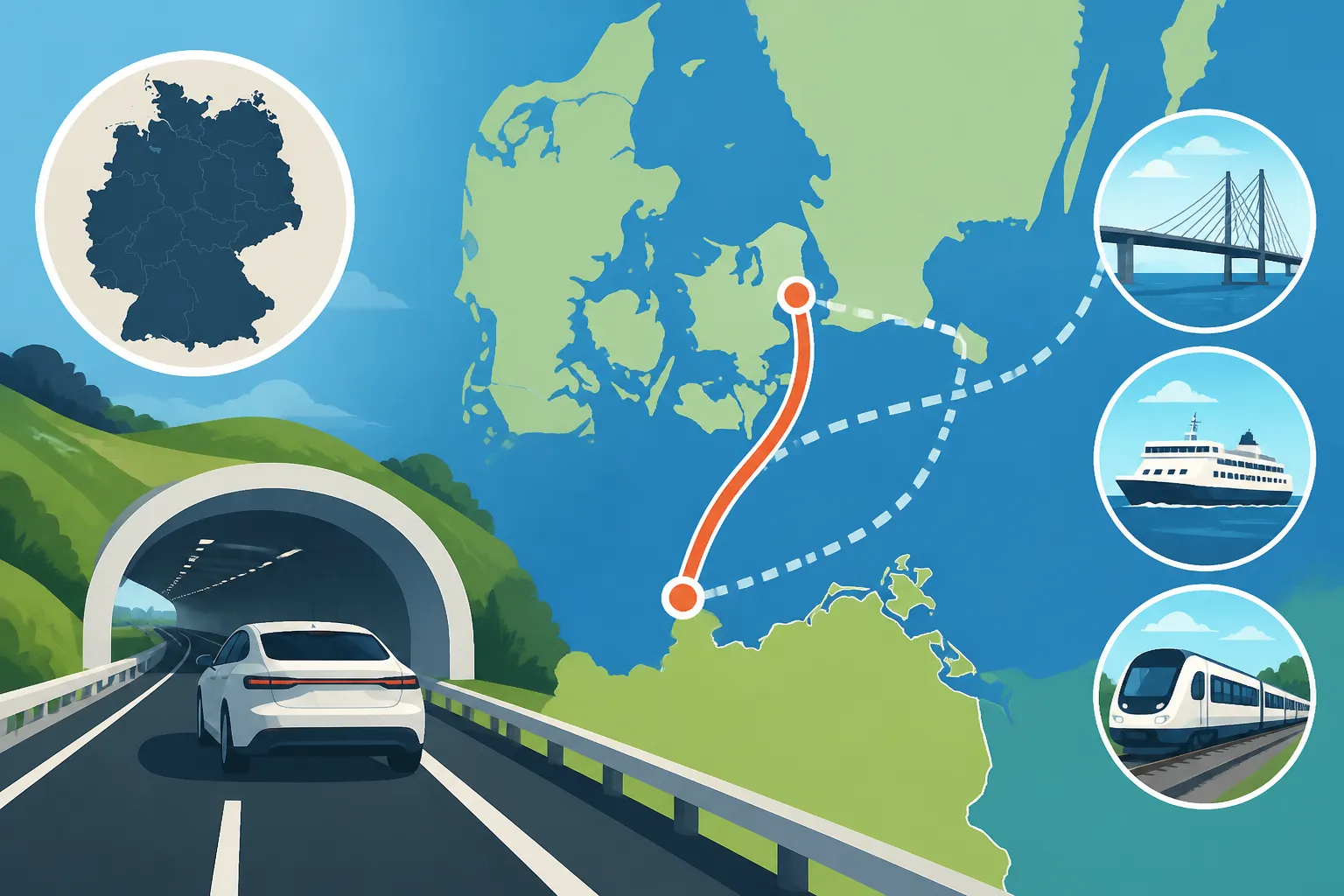
Germany to Denmark and Sweden: The Fehmarn Route and Alternatives
The thought of venturing from Germany into the Nordic lands of Denmark and Sweden is an exciting one, full of promises of stunning coastlines, vibrant cities, and a different cultural flavor. But let's be real, the moment you start looking at maps and ferry schedules, that initial excitement can quickly morph into a familiar expat feeling: a mild sense of dread about the bureaucracy and logistics. How do you actually get there without losing your mind or spending a fortune? This guide is here to untangle the routes, explain the infamous Fehmarn crossing, and introduce you to Omio, your ultimate travel companion for making this cross-border adventure as smooth as a fresh kanelbulle.
Disclosure: This post may contain affiliate links. We may earn a commission at no extra cost to you if you make a purchase through these links. Read full disclosure.
The Classic Connection: Navigating the Fehmarn Route to Denmark and Beyond
For many, the first thought when traveling north from Germany is the Fehmarn Route. It's legendary, historic, and often, the most straightforward path. But what does it actually entail, and why has it earned such a reputation among travelers heading to Scandinavia? Let's dive in.
What is the Fehmarn Route and Why It Matters?
The Fehmarn Route refers primarily to the ferry crossing between Puttgarden on the German island of Fehmarn and Rødby in Denmark. This short, roughly 45-minute journey across the Fehmarnbelt is a crucial link, essentially extending the German Autobahn directly onto Danish soil. For decades, it has been the fastest way for vehicles, trains, and even pedestrians to hop between the two countries.
Historically, this route has been indispensable. Before modern bridges connected Denmark's islands, this ferry was the lifeline. Even now, with ambitious plans for the Fehmarnbelt Fixed Link (a submerged tunnel that will replace the ferry connection, though it's still years away from completion), the Puttgarden-Rødby ferry remains the backbone of north-south travel through this region. It’s not just a ferry; it’s a cultural experience of efficiency and convenience. You drive your car onto a massive ship, perhaps grab a quick snack or duty-free item, and before you know it, you're docking in a new country. It saves hours of driving compared to more circuitous land routes and connects directly into Denmark’s excellent road and rail networks, paving the way to Copenhagen and beyond.
Traveling the Fehmarn Route by Car and Train
So, you've decided the Fehmarn Route is for you. Great choice! Now, let's break down how you'll traverse it, whether you're behind the wheel or enjoying the scenery from a train window.
By Car:
If you're driving, the journey to Puttgarden is straightforward, mostly on the A1 Autobahn which leads directly to the ferry terminal. Once there, you simply follow the signs, pay for your ticket (or show your pre-booked confirmation), and drive onto the ferry. The ferry company operating this route is Scandlines, and booking in advance, especially during peak season or holidays, is highly recommended. You can buy tickets at the port, but pre-booking guarantees your spot and often comes with a better price. The ferry itself is well-equipped with restaurants, shops, and places to stretch your legs. Disembarking is just as simple: drive off the ferry at Rødby, and you're instantly on Danish highways. From Rødby, Copenhagen is roughly a two-hour drive, and from there, you can connect directly to Sweden via the impressive Öresund Bridge. Remember to account for potential traffic delays leading up to the ferry, particularly if you're traveling during popular holiday periods.
By Train:
Traveling by train is arguably even more relaxing. Deutsche Bahn (DB) operates direct connections from various German cities like Hamburg to Copenhagen, which famously used to involve the train literally driving onto the ferry at Puttgarden! While this specific "train on ferry" experience has mostly been phased out for direct routes using the Great Belt Bridge (which we'll discuss next) for efficiency, you can still plan train journeys that incorporate the Puttgarden-Rødby ferry. For these, you'll typically take a train to Puttgarden, walk onto the ferry, and then board another train on the Danish side in Rødby. This requires a bit more coordination with your luggage, but it's a perfectly viable option.
The key to mastering either car or train travel on this route is planning. This is where a platform like Omio really shines. Instead of juggling different websites for ferry tickets and train schedules, Omio lets you see all your options in one place. You can compare prices, travel times, and modes of transport, making it incredibly easy to book your entire journey, from a German city through Denmark and even onto Sweden, with just a few clicks. It takes the guesswork out of cross-border connections, offering tickets for both trains and buses that connect with the ferry or bypass it entirely.
Alternatives to Fehmarn: Exploring Other Crossings and Inland Routes
While the Fehmarn Route is a popular choice, it's certainly not the only way to get from Germany to Denmark and on to Sweden. Depending on your starting point in Germany, your destination, and your preference for sea vs. land, other options might be more suitable, or simply offer a different kind of adventure.
The Rostock-Gedser Ferry: A Different Gateway to Denmark
If you're starting your journey from eastern Germany, perhaps Berlin, or even from regions further south, the ferry from Rostock to Gedser, Denmark, might be a more convenient option than driving all the way to Puttgarden. This route is operated by Scandlines, similar to the Fehmarn crossing, but it's a longer journey at approximately two hours.
Details and Booking:
The ferry terminal in Rostock is easily accessible from the A19 Autobahn. Like the Puttgarden route, booking in advance is strongly recommended, especially for vehicles. You can do this directly through Scandlines' website or, for a more integrated travel experience, check options through platforms like Omio. While the ferry trip is longer, it offers more time to relax, enjoy the onboard facilities, and potentially avoid the rush sometimes associated with the shorter Fehmarn crossing.
Pros and Cons:
The biggest "pro" for the Rostock-Gedser route is its geographical advantage if you're coming from the east. It saves you the longer drive across northern Germany to Fehmarn. The longer ferry duration can also be a "pro" for those who enjoy the sea journey itself, offering more time to unwind. However, the "con" is that it adds significant time to the overall journey compared to the Fehmarn route if your German starting point is closer to Puttgarden. Also, upon arrival in Gedser, you'll have a slightly longer drive to major Danish cities like Copenhagen compared to arriving in Rødby. Still, it’s a robust and reliable alternative, perfect for those who want to avoid the western German routes entirely. It's often favored by those with more flexible schedules or those who simply want a different scenic experience.
The Longer Drive: Jutland and the Great Belt Bridge
For those who prefer to keep all four wheels on solid ground for as long as possible, or perhaps have an aversion to ferries, there's the option of driving north through the Jutland peninsula of Denmark. This route doesn't involve any ferry crossings from Germany directly to Denmark. Instead, you drive straight into Denmark and then cross the Great Belt Bridge (Storebæltsbroen) to reach the islands where Copenhagen is located.
Exploring the Mainland Route:
Starting from northern Germany, you'll take the A7 Autobahn directly into Denmark. This is a continuous drive, often preferred by those who find ferry schedules restrictive or simply enjoy long drives. The drive through Jutland is scenic in parts, taking you through smaller towns and open landscapes. The highlight, and indeed the crucial link, is the Great Belt Bridge. This impressive structure, one of the longest suspension bridges in the world, connects Funen (Fyn) with Zealand (Sjælland), where Copenhagen resides. It's a toll bridge, and you'll need to pay a fee to cross it. The cost varies for different vehicle types, and you can pay at the toll booths or sometimes with an electronic transponder.
Challenges and Considerations:
While avoiding the ferry seems simple, this route often translates to a significantly longer driving time. From Hamburg to Copenhagen, for example, driving via Jutland and the Great Belt Bridge can easily add an hour or two compared to the Fehmarn ferry route, depending on traffic. This also means more fuel costs and potential wear and tear on your vehicle. Another point to consider is that weather conditions, particularly high winds, can occasionally lead to closures or restrictions on the Great Belt Bridge, just as they can affect ferry operations.
For travelers relying on public transport, this route is also well-served by trains and long-distance buses. Deutsche Bahn offers direct connections from Germany to Copenhagen that primarily use the Great Belt Bridge, providing a seamless journey without needing to switch modes. When considering your overall journey, remember that you can always look up bus and train tickets on Omio to see how these routes compare in terms of cost and time against the ferry options. It's fantastic for comparing all the different ways to get there, whether you're trying to save money or time, and letting you book the most convenient option right away. This flexibility is a godsend when navigating international travel.
Onward to Sweden: Connecting from Denmark to Your Swedish Destination
Once you’ve successfully navigated your way into Denmark, the next leg of your journey to Sweden is relatively straightforward, thanks to some incredible engineering and efficient transport networks. Copenhagen acts as the primary hub for connecting to Sweden.
The Öresund Bridge: Your Direct Link from Copenhagen to Malmö
The Öresund Bridge is nothing short of an engineering marvel. It's a combined bridge and tunnel that spans the Öresund strait, directly connecting Copenhagen (specifically the Kastrup area near the airport) with Malmö in Sweden. This bridge has revolutionized travel between Denmark and Sweden, making it incredibly quick and easy.
How it Works and Costs:
The bridge is a toll road, and like the Great Belt Bridge, the cost varies depending on your vehicle type. You can pay at the toll booths on the Swedish side (at Lernacken) using cash (DKK, SEK, EUR are usually accepted), credit card, or via an electronic device like a BroBizz. Driving over it offers spectacular views, although part of the crossing is actually a submerged tunnel to allow for ship traffic. The journey itself takes only about 10-15 minutes by car.
For those traveling by public transport, the Öresund Line trains run frequently across the bridge, connecting Copenhagen Central Station (København H) and Copenhagen Airport (Kastrup) directly with Malmö Central Station and other Swedish cities. It’s a seamless and very popular commuter route. These trains are efficient, comfortable, and offer a truly hassle-free way to cross the border. You typically don't even notice you've changed countries until your phone sends a "Welcome to Sweden" message!
Beyond Malmö: Reaching Major Swedish Cities
While Malmö is a charming city in its own right, many travelers have their sights set on other Swedish destinations like Gothenburg or the capital, Stockholm. Luckily, Sweden boasts an excellent domestic transport network.
Trains:
From Malmö, you can catch direct high-speed trains (like the SJ Snabbtåg) to Gothenburg (Göteborg) in about 2.5-3 hours and to Stockholm in around 4.5-5 hours. These trains are generally very comfortable, often offering Wi-Fi and power outlets. Booking in advance usually secures better prices, especially for the popular routes to Stockholm.
Buses:
Long-distance buses, such as those operated by FlixBus, also connect Malmö to other major Swedish cities. These can be a more budget-friendly option, though generally slower than trains. They offer a good alternative if you're not in a rush or if train tickets are particularly expensive.
Domestic Flights:
For those in a real hurry to reach cities like Stockholm or even further north, domestic flights from Copenhagen Airport (CPH) or even Malmö Airport (MMX) are an option. Airlines like SAS and Norwegian operate frequent services. While faster in the air, remember to factor in airport transfer times, check-in, and security, which can often negate the time saved for shorter distances.
Regardless of your preferred mode of transport, planning these onward connections can be complex when dealing with different countries' operators and currencies. This is where Omio truly shines as a universal booking tool. It lets you search for and compare trains, buses, and even flights for your entire journey from Germany, through Denmark, and deep into Sweden, all on one platform. You can see the total travel time, various price points, and book everything in your preferred language and currency. It’s like having a personal travel agent who understands cross-border logistics, saving you the headache of multiple websites and foreign booking systems. Whether you're aiming for a picturesque ferry, a speedy train, or a cross-country bus, Omio simplifies the entire process.
Planning Your Journey: Tips for Smooth Cross-Border Travel with Omio
Embarking on a journey from Germany to Denmark and Sweden can seem like a daunting task, especially with the language barriers, different transport systems, and varied booking procedures. However, with the right tools and a bit of foresight, it can be an incredibly rewarding and stress-free experience.
Seamless Booking Experience: Why Omio is Your Best Travel Companion
Let's face it, one of the biggest headaches for any expat traveling across borders is piecing together different transport options. You might find a great train deal in Germany, but then struggle to find an equally convenient or affordable ferry or bus connection in Denmark, or onward trains in Sweden. This is precisely why Omio becomes your indispensable travel companion.
Imagine you're trying to figure out the fastest way from Hamburg to Stockholm. Do you take the Fehmarn ferry route and then a train? Or drive all the way through Jutland? Or maybe a combination of bus and flight? Trying to research all these permutations on separate operator websites (Deutsche Bahn, Scandlines, SJ, FlixBus, various airlines) would take hours, not to mention dealing with potentially different languages and payment systems. Omio aggregates all these options. You simply input your starting point in Germany and your final destination in Sweden, and it presents you with a comprehensive list of possibilities, including trains, buses, and flights, often even integrating ferry connections where relevant.
It's not just about seeing options; it's about making an informed decision effortlessly. You can compare prices, estimated travel times, and the number of transfers at a glance. For example, if you're trying to decide between a longer, cheaper bus ride or a faster, more expensive train, Omio lays out the pros and cons clearly. This empowers you to choose the travel mode that best suits your budget and schedule. Once you've made your choice, booking is streamlined, allowing you to purchase tickets for multiple legs of your journey from different operators in one go, all in English (or your preferred language) and with familiar payment methods. This kind of holistic approach to travel planning and booking is truly invaluable, saving you time, stress, and often, money. It's truly a game-changer for international travel.
Essential Travel Considerations: Currency, Language, and Local Transport
Beyond booking your main transport, there are a few other practical considerations to keep in mind when venturing into Denmark and Sweden. Addressing these upfront can prevent little annoyances from turning into major travel frustrations.
Currency:
Both Denmark and Sweden have their own currencies, which are not the Euro. Denmark uses the Danish Krone (DKK), and Sweden uses the Swedish Krona (SEK). While credit and debit cards are widely accepted in both countries – indeed, Scandinavia is quite advanced in cashless payments – it's always a good idea to have some local cash on hand for small purchases, local markets, or in case of any card machine issues. Before you go, check current exchange rates and consider withdrawing some cash from an ATM once you arrive. You can find more tips on Money for Travel in Germany: Cash, Cards, and ATMs which also applies to general European travel.
Language:
While Danish and Swedish are the official languages, you'll find that English proficiency is exceptionally high in both countries, especially in tourist areas, major cities, and among younger generations. Most signs will also have English translations. However, learning a few basic phrases in Danish (e.g., "Hej" for hello, "Tak" for thank you) and Swedish (e.g., "Hej," "Tack") can go a long way in showing respect and might even earn you a warmer smile from locals. Don't worry about sounding perfect; the effort is appreciated. You can always check out German Language and Everyday Communication for Visitors for a general understanding of navigating language abroad.
Local Transport:
Both Denmark and Sweden boast highly efficient and integrated public transport systems within their cities. Copenhagen's metro, S-trains, and buses are excellent, and Malmö and Stockholm also have extensive bus and tram networks, often with easy-to-use apps for ticket purchases. If you're planning to explore extensively within a city, consider buying a multi-day pass or a city card that includes public transport. Always validate your tickets to avoid fines! If you're relying on your German driving license, make sure you understand the local driving rules, which can differ slightly from Germany.
Connectivity:
Ensure your mobile phone plan works in Denmark and Sweden without incurring massive roaming charges. Many European mobile plans include free roaming within the EU, but it's always wise to double-check. Alternatively, consider picking up a local SIM card or using an eSIM for reliable data access. This ensures you can use navigation apps, translate on the fly, and stay connected with family and friends. For more on this, check out our guide on Mobile Data and eSIMs for Travel in Germany, as many principles apply when crossing borders within Europe. Planning these details proactively will allow you to focus on enjoying your journey and immersing yourself in the beautiful Nordic culture.
| Route Option | Primary Transport Modes | Approx. Travel Time (Hamburg to Copenhagen) | Key Features & Considerations | Ideal For |
|---|---|---|---|---|
| Fehmarn Route (Puttgarden-Rødby) | Car + Ferry, Train + Ferry | 4-5 hours (incl. ferry) | Shortest ferry crossing (45 min), direct Autobahn access. | Drivers & train travelers seeking the fastest, most direct route via ferry. |
| Rostock-Gedser Ferry | Car + Ferry, Bus + Ferry | 6-7 hours (incl. ferry) | Longer ferry crossing (2 hours), good for Eastern Germany departures. | Those starting from Eastern Germany, or preferring a more relaxed ferry journey. |
| Jutland & Great Belt Bridge | Car, Train, Bus | 5-6 hours (no ferry) | No ferry required, continuous driving, toll bridge (Great Belt Bridge). | Drivers who dislike ferries, or public transport users wanting seamless train connections. |
Disclaimer
Please note that travel regulations, including visa requirements, entry rules, and health guidelines, can change rapidly. Always check the latest official information from the German, Danish, and Swedish authorities, as well as your respective embassy or consulate, before planning your trip. The information provided in this guide is for general informational purposes only and does not constitute legal or professional advice.