Mobile Data and eSIMs for Travel in Germany
Oh, the sheer panic of landing in a new country, stepping off the plane, and realizing your phone is nothing more than an expensive paperweight! Or worse, seeing those dreaded "roaming charges apply" notifications pop up as your data connection flickers in and out. Trust me, I've been there, staring blankly at a German train schedule with no way to translate or confirm my platform. This guide is here to banish those connectivity fears, helping you navigate the world of mobile data and eSIMs in Germany so you can stay connected, safe, and stress-free throughout your adventures.
Disclosure: This post may contain affiliate links. We may earn a commission at no extra cost to you if you make a purchase through these links. Read full disclosure.
Why Mobile Data is a Lifesaver (and a Sanity Saver) in Germany
Let's be honest, in this day and age, a smartphone isn't just for scrolling through social media. It's your compass, your translator, your emergency line, and often, your ticket to true immersion. In Germany, where bureaucracy and precision rule, having reliable mobile data isn't just a luxury – it's practically a necessity for a smooth trip.
Navigating German Public Transport and Beyond
Germany's public transport system, while renowned for its efficiency, can be a labyrinth for newcomers. From the intricate network of U-Bahns and S-Bahns in major cities to the long-distance ICE trains, there's a lot to keep track of. Imagine standing on a platform, unsure if your train is delayed or if you're even on the right track, with no way to check. That’s where mobile data steps in as your digital guardian angel.
With a solid data connection, you can download and use the official Deutsche Bahn Navigator app, which provides real-time updates on train schedules, platform changes, and connections across the entire country. This app is a lifesaver, especially when Deutsche Bahn announces a Verspätung (delay), which, let's be frank, happens more often than you'd expect. You can also purchase tickets directly through the app, saving you the scramble at ticket machines that often only accept specific cards or cash. Beyond trains, local transport apps for cities like Berlin (BVG) or Munich (MVG) are invaluable for navigating buses, trams, and local metros. Without data, these apps are just icons on your screen. Furthermore, platforms like Omio become incredibly useful for comparing different travel options – whether it's train, bus, or even flight – across Germany and beyond, all with just a few taps. Having that immediate access to information allows for flexibility and reduces anxiety, letting you focus on the journey itself.
Staying Connected for Safety and Emergencies
When you're far from home, safety is paramount. Mobile data offers a critical layer of security that traditional guidebooks simply can't. Should you find yourself lost in a charming but unfamiliar German town, Google Maps or Apple Maps can guide you back to your accommodation using GPS. More importantly, in a genuine emergency, your phone is your lifeline. Germany's emergency number, 112, is universally recognized for police, fire, and medical services, and you'll want to be able to dial it without a second thought. Knowing you can quickly look up specific information, like the nearest English-speaking doctor or an emergency pharmacy (Apotheke), provides immense peace of mind.
Think about it: a sudden illness, a minor accident, or even just needing to contact your family back home to reassure them you've arrived safely. Access to translation apps can bridge language barriers with a local, whether you're asking for directions or trying to explain symptoms to a pharmacist. For information on what to do in medical emergencies or how to navigate emergency numbers, you might want to read our detailed guide on Emergency Numbers in Germany: Calling 112, Poison Control, and More. Without data, these crucial tools are rendered useless, leaving you feeling isolated and vulnerable in situations where quick information and communication are vital.
Cultural Immersion and Spontaneity
Germany is a country rich in history, culture, and stunning landscapes, and a good data plan helps you embrace it all. Forget being tied to your hotel's Wi-Fi to plan your day. With mobile data, you can spontaneously decide to visit that intriguing castle you just saw a picture of, instantly check its opening hours, and plot your route. Platforms like GetYourGuide are perfect for booking last-minute tours or experiences, like a walking tour of Berlin's historical sites or a wine tasting in the Moselle Valley, allowing you to seize opportunities as they arise.
Want to try a local delicacy? A quick search can lead you to the best traditional German restaurant nearby, complete with reviews and directions. You can easily find out about local events, festivals, or even the obscure museum that wasn't in your guidebook. This freedom to adapt your itinerary on the fly and explore beyond the well-trodden tourist paths truly enhances your travel experience, transforming a planned trip into an authentic adventure. This is particularly true if you are looking for local tips on things like German Food Culture: Eating and Drinking as a Visitor or even German Beer Culture: Styles, Beer Gardens, and Breweries.
Understanding Your Options: Roaming, SIM Cards, and eSIMs
When it comes to getting online in Germany, you've got a few main paths to choose from. Each has its pros and cons, and what works best for one traveler might be a nightmare for another. Let's break them down.
The Roaming Rollercoaster: Is It Still a Rip-Off?
Ah, roaming. The word itself used to send shivers down an expat's spine, conjuring images of eye-watering phone bills upon returning home. Thankfully, for travelers from within the European Union, those days are largely over, at least within the EU itself. Thanks to the "Roam Like at Home" principle, if you're visiting Germany from another EU country, you can generally use your phone's mobile data, calls, and texts at no extra cost, as long as you're within your home plan's fair usage limits. This is fantastic news for our EU neighbors, offering seamless connectivity.
However, if you're coming from outside the EU – say, from the US, Canada, Australia, or anywhere else – traditional international roaming can still be a serious budget killer. Your home provider's international roaming packages might seem convenient, but they often offer limited data for a high price. I've heard countless stories of people racking up hundreds of euros in unexpected charges just by checking emails or scrolling briefly through Instagram. Before you rely on roaming, always, always, check with your home network provider about their specific rates and consider turning off data roaming entirely unless you've purchased a dedicated package. It’s a risk many seasoned expats simply won’t take, and for good reason.
The Traditional German SIM Card: Where to Get One
For many years, buying a local physical SIM card has been the go-to solution for travelers wanting to avoid roaming fees. And it's still a perfectly viable option! When you purchase a German SIM card, you're getting a local number and access to local data rates, which are usually far more affordable than roaming.
You can find physical SIM cards almost anywhere. Major electronics stores like MediaMarkt or Saturn, phone provider shops (Telekom, Vodafone, O2), and even many supermarkets and drugstores like ALDI Talk (from ALDI Süd) or ja! mobil (from REWE) offer prepaid SIM packages. The catch? German law requires all prepaid SIM cards to be registered to an individual. This isn't just a quick name-and-number thing; you'll need to provide identification, usually your passport, and often complete a "PostIdent" or "VideoIdent" verification process. PostIdent involves taking your ID to a Deutsche Post office where a clerk verifies your identity, while VideoIdent lets you do it via a video call with an agent. Both can be a bit of a hurdle, especially if your German isn't up to scratch, but it's a mandatory step. Once registered, you simply pop the SIM into your unlocked phone, and you're good to go. These local SIMs are great if you're staying for a longer period and don't mind the registration process.
Embracing the Future: What Exactly is an eSIM?
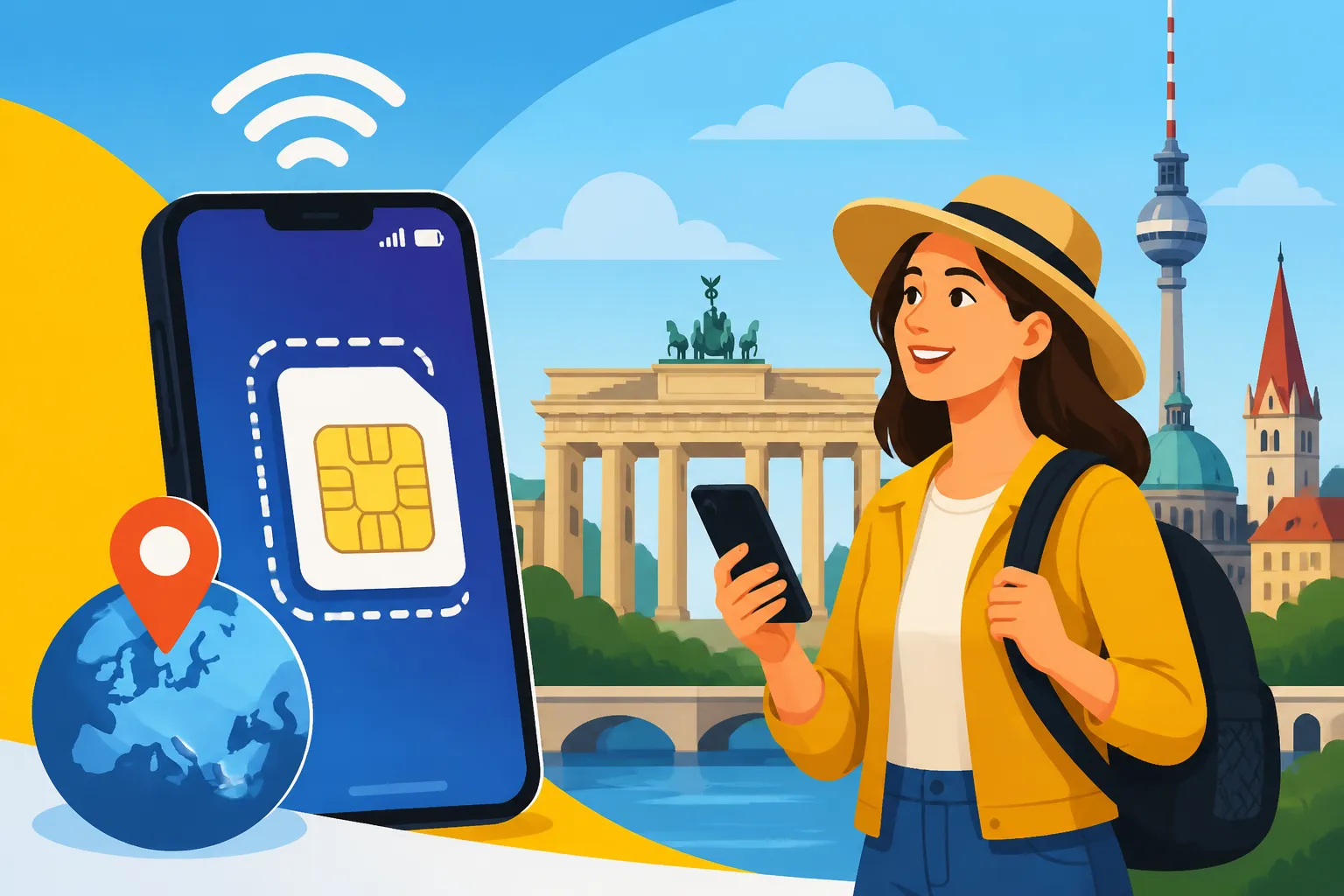
Now, let's talk about the game-changer: the eSIM. An eSIM, or "embedded SIM," is essentially a digital SIM card that's built directly into your phone. Instead of swapping out tiny physical plastic cards, you simply download an eSIM profile to your device. This digital approach eliminates the need for physical interaction and can make getting connected significantly easier and faster.
Most newer smartphone models, including many iPhones (XS and later), Google Pixels (2nd generation and later), and certain Samsung Galaxy devices, are eSIM compatible. You won't find a physical slot for it because it's already there, integrated into your device's hardware. The main benefits are incredible convenience – you can buy and activate a plan completely online, often within minutes – and the ability to store multiple eSIM profiles on one device. This means you can have your home country's SIM active (for calls/texts) and a German eSIM active for data simultaneously, or switch between various data plans from different countries without fumbling with tiny trays and pins. It's a truly modern solution to a very modern problem.
eSIM Advantages for German Travelers
For anyone traveling to Germany, especially for shorter trips, eSIMs offer some compelling advantages that make them a very attractive option. The most obvious benefit is convenience. Forget hunting for a phone store after a long flight or wrestling with registration bureaucracy. With an eSIM, you can purchase a data plan online before you even leave home or while you're waiting for your luggage, and activate it instantly upon arrival. This means you step off the plane already connected, which, as any seasoned traveler knows, is a glorious feeling.
Another huge plus is the ability to keep your home SIM card active. Many travelers want to receive calls or texts on their primary number while abroad, but don't want to incur exorbitant data roaming charges. An eSIM allows you to use your primary SIM for calls and SMS (if desired, though you might pay roaming rates for those) while dedicating the eSIM solely to data, ensuring you're always online without breaking the bank. This dual-SIM functionality, whether using a physical SIM and an eSIM or two eSIMs, offers unparalleled flexibility. It also allows for seamless switching between plans. If your initial data package runs out, topping up or buying a new eSIM plan from a different provider is usually just a few clicks away, no physical store visit required. This is particularly useful for longer trips where your data needs might fluctuate, or if you're traveling through multiple countries and want a local data plan for each.
Diving Deeper into eSIMs for Germany: Providers and Plans
Now that you're sold on the idea of an eSIM, let's talk specifics. Which providers should you look at, and what kind of plans are out there for your German adventure?
Major German Network Providers and Their eSIM Offerings
Germany has three main network operators: Telekom, Vodafone, and O2. All of them offer eSIM options, primarily for contract customers, but their prepaid eSIM offerings for tourists can be a bit more complex to navigate.
- Telekom: Widely regarded as having the best network coverage and speed in Germany. Telekom offers eSIMs for both their contract plans (MagentaMobil) and some prepaid options (MagentaMobil Prepaid). However, activating a prepaid eSIM with Telekom still typically requires the same PostIdent or VideoIdent verification process as a physical SIM. So, while it's an eSIM, the initial setup can still be a bit bureaucratic for short-term visitors.
- Vodafone: Another strong contender for network quality, especially in urban areas. Vodafone also provides eSIMs for its contract tariffs (Red, GigaMobil) and some prepaid tariffs (CallYa). Similar to Telekom, the prepaid eSIMs for tourists might involve a more involved activation process due to German regulations.
- O2 (Telefónica): Often the most budget-friendly of the big three, O2 has improved its network significantly over the years, though coverage might be slightly less robust in very rural areas compared to Telekom and Vodafone. They offer eSIMs for both contract and prepaid customers, but again, expect potential identification requirements for prepaid services.
For tourists, dealing directly with these major German carriers for a prepaid eSIM might still involve some German language skills and a bit of patience for the registration. This is where international eSIM providers often shine for sheer ease of use.
International eSIM Providers and Platforms
This is where the real magic happens for many international travelers! Several global eSIM providers specifically cater to tourists and business travelers, offering data plans for Germany that are incredibly easy to purchase and activate. These platforms bypass much of the local German bureaucracy, making them a fantastic choice.
Some of the most popular and reliable international eSIM providers include:
- Airalo: This is often a go-to for many expats and travelers. Airalo offers various data packages for Germany (and almost every other country) with different data allowances and validity periods. Their app is user-friendly, and activation is straightforward, typically involving scanning a QR code. You can choose from regional or local plans, depending on if you're only staying in Germany or traveling across Europe.
- Holafly: Holafly focuses on providing unlimited data plans for many countries, including Germany. This can be fantastic for heavy data users who don't want to worry about running out. The trade-off is often a slightly higher price point compared to plans with data caps. They are known for good customer support and easy setup.
- MobiMatter: Another global provider that offers a wide range of eSIM plans from various local and international carriers. MobiMatter often provides competitive pricing and a good selection of data packages for Germany, allowing you to compare options from different underlying networks.
These providers are generally "expat-friendly" because their entire service is designed for an international audience, meaning English support is readily available, and the purchasing and activation process is streamlined to be as quick and painless as possible. They act as resellers, leveraging the networks of local providers without you having to directly engage with German registration processes.
Choosing the Right eSIM Plan for Your Trip
Selecting the perfect eSIM plan depends entirely on your travel style and data needs. There's no one-size-fits-all answer, so consider these factors:
- Data Allowance: How much data do you actually need? If you're primarily using maps, checking emails, and light social media, 5GB for a week or two might be plenty. If you plan to stream videos, make frequent video calls, or work remotely, you'll need significantly more, perhaps 10GB, 20GB, or even an unlimited plan like those offered by Holafly. Be realistic about your usage to avoid constantly topping up or, conversely, overpaying for data you won't use.
- Validity Period: eSIM plans come with specific validity periods (e.g., 7 days, 15 days, 30 days). Make sure the plan's validity matches or exceeds the duration of your trip. If you're on a short city break, a 7-day plan might be perfect. For a month-long road trip across Germany, a 30-day plan is essential. Some providers allow you to purchase multiple plans and activate them consecutively, offering flexibility.
- Coverage: While international eSIM providers generally use the networks of major German carriers (often Telekom or Vodafone), it's always good to quickly check reviews or coverage maps if you're heading to particularly remote areas. For most urban centers and popular tourist routes, coverage will be excellent regardless of the underlying network.
- Price: Naturally, price is a factor. Compare different providers and their packages. Sometimes a slightly more expensive plan with better coverage or more data can save you headaches (and money) in the long run. Keep an eye out for promotional offers, which are common.
Here’s a quick comparison table to help you visualize the different options:
| Feature | International Roaming (Non-EU) | German Physical Prepaid SIM | International eSIM |
|---|---|---|---|
| Cost | Very High | Low to Moderate | Moderate |
| Convenience | High (no setup) | Low (in-person purchase, registration) | Very High (online purchase, instant activation) |
| Setup Time | Instant (if enabled) | 1-2 hours (purchase + registration) | 5-15 minutes |
| ID Required | No | Yes (Passport + PostIdent/VideoIdent) | No (usually) |
| Physical Card | No | Yes | No |
| Keep Home SIM | Yes (can be costly) | No (replaces home SIM) | Yes (dual SIM) |
| Flexibility | Low (limited bundles) | Moderate (local top-ups) | High (easy plan changes) |
Practical Steps: Activating and Troubleshooting Your Mobile Data
Getting your mobile data up and running, especially with an eSIM, is usually a breeze. But like anything technology-related, a few hitches can occur. Knowing how to activate and troubleshoot can save you from unnecessary frustration.
Step-by-Step eSIM Activation Guide
The beauty of an eSIM lies in its simplicity, but a few steps are crucial for a smooth activation.
- Purchase Your eSIM Plan: Head to the website or app of your chosen international eSIM provider (e.g., Airalo, Holafly). Browse the plans for Germany, select the data allowance and validity that fits your trip, and complete the purchase. You'll typically receive an email with a QR code and manual installation details.
- Prepare Your Device: Ensure your phone is unlocked (not tied to a specific carrier) and connected to Wi-Fi. It's also a good idea to check that your device is indeed eSIM compatible before purchasing.
- Install the eSIM Profile:
- For iOS (iPhone): Go to Settings > Cellular (or Mobile Data) > Add eSIM. You'll usually have the option to "Use QR Code." Scan the QR code provided by your eSIM provider. Follow the on-screen prompts to label your eSIM (e.g., "Germany Travel") and set it for data. You can choose to keep your primary SIM for voice and messages.
- For Android: The exact steps can vary slightly by manufacturer, but generally, go to Settings > Network & internet > SIMs > Add more (or similar). Select "Download an eSIM instead" or "Use a QR code." Scan the QR code and follow the instructions to set up the profile.
- Configure Data Roaming (Important!): Once the eSIM is installed, make sure "Data Roaming" is enabled for your new eSIM profile in your phone's settings. While it might sound counterintuitive (we're trying to avoid roaming charges!), international eSIMs often function by connecting to local networks via a "roaming" agreement. This is how they work without you needing a local physical SIM. You are paying for this data through the eSIM provider, so it's not traditional bill-shock roaming.
- Set as Primary Data Source: Ensure your new eSIM is selected as the primary source for mobile data in your phone's settings. You can typically keep your home SIM as the primary for voice calls if you wish.
And voilà! You should now be connected to a local German network.
Common Issues and Quick Fixes
Even with the best preparation, technology can be finicky. Here are some common problems you might encounter and how to troubleshoot them:
- "No Service" or "Searching for Network":
- Restart Your Phone: The classic fix, but often effective. It forces your phone to re-scan for available networks.
- Check Data Roaming Settings: Double-check that data roaming is enabled for your eSIM profile. This is the most common oversight.
- Verify APN Settings: In rare cases, you might need to manually enter Access Point Name (APN) settings. Your eSIM provider's support pages will usually provide these if necessary. You can find APN settings under your phone's mobile data or cellular settings.
- Check Network Selection: Your phone usually automatically selects the best network, but sometimes manual selection can help. In your phone's settings (under Mobile Network or SIMs), you can search for available networks and select one of the major German carriers (Telekom, Vodafone, O2).
- Slow Data Speeds:
- Signal Strength: Are you in an area with poor signal? Sometimes simply moving to a different location can help.
- Data Cap Reached: Have you used up your data allowance? Check your eSIM provider's app or website to see your remaining data. If it's low, a top-up might be needed.
- Network Congestion: In very crowded areas (like during a major festival), network speeds can temporarily slow down due to high demand.
- Cannot Make Calls/Send Texts: Remember, many data-only eSIMs do not include voice or SMS services. If you need these, you'll need to rely on your home SIM (at roaming rates) or use internet-based calling apps like WhatsApp, FaceTime, or Google Meet, which work perfectly over your new eSIM data connection.
If all else fails, don't hesitate to contact your eSIM provider's customer support. They are usually very responsive and experienced in troubleshooting connectivity issues for travelers.
Maximizing Your Data and Battery Life
Germany is fantastic for exploring, and you'll want your phone to keep up! Here are some tips to make your data and battery last longer:
- Embrace Wi-Fi Whenever Possible: While your eSIM is fantastic, take advantage of free Wi-Fi in cafes, restaurants, and your accommodation. Download maps for offline use on apps like Google Maps. Before heading out, check Accommodation in Germany: Hotels, Pensionen, and Hostels for more info on expected Wi-Fi quality. This conserves your mobile data for when you truly need it.
- Download Before You Go: Download movies, podcasts, and even your travel guidebooks (or this article!) before you leave your Wi-Fi zone. This is a huge data saver.
- Adjust App Settings: Many apps consume data in the background. Go into your phone's settings and restrict background data usage for apps you don't need constantly running. Similarly, turn off automatic updates for apps.
- Low Power Mode/Battery Saver: Most smartphones have a low power or battery saver mode that extends battery life by limiting background activity, screen brightness, and other power-hungry features.
- Offline Maps: Crucial for navigation. Download entire regions of Germany on Google Maps or other mapping apps so you can navigate even without a data signal.
- Minimize Streaming: Streaming video or high-quality audio consumes a lot of data. Save that Netflix binge for when you're back on Wi-Fi.
- Use Power Banks: A portable power bank is a traveler's best friend. Keep it charged, and you'll never have to worry about your phone dying mid-sightseeing.
Staying Connected Beyond Your Phone: Public Wi-Fi and Hotspots
While a reliable mobile data plan is your best bet, it's also good to know what to expect from public Wi-Fi and hotspots in Germany. They can offer a convenient backup, but they come with their own set of considerations.
The Reality of Free Public Wi-Fi in Germany
Germany, historically, has been a bit slower to embrace widespread, free public Wi-Fi compared to some other countries. This has changed considerably in recent years, but it's still not as ubiquitous as you might expect in some places.
You'll generally find free Wi-Fi in:
- Airports and Major Train Stations: Most major transport hubs, especially in larger cities like Berlin, Munich, or Frankfurt, offer free Wi-Fi, often for a limited time (e.g., 30 minutes to an hour) before requiring you to re-login or pay for extended access.
- Cafes, Restaurants, and Shops: Many establishments, particularly in tourist areas, now offer free Wi-Fi to customers. Look for "Free Wi-Fi" or "WLAN" signs. You might need to ask a staff member for the password.
- Public Libraries and Museums: Some cultural institutions provide free internet access, which can be a good option for a quick check.
- Hotels and Accommodation: As mentioned, most hotels will provide Wi-Fi, though quality can vary. Booking.com and similar platforms usually list Wi-Fi availability as a key amenity.
Reliability and Security Concerns: While convenient, public Wi-Fi can be a mixed bag. The speed and reliability often depend on how many people are connected. More importantly, public Wi-Fi networks are often unencrypted and less secure. This means your data could be vulnerable to interception by others on the same network. Avoid conducting sensitive transactions (like online banking or entering credit card details) when on public Wi-Fi. For casual browsing, it's generally fine, but always exercise caution. A virtual private network (VPN) can add a layer of security if you frequently rely on public Wi-Fi.
Hotel and Accommodation Wi-Fi: What to Expect
When you book your stay through platforms like Booking.com, you'll almost always see whether Wi-Fi is included. In German hotels, hostels, and even many Pensionen (guesthouses), Wi-Fi is now standard.
However, the quality can vary wildly. In larger, more modern hotels, you'll often find fast and reliable connections, sometimes even a dedicated network for each room. In smaller, older establishments, the Wi-Fi might be slower, prone to drops, or only strong in common areas like the lobby. It's not uncommon to encounter frustratingly slow speeds that make even simple browsing a chore. Sometimes, you'll be given a code for a single device, meaning you can't connect both your laptop and phone simultaneously without jumping through hoops. Always manage your expectations and don't rely solely on hotel Wi-Fi for critical tasks or heavy data usage. Your eSIM will be your reliable fallback!
Disclaimer
The information provided in this guide is for general informational purposes only and is subject to change. While we strive to keep the content up-to-date and accurate, mobile data plans, network coverage, pricing, and specific activation requirements can vary. Always confirm details directly with service providers before making any purchasing decisions. This guide does not constitute legal, financial, or professional advice.