Germany to Italy: Over the Alps by Rail vs Flying
Ah, the classic expat dilemma: you've settled into life here in Germany, and now that wanderlust for Italy has struck! But then reality hits: how do you even get there? It’s not just a matter of point A to point B; it’s a whole logistical puzzle. This guide is going to walk you through the nitty-gritty of choosing between traversing those magnificent Alps by rail or soaring over them by plane, helping you weigh the pros, cons, and hidden factors so you can make the best choice for your Italian escapade.
Disclosure: This post may contain affiliate links. We may earn a commission at no extra cost to you if you make a purchase through these links. Read full disclosure.
The Allure of the Alps: Why Germany to Italy is More Than Just a Trip
Traveling from Germany to Italy isn't just a simple hop; it's a journey that takes you across some of Europe's most breathtaking landscapes, primarily the formidable Alps. For many of us living here, it represents a shift from efficient German precision to the vibrant chaos and beauty of Italy, and how you choose to make that transition can dramatically shape your entire trip experience.
Experiencing the Journey vs. Reaching the Destination
Think about what kind of traveler you are. Are you the type who sees travel purely as a means to an end, wanting to get from your German apartment to that Roman piazza as quickly as humanly possible? Or do you cherish the journey itself, gazing out at ever-changing scenery, perhaps with a good book and a Kaffee in hand? This fundamental difference often dictates the rail vs. flight decision.
When you opt for the train, especially routes that wind through the Alps, you’re not just moving between countries; you're immersing yourself in the transition. Imagine leaving behind the rolling hills of Bavaria, slowly ascending into the dramatic peaks and valleys of Austria or Switzerland, and then descending into the sun-drenched plains of northern Italy. It’s a sensory experience: the tunnels, the bridges, the quaint villages nestled in mountain passes, often capped with snow even in late spring. This offers a unique perspective you just can't get from 30,000 feet. For those looking for more scenic routes within Germany before even heading south, there are countless Day Trips and Weekend Getaways Across Germany that offer similar picturesque journeys.
Flying, on the other hand, abstracts this experience. One moment you're battling traffic to Frankfurt Airport, the next you're squinting at tiny towns from above, and then you're crammed into a bus from Rome Fiumicino trying to reach the city center. It’s efficient, no doubt, but it can feel disconnected, stripping away the geographical and cultural nuances that make cross-border travel so rich.
Planning Your Cross-Border Adventure
No matter which mode of transport you lean towards, planning an international trip from Germany requires a bit more thought than just booking a regional train. You're dealing with different countries, potentially different currencies (though Eurozone travel simplifies this), and certainly different travel networks. It's a logistical challenge that can feel overwhelming, especially when trying to compare options across various platforms, each with their own prices, timings, and hidden fees.
You’ll need to consider how much time you actually have for the journey, your budget (and that includes not just ticket price but also hidden costs like airport transfers or baggage fees), and your personal comfort level. Do you mind spending 8-10 hours on a train, or do you prefer a quick 1.5-hour flight followed by the airport hassle? Are you traveling with a family, with bulky luggage, or solo with just a backpack? These factors are crucial. This is where a reliable platform can be a lifesaver, allowing you to see all your options side-by-side. For instance, Omio lets you compare not just train versus flight, but even bus options, giving you a comprehensive overview of how to get from Germany to your desired Italian destination, all in one place. It takes the headache out of juggling multiple websites and figuring out the best connections.
Taking the Scenic Route: Germany to Italy by Rail
There’s a certain romance to train travel, isn't there? Especially when you're crossing international borders and watching the landscape unfurl outside your window. From Germany to Italy, train travel is more than just a means of transport; it’s an integral part of the adventure.
The Magic of Train Travel Through the Alps
Imagine this: you board an early morning train from Munich or Berlin, sip your coffee, and soon enough, the familiar flatlands give way to the dramatic, jagged peaks of the Alps. The journey south from Germany, through Austria or Switzerland, and into Italy, is simply spectacular. Routes like the Brenner Pass (through Austria to Verona/Bologna) or the Gotthard Pass (through Switzerland to Milan) are legendary for a reason.
You might find yourself on a sleek ICE train, known for its speed and comfort, or a EuroCity (EC) train, which is perfectly suited for scenic international routes. Some connections might even involve a Railjet operated by ÖBB, Austria's national railway. These trains are generally quite comfortable, offering spacious seating, dining cars (or at least a bistro car), and often, power outlets and Wi-Fi. You have room to stretch your legs, wander to the dining car, or simply gaze out at the majestic views. One minute you're seeing snow-capped peaks and glaciers, the next you're passing through lush green valleys with picturesque chalets, and then, almost magically, palm trees begin to appear as you descend into Italy. If you're used to German train travel, you might want to read up on High-Speed Trains in Germany ICE Deutsche Bahn Routes and Savings to get a sense of what to expect, though international journeys often involve different operators.
The real beauty here is the seamless city-center to city-center connection. You depart from, say, Munich Hauptbahnhof, and arrive directly into Milano Centrale or Roma Termini, without the extra hassle of airport security, transfers, or the time-consuming check-in processes. This is a huge advantage, especially when traveling with family or heavy luggage.
Pros and Cons of Rail Travel
Like any travel method, taking the train has its distinct advantages and disadvantages.
Pros of Rail Travel: Embrace the Journey
- Unbeatable Scenery: This is, hands down, the biggest draw. No flight can offer the immersive, panoramic views of the Alps that a train journey can. It’s an experience in itself, not just a way to get somewhere.
- Comfort and Space: Trains generally offer more legroom and wider seats than economy class flights. You can get up, walk around, visit the bistro car, or even book a compartment for added privacy.
- Generous Baggage Allowance: Say goodbye to worrying about luggage weight limits or exorbitant fees. Most train operators allow you to bring a reasonable amount of luggage with you, usually storable overhead or in designated areas. This is a huge relief for longer trips or if you're bringing souvenirs back!
- City-Center Convenience: Trains drop you right in the heart of your destination city. This eliminates the need for expensive and time-consuming airport transfers, which can often add an hour or more to your journey on both ends.
- Environmental Friendliness: For the eco-conscious traveler, trains are a significantly greener option than flying, producing a fraction of the carbon emissions.
- Less Stressful Process: No lengthy security lines, no taking off your shoes, no liquid restrictions. You typically just show up, find your platform, and board. The entire experience is far more relaxed.
- Flexibility with Tickets: While booking in advance often gets you the best deals, many train tickets (especially full-price ones) offer more flexibility for changes or cancellations than budget airline tickets. If you plan carefully using platforms like Omio, you can often find flexible options that work with your schedule.
Cons of Rail Travel: The Trade-Offs
- Longer Travel Times: This is the primary drawback. A train journey from, say, Munich to Rome will take considerably longer than a flight, often 8-10 hours or more, depending on connections. For shorter trips (e.g., Munich to Milan), the difference might be less pronounced once you factor in airport logistics.
- Potentially Higher Costs (if not planned): If you don't book train tickets well in advance, especially for popular routes or during peak season, they can easily become more expensive than budget flights. Spontaneous train travel on long international routes often comes with a premium.
- Multiple Transfers: Depending on your origin and destination, you might need to make one or two changes between trains. While these are usually well-coordinated, they can be a source of stress, especially with heavy luggage or tight connection times.
- Fewer Direct Routes: While major city pairs often have direct connections, some smaller towns might require more intricate planning with multiple changes.
Practicalities: Booking, Luggage, and Connections
Booking your international train journey from Germany to Italy is often where the "expat reality" truly sets in. You’re dealing with Deutsche Bahn (DB), ÖBB, Trenitalia, and maybe even SBB (Swiss Federal Railways) all at once. It can be a bit of a maze.
My number one piece of advice: book in advance! Just like flights, train tickets become significantly more expensive closer to the departure date. Look for "Sparpreis Europa" (saver fare Europe) or similar promotional tickets offered by national rail providers. These are limited in quantity and sell out quickly. You might be able to find great deals even 2-3 months out. For tips on booking domestic German trains, see How to Buy Deutsche Bahn Tickets and Save Money.
When it comes to luggage, generally, if you can carry it, you can bring it. There are no strict weight limits like on airlines, but be mindful of space. You’ll need to manage your own bags onto and off the train, and store them either above your seat or in designated luggage areas. If you’re traveling with oversized items, it’s always best to check with the specific train operator, but generally, trains are very accommodating.
Finding the best connections can be the trickiest part. This is precisely why a comprehensive search tool like Omio becomes invaluable. Instead of hopping between DB's website, Trenitalia's site, and maybe even a third national rail carrier, Omio aggregates all these options. You simply input your departure and arrival points (e.g., Berlin to Florence), and it shows you all available train routes, including connections, travel times, and prices from various operators. It’s a total game-changer for international rail travel, simplifying what would otherwise be a multi-tab headache into a single, easy-to-understand interface. You can compare routes, filter by direct trains, or find the fastest and cheapest options effortlessly.
Soaring Over the Peaks: Germany to Italy by Air
For many, the sheer speed of air travel is an undeniable draw, especially when you're looking to maximize your time in Italy. Cutting hours off a journey can make a significant difference, particularly for shorter trips or business travel.
The Speed and Convenience of Flying
Let's be honest: when you need to get somewhere fast, flying often seems like the only logical choice. A direct flight from a major German hub like Frankfurt (FRA), Munich (MUC), or Berlin Brandenburg (BER) to an Italian city such as Rome (FCO), Milan (MXP/LIN), or Venice (VCE) can be as quick as 1.5 to 2 hours in the air. This aerial dash across the continent allows you to spend more time exploring ancient ruins or enjoying a pasta dish, rather than gazing out a window.
Germany boasts excellent airport infrastructure, with major international hubs and smaller regional airports that connect to various Italian cities. Airlines like Lufthansa, ITA Airways, and budget carriers such as Ryanair, EasyJet, and Wizz Air offer a plethora of routes. The sheer volume of flights means you often have many options for departure times and prices, especially if you book in advance. If you're pondering how to get to these German airports, remember the excellent public transport options available, which you can read more about in Getting Around Germany: Trains, Buses, Flights, and Car Hire, or specifically for Frankfurt, How to Get From Frankfurt Airport to the City Center.
The perception of convenience for flying largely stems from this speed. You're in and out, or so it seems. For some, the thought of navigating multiple train changes or a long seated journey is far less appealing than the quick, albeit sometimes uncomfortable, directness of a flight. And with Omio, you can easily compare these flight options across different airlines, making sure you're getting the most competitive price for your chosen route.
Pros and Cons of Air Travel
While fast, flying comes with its own set of trade-offs.
Pros of Air Travel: The Need for Speed
- Fastest Travel Time: This is the undisputed champion of flying. The actual flight duration is almost always shorter than a train journey for Germany-Italy routes, sometimes by several hours.
- Often Cheaper for Specific Bookings: For last-minute trips or bookings made far in advance, budget airlines can offer incredibly low fares that trains simply can't match. This can be very attractive for cost-conscious travelers.
- Wide Range of Destinations: Airlines often service a broader array of smaller airports in Italy, potentially allowing you to fly closer to your final destination than a main train station would.
- More Direct Routes (Sometimes): For popular city pairings, direct flights are common, eliminating the need for transfers in the air, though ground transfers to and from airports are almost always a factor. You can quickly compare direct flights and flight times with Omio to find the most efficient route.
Cons of Air Travel: The Hidden Realities
- Hidden Costs: The advertised flight price can be deceptive. Luggage fees (for checked and sometimes even carry-on bags), seat selection fees, airport taxes, and credit card processing fees can quickly add up, making a "cheap" flight much more expensive.
- Airport Transfers: The time and cost of getting to and from airports (which are typically outside city centers) are significant. Factor in taxi fares, train tickets, or bus services from your German home to the departure airport, and from the Italian arrival airport to your accommodation. This can easily add 2-3 hours and €30-€100+ to each leg of your journey.
- Time-Consuming Airport Procedures: Arriving 2-3 hours before your flight for check-in and security, boarding, deplaning, baggage claim, and passport control (if applicable for non-Schengen flights, though Germany-Italy is within Schengen) eats up valuable time that isn't reflected in the flight duration.
- Less Comfortable Experience: Economy seats are often cramped, and the overall experience of airport queues, security checks, and turbulence can be stressful and uncomfortable.
- Environmental Impact: Flying has a much larger carbon footprint per passenger than train travel, which is a growing concern for many travelers.
- Less Scenic: You essentially miss all the beautiful landscapes you’re traversing, seeing only clouds or a distant, abstract view of the ground.
Navigating Airports and Airlines
If you opt to fly, you'll want to be well-prepared. Always, always check your airline's baggage policy before you book and certainly before you pack. Budget airlines like Ryanair are notorious for strict size and weight limits, and their fees for exceeding these can be punitive. Don't get caught out at the gate!
Plan your airport transfers in advance. Whether it's the S-Bahn to Berlin Brandenburg, the Lufthansa Express Bus to Munich Airport, or a taxi, know your route and budget your time accordingly. Arriving early is always less stressful than rushing and potentially missing your flight.
Be aware of which airlines fly which routes. For the best prices, you'll often look at the low-cost carriers, but be mindful of their potential downsides. Full-service airlines like Lufthansa or ITA Airways might be more expensive initially but could include baggage, seat selection, and better service, potentially offering better value overall, especially if you have specific needs. Again, this is where a platform like Omio shines, allowing you to directly compare the "all-in" prices, including estimated baggage fees, across various airlines for your desired journey.
Making Your Choice: Rail or Air for Your Italian Adventure?
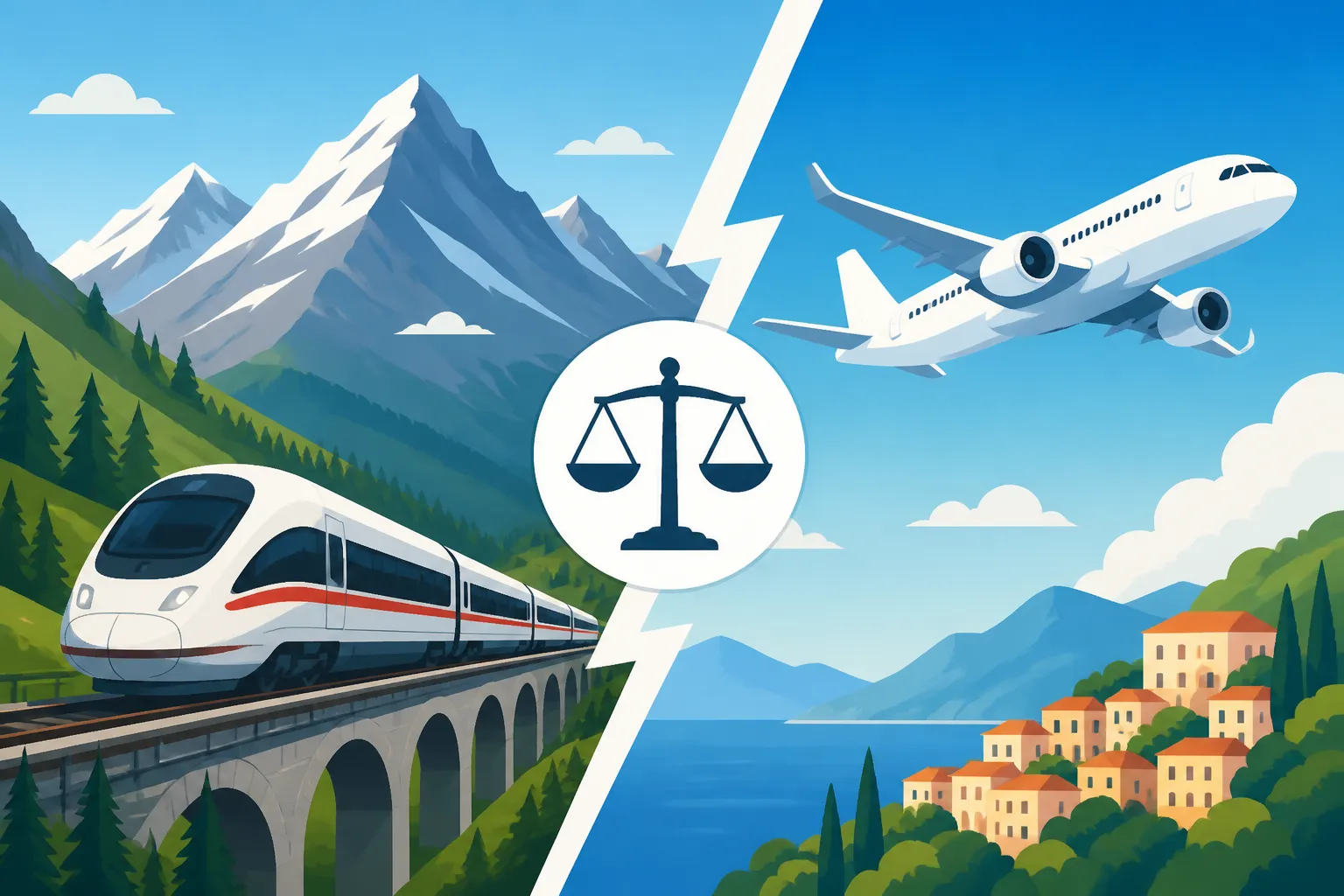
Ultimately, the decision between train and plane for your Germany to Italy journey boils down to your personal priorities, budget, and desired travel experience. There's no single "best" option; it's about finding what works for you.
Cost Comparison: Beyond the Ticket Price
This is where many travelers get tripped up. The initial price of a flight can look incredibly appealing, especially those budget airline deals. But you have to dig deeper. Let's break down the true cost.
| Cost Factor | Train Travel (Germany-Italy) | Air Travel (Germany-Italy) |
|---|---|---|
| Ticket Price | Varies widely; cheaper if booked far in advance (e.g., €39-€150+) | Varies widely; often cheaper than train for last-minute/early birds (€20-€100+) |
| Baggage Fees | Typically included for standard luggage; very generous allowance | Often €20-€60+ per checked bag, per flight segment; strict carry-on rules |
| Seat Selection | Often included or small fee for reservation (€4-€10) | Typically €5-€30+ per segment, per person |
| Airport/Station Transfers | Minimal (local public transport within cities, usually cheap) | Significant (taxi, dedicated airport train/bus, often €10-€50+ each way) |
| Time Cost | Longer travel time, but productive/relaxing | Shorter flight, but 2-4 hours lost to airport procedures + transfers |
| Food/Drinks | Bring your own, buy on board (more options), or local station snacks | Expensive airport food; limited onboard options, often for purchase |
| Flexibility | More flexible cancellation/changes with standard fares | Very limited flexibility, high change fees for budget airlines |
| Environmental Impact | Significantly lower carbon footprint | Higher carbon footprint |
| Total Real Cost | Often competitive or cheaper once all factors are considered | Can quickly exceed train costs when all hidden fees/transfers are added |
As you can see, a €30 flight might easily turn into a €100+ journey once you factor in the checked bag, seat selection, and airport bus. A €60 train ticket, however, often remains just that: €60, plus perhaps a €5 coffee. It's vital to look at the total estimated cost for your door-to-door journey. This is where Omio becomes your best friend. Its platform is designed to show you not just the headline ticket price but also allows you to account for these variables, giving you a much clearer picture of your actual expenditure across flights, trains, and even buses. This transparency helps you make an informed financial decision, looking beyond just the cheapest initial fare.
Time vs. Experience: What Matters Most to You?
Beyond the euros and cents, consider what kind of travel experience you truly value.
If you are on a tight schedule, say a quick business trip or a short weekend getaway where every hour counts, flying will likely be your preferred option. The speed of the flight itself is unparalleled, getting you into the destination country much faster. However, remember to factor in the total transit time from your German doorstep to your Italian hotel. Sometimes, a 5-hour train ride from Munich to Milan can actually be comparable to a 1.5-hour flight when you account for getting to the airport, security, the flight, and then getting from the Italian airport to the city center.
On the other hand, if you view travel as part of the adventure, if you enjoy observing the world outside your window, if you want to unwind and avoid the frenetic pace of airports, then train travel is undoubtedly superior. It allows for a gradual transition between the landscapes and cultures, offering a contemplative and often very scenic journey. It's particularly appealing for leisure travelers, families, or anyone who just wants to slow down and savor the trip. Exploring different regions of Germany and Italy by train often gives you a deeper sense of Germany's Regions and Where to Go: A Traveler's Overview and how they connect.
Ultimately, it’s a personal choice that reflects your travel philosophy. Are you optimizing for speed at all costs, or are you looking for a more enriching, perhaps slightly longer, journey that leaves you feeling more relaxed upon arrival? Think about your mood when you arrive after a flight vs. a train. For me, the train often wins on the "arrival mood" metric. And for those moments when you need to quickly communicate or manage tickets, having some basic German Language and Everyday Communication for Visitors or Italian phrases can ease the process.
The Simplest Way to Compare and Book: Omio to the Rescue!
Navigating the multitude of websites for trains, buses, and flights across international borders is a task none of us enjoy. You open one tab for Deutsche Bahn, another for Trenitalia, then Skyscanner for flights, and maybe FlixBus for buses – it’s a mess! This is precisely why Omio is an absolute game-changer for planning trips from Germany to Italy.
Omio is not just a booking platform; it's a comprehensive travel planning assistant that aggregates all these different transport options into one single, user-friendly interface. You simply tell it where you're starting in Germany and where you want to end up in Italy, and it does the hard work for you. It pulls up train schedules and prices from major operators, lists flight options from various airlines (including budget carriers and full-service ones), and even includes long-distance bus routes from services like Long-Distance Buses in Germany FlixBus and Networks.
Think of the time and frustration saved. Instead of manually comparing prices and timings across half a dozen sites, you get a clean, clear comparison that allows you to weigh speed, cost, and convenience for each mode of transport. You can instantly see if that "cheap" flight is still cheap after adding baggage, or if a slightly longer train journey actually gets you to your final destination faster (and more comfortably!) once you factor in airport transfers.
For complex routes, or if you're traveling from a smaller German town to a less-accessible Italian destination, Omio helps you piece together multi-leg journeys, whether that involves a train to a major airport followed by a flight, or a series of connecting trains. It's designed to take the guesswork out of cross-border travel, making your journey from Germany to the sunny shores of Italy as smooth and stress-free as possible. Seriously, give Omio a try – it simplifies the entire process and makes informed decision-making so much easier.
Disclaimer
The information provided in this article is for general guidance only and may not apply to every individual situation. While we strive to provide accurate and up-to-date information, travel regulations, prices, and service availability can change rapidly. Always check the latest official sources and specific service providers (e.g., train companies, airlines) for the most current information before making any travel plans or purchases.