Germany to Spain and Portugal: Long-Haul Overland vs Budget Flights
The journey from the bustling streets of Berlin or the picturesque canals of Hamburg all the way to the sunny coasts of Spain and Portugal is a trek many of us expats consider. It's not just about getting from A to B; it's about balancing cost, time, comfort, and, let's be honest, your sanity. This guide dives deep into the eternal dilemma: whether to brace yourself for a long-haul overland adventure or zip across the skies with budget airlines, offering insights and a fantastic tool, Omio, to help you make the best decision.
Disclosure: This post may contain affiliate links. We may earn a commission at no extra cost to you if you make a purchase through these links. Read full disclosure.
Budget Flights: The Need for Speed (and Sometimes Sanity)
This is often the first thought for cross-continental travel. "Just fly!" people say, picturing themselves sipping sangria hours after leaving Germany. And yes, in terms of sheer speed, flights win hands down. But as many of us have learned the hard way, the devil is in the details.
The Allure of Air Travel: Speed, Price, and Perceived Convenience
When you’re looking at covering over 1,500 kilometers, the idea of a few hours in the air versus a day or more on land is incredibly appealing. Budget airlines like Ryanair, easyJet, or Vueling have made air travel across Europe incredibly accessible. You can often snag tickets from Berlin Brandenburg Airport (BER) or Frankfurt Airport (FRA) to Madrid, Barcelona, or Lisbon for what seems like a steal – sometimes as low as €30-50 if you book far enough in advance and hit a good sale. This perceived low cost is a huge draw, especially for those on a tight budget or with limited vacation days. It feels like a no-brainer: quick, cheap, done.
Many expats, myself included, have fallen for the siren call of a ridiculously cheap flight. You see a €29 ticket to Lisbon and immediately picture yourself strolling through Alfama, a Pastel de Nata in hand. The convenience extends beyond just the flight time; it's the idea of less planning, less navigating multiple connections, and a straightforward journey. For a quick weekend getaway or if you have a rigid schedule, flying often seems like the only logical option. It's particularly appealing for those who dread long hours cooped up, preferring to get the travel part over with as swiftly as possible. This is where tools like Omio become invaluable, as they consolidate flight options from various budget airlines, letting you compare prices and times across different carriers without jumping between a dozen websites.
However, the "convenience" can often be a mirage. While the flight itself is fast, the journey to and from often adds significant hidden time. Think about the trek to out-of-the-way airports that budget airlines often use, the mandatory two-hour early arrival for international flights, security checks, boarding, deplaning, and then the journey from the destination airport into the city center. A 2.5-hour flight can easily become a 6-8 hour door-to-door ordeal. For those who prioritize every minute of their travel, understanding these real-world time sinks is crucial. If you're wondering how to navigate the transit systems to get to these airports efficiently, our guide on Getting Around German Cities U-Bahn, S-Bahn, Trams, and Buses might offer some helpful insights.
The Hidden Costs and Realities of Budget Airlines
Ah, the "budget" in budget airlines – it's a bit like a magic trick, isn't it? The initial fare might be tempting, but then the add-ons start piling up. First, there's the baggage. That small personal item might be free, but anything more than a tiny backpack will cost you. A checked bag, even a carry-on, can easily double the initial ticket price, especially if you add it at the airport. Then come the seat selection fees, priority boarding, printing your boarding pass if you forget to do it online, and even snacks or water onboard. Suddenly, that €29 flight has morphed into a €100+ expenditure.
Beyond the monetary costs, there are comfort and logistical realities. Budget airlines are known for their no-frills experience: cramped seats, minimal legroom, and often inconvenient flight times, sometimes departing at ungodly hours or arriving late at night when public transport options are limited. This can lead to additional costs for taxis or an extra night's stay. Delays and cancellations are also more common, and rebooking or compensation can be a bureaucratic nightmare, especially when dealing with foreign customer service. The stress of constantly checking small print and being nickel-and-dimed can quickly erode any "savings" or "convenience" you thought you were getting. Planning wisely, using a platform like Omio to clearly see the total costs including baggage options, can save you a lot of grief.
For many expats, the hidden costs and the sheer lack of comfort can make budget flights a less appealing option than initially perceived. It’s not just about the monetary expense but the mental toll of navigating these additional charges and potential inconveniences. If you're traveling with family or have specific needs, these issues become even more pronounced. Furthermore, connecting to your actual flight can sometimes involve navigating busy German public transport to get to the airport, adding another layer of complexity. For tips on how to manage your finances while traveling, our Cost of Living in Germany Budgeting Guide for Expats provides a broader perspective on budgeting for life here, including travel expenses.
Overland Adventures: The Scenic Route (and the Slow Grind)
While flights offer speed, overland travel — by train or bus — offers something different: immersion, flexibility, and often, a much more relaxed journey, albeit a longer one. It's not for everyone, but for those with time on their hands or a love for the journey itself, it can be incredibly rewarding.
Rail Journeys: Comfort, Scenery, and European Connections
Traveling by train from Germany to Spain or Portugal is a grand European adventure, though it requires multiple connections. You're looking at a journey that will likely span 24-36 hours, involving at least one overnight segment, possibly two. Typically, this would involve a high-speed train from Germany (like a Deutsche Bahn ICE) to Paris, then another high-speed TGV train to cities like Barcelona or Madrid, and potentially an onward connection to Portugal. The beauty of this route lies in the comfort: more legroom, dining cars, the ability to walk around, and spectacular scenery passing by your window. Imagine gliding through the French countryside, past vineyards and quaint villages, as you make your way south.
The cost can be competitive, especially if you book in advance. Services like TGV INOUI or SNCF offer competitive fares, and sometimes you can find overnight sleeper train options for a unique experience. While you might not match the lowest budget flight fare, the value proposition is different – you're paying for comfort, space, and a unique travel experience. Baggage allowances are usually more generous, and you arrive directly in city centers, saving you the hassle and cost of airport transfers. This journey is less about speed and more about embracing the romance of travel. For those considering this, understanding High-Speed Trains in Germany ICE Deutsche Bahn Routes and Savings can be a real game-changer. Plus, you can plan and book these complex multi-leg journeys easily through Omio, which pulls together various train operators' schedules and prices.
For the intrepid traveler, a train journey offers a true sense of journeying across the continent, watching the landscapes shift from the forests of Germany to the arid plains of Spain. You get to witness the transition, perhaps even making a planned stopover in a city like Paris or Lyon, turning the travel day into part of the vacation itself. It’s an ideal option for those who find airports and flying stressful, preferring the more grounded and less frantic pace of train travel. Moreover, connecting train services can be found and booked with ease, even internationally, through platforms like Omio, taking the headache out of coordinating different national rail services. You might also want to check out How to Buy Deutsche Bahn Tickets and Save Money for additional tips.
Bus Travel: The Budget-Friendly Marathon
If budget is your absolute top priority and you have an iron backside (and a lot of patience), then long-distance bus travel is your most economical overland option. Companies like FlixBus offer routes directly from major German cities to destinations across Spain and Portugal. These journeys are long – think 28-40+ hours, often involving transfers in hubs like Paris, Lyon, or Barcelona. They are generally the cheapest way to cover this distance, often coming in significantly less than trains or even many budget flights, especially if you're booking closer to your travel date.
While incredibly budget-friendly, bus travel comes with its own set of challenges. Comfort is basic, even on modern coaches, and sitting for such extended periods can be grueling. You'll have scheduled stops, but stretching your legs adequately can be difficult. However, many buses now offer Wi-Fi, power outlets, and onboard restrooms, making the experience more tolerable. Baggage allowance is usually more generous than budget airlines, with one checked bag often included, but always double-check the specific operator's policy. It’s a journey for the truly resilient and budget-conscious traveler. To find the best routes and prices, and understand what to expect, check out our guide on Long-Distance Buses in Germany FlixBus and Networks. And guess what? Omio lets you compare and book bus tickets alongside trains and flights, giving you a full spectrum of choices.
For expats who might be moving or carrying a lot of luggage, the bus can be a practical solution despite the duration. Imagine relocating to a new country and needing to transport more than just a carry-on – the bus can be surprisingly accommodating. It’s also an excellent option for students or those on gap years who truly want to stretch their euros and experience Europe on a shoestring budget. While it’s certainly not luxurious, the price point often makes it an unbeatable choice. Just remember to pack plenty of snacks, entertainment, and a good neck pillow! To stay connected during such a long journey, consider getting a Mobile Data and eSIMs for Travel in Germany.
The Verdict: Which Journey is Right for You?
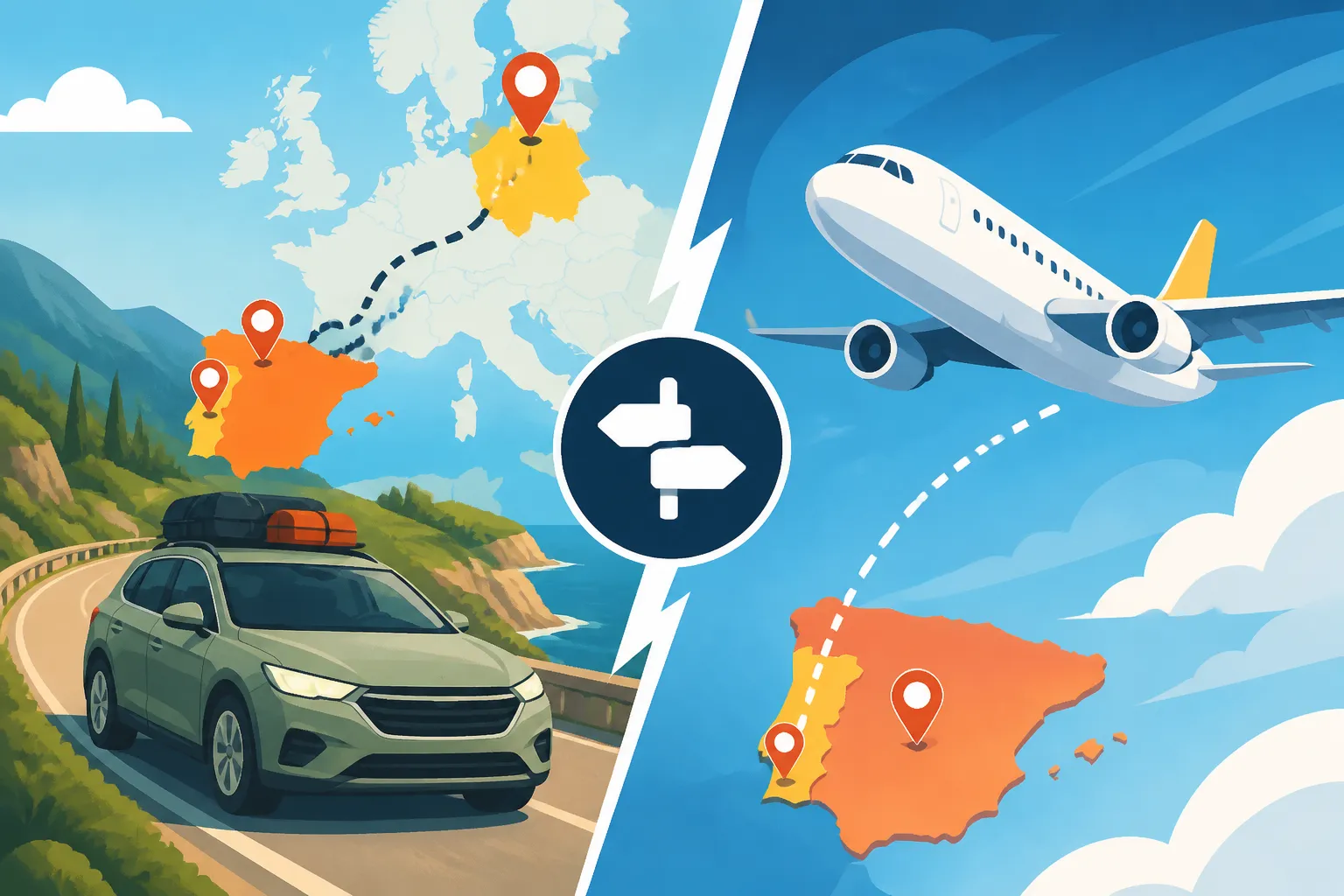
So, how do you decide between rocketing through the air or embarking on a land expedition? There's no single "best" answer; it truly depends on your priorities, resources, and tolerance for discomfort.
Making an Informed Choice: Factors to Consider
When weighing your options, consider these points:
- Time: If you have limited vacation days, flying will nearly always win on overall door-to-door time, despite airport faff. For a trip from Berlin to Seville, a flight might take 6-8 hours with transfers, while a train or bus could easily be 30-40 hours. If you want to spend less time in transit, flying is generally the answer.
- Budget: This is where things get tricky. While initial flight fares can be low, always factor in baggage, airport transfers, and potential hidden fees. For trains, early booking can yield great prices, and baggage is usually included. Buses are generally the cheapest overall if you can handle the duration. To truly compare, you need a tool that shows you the full picture, and that's precisely what Omio does, laying out all options transparently.
- Comfort: This is subjective but crucial. If you value space, the ability to move around, and consistent amenities, trains are usually superior. Buses are basic but increasingly comfortable. Flights on budget airlines are often cramped. Think about your personal comfort threshold for long journeys.
- Experience: Do you view travel as a means to an end, or is the journey itself part of the adventure? Overland travel offers a richer, more immersive experience, allowing you to see the landscape change and connect with the continent in a different way. Flights are more functional.
- Baggage: If you're traveling light with just a backpack, budget flights can be very economical. However, if you have multiple bags, a train or bus could quickly become more cost-effective due to more generous baggage policies. This is especially true if you're considering a big move and checking our guide on Moving Your Belongings to Germany Tips for an Easy Move to Germany.
Let's put some of these factors into a comparison table:
| Feature | Budget Flights (Germany to Spain/Portugal) | Overland Train (Germany to Spain/Portugal) | Overland Bus (Germany to Spain/Portugal) |
|---|---|---|---|
| Travel Time | 5-8 hours (door-to-door, including airport transfers & wait times) | 24-36+ hours (includes transfers, potential overnight) | 28-40+ hours (includes transfers, multiple stops) |
| Cost (Initial) | Very low, often €30-80 | Moderate to high, €80-200+ (depending on booking time & class) | Very low, often €40-100 |
| Hidden Costs | Baggage fees, seat selection, airport transfers, food/drinks, printing | None for baggage, food extra | Sometimes extra for oversized/additional baggage, food extra |
| Comfort | Cramped seats, minimal amenities, often basic service | Spacious, ability to walk around, dining cars, better legroom | Basic, can be uncomfortable for long durations, occasional Wi-Fi/outlets |
| Baggage | Strict limits, often costly add-ons | Generous allowance, typically included | Usually 1-2 checked bags included, but check specifics |
| Arrival/Dep. | Out-of-town airports, requiring transfers | City center stations, excellent connectivity | City center stations, good connectivity |
| Experience | Fast, functional, can be stressful | Scenic, relaxed, immersive, part of the adventure | Endurance test, highly economical, more "local" feel |
| Environmental | Higher carbon footprint per passenger | Lower carbon footprint per passenger | Lowest carbon footprint per passenger |
Why Omio is Your Best Friend for Cross-Continental Travel
Navigating all these choices, comparing different airlines, train operators, and bus companies across multiple countries, can be a headache of epic proportions. This is where Omio truly shines as a fantastic travel companion for expats and tourists alike. Instead of juggling dozens of tabs and trying to figure out if that flight deal is really cheaper once you add a bag, Omio streamlines the entire process.
It’s a platform that allows you to search, compare, and book tickets for trains, buses, and flights all in one place. Imagine inputting "Berlin" to "Lisbon," and instantly seeing all the flight options from various airlines, the train routes with their connections, and the long-distance bus schedules, complete with their prices and journey durations. You can filter by price, time, or even environmental impact, helping you make a decision that aligns with your values. They even help you understand the different ticket types and baggage policies, cutting through the confusion of multiple providers. For any expat planning a trip from Germany, whether it's a quick flight or an epic overland journey, Omio makes the planning phase significantly less stressful and more efficient. For general logistical advice, our Travel Logistics in Germany Money, Safety, and Connectivity article can provide useful information for your broader trip planning.
Using a service like Omio means you save valuable time that you'd otherwise spend trawling individual websites. It gives you transparency on pricing and options, helping you spot the real best deals, not just the advertised ones. Whether you prioritize speed, budget, or the scenic route, Omio empowers you to compare apples to oranges (and oranges to pears!) effectively, ensuring you pick the travel method that best suits your needs for that specific trip. Next time you're dreaming of Spanish tapas or Portuguese beaches, remember to start your search with Omio for a hassle-free comparison and booking experience! Remember to also consider Travel Insurance for Trips to and Within Germany for peace of mind, no matter how you travel.
Disclaimer
Please remember that travel information, including prices, schedules, and visa requirements (like the Schengen Visa for Germany Short-Stay Visa Requirements and Tips), can change rapidly. Always check the most up-to-date information directly with providers or official sources before making any travel arrangements. This guide provides general advice for informational purposes only.