Why German Hotels Cap Rooms at Three: Booking for Families of Four Plus
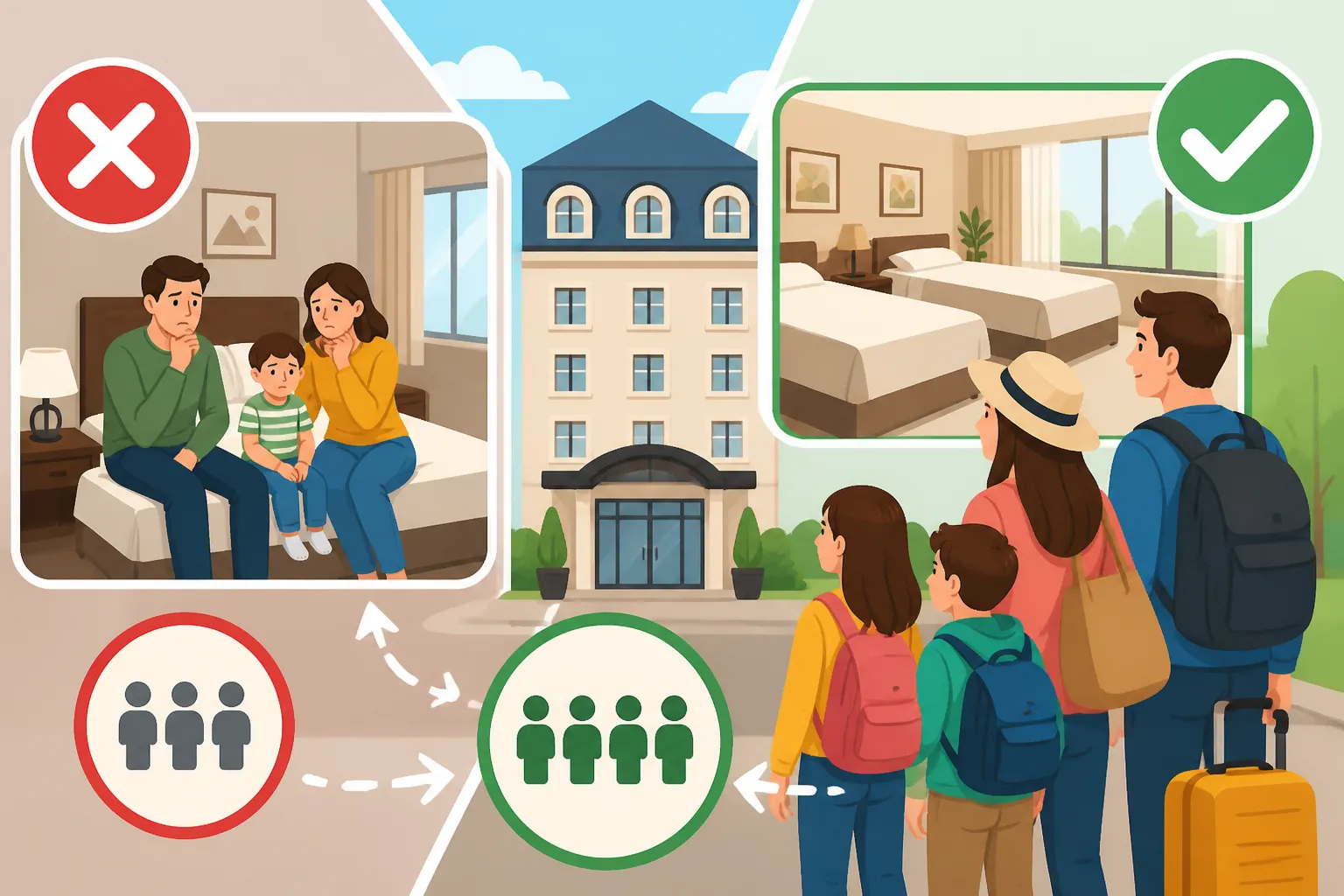
You've just arrived in Germany, perhaps after a long journey with excited (or exhausted!) kids, and you're ready to check into your pre-booked hotel. But then it hits you: that seemingly spacious "family room" you booked is actually two separate rooms, or worse, it's a room for three people, and you're a family of four. This scenario is incredibly common and frustrating for expat families and tourists alike. This guide dives deep into why German hotels often have a strict three-person limit per room and, more importantly, how you can navigate the booking landscape to find genuinely family-friendly accommodation, with Booking.com as your trusted ally.
Disclosure: This post may contain affiliate links. We may earn a commission at no extra cost to you if you make a purchase through these links. Read full disclosure.
The German Hotel Room Conundrum: Why Three is Often the Magic Number
If you've spent any time trying to book a hotel room in Germany for more than two adults and one small child, you've likely encountered the baffling phenomenon where most standard hotel rooms are capped at three people, even if they look like they could easily fit more. It's not a conspiracy, I promise, but a confluence of historical, cultural, and regulatory factors that shape the German hospitality industry. As an expat who's been here a while, I've seen countless families pull their hair out over this, and I can tell you, the frustration is absolutely valid.
Understanding German Hotel Standards and Room Types
Unlike some other countries where a "double room" might imply space for a family with a couple of kids, German hotel nomenclature is typically quite precise and, shall we say, efficient. A "Doppelzimmer" is generally for two people. A "Dreibettzimmer" (triple room) for three. Beyond that, options thin out remarkably quickly in traditional hotels.
Historically, German hotels often catered to business travelers, couples, or solo tourists. Family travel, especially with multiple children, was often associated with longer stays in Ferienwohnungen (holiday apartments) or camping, rather than overnight hotel stops. This means that many older hotel buildings, which make up a significant portion of the accommodation landscape in charming historic towns and city centers, simply weren't designed with large family rooms in mind. Space is at a premium, especially in bustling city centers like Munich or Berlin, and every square meter is optimized. You’ll find cozy, functional rooms rather than sprawling suites. Even when a room has two single beds pushed together, creating a "German double," the overall footprint is usually just enough for two, perhaps with a small cot added for a baby. It's not about being unwelcoming; it's just how the building was laid out and has operated for decades. This emphasis on practical, rather than expansive, design is something many foreigners find surprising when they first move here.
Regulations, Safety, and Fire Codes
Beyond historical design, legal and safety regulations play a huge role in dictating room capacities. German building codes and fire safety regulations are incredibly stringent – and for good reason, of course. These rules often specify a maximum number of occupants per room based on its size, the number and type of exits, ventilation, and other safety measures. This isn't something a hotel owner can just decide to bend. An inspector will ensure compliance, and hotels can face hefty fines or even closure if they consistently exceed these limits.
Imagine a charming, old hotel in a picturesque town like Rothenburg ob der Tauber. While you might picture your family of four nestled in a cozy room, the reality is that the room's original design, its window size, the corridor width, and the distance to the nearest fire escape could all contribute to a legal maximum occupancy of three people. It’s not just a suggestion; it’s a non-negotiable legal requirement. Even if a hotel staff member wanted to accommodate your family of four in a "triple" room by squeezing in an extra rollaway bed, they might literally be breaking the law to do so. This adherence to strict rules, known as Vorschriften, is a hallmark of German bureaucracy, and it extends well into the hospitality sector. It’s one of those things you learn to expect when living in Germany, where safety and order often take precedence.
Economic Factors and Target Demographics
From a business perspective, the decision to offer primarily smaller rooms for up to three people also makes sense for many hotel operators. As mentioned, the traditional target demographic often didn't include large families. Building and maintaining larger rooms or suites that can comfortably accommodate four or more people is more expensive. It means sacrificing a greater number of smaller, more profitable rooms, or incurring higher construction and furnishing costs.
For a hotel aiming for efficiency, it's often more lucrative to offer two standard double rooms that can be booked by two separate couples or individuals, rather than one large family suite that might sit empty if no large family books it. The demand for "family rooms" as understood in other parts of the world has certainly grown, leading some newer hotels or those undergoing renovations to include them. However, for a significant portion of the existing hotel infrastructure, adapting to this demand would require substantial, often cost-prohibitive, structural changes. This economic reality means that even if a hotel could technically fit a fourth person, they might choose not to, simply because their business model isn't built around that specific market segment. This can leave families feeling overlooked, but understanding the underlying economic drivers can help explain why it's so pervasive.
The Frustration is Real: Challenges for Larger Families
Okay, so we understand why it's happening. But that doesn't make it any less frustrating when you're staring at a hotel booking page, trying to figure out how to squeeze your family of four into a system built for two or three. The challenges for larger families go beyond just finding space; they touch upon financial burdens, logistical nightmares, and the sheer mental load of planning accommodation in a foreign country. Trust me, I've heard enough expat horror stories to validate every single one of these annoyances.
The Online Booking Maze: Why Standard Filters Fail
One of the biggest pain points is how standard online booking systems are designed. You go to a popular site, diligently input "4 people," and then you're hit with either no results, or results showing two separate rooms, or perhaps a single, exorbitantly priced suite that blows your budget out of the water. The filter for "family rooms" often doesn't narrow it down effectively, or the definition of a "family room" might still be a double room with a single pull-out couch, leaving one child out in the cold (metaphorically, of course!).
The truth is, many booking platforms, even excellent ones like Booking.com, rely on the information provided by the hotels themselves. If a hotel only lists rooms for 1-3 people, that's all the system can show you. The problem isn't necessarily the booking platform, but the inventory it has access to. You might scroll through page after page, thinking there's nothing suitable, when in reality, the options exist but require a more nuanced search or a different type of accommodation altogether. It’s disheartening to feel like you're constantly fighting the system just to find a place for your family to sleep together. This often means switching tabs, trying different dates, or giving up on standard hotels entirely, which adds a significant layer of stress to travel planning. For a deeper dive into adjusting to life here, you might find our guide on Living in Germany: Essential Guide to Daily Life for New Expats helpful, as it touches on adapting to various systemic differences.
Cost Implications: Two Rooms vs. One Larger Suite
Let's talk money, because this is where the "three-person cap" really starts to hurt. If you're forced to book two separate rooms for your family of four, you're almost certainly paying more. Sometimes, significantly more. You're effectively doubling your room cost, even if the second room is just for one child. This can quickly derail a travel budget, especially for longer trips or stays in expensive cities. A single suite, if available, also often comes with a premium price tag that might be well beyond what you'd pay for a single, albeit larger, family room in other countries.
The underlying issue is that you're paying for two distinct units, two sets of cleaning, two sets of potential amenities, and essentially, two revenue streams for the hotel. Even if the rooms are small, the cost multiplies. This makes otherwise affordable trips to Germany feel out of reach for many families. What might be a standard family vacation budget elsewhere becomes a luxury in Germany if you rely solely on traditional hotels without a clear strategy for finding multi-person rooms. Understanding the Cost of Living in Germany: Budgeting Guide for Expats can certainly provide more context on how various expenses add up here.
Logistical Headaches: Keeping the Family Together
Beyond the cost, there are the practical realities of managing a family, especially with younger children, across two separate rooms. Will the rooms be adjacent? On the same floor? Or will you find yourselves with kids on a different floor or, heaven forbid, in a different wing of the hotel? This can be a major source of anxiety for parents, not just for safety but for convenience. Imagine bedtime routines, middle-of-the-night calls, or simply wanting to enjoy family time in one space without constant shuffling between rooms.
Even if the rooms are next door, they're still separate. This often means less communal space, no shared bathroom (which can be a pro or a con, depending on your family!), and a feeling of being disjointed rather than "together." For families traveling with very young kids, having a separate room can feel impossible, as parents need to be within earshot or easy reach. The ideal, of course, is a single, comfortable space where everyone can relax, store their belongings, and regroup after a day of sightseeing. The search for this ideal often leads to a lot of compromises and added stress.
Finding Your Family-Friendly Haven: Strategies for Families of Four Plus
Okay, deep breaths! While the challenges are real, Germany is absolutely a fantastic country for families to visit. You just need to know how to look for accommodation. It’s less about brute-force searching and more about smart strategies and knowing where to pivot your expectations. Our ultimate "hero" in this quest for family-friendly lodging is often Booking.com, simply because its vast database and filtering options, when used correctly, can unlock a world of options beyond traditional hotels.
Embracing the Power of Smart Search on Booking.com
Forget just typing "4 people" and hitting search. To truly leverage a platform like Booking.com for a larger family, you need to become a filter master.
Here's how to make Booking.com work for you:
- Be Precise with Your Numbers: When you start your search, input the exact number of adults and children. Crucially, specify the age of each child. This is vital because some properties might consider a 12-year-old an "adult" for room capacity purposes, while others might view them as a child requiring a specific bed type. Booking.com allows you to input these details upfront, which significantly refines your results.
- Filter for "Family Rooms" or "Suites": Once you get your initial results, look for the "Room features" or "Room types" filters. Select "Family Room" or "Suite." While "Family Room" in Germany might still be smaller than you expect, it often implies a setup that can accommodate more than three, perhaps with a sofa bed or bunk beds. Suites are almost always more spacious and likely to have separate sleeping areas.
- Explore "Apartments" and "Aparthotels": This is where Booking.com truly shines beyond just traditional hotels. Many properties listed are actually Ferienwohnungen (holiday apartments) or aparthotels. These are explicitly designed for longer stays and often come with multiple bedrooms, separate living areas, and kitchenettes. They are a game-changer for families of four or more.
- Ferienwohnungen: These are self-catering apartments, often privately owned and rented out. They are typically much larger than hotel rooms, providing ample space for everyone. They almost always come with a fully equipped kitchen, which is a massive bonus for families looking to save money on meals or cater to specific dietary needs. You can often filter for these directly on Booking.com by selecting "Apartment" or "Villa" under the "Property type" filter.
- Aparthotels: These offer a hybrid model – the space and amenities of an apartment (kitchenette, living area) with some hotel services like reception, daily cleaning (sometimes optional), and breakfast. They’re a fantastic middle ground.
- Look for Connecting Rooms: While not always guaranteed, some traditional hotels do offer connecting rooms. While you'll still pay for two rooms, having an internal door can make a world of difference for keeping the family together. Booking.com descriptions sometimes mention this feature, but it often requires a direct call to the hotel to confirm and request.
- Check Bed Configurations Carefully: Always, always read the room description in detail. Does it say "1 large double bed and 1 sofa bed"? Or "2 single beds and 1 bunk bed"? Don't assume. The pictures can be misleading, so the written description on Booking.com is your most reliable source.
By being meticulous with your search on Booking.com, you'll uncover a broader range of suitable options that might otherwise be hidden. It's truly the most comprehensive platform for navigating Germany's diverse accommodation offerings.
Alternative Accommodation Types Beyond Traditional Hotels
If traditional hotels are consistently falling short, it's time to broaden your horizons. Germany offers a rich tapestry of accommodation types, many of which are inherently more family-friendly for larger groups. And yes, you can find most of these on Booking.com too!
- Ferienwohnungen (Holiday Apartments): I cannot stress this enough – holiday apartments are often the best solution for families of four or more in Germany. They provide space, privacy, and the invaluable addition of a kitchen. Imagine being able to prepare breakfast before heading out, pack lunches, or cook a simple dinner after a long day of exploring. This not only saves money but also provides a sense of normalcy and routine for kids. You'll find these everywhere, from bustling cities to quiet villages. Searching for "Apartment" or "Ferienwohnung" directly on Booking.com (or using the property type filter) will yield excellent results. Our guide on Housing in Germany: Renting, Buying, and Finding Your Home as an Expat gives a general overview of housing types, and many principles apply to temporary apartment rentals as well.
- Pensionen (Guesthouses): These are typically smaller, family-run establishments, often cozier and more personal than large hotels. While some Pensionen may still have smaller rooms, they are often more flexible and might offer larger family rooms or even small apartments within their property that aren't marketed in the same way as a hotel chain. They might also be more willing to add an extra bed for a small fee. Booking.com lists many Pensionen, and their descriptions can often be more detailed about family configurations.
- Youth Hostels (Jugendherbergen): Don't let the "youth" in the name fool you! German youth hostels are renowned for their cleanliness, safety, and modern facilities. Many offer private family rooms, often with bunk beds, and sometimes even en-suite bathrooms. They are incredibly budget-friendly, often include breakfast, and provide a fantastic atmosphere for kids to meet other travelers. Again, Booking.com can help you locate these, or you can search the official Jugendherberge website for specific locations.
- Holiday Parks and Resorts: Especially if you're traveling during the warmer months or to a specific region known for tourism, consider a holiday park (Ferienpark). These are purpose-built complexes with self-catering bungalows or cottages, playgrounds, swimming pools, and various activities. They are designed entirely around family needs and easily accommodate larger groups. While dedicated holiday park websites exist, some will list their individual units on platforms like Booking.com.
- Camping: For the adventurous family, Germany has a fantastic network of campsites (Campingplätze), many offering bungalows or mobile homes for rent. This is a very popular way for German families to vacation and can provide a truly immersive experience with nature.
The Art of Direct Communication: Don't Be Afraid to Call
Even with the best online search tools, sometimes the human touch is invaluable. If you find a hotel you absolutely love on Booking.com but their room configuration seems just shy of what you need, don't hesitate to contact them directly.
Here's why:
- Hidden Flexibility: A hotel might have one or two rooms that can accommodate a fourth person with a rollaway bed (Zustellbett) but doesn't actively advertise it online because it's not a standard offering. They might reserve this flexibility for direct inquiries.
- Connecting Rooms Not Listed: They might have connecting rooms that aren't easily bookable as a single unit online but can be assigned if you call.
- Better Understanding of Your Needs: By speaking to someone, you can explain your family's specific situation (e.g., "Our two children are small and can share a bed," or "We only need a cot for a baby"). They might be able to offer a creative solution.
- Language Barrier? Try Email: If your German isn't quite up to conversational standards, send a polite email in English. Many hotels, especially those catering to tourists, will have English-speaking staff who can respond. For general communication tips, our article on German Language and Everyday Communication for Visitors might be useful.
- Confirm, Confirm, Confirm: If they offer a solution over the phone or email, always ask for written confirmation. This ensures everyone is on the same page when you arrive.
Calling ahead, or sending an email after you've identified a promising property on Booking.com, can sometimes unlock options you didn't even know existed. It's an extra step, but often worth the effort for peace of mind.
Making the Most of Your Family Stay in Germany
Once you've navigated the booking maze and secured your family-friendly accommodation, there are still ways to optimize your experience and ensure a smooth, enjoyable trip to Germany. These tips apply whether you've booked a hotel, an apartment, or a cozy guesthouse through Booking.com.
Leveraging Family-Friendly Features
When you're searching on Booking.com or speaking directly with properties, keep an eye out for these features that can make a huge difference for families:
- Kitchenettes or Full Kitchens: If you're in an apartment (Ferienwohnung) or aparthotel, a kitchen is a game-changer. Being able to prepare simple meals, snacks, and drinks can save a significant amount of money and reduce mealtime stress. You can stock up on groceries from local supermarkets, which is an experience in itself! Our guide on Navigating German Supermarkets: Grocery Shopping Tips and Tricks can help you find your way around.
- On-site Play Areas or Gardens: Especially for younger children, a dedicated space to burn off energy is invaluable. Look for hotels or apartments that mention playgrounds (Spielplatz), gardens, or even family rooms with toys.
- Breakfast Options: While many hotels offer breakfast buffets, check if it's included or an extra cost. For self-catering apartments, inquire if they offer a breakfast delivery service or if there's a nearby bakery (Bäckerei) for fresh rolls.
- Proximity to Parks and Attractions: Location isn't just about being central; for families, it's often about being close to green spaces, family-friendly museums, or public transport links that connect you easily to your desired activities. When exploring cities, our articles like Best Day Trips From Berlin or Family-Friendly Cities in Germany: Best Places to Raise Kids can provide inspiration for destinations and activities.
- Laundry Facilities: If you're on a longer trip, access to laundry facilities (either in your apartment or at the property) can lighten your packing load considerably.
Remember to utilize the specific filters on Booking.com for these amenities. Many properties highlight "family-friendly" or "child-friendly" services in their descriptions, making it easier to pinpoint what you need.
Booking Smart for Budget and Convenience
Securing the right family accommodation often comes down to timing and strategic choices.
- Book Well in Advance: This is perhaps the most crucial tip, especially for larger families. Family rooms, apartments, and suites are often the first to be booked, particularly during peak travel seasons (summer, school holidays, Christmas markets, major festivals like Oktoberfest). Starting your search on Booking.com several months ahead can make a huge difference in availability and price. Check our guide on German Public Holidays: How They Affect Life and Work to understand peak times.
- Consider Shoulder Seasons: If your travel dates are flexible, consider visiting Germany during the shoulder seasons (late spring or early autumn). You'll still enjoy pleasant weather, fewer crowds, and often better rates and availability for larger rooms.
- Explore Locations Slightly Outside the City Center: While a central location is appealing, properties a bit further out often offer more space for your money. Germany's public transport system is excellent, so being a short train or tram ride away from the main attractions can be a worthwhile trade-off for a larger, more comfortable family space. Don't forget to look at our tips on Getting Around Germany: Trains, Buses, Flights, and Car Hire for navigating transportation effectively.
- Read Reviews on Booking.com: Always check recent reviews, particularly those from other families. They often offer invaluable insights into the actual size of the room, the quality of amenities, and the property's overall suitability for children. Booking.com makes it easy to filter reviews or specifically look for comments related to family stays.
By combining early planning with a savvy approach to location and amenities, you can maximize your chances of finding a great deal on a comfortable, family-friendly spot.
Packing Strategically for Multi-Room Stays
Even with the best planning, sometimes two rooms are simply unavoidable. If you find yourself in this situation, a little strategic packing can ease the logistical burden:
- "Family Essentials" Bag: Designate one bag for shared items like toiletries, medicines, pajamas, and charging cables. This way, if your rooms are not adjacent, you only need to carry one bag back and forth for shared necessities.
- Kids' Overnight Bag: For younger children, pack a small backpack with their favorite toy, a book, and their pajamas. This helps them feel secure and gives them quick access to comfort items, regardless of which room they're sleeping in.
- Communication is Key: If rooms are separate, establish clear communication rules with older children. For instance, using walkie-talkies or having phones for older kids (if appropriate) can offer peace of mind.
- Room Reconnaissance: Upon arrival, immediately scope out the layout of your assigned rooms. If they are far apart, or if you have concerns, politely inquire at reception if any closer rooms have become available. Sometimes, a quick conversation can lead to a better arrangement.
Navigating accommodation for a family of four or more in Germany requires a bit more effort and a good understanding of the local nuances. But with a strategic approach, a willingness to explore various accommodation types, and the powerful search capabilities of Booking.com, you absolutely can find your perfect base for an unforgettable German adventure.
| Accommodation Type | Pros for Families of 4+ | Cons for Families of 4+ | Best for | Found on Booking.com? |
|---|---|---|---|---|
| Traditional Hotel | Central locations, services (breakfast, cleaning), comfort | Limited "family rooms" (often just triples), expensive for 2 rooms, less space | Short stays, city breaks (if you find a true family suite) | Yes |
| Ferienwohnung (Apartment) | Ample space, multiple bedrooms, full kitchen, privacy, cost-effective for longer stays | No hotel services, may require more self-sufficiency, often less central | Longer stays, budget-conscious, desire for home-like comfort | Yes (Filter "Apartment") |
| Aparthotel | Space of an apartment, some hotel services (reception, optional cleaning) | Can be pricier than private apartments, fewer options than hotels | Mid-range stays, desire for blend of space and convenience | Yes (Filter "Aparthotel") |
| Pension (Guesthouse) | Personal touch, often charming, potentially more flexible | Variability in room size, fewer amenities than larger hotels | Rural areas, authentic experience, specific region focus | Yes |
| Youth Hostel (Jugendherberge) | Very budget-friendly, private family rooms, social atmosphere, usually includes breakfast | Bunk beds, shared facilities possible, less luxury | Budget travel, families with older children, social travelers | Yes (Filter "Hostel") |
| Holiday Park | Designed for families, many activities, self-catering bungalows | Often outside city centers, less cultural immersion | Leisure trips, longer stays, dedicated family fun | Yes (some units listed) |
Disclaimer
This article is for general informational purposes only and does not constitute professional advice. Laws, prices and regulations vary by location and change over time. Consult a qualified professional for guidance on your specific situation.