Booking for Visiting Parents in Germany: Lifts, Stairs, and Access Checks
Bringing your beloved parents or elderly relatives to Germany for a visit is such a heartwarming thought, but oh boy, the practicalities of finding suitable accommodation can quickly turn that excitement into a mountain of stress. Many of Germany's charming, historic buildings weren't exactly built with modern accessibility in mind, leaving us expats scrambling to figure out if there's a lift, how many stairs are involved, and if the bathroom is actually manageable. This guide is here to walk you through the often-frustrating process of securing comfortable and accessible lodging for your parents, and we’ll show you why a platform like Booking.com can be an absolute lifesaver in navigating these tricky waters.
Disclosure: This post may contain affiliate links. We may earn a commission at no extra cost to you if you make a purchase through these links. Read full disclosure.
Why Accessibility Can Be Such a Headache in Germany
Let's just be honest: Germany is beautiful, efficient, and steeped in history. But that last part? History? It often translates into buildings that are utterly charming but decidedly not designed for anyone with mobility challenges. You're picturing your parents enjoying a lovely stay, not huffing and puffing up three flights of stairs with heavy luggage, right? This isn't just about wheelchairs; it's about tired knees, walking aids, balance issues, and simply the energy drain of constant physical hurdles.
The Charm of Old Buildings vs. Practicality
Oh, the lovely old towns, the historic city centers, the picturesque guesthouses tucked into centuries-old buildings! They are part of Germany's allure, truly. But here's the rub: many of these buildings, particularly in smaller towns or older parts of major cities like Berlin, Munich, or Cologne, predate modern accessibility standards. "Lift available" might mean a tiny, old-fashioned elevator that fits one person and a small suitcase, or it might mean a lift only starts from the first floor, after you’ve already climbed a flight of stairs. Sometimes, an "accessible room" might just mean it’s on the ground floor, but the bathroom still has a step-up shower. Trust me, I've seen it all.
The struggle is real when you're trying to reconcile the romantic image of Germany with the practical needs of your parents. It's not a criticism of Germany, just a reality we expats learn to navigate. The emphasis on robust construction and preserving historical facades often takes precedence over retrofitting for universal access, especially in privately owned accommodations. This means you can't just assume a place is easy to get around; you have to check every single detail.
Inconsistent Standards and Information Gaps
Another layer of frustration comes from the lack of universally applied, clear accessibility standards, especially in the private sector. What one guesthouse owner considers "accessible" might be completely different from what your parents actually need. Online listings, while helpful, often have vague descriptions. A property might state "wheelchair accessible," but does that mean a ramp into the building, wide doors, a roll-in shower, or just enough space to turn a chair in the room itself? These nuances are critical, and they are often lost in translation or simply not considered by the property owner.
This is where a platform like Booking.com becomes invaluable, not just for its sheer volume of listings but because it allows properties to specify various features. However, even with filters, you still need to be diligent. It's common to find discrepancies or discover that a "small step" in the description is actually a significant barrier for someone with limited mobility. This information gap means you can't rely solely on what's written; a little detective work is always required.
Deciphering "Accessible": What to Actually Look For When Booking
When you're trying to find that perfect, stress-free spot for your parents, you've got to become a bit of an accessibility detective. Don't just look for the generic "accessible" tag. Dig deeper. This is where Booking.com's detailed filtering and property descriptions can start to shine, helping you narrow down the myriad options.
Lifts, Ramps, and Entrances: Getting Into the Building
First and foremost, how do your parents even get into the place? Many hotels and apartment buildings, especially newer ones, will have a proper ramp or a street-level entrance. But for older establishments, it's a huge question mark.
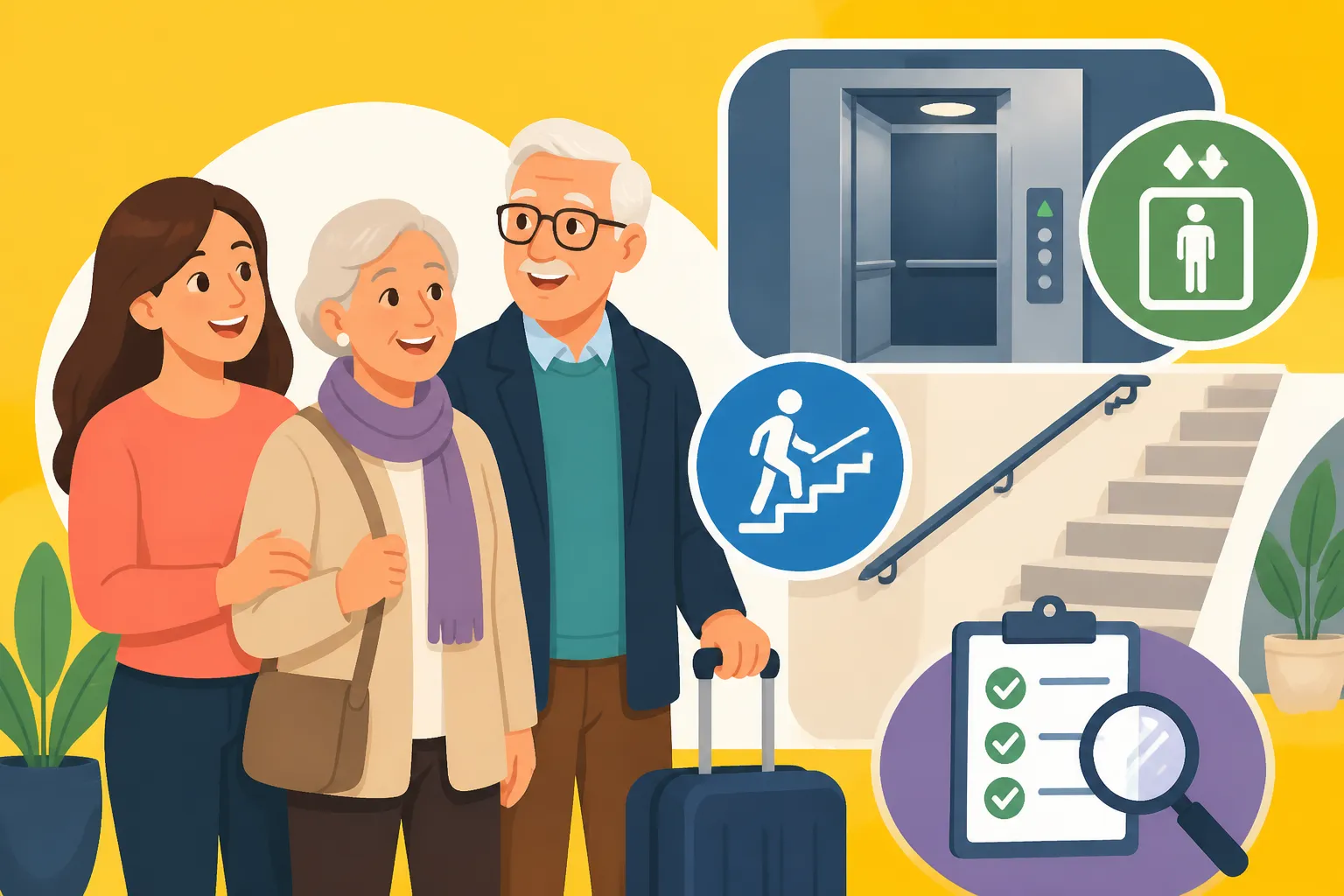
- Lifts (Aufzug): This is usually the first thing on anyone's checklist. A lift is essential. But here’s the kicker: where does the lift start? I've seen countless German buildings where the lift only begins on the first floor, meaning you still have to ascend a full flight of stairs from the street. Or maybe it goes to all floors except the ground floor or the top floor. Always check. On Booking.com, if a property lists an "elevator" or "lift," you can often find pictures or reviews that clarify its placement and size. Don't be shy about zooming in on images to spot any initial steps.
- Ramps: Are there steps leading up to the main entrance? If so, is there a permanent ramp or at least a portable one available? Some smaller guesthouses might have a small, easily surmountable step or two, but anything more can be a real issue.
- Doorways: Are the main entrance doors wide enough for a walker or a wheelchair? Heavy, ornate wooden doors are common in Germany, and some can be quite narrow or difficult to open.
Room Layout and Bathroom Essentials
Once inside, the battle isn't over. The room itself needs to be navigable, and the bathroom often holds the biggest surprises.
- Room Size and Furniture Placement: Is there enough space to move around comfortably, particularly if a walker or wheelchair is needed? German hotel rooms can sometimes be on the smaller side. Check photos on Booking.com carefully. Look for rooms without excessive clutter or awkwardly placed furniture that could impede movement. Is there space to store luggage without tripping over it?
- Bed Height and Clearance: Can your parents comfortably get in and out of the bed? Some beds are quite low, others surprisingly high. Is there enough clearance underneath for portable medical equipment if needed?
- Bathroom Accessibility: This is often the trickiest part.
- Roll-in Shower (bodengleiche Dusche): This is key. Many German bathrooms have showers with a high lip or step-up, which can be a fall hazard. You need a shower where you can roll or walk straight in without obstacles.
- Grab Bars (Haltegriffe): Are there grab bars in the shower and next to the toilet? These are vital for stability.
- Toilet Height and Space: Is the toilet too low or too high? Is there enough space around it for assistance or a transfer?
- Sink Height: While less critical, a sink that's too low or too high can be uncomfortable.
- Door Width: Again, bathroom doors can sometimes be surprisingly narrow.
- Flooring: Smooth, non-slip flooring is always preferable. Thick carpets can be difficult for walkers or wheelchairs.
It's a lot to consider, I know! But truly, for peace of mind, every one of these points needs to be addressed. Booking.com offers specific "accessibility features" filters that can help tremendously. Look for things like "wheelchair accessible," "toilet with grab rails," "roll-in shower," and "higher level toilet." Utilize these filters, but always cross-reference with photos and, ideally, direct communication. For a good overview of broader healthcare considerations, check out our guide on Healthcare in Germany: A Comprehensive Guide for Expats.
| Feature Type | Ideal for Elderly/Less Mobile | Potential Challenges in Germany | How Booking.com Helps |
|---|---|---|---|
| Building Access | Zero-step entry, ramps, large, modern elevator from ground floor. | Historic buildings with many steps, small, old elevators starting on upper floors. | "Elevator" filter; scrutinize photos, read reviews for entrance details. |
| Room Mobility | Spacious layout, minimal clutter, easily moved furniture, firm beds. | Compact rooms, fixed furniture, low beds, thick carpets. | Look at room photos for space, check reviews for specific furniture. |
| Bathroom Access | Roll-in shower, grab bars, accessible toilet height, wide door. | Step-up showers, no grab bars, cramped toilet areas, narrow doors. | "Accessibility features" filter (e.g., "roll-in shower", "toilet with grab rails"); check bathroom photos carefully. |
| Overall Comfort | Quiet room, good lighting, clear emergency exits. | Noisy locations, dim lighting, confusing layouts. | Read guest reviews about noise levels, check property amenities. |
Beyond the Listing: Essential Pre-Booking Checks and Questions
Even the most detailed Booking.com listing can't tell you everything. This is where you become a proactive super-planner. Don't be afraid to take an extra step or two to ensure your parents' comfort and safety.
Contacting the Property Directly
This is probably the most crucial step after you've identified a few potential properties on Booking.com. Once you've used the filters and read the descriptions, reach out to the hotel or apartment owner directly. Booking.com often provides a messaging system for this, or you can find their direct email or phone number on their profile.
Here’s what you need to ask, specifically:
- "Can you confirm the exact number of steps from the street level to the main entrance?" Be very specific. "Are there any steps at all?"
- "Does the lift start from the ground floor (Erdgeschoss) or do we need to take stairs to reach it?" Reiterate this question, as it's a common point of confusion.
- "Could you describe the shower in the room? Is it a roll-in shower or does it have a lip/step?" Ask about grab bars too.
- "Are there any photos of the bathroom specifically showing the shower and toilet area that are not on your Booking.com listing?" Many properties have more photos they can send.
- "Is there enough space in the room for a walker or a small wheelchair to maneuver comfortably?"
- "Are the doors wide enough for a standard wheelchair (typically 80cm wide)?" This is especially important for bathroom doors.
Don't just rely on a simple "yes" or "no." Ask for specifics, dimensions if possible, or even a short video if you're really unsure. Most reputable hosts, especially those with accessibility options, will be happy to provide this information. If they seem dismissive or vague, that's a red flag. For practical communication tips, you might find our article on Seeing a Doctor Who Doesn’t Speak English: Tips for Overcoming Language Barriers helpful, as the communication challenges can be similar.
Virtual Reconnaissance: Google Street View and Reviews
Before even contacting the property, do a little internet sleuthing.
- Google Street View: This is your best friend. Plug in the address and "walk" down the street virtually. Look at the building entrance. Can you see steps? A ramp? How wide is the sidewalk in front? Is it easily accessible from public transport?
- Read Reviews, Critically: On Booking.com, pay special attention to reviews that mention accessibility, senior travelers, or mobility issues. Sometimes, guests will highlight specific challenges or positive aspects that aren't clear from the listing description. Filter reviews by keywords like "stairs," "lift," "wheelchair," "elderly," or "accessible." Be wary of general "great location!" reviews and focus on practical details.
Remember, a little extra effort upfront can save a world of stress and disappointment when your parents arrive.
Accommodation Types: Hotels, Apartments, and Unique Stays for Accessibility
Germany offers a wide array of accommodation, each with its own quirks and benefits when it comes to accessibility. Thinking about the type of place can really narrow down your Booking.com search from the get-go.
Hotels: The Familiar Option
Hotels are often the first choice for visitors, offering services like daily cleaning, reception staff, and sometimes on-site restaurants.
- Pros: Newer chain hotels (like some modern Holiday Inn Express, Hampton by Hilton, or even some of the larger German chains such as Maritim or NH Hotels) are far more likely to have consistent accessibility standards, including roll-in showers and spacious rooms. They also often have staff who speak English and are trained to assist. Booking.com makes it easy to filter for these types of hotels specifically.
- Cons: Older, smaller, independent hotels, especially in historic city centers, can be a mixed bag. They might be charming but lack modern lifts, or have compact bathrooms. They can also be pricier than other options.
- Tips: When searching on Booking.com, prioritize newer constructions or internationally recognized chains known for their standardized offerings. Use the specific accessibility filters religiously. Read recent reviews focused on practical guest experiences regarding movement within the hotel.
Apartments (Ferienwohnungen): Home Away From Home
Renting a self-catering apartment or Ferienwohnung can be a fantastic option for longer stays, offering more space, a kitchen, and a more local feel.
- Pros: Apartments often provide a living room, separate bedrooms, and a kitchen, which can be a huge benefit for parents who prefer to prepare some meals or just enjoy more space to relax. If you find a ground-floor apartment, it might bypass the "lift" problem entirely. Some newer apartment buildings are built with good accessibility.
- Cons: You won't have a reception desk, so communication often relies directly on the owner, which can sometimes be a challenge if there's a language barrier or if they are less responsive. Cleaning and other services are typically extra or not included. Apartment buildings, especially older ones, are often walk-ups with no lifts at all.
- Tips: When looking on Booking.com, always filter for "entire apartment" and pay extremely close attention to the floor number. Ground floor (Erdgeschoss) is usually best. Don't be shy about asking the owner for very specific details and photos, just as you would for a hotel. Look for modern apartment buildings if possible. This is also where checking Finding an Apartment in Germany: Best Websites and Tips for Expats could give you a broader understanding of the German rental market.
Guesthouses (Pensionen) and Bed & Breakfasts
These smaller, often family-run establishments offer a more intimate experience.
- Pros: They can be incredibly welcoming and offer a truly authentic German experience. Owners are often very hands-on and might go out of their way to assist your parents.
- Cons: Accessibility is usually a major concern here. Many Pensionen are in older buildings, often with steep staircases and no lifts. Bathrooms can be small and dated. They are less likely to have formal accessibility features.
- Tips: Unless a specific guesthouse is explicitly marketed as accessible, proceed with extreme caution. This is one area where Booking.com filters are a must, and direct communication is paramount. Don't assume anything; verify everything.
Unique Stays: Castles, Farm Stays, and More
Germany offers unique accommodations like stays in castles, converted farmhouses, or historical estates.
- Pros: These can be truly memorable experiences.
- Cons: Accessibility is almost always a huge challenge. Steps, uneven terrain, multi-level layouts, and old-fashioned facilities are par for the course. These are generally not suitable for anyone with significant mobility issues.
- Tips: Enjoy these places yourselves, perhaps, but probably avoid them for parents needing easy access. You might find some interesting places listed on Booking.com that look charming, but unless they specifically highlight modern accessibility adaptations, it's best to steer clear for this specific need.
The key across all these types is diligence. Booking.com offers a fantastic starting point with its robust search filters and extensive property listings. By combining those tools with proactive communication and a critical eye, you can dramatically increase your chances of finding the perfect, stress-free accommodation for your visiting parents in Germany. They deserve a wonderful trip, and with a little planning, you can make sure they get it! And for more insights into short-term stay options, have a look at our guide on Short-Term Accommodation in Germany: Options for Your First Weeks.
Disclaimer
This article is for general informational purposes only and does not constitute professional advice. Laws, prices and regulations vary by location and change over time. Consult a qualified professional for guidance on your specific situation.