Seeing a Doctor Who Doesn’t Speak English: Tips for Overcoming Language Barriers
Navigating a German medical clinic without speaking the local language can be incredibly stressful, especially when you are unwell. This comprehensive guide provides actionable translation strategies, cultural insights, and practical advice to help expats overcome language barriers and secure effective healthcare.
Disclosure: This post may contain affiliate links. We may earn a commission at no extra cost to you if you make a purchase through these links. Read full disclosure.
Preparing for Your Medical Appointment in Germany
Translating Your Symptoms and Medical History
When you are sick, your brain is already exhausted; attempting to recall complex German medical vocabulary in the heat of the moment is a recipe for miscommunication. The most effective strategy for overcoming a language barrier with a German doctor is rigorous, written preparation. Before you leave your apartment, write down your primary symptoms, the duration of your illness, and your relevant medical history in plain English.
Next, translate this information into German using a highly accurate translation tool. It is crucial to format this translated text as concise bullet points rather than dense paragraphs. German doctors are notoriously efficient and operate on tight schedules; handing them a clear, bulleted list of symptoms in German allows them to absorb the necessary information instantly. Be sure to include current medications you are taking, any known allergies (Allergien), and past surgeries (Operationen).
If you are a new arrival, bringing translated copies of your previous medical records from your home country is highly recommended. While finding a dedicated English-speaking general practitioner is the ideal scenario—a process we outline in Finding a Doctor in Germany: How to Choose a Hausarzt—having a translated “cheat sheet” guarantees that any local doctor can understand your baseline health profile. Furthermore, if your condition requires ongoing management with specialized wellness products or supplements that are hard to describe to a German pharmacist, expats frequently use platforms like iHerb to securely order their preferred international health items directly to their door, bypassing the language barrier entirely.
Utilizing Digital Translation Tools
In modern German clinics, digital translation tools are widely accepted and frequently used by medical professionals themselves to bridge communication gaps with international patients. While Google Translate is the most famous, many expats and German professionals prefer DeepL for its superior handling of complex grammar and medical terminology.
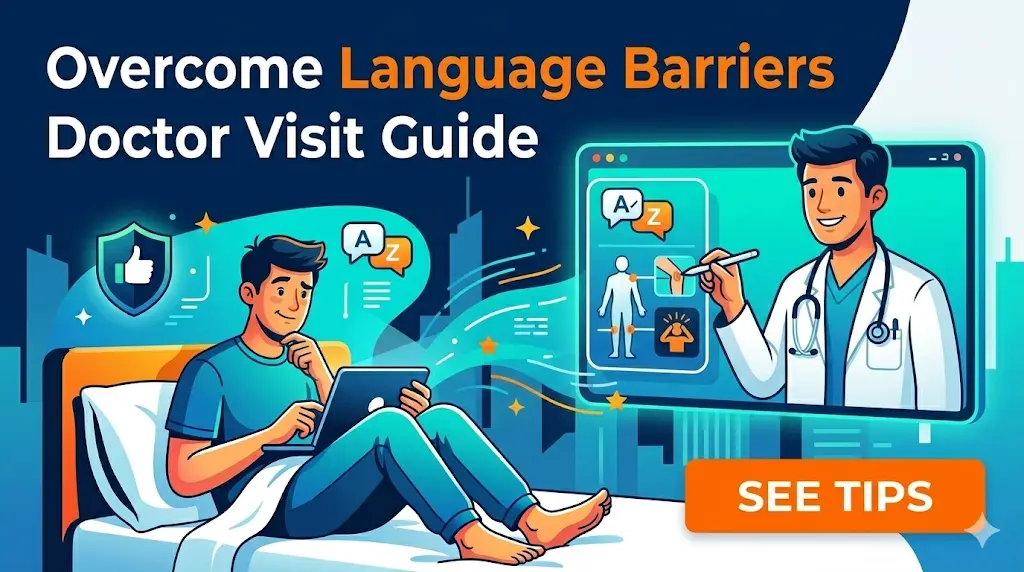
Before your appointment, ensure you have downloaded the offline German language packs for your chosen translation app. Clinic buildings in Germany often have thick concrete walls that severely restrict cellular data, and relying on a live internet connection to translate a crucial medical question is a massive risk. Utilize the “conversation mode” or audio dictation features, which allow you and the doctor to speak directly into the phone, generating real-time text translations.
While these tools are excellent for basic diagnostics, they can struggle with the nuance of pain description. Try to learn the basic German modifiers for pain (Schmerz), such as stechend (stabbing), drückend (pressing), or pochend (throbbing). Combining these specific adjectives with pointing to a visual body diagram will drastically improve the accuracy of the doctor’s diagnosis.
Navigating the German Clinic Experience
Communicating with the Receptionist and Nurses
The most formidable language barrier in a German medical practice (Arztpraxis) is rarely the doctor; it is almost always the front desk. The medical assistants, known as Medizinische Fachangestellte (MFA), handle all triage, appointment booking, and initial paperwork. Because their roles are highly administrative and deeply rooted in German health insurance bureaucracy, they are less likely to speak fluent English than the physicians, who often read international medical journals.
When you approach the reception desk (Anmeldung), start with a polite German greeting and immediately state your purpose using simple phrases. Hand over your electronic health card (Gesundheitskarte) immediately, as this is the first thing they need to process your visit. If you are a walk-in patient without an appointment (ohne Termin), clearly state that you have acute pain (akute Schmerzen), which legally obligates them to triage you, even if you must wait several hours in the waiting room (Wartezimmer).
It is also vital to understand German clinical culture. The communication style at a German front desk is highly direct, factual, and efficient. Expats from North America or the UK often misinterpret this directness as rudeness or a lack of empathy, especially when exacerbated by a language barrier. Do not take it personally; it is simply the standard professional demeanor.
Bringing a German Speaking Friend or Translator
If your medical issue is complex, chronic, or requires discussing specialized treatment plans, relying on smartphone apps is insufficient and potentially dangerous. The absolute best strategy is to bring a trusted, fluent German-speaking friend or colleague to your appointment. By law, you are allowed to have a chaperone in the consultation room. A human translator can pick up on cultural nuances, ask clarifying follow-up questions, and ensure you fully understand the doctor’s instructions.
If you do not have a German-speaking friend available, hiring a professional medical interpreter for an hour is a highly strategic investment in your health. If you are paying a freelance interpreter, utilizing a borderless financial platform like Wise allows you to easily transfer their fee directly to their Euro account without incurring the hidden markups of legacy banks.
Alternatively, your choice of health insurance can solve this problem for you. If you are privately insured, premium expat-focused providers like Ottonova offer comprehensive concierge services. Their English-speaking support teams can actually call the clinic on your behalf, book the appointment, and explicitly brief the doctor’s office in German about your symptoms before you even arrive. Similarly, specialized brokers like Feather Insurance provide robust, English-language support to help you navigate the bureaucratic hurdles of finding care, easing your transition into Healthcare in Germany: A Comprehensive Guide for Expats.
| English Phrase | German Translation | Pronunciation Guide | Context / Usage |
| Do you speak English? | Sprechen Sie Englisch? | Shpre-khen zee Eng-lish? | Always ask this first out of politeness. |
| I have an appointment. | Ich habe einen Termin. | Ikh ha-beh eye-nen ter-meen. | Say this at the front desk upon arrival. |
| I don’t have an appointment, but I am in acute pain. | Ich habe keinen Termin, aber ich habe akute Schmerzen. | Ikh ha-beh kye-nen ter-meen, ah-ber ikh ha-beh ah-koo-te shmer-tsen. | Use for urgent, same-day walk-in visits. |
| I need a sick note for work. | Ich brauche eine Krankschreibung. | Ikh brow-khe eye-ne krahnk-shrye-bung. | Requesting official documentation for your employer. |
| Where does it hurt? | Wo tut es weh? | Vo toot es vay? | The doctor will likely ask you this. |
| It hurts here. | Es tut hier weh. | Es toot here vay. | Use while pointing to the affected body part. |
Following Up and Managing Prescriptions
Decoding the German Prescription System
Once your consultation concludes, the doctor will likely issue a prescription (Rezept). However, the German prescription system utilizes a strict color-coded paper framework (though transitioning slowly to digital e-prescriptions) that dictates exactly who pays for the medication. Understanding this color coding is crucial, as the pharmacist (Apotheker) will rarely explain the billing mechanics in English.
If you receive a Red (or Pink) Prescription, you are covered by statutory public health insurance. This means the medication is deemed medically necessary, and your public insurer covers the bulk of the cost. You will only pay a small statutory co-pay (Zuzahlung) at the pharmacy counter, typically between €5 and €10.
If you receive a Green Prescription, the doctor is officially recommending a medication (often an over-the-counter remedy like a mild painkiller, cough syrup, or herbal supplement), but it is not covered by your statutory health insurance. You must pay the full retail price out of pocket. To avoid the high retail markups on non-prescription wellness items at the local pharmacy, many expats prefer to order their general vitamins and preventative care products online via iHerb, which provides an English-language interface and massive variety.
Finally, a Blue Prescription is issued to patients with private health insurance. Privately insured patients must pay the full cost of the medication upfront at the pharmacy and subsequently submit the receipt to their insurer for reimbursement.
Getting Health Insurance Support
Do not underestimate the administrative resources provided by your health insurance company when dealing with language barriers. If you are struggling to communicate with a specialist or cannot find a doctor who speaks English to provide a second opinion, your insurer is legally obligated to assist you.
Major statutory public funds (Krankenkassen) have recognized the growing expat demographic and established dedicated English-speaking hotlines. They can help you locate specialists, clarify what treatments are covered under Public Health Insurance gesetzliche Krankenkasse: What It Covers and Costs, and mediate disputes with billing departments.
If you chose private health insurance, the customer service experience is generally highly tailored. Digital-first providers like Ottonova and expat-centric platforms like Feather Insurance pride themselves on providing all policy documents, claim submissions, and customer support entirely in English. If you ever need to visit a highly specialized private clinic that does not accept public insurance, you can choose to go as a “self-payer” (Selbstzahler). When settling these large, out-of-pocket private medical invoices from an international account, utilizing Wise ensures you transfer the funds at the real exchange rate, protecting you from punitive legacy banking fees.
Emergency Situations and the 116117 Hotline
If you face a medical situation outside of standard clinic hours (evenings, weekends, or public holidays) and cannot reach your regular doctor, do not panic. Germany operates a nationwide, non-emergency medical on-call service reachable by dialing 116117.
When you call this number, you can request an English-speaking operator. They will assess your symptoms over the phone and direct you to the nearest open on-call clinic (Bereitschaftspraxis), or in severe cases, dispatch an on-call doctor to your apartment. This service prevents you from unnecessarily crowding hospital emergency rooms. However, if you are experiencing a genuine, life-threatening emergency (such as chest pain or severe bleeding), immediately dial 112 for an ambulance. Emergency dispatchers in Germany are highly trained and almost universally speak English.
Conclusion
Seeing a doctor who doesn’t speak English in Germany is undoubtedly a daunting prospect, but it is a highly manageable challenge with the right preparation. By proactively translating your symptoms into concise German bullet points, leveraging digital tools like DeepL, and understanding the direct, efficient nature of German clinical culture, you can ensure your medical needs are met accurately. Navigating the front desk and the color-coded prescription system becomes routine once you know the rules.
Furthermore, by utilizing English-first insurance platforms like Ottonova or Feather Insurance for administrative support, sourcing your supplementary wellness products through iHerb, and managing private medical payments seamlessly with Wise, you completely neutralize the bureaucratic friction of the German healthcare system. Ultimately, your health is your most valuable asset, and overcoming the language barrier ensures you receive the world-class medical care Germany has to offer.
References
Primary sources (official)
- Federal Ministry of Health (BMG): The highest German federal government department responsible for health policy, offering comprehensive English-language guides on the structure of the statutory and private healthcare systems. https://www.bundesgesundheitsministerium.de/en/en.html
- Kassenärztliche Bundesvereinigung (KBV): The National Association of Statutory Health Insurance Physicians, providing official English patient information, including the functions of the 116117 medical on-call service. https://www.kbv.de/html/
Other helpful sources
- Make it in Germany: The official German government portal for international professionals, offering specific, practical checklists for finding doctors, understanding health insurance, and navigating medical appointments as an expat. https://www.make-it-in-germany.com/en/living-in-germany/health-healthcare
- 116117.de – Der Patientenservice: The direct consumer-facing portal for booking appointments and locating on-call medical practices outside of regular working hours. https://www.116117.de/de/index.php
Disclaimer
The information provided in this article is for general informational and educational purposes only and does not constitute professional medical, legal, or financial advice. German healthcare regulations, the specific benefits of public versus private insurance plans, and the prescription billing framework are highly complex and subject to continuous legislative updates. The availability of English-speaking medical staff varies significantly by geographic location and medical specialty. Always consult directly with a qualified medical professional, dial 112 in a genuine emergency, or speak with a certified insurance broker regarding your unique health needs and coverage options in Germany.