Day Trips and Weekend Getaways Across Germany
Picture a free Saturday in Germany. You open the DB Navigator app, see a confusing range of fares, discover that half of the Rhine is apparently “sold out,” and end up spending the day on your sofa. This guide fixes that. It shows you how to choose, book, and pace day trips and weekend getaways across Germany without the guesswork.
Disclosure: This post may contain affiliate links. We may earn a commission at no extra cost to you if you make a purchase through these links. Read full disclosure.
Why Germany Rewards the Short Trip
Germany is built for the small escape. There is a castle, a wine village, a lake, or a medieval old town within reach of almost every major city. The rail network ties them together more tightly than in most countries I have lived in. Once you understand the rhythm, a weekend away stops feeling like a project and becomes a habit.
The Weekend Culture You Are Joining
Germans take their free time seriously. Friday afternoon trains out of Munich toward the Alps fill with hiking boots and rucksacks. Hamburg families head to the Baltic beaches the moment the weather turns. Berliners disappear into Brandenburg’s lakes. You are joining a culture that already treats the short getaway as normal, which means the infrastructure is there: trails are marked, guesthouses expect weekend arrivals, and regional trains run to surprisingly small places.
The flip side is that you are competing with millions of locals for the same scenic spots. Saxon Switzerland on a sunny Sunday in May is not a quiet wilderness experience. The car park at Königssee fills early. The trick is to go where the locals go, but at slightly different times. The rest of this guide is built around that idea.
My first year here, I tried to plan trips the way I had at home: pick a famous place, book a hotel, go. It worked, but I kept arriving in towns on public holidays when everything was shut, or turning up at castles with timed-entry tickets that had sold out weeks earlier. Germany rewards a bit of advance thinking more than spontaneity. Spontaneity still works, though, once you know where the traps are.
The Frustrations Nobody Warns You About
Let me validate a few things up front, because they drove me mad.
First, Sundays. Shops close, many small-town restaurants run limited hours, and if your train is delayed you may arrive at a village where the only open place is a petrol station. Second, train reliability. Deutsche Bahn’s long-distance trains are often late, connections get missed, and a “simple” two-change journey can unravel quickly. Third, the language gap shrinks the further you get from big cities. A family-run Gasthof in the Bavarian Forest may have a German-only menu and an owner who speaks no English at all.
None of this is a reason to stay home. It is a reason to plan with buffers. Build in generous connection times, carry snacks on Sundays, and download an offline translation pack before you leave. When the regional train stops in a field for twenty minutes for no announced reason, remember that this is a rite of passage, not a personal failure.
Getting Around for Short Trips
Transport is where most newcomers either save a fortune or waste one. The good news is that the system is logical once you separate regional travel from long-distance travel.
Regional Trains and the Deutschland-Ticket
The single biggest game-changer for day trips is the Deutschland-Ticket. It is a monthly subscription covering local and regional public transport nationwide: regional trains like the RE and RB, S-Bahn, U-Bahn, trams, and most buses. It does not cover long-distance trains like the ICE, IC, or EC. Because it runs as a subscription with its own cancellation rules and price changes, check the official terms before you sign up. For a full breakdown of who it suits, see What Is the Deutschland-Ticket and Is It Worth It?
In practice, it turns huge parts of Germany into “free” day-trip territory once you hold it. From Berlin, you can ride regional trains to Potsdam, the Spreewald, or the Baltic coast at Warnemünde. From Munich, regional trains reach Garmisch-Partenkirchen, the lakes around Tegernsee and Schliersee, and Regensburg. Slower trains mean longer journeys, but the scenery out of the window is often part of the point.
A real scenario: a friend of mine in Frankfurt uses the ticket to reach the Rhine Gorge almost every month in summer. She takes a regional train to Bingen or Koblenz, walks a section of the Rheinsteig, and comes back the same evening without buying a single extra fare. Over a season, that adds up to a lot of weekends that would otherwise have required separate tickets.
ICE Trains, Saver Fares, and Booking Windows
For longer weekend trips, like Berlin to Dresden or Hamburg to Munich, the ICE is the fast option. Deutsche Bahn sells several fare types. Sparpreis and Super Sparpreis fares are cheaper but tied to specific trains and carry restrictions. Flexpreis fares cost more but let you take any train on the route. Saver fares tend to rise as departure approaches and as trains fill, so booking early usually pays off. I explain the fare logic in How to Buy Deutsche Bahn Tickets and Save Money
Two habits will save you real money. First, check prices across several days and departure times. A Friday evening train out of a big city is often the most expensive, while an early Saturday train can be noticeably cheaper. Second, think about seat reservations on busy routes. On a holiday weekend, an ICE without a reservation can mean standing in the vestibule with your suitcase for three hours.
If a saver-fare train is delayed enough that you would miss your connection, the rules on using other trains can change. Read the passenger rights information on Deutsche Bahn’s own pages before you travel, so you know your options when a delay notice appears.
Long-Distance Buses, Car Hire, and Comparison Tools
Long-distance buses, mainly FlixBus, are often the cheapest way between big cities. They are a reasonable choice when you are flexible and not in a hurry. They are slower than trains, more sensitive to Autobahn traffic, and less comfortable for reading or working. They shine for routes where the rail connection is awkward or the train fares have climbed.
When I am deciding between train, bus, and the occasional flight, I often check a comparison platform like Omio first. It puts the options side by side so you can see quickly whether the cheap bus is worth the extra two hours. I then usually book the train directly with Deutsche Bahn, which makes changes and delay claims simpler.
Car hire makes sense for specific regions: the Black Forest’s remote valleys, the Romantic Road villages, or the Eifel. It also helps for Alpine trailheads that buses serve only a few times a day. Just remember that city parking is limited and expensive, and that many inner cities have low-emission zones that require a sticker. Rental cars generally come with one, but confirm it when you collect the car.
Classic Day Trips From the Big Cities
Most expats live in or near a handful of cities, so let me organise the best short escapes by base.
Day Trips From Berlin
Potsdam is the obvious first trip, and for good reason. Sanssouci Palace and its park are reachable by S-Bahn or regional train, and you can easily spend a full day walking between palaces, gardens, and the Dutch Quarter. Go on a weekday if you can. Weekend crowds in the park are real, especially in good weather.
The Spreewald, southeast of Berlin, is my favourite antidote to city fatigue. You glide along canals in flat-bottomed punts and stop for pickled gherkins, which the region is famous for. Lübbenau and Lübben are the usual bases. For something wilder, the lakes around the Müritz or the forests of the Uckermark feel remote despite being within a manageable train ride.
History-minded visitors often take the train to the Sachsenhausen memorial in Oranienburg. It is a sobering day, and worth preparing for emotionally. For a fuller list with routes, see Best Day Trips From Berlin
Day Trips From Munich
Munich is probably the best base in Germany for day trips. The Bavarian lakes, Ammersee, Starnberger See, Tegernsee, and Chiemsee, are all reachable by regional train. Chiemsee has the added draw of Herrenchiemsee Palace on its island. In summer, you can swim, eat at a beer garden, and be home for dinner.
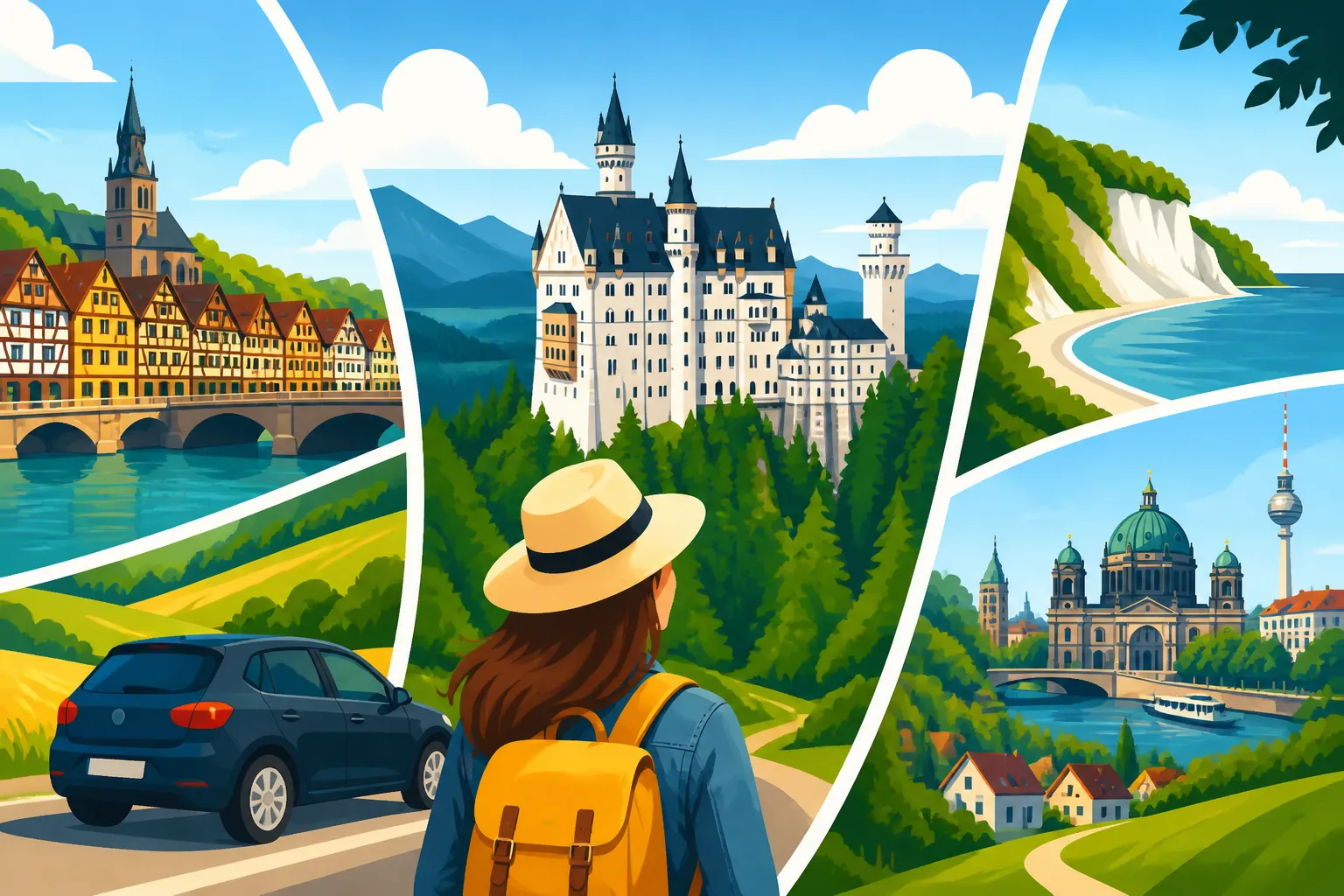
Neuschwanstein is the trip everyone wants to take. It is also the one people most often get wrong. Interior visits run on timed tickets that sell out, particularly in summer and around holidays, and the journey from Munich to Füssen and up to the castle takes most of a day. If you do not want to manage the logistics yourself, a guided tour booked through a platform like GetYourGuide bundles transport and entry. Independent travellers should start with How to Visit Neuschwanstein Castle From Munich
Salzburg in Austria, Regensburg, Augsburg, and the Alpine town of Garmisch-Partenkirchen round out the list. For the full set with practical routing, see Best Day Trips From Munich
Day Trips From Frankfurt, Cologne, and Hamburg
From Frankfurt, Heidelberg is the classic pick: castle ruins, the Philosophers’ Walk, and a lively student old town. The Rheingau wine villages like Rüdesheim and Eltville are an easy hop for a relaxed afternoon of Riesling. Marburg and the half-timbered streets of Limburg are quieter options when Heidelberg is overrun.
From Cologne, Bonn, Aachen with its cathedral, and the Eifel’s volcanic lakes all make easy day trips. The Ahr valley’s red-wine villages are a good choice too, and many of them have been rebuilding after the 2021 floods. Düsseldorf is so close it barely counts as a trip, but its old town and the Rhine promenade are worth an afternoon.
From Hamburg, Lübeck’s Holsten Gate and marzipan shops sit within a short regional train ride. Lüneburg’s crooked brick old town and the heathland around it are lovely in late summer when the heather blooms. The North Sea and Baltic coasts are reachable too, though they reward an overnight stay more than a rushed day.
Weekend Getaways Worth an Overnight Stay
Some places simply do not fit into a single day. Trying to cram them in leaves you tired and feeling like you saw them through a train window.
The Rhine and Moselle Valleys
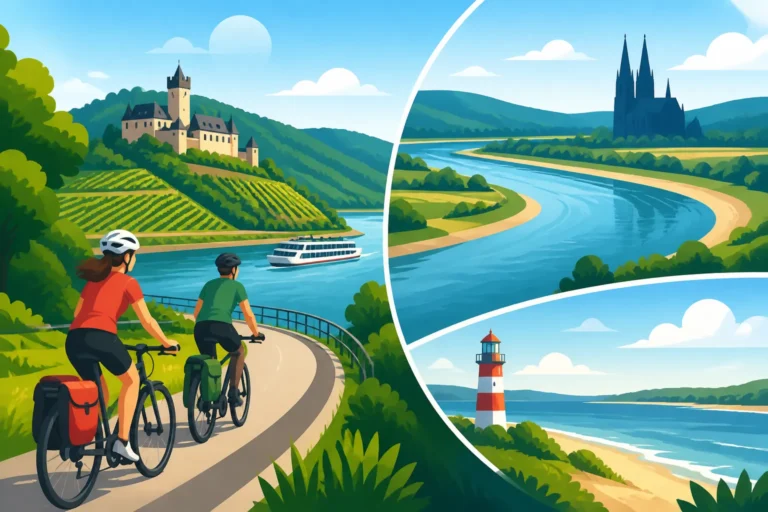
The Middle Rhine between Bingen and Koblenz is a UNESCO-listed stretch of castles, vineyards, and river towns like Bacharach, St. Goar, and Boppard. The Loreley rock sits right in the middle. The ideal weekend combines a boat on one leg with the riverside train on the other, plus a night in a small wine town. I go into the details in The Rhine Valley: Castles, Wine, and River Towns
The Moselle is the gentler, more winding cousin. Cochem with its Reichsburg castle, Bernkastel-Kues, and Traben-Trarbach are classic bases, and Burg Eltz is one of the most photogenic castles in the country. Public transport is thinner here than on the Rhine, so check bus and boat timetables carefully, especially outside the main season.
A realistic tip from experience: wine festival weekends transform these towns. They become fun, loud, and fully booked. If you want atmosphere, aim for a Weinfest. If you want quiet walks through the vineyards, pick a weekend with no festival on the calendar.
The Black Forest and Lake Constance
The Black Forest covers a lot of ground, and a weekend works best when you pick one area rather than trying to see “the Black Forest” as a whole. Freiburg makes a great urban base. Titisee, Triberg with its waterfalls and cuckoo clocks, and the Feldberg area offer the classic scenery. Many guesthouses in the region issue guest cards that include free local transport, so ask when you book. For a car-free approach, read How to Plan a Black Forest Trip Without a Car
Lake Constance, or the Bodensee, sits at the meeting point of Germany, Austria, and Switzerland. Meersburg, Lindau’s island old town, and the flower island of Mainau make an easy weekend, and ferries connect the shores. This is one region where the border-crossing day trip feels effortless. Just bring your passport or ID and check whether your rail ticket covers the foreign sections.
Both regions charge a local visitor tax, the Kurtaxe, in many towns. It is usually added to your accommodation bill. In return you typically get a guest card with discounts or free transport, so it is less of a rip-off than it first appears.
Saxony and Saxon Switzerland
Dresden and Leipzig make a fantastic city-based weekend, connected by a short train ride. Dresden has the rebuilt Frauenkirche, the Zwinger, and the river terraces. Leipzig has a creative, slightly gritty energy and a deep musical history linked to Bach. If you want to combine both, see How to See Saxony: Dresden and Leipzig in a Weekend
Saxon Switzerland, the sandstone landscape southeast of Dresden, is the weekend’s natural add-on. The Bastei bridge is the famous viewpoint, but the trails around Rathen, Schmilka, and Bad Schandau are where the real magic is. S-Bahn trains run along the Elbe from Dresden, so you can do it without a car.
My advice: stay overnight in Bad Schandau or a nearby village rather than commuting from Dresden. You get the trails early in the morning before the day-trippers arrive, and evening walks along the Elbe are quietly beautiful.
Choosing Your Getaway at a Glance
Here is a quick comparison to help you match a destination to your weekend. It skips prices and exact journey times on purpose, because those shift. Check current timetables and fares before you commit.
| Destination | Best Base City | Day Trip or Overnight | Car Needed | Best For | Watch Out For |
|---|---|---|---|---|---|
| Potsdam and Sanssouci | Berlin | Day trip | No | Palaces, gardens | Weekend park crowds |
| Spreewald | Berlin | Either | No | Canals, quiet nature | Limited winter activity |
| Neuschwanstein | Munich | Long day trip | No | Fairy-tale castle | Timed tickets selling out |
| Bavarian Lakes | Munich | Day trip | No | Swimming, beer gardens | Packed summer trains |
| Middle Rhine | Frankfurt or Cologne | Overnight | No | Castles, wine, boats | Festival weekends book up |
| Moselle Valley | Frankfurt or Cologne | Overnight | Helpful | Wine villages, Burg Eltz | Thin bus timetables |
| Black Forest | Freiburg or Stuttgart | Overnight | Helpful | Forests, waterfalls | Spread-out sights |
| Lake Constance | Munich or Stuttgart | Overnight | No | Lake towns, border hops | ID needed for crossings |
| Saxon Switzerland | Dresden | Overnight | No | Sandstone hiking | Crowds at the Bastei |
| Baltic Coast | Hamburg or Berlin | Overnight | No | Beaches, chalk cliffs | Summer accommodation rush |
Use the table as a starting filter, not a final answer. A rainy weekend can make a city-based getaway like Saxony far more enjoyable than a hiking-focused plan.
Where to Sleep on a Weekend Away
Accommodation is where the German short-trip experience gets its character. The choices are wider than chain hotels, and the small places are often the best part of the trip.
Pensionen, Gasthöfe, and Holiday Apartments
A Pension is a small guesthouse, often family-run, usually with breakfast included. A Gasthof adds a restaurant downstairs, frequently with a menu of regional dishes and local beer. A Ferienwohnung is a holiday apartment, common in coastal and mountain areas. These sometimes require minimum stays or charge a separate cleaning fee. To weigh the trade-offs, see How to Choose Between a Hotel and a Pension in Germany
My favourite weekend memories are almost all from small places. One was a Gasthof in the Bavarian Forest where the owner insisted on drawing me a hiking map on a napkin. Another was a Moselle Pension where breakfast came with the family’s own wine jam. They are not always polished, and Wi-Fi can be patchy, but they give you a glimpse of rural Germany that a chain hotel will not.
Be aware that some small places run limited reception hours. If you arrive late on a delayed train, you may find a locked door and a phone number taped to it. Message ahead to confirm your arrival window, especially on Sundays.
Booking Platforms Versus Calling Directly
For most weekends, a platform like Booking.com is the easiest way to compare options, read reviews, and filter by things like breakfast or free cancellation. That flexible cancellation is particularly valuable in Germany, where a train strike or a sudden weather change can derail your plans at short notice.
That said, some of the best rural Pensionen list only a fraction of their rooms online, or none at all. In wine regions and small Alpine villages, the local tourist office website often has a full accommodation directory. Phoning or emailing directly can turn up rooms that look sold out on the big platforms. A short email in simple German, or polite English, usually gets a reply.
A useful hybrid approach: book a refundable room on Booking.com as a safety net, then contact a small local place directly. If the direct option works out, cancel the platform booking within its free cancellation window.
Registration Forms and Visitor Tax
Do not be surprised when your guesthouse hands you a registration form at check-in. German accommodation providers are generally required to record guest details, and non-German guests may be asked for their passport or ID. It is routine, not suspicious.
In spa towns, coastal resorts, and many mountain areas, the Kurtaxe or a similar visitor tax applies per person per night. The rate varies by municipality, so check the local tourist office’s page rather than assuming. Keep the guest card you receive. In places like the Black Forest or the Baltic resorts, it can unlock free buses, museum discounts, or beach access.
Money, Timing, and the Sunday Problem
The practical details are what separate a smooth weekend from a frustrating one.
Cash Versus Card on Short Trips
Germany has moved a long way toward card payments, but cash has not disappeared. The Bundesbank’s payment study covering 2025 found that cash was still the most-used payment method, at 45% of all payments. At the same time, card or other cashless payment was possible at 86% of recorded in-person purchases. In other words, you can pay by card most of the time, but not always.
On a weekend trip, the places most likely to be cash-only are the small ones you will probably love most. Think village bakeries, beer gardens, mountain huts, market stalls, and family-run inns. I always carry a modest amount of cash in small notes and coins, and I check with a guesthouse before arrival whether it takes cards. For more on cards, ATMs, and fees, see Money for Travel in Germany: Cash, Cards, and ATMs
One more tip: ATMs in rural villages can be scarce, and some charge foreign cardholders extra. Withdraw cash in the city before you leave, using an ATM linked to your bank or one you know is fair.
Sundays and Public Holidays
Most shops in Germany close on Sundays and public holidays, and many small-town restaurants close one or two days a week. Museums, castles, and attractions usually stay open on Sundays. Monday is often their closing day instead, which catches out a lot of visitors. Always check opening days, not just opening hours.
Public holidays also vary by state. Bavaria and Baden-Württemberg have more than northern states, which means you can cross a state border and find one town shut while the next is busy. Long weekends created by holidays are peak travel times, with fuller trains and pricier rooms. The calendar is laid out in What Are Germany’s Public Holidays and How Do They Affect Travel?
My Sunday survival kit: buy breakfast supplies and snacks on Saturday, know which station shops will be open, and book a dinner table in advance if you are staying somewhere small.
Seasons and Weather
Spring and early autumn are, in my view, the sweet spot for short trips. You get mild temperatures, fewer crowds, blooming orchards along the Bergstrasse in spring, and the grape harvest on the Rhine and Moselle in autumn. Summer is glorious for lakes and coast but busier and more expensive.
Winter has its own appeal: Christmas markets in Nuremberg, Dresden, and dozens of smaller towns, plus snow in the Alps and the Harz. Be aware that many Alpine trails and some river boat services shut down or reduce schedules in the cold months. Always check seasonal timetables before you plan a trip around a ferry or cable car.
Planning Your First Getaway Step by Step
Here is the routine I wish someone had handed me when I first arrived.
A Simple Planning Routine
- Decide on the type of trip first: city, nature, wine, or castle. Then pick a destination that matches the weekend’s weather forecast.
- Check the calendar for public holidays, festivals, and trade fairs in your chosen area, since these affect crowds and room availability.
- Work out whether regional trains alone can get you there. If you hold a Deutschland-Ticket, this can make the trip far cheaper.
- If you need a long-distance train, compare fares across several departure times and book saver fares as early as you can commit.
- Book accommodation with free cancellation, then look for small local options and switch if something better appears.
- Confirm opening days for the main attraction, and book timed tickets for places like Neuschwanstein well in advance.
- Ask your accommodation whether it accepts cards, what its check-in hours are, and whether a guest card is included.
- Download offline maps, timetables, and a translation pack, and carry some cash for small purchases.
- Pack for the region: hiking shoes for Saxon Switzerland, layers for the Alps, a swimsuit for the lakes in summer.
- Leave buffers in your timetable so a delayed train becomes an inconvenience rather than a ruined evening.
Two Sample Weekends
For a relaxed Rhine weekend from Frankfurt, take a regional train to Bingen on Saturday morning and cross to Rüdesheim for lunch. Then take a riverboat downstream toward Bacharach and spend the night in a small wine guesthouse. On Sunday, walk a vineyard section of the trail, visit a castle, and take the riverside train home in the late afternoon. Little Sunday shopping is required, and most of the transport can run on regional services.
For an active Saxony weekend, arrive in Dresden on Friday evening and spend Saturday on the Altstadt and the river terraces. Then take the S-Bahn to Bad Schandau for the night. Hike early on Sunday before the crowds arrive, eat lunch in a riverside inn, and head home. It balances culture and nature in a way that suits a first-time visitor perfectly.
Whatever you choose, the real goal is to build a rhythm. The more short trips you take, the more Germany stops feeling like a set of administrative hurdles and starts feeling like a country full of places you cannot wait to get back to.
Disclaimer
This article is for general informational purposes only and does not constitute professional advice. Laws, prices and regulations vary by location and change over time. Consult a qualified professional for guidance on your specific situation.