Cycling Routes in Germany: The Rhine, Elbe, and More
Oh, the sheer joy (and occasional minor bureaucratic headache) of exploring Germany on two wheels! If you're anything like me, you arrived here with visions of idyllic countryside, charming villages, and perhaps a hearty beer garden at the end of a long day. And while Germany delivers on those dreams for cyclists, figuring out the best routes, the local rules, and how to actually get your bike from A to B can feel like navigating a maze of unwritten rules and German efficiency. This guide is here to cut through the confusion, sharing insider tips and detailing some of the country's most incredible cycling routes so you can hit the paths with confidence and truly experience the landscape.
Why Germany is a Cyclist's Paradise
Germany, my friends, is not just a country; it's a cyclist's dream wrapped in a very well-maintained package. Having personally pedaled my way through countless regions, I can tell you that the commitment to cycling infrastructure here is truly something to behold. It's a country that understands that a bike isn't just for sport; it's a legitimate mode of transport, a way to explore, and a beloved leisure activity.
Disclosure: This post may contain affiliate links. We may earn a commission at no extra cost to you if you make a purchase through these links. Read full disclosure.
The Allure of German Cycle Paths
What makes cycling here so special? Well, for starters, the sheer variety. You can glide along tranquil riverbanks, conquer rolling hills through vineyards, or trace historic routes through ancient forests. The network of long-distance cycling paths (Radfernwege) is nothing short of phenomenal, often stretching for hundreds, if not thousands, of kilometers, connecting cities, natural parks, and cultural highlights. These paths are usually meticulously signposted, often in multiple languages, and provide a seamless journey that minimizes interaction with car traffic. It's a freedom you rarely experience in other countries, allowing you to truly immerse yourself in the landscape and the local culture at your own pace. You’ll find yourself stopping at quaint bakeries in small towns, discovering hidden castles, and enjoying a riverside picnic with nothing but the sounds of nature around you. This isn't just about getting from one point to another; it's about the journey itself, the unfolding panorama, and the small, unexpected delights along the way.
Beyond the Bike Lane: Safety and Infrastructure
Germany doesn't just have bike paths; it has a philosophy of cycling. The infrastructure goes far beyond a painted line on the side of the road. We're talking dedicated, often paved, two-way cycle routes that are physically separated from car traffic. In urban areas, you'll find an intricate network of clearly marked lanes, bike-priority streets, and ample bike parking. Outside the cities, the long-distance routes often utilize old railway lines, forest paths, and quiet country roads, ensuring a smooth and safe ride. You’ll notice the quality of the surfacing, the thoughtful placement of rest stops, and the consistent signage that makes getting lost genuinely difficult (though I've managed it a time or two, usually due to my own daydreaming!). This dedication to infrastructure means that whether you're a seasoned long-distance cyclist or a family with young children, you'll find routes that cater to your skill level and comfort, providing a remarkably safe and stress-free cycling environment. This makes planning a trip much easier, as you don't have to worry about dangerous roads or confusing directions.
The Grand Rivers: Iconic Long-Distance Routes
When you think of long-distance cycling in Germany, the majestic rivers immediately come to mind. These aren't just waterways; they are the veins of the country, flanked by incredible cycling paths that offer some of the most scenic and culturally rich journeys you can imagine.
The Majestic Rhine Cycle Path (Rheinradweg)
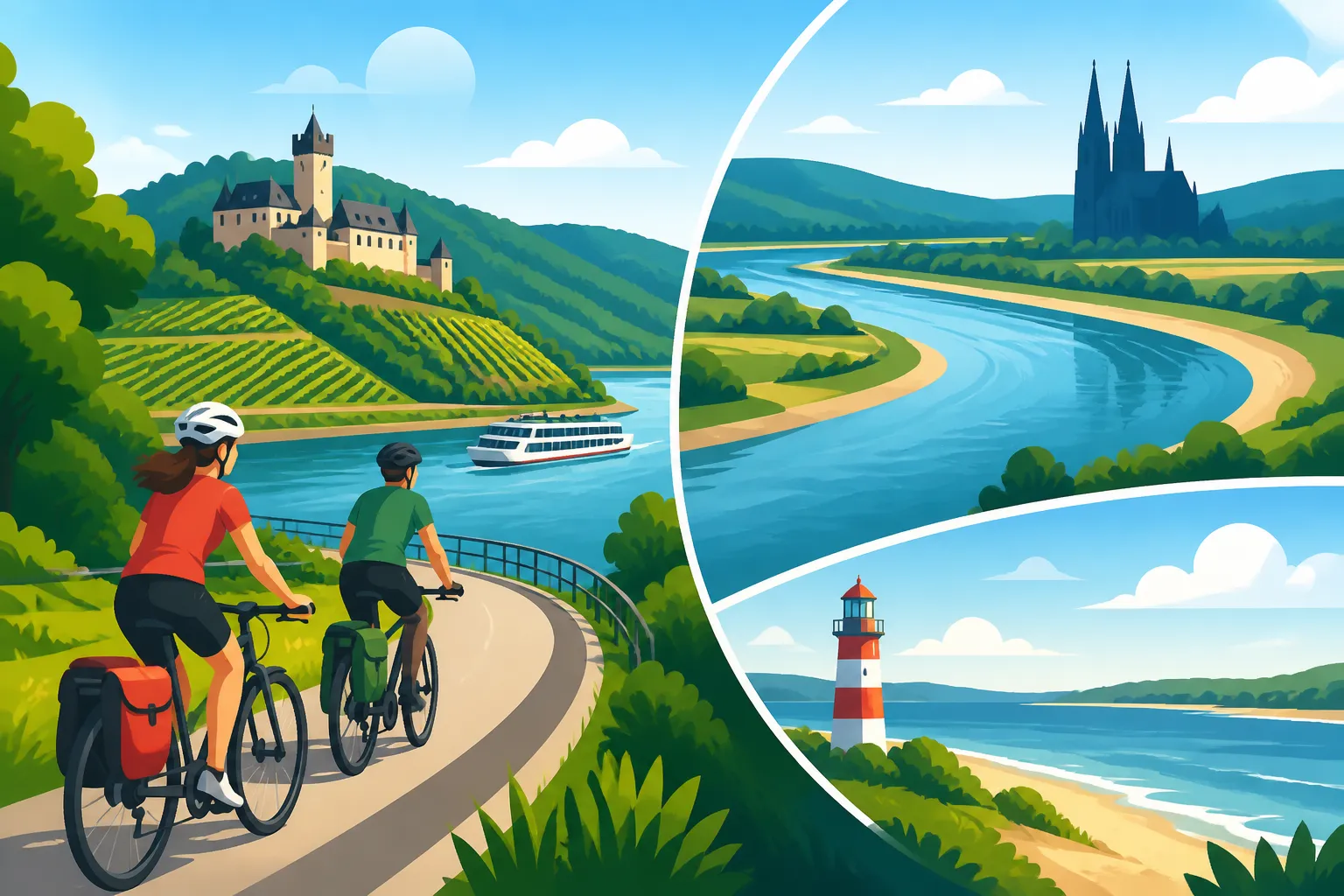
The Rhine Cycle Path, or Rheinradweg, is probably the most famous of Germany's river routes, and for very good reason. It stretches for over 1,200 kilometers, traversing four countries from the Swiss Alps all the way to the North Sea, with a significant portion running through Germany. Along the German stretch, you'll pedal past vineyard-clad hillsides, medieval castles perched dramatically above the river, and bustling cities like Cologne and Düsseldorf. The Upper Middle Rhine Valley, a UNESCO World Heritage site between Bingen and Koblenz, is particularly breathtaking, with its legendary Loreley Rock and countless fairy-tale fortresses.
The path itself is mostly flat, making it accessible for almost all fitness levels, though there are occasional slight inclines. It's incredibly well-signposted, making navigation a breeze. You'll often find yourself riding right alongside the river, watching barges glide by and soaking in the unique atmosphere. This route is fantastic for those who love history, good wine (the Moselle region, a tributary of the Rhine, is just a short detour and absolutely worth exploring for its wine!), and charming towns. There are plenty of opportunities to hop on a river cruise if you need a break from pedaling or want to see the scenery from a different perspective. Many towns along the Rhine offer excellent public transport connections, including trains that can often accommodate bikes, which is super helpful for shorter stages or if you encounter bad weather.
The Serene Elbe Cycle Path (Elberadweg)
If you're looking for something a bit more tranquil and perhaps a touch less crowded than parts of the Rhine, the Elbe Cycle Path is an absolute gem. Spanning approximately 1,270 kilometers from the source of the Elbe in the Czech Republic to its mouth at the North Sea near Cuxhaven, the German section offers a diverse landscape. You'll start in the stunning Saxon Switzerland National Park, with its dramatic sandstone cliffs, then glide through the Baroque splendor of Dresden, past the porcelain town of Meissen, and through the flat, open plains of Brandenburg and Saxony-Anhalt. Further north, you'll encounter historical cities like Magdeburg and Hamburg, before reaching the windswept coast.
The Elbe Cycle Path is renowned for its generally flat terrain, making it incredibly family-friendly and ideal for a relaxed multi-day tour. It often runs through nature reserves, offering plenty of opportunities for wildlife spotting. What I love about the Elbe is its sense of quiet majesty; it feels less commercially developed in many parts, allowing for a more serene and reflective cycling experience. The path takes you through charming small towns and past impressive natural scenery, with ample opportunities to enjoy local cuisine and accommodation. Just like the Rhine, it's very well-marked, so you won't spend precious cycling time staring at a map. For those interested in Getting Around Germany: Trains, Buses, Flights, and Car Hire, knowing that many regional trains along this route also allow bikes (often with a separate ticket) is a huge plus.
Other Notable River Routes (Danube, Moselle, Main)
While the Rhine and Elbe often steal the spotlight, Germany boasts an array of other fantastic river cycle paths that offer unique experiences:
- The Danube Cycle Path (Donauradweg): A true European classic, a large portion of this path flows through southern Germany. Starting near Donaueschingen, where the Breg and Brigach rivers meet to form the Danube, it takes you through picturesque Bavaria, past charming cities like Regensburg (another UNESCO site!) and Passau. This section is generally flat and incredibly popular, especially with international cyclists. You'll find a delightful blend of cultural history and stunning natural beauty.
- The Moselle Cycle Path (Moselradweg): This is where you go if you love wine. Following the winding Moselle river from France through Luxembourg and then deep into Germany, this path is characterized by steep, terraced vineyards, Roman history, and charming wine villages. It’s a slightly curvier path than the Elbe or Danube, but still largely flat along the riverbanks, making it accessible. Sampling local Riesling directly from a vintner after a day's ride is an experience not to be missed!
- The Main Cycle Path (Mainradweg): Starting at the source of the Main river in Franconia and flowing to where it joins the Rhine near Mainz, this route offers a captivating journey through Germany's diverse landscapes. You'll cycle through lush forests, past historic towns, and through the heart of Franconian wine country, famous for its Bocksbeutel bottles. The path is well-developed and mostly flat, making it another excellent choice for a relaxed tour. It's often praised for its excellent signage and variety, blending natural beauty with cultural stops.
These river paths offer an incredible way to experience the diversity of Germany, each with its own character and charm.
Themed Routes and Scenic Journeys
Beyond the grand rivers, Germany's cycling network truly shines with its themed routes, designed to immerse you in specific aspects of the country's history, nature, or culinary delights. These are often shorter than the epic river paths, perfect for a long weekend or a focused exploration.
Historic Trails: The Berlin Wall Cycle Path and Roman Limes
For history buffs, cycling can be an incredibly powerful way to connect with the past. Germany offers routes that literally trace the lines of history.
- The Berlin Wall Cycle Path (Berliner Mauerweg): This incredibly poignant and fascinating route circles the former West Berlin, tracing the exact path of the Berlin Wall. Over approximately 160 kilometers, you'll cycle past remnants of the Wall, watchtowers, memorial sites, and informative panels that tell the stories of escape attempts, division, and reunification. It's a deeply moving experience that combines urban cycling with quiet stretches through parks and suburban areas. You can do it in sections or tackle the whole thing over a few days. For anyone visiting the capital, it's a unique way to understand the city's complex past. It's generally flat and well-marked, suitable for all skill levels.
- The German Limes Cycle Path (Limesradweg): Step back in time to the Roman Empire! This route follows the course of the Upper Germanic-Rhaetian Limes, a UNESCO World Heritage Site that was once the frontier of the Roman Empire. Spanning around 818 kilometers from the Rhine to the Danube, it takes you through stunning landscapes, past reconstructed Roman forts, watchtowers, and museums that bring ancient history to life. It's a challenging but rewarding route, with some rolling hills, particularly in the Swabian Alb region. This path is perfect for those who love history, archaeology, and a good physical challenge, offering a glimpse into a different era of European history.
Nature's Embrace: Black Forest and Baltic Sea Coastal Route
If you're yearning for fresh air, dramatic landscapes, and the tranquility of nature, Germany's natural cycle routes are calling.
- Black Forest Cycle Path (Schwarzwaldradweg): The Black Forest is a legendary region, known for its dense forests, cuckoo clocks, and delicious cake. While it's certainly more challenging than the flat river routes, with significant climbs and descents, the rewards are immense. There are several dedicated cycle routes, but the "Schwarzwaldradweg" itself offers a varied experience. You'll wind through picturesque valleys, past traditional farmhouses, and through charming towns like Freudenstadt or Triberg. Expect steep ascents followed by thrilling descents, so make sure your brakes are in good order! This route is best suited for experienced cyclists or those with e-bikes. The crisp mountain air and stunning vistas make every pedal stroke worth it. For those looking to enjoy Healthy Living in Germany: Wellness, Fitness, and Mental Health Guide, this region offers excellent opportunities for outdoor activity.
- Baltic Sea Coastal Cycle Path (Ostseeküstenradweg): If sea breezes and sandy beaches are more your style, head north! This picturesque route stretches along Germany's Baltic coast, offering breathtaking views of the sea, white sand beaches, and charming seaside resorts. You'll cycle past dramatic cliffs, through fragrant pine forests, and past Hanseatic cities like Rostock, Stralsund, and Lübeck. The terrain is generally flat to gently rolling, making it accessible for most cyclists. It's a fantastic route for families and those who love coastal scenery, fresh seafood, and a relaxed pace. Keep an eye out for traditional thatched-roof houses and the iconic lighthouses that dot the coastline.
Wine and Culinary Cycling Adventures
Germany isn't just about beer; its wine regions are spectacular, and what better way to explore them than by bike?
- Ahr Valley Red Wine Trail (Rotweinwanderweg): While more of a hiking trail, significant portions are excellent for cycling, particularly on adjacent paths. The Ahr Valley, a small but renowned wine region, is famous for its Spätburgunder (Pinot Noir). The landscape here is dramatic, with steep, terraced vineyards clinging to the hillsides. Cycling through these valleys, you can stop at Straußwirtschaften (seasonal wine taverns) to taste local wines and regional delicacies. It’s a more intimate experience than the larger river routes, offering direct engagement with local winemakers.
- Palatinate Forest and Wine Route (Pfälzerwald und Weinstraße): This region in southwest Germany offers a fantastic combination of dense forests and sunny vineyards. The German Wine Route (Deutsche Weinstraße) itself is famous for its charming villages, almond blossoms in spring, and of course, its wine. You can cycle gentle paths through vineyards, stopping at numerous wineries for tastings, or venture into the deeper Palatinate Forest for more challenging climbs and stunning views. It's a region known for its hospitality and excellent food, making it a perfect destination for a leisurely cycling holiday focused on indulgence. For anyone looking to enjoy German Food Culture: Eating and Drinking as a Visitor, this area is a must.
Planning Your German Cycling Holiday
So, you're convinced! Now, how do you turn this dream into a reality? Planning a cycling trip in Germany, especially if you're traveling from abroad or within Germany with a bike, requires a bit of foresight. But trust me, it's worth every bit of effort.
Essential Gear and Bike Rental Options
First things first: your trusty steed. Do you bring your own bike or rent one?
- Bringing Your Own Bike: If you're passionate about your own bike and it's suitable for long distances, bringing it can be a great option. However, factor in the logistics and cost of transporting it, especially if flying. For train travel within Germany, Deutsche Bahn has specific rules and requires a separate bike ticket and often a reservation, especially for long-distance ICE trains. Always check ahead!
- Renting a Bike: For many expats and tourists, renting is the easiest solution. Most major cities and popular cycling regions have excellent bike rental shops. You can find everything from standard touring bikes to electric bikes (e-bikes), which are a godsend on hillier routes or for covering more ground with less effort. Some companies offer one-way rentals, allowing you to pick up a bike in one city and drop it off in another, which is ideal for long-distance routes. Prices vary, but expect to pay around €15-€30 per day for a good quality touring bike, and more for an e-bike. Brands like Rent a Bike or local shops listed on sites like GetYourGuide or local tourism websites can be great starting points. Always book in advance, especially during peak season! Don't forget a helmet, a basic repair kit (even if you rent, it’s good practice), water bottles, and comfortable cycling attire.
Accommodation Along the Routes
Finding a place to rest your weary head after a day of cycling is usually quite straightforward in Germany, thanks to its well-established tourism infrastructure.
- "Bett & Bike" Program: Look out for accommodations that are part of the "Bett & Bike" program, certified by the ADFC (German Cyclists' Association). These establishments are specifically geared towards cyclists, offering secure bike storage, drying facilities for wet gear, healthy breakfasts, and information on local routes and repair shops. They are a true blessing after a long day!
- Variety of Options: Beyond Bett & Bike, you'll find everything from cozy Pensionen (guesthouses) and traditional hotels in charming villages to larger hotels in cities. Many youth hostels are also bike-friendly. In popular areas, booking ahead is always a good idea, especially during summer or on weekends. You can use platforms like Booking.com to find a wide array of choices. Don't underestimate the joy of stumbling upon a small, family-run guesthouse in a tiny village – those often turn out to be the most memorable stays!
Transportation Logistics: Getting You and Your Bike Around
This is often the trickiest part for newcomers, but once you understand the system, it's manageable.
- Deutsche Bahn (DB): Germany's national railway system is your best friend for long-distance travel, but bringing bikes has rules. For regional trains (RE, RB, S-Bahn), you usually just need a separate bike ticket (Fahrradkarte), and bikes are allowed in designated carriages (look for the bike symbol). For long-distance ICE, IC, and EC trains, it's more complicated. You generally must make a bike reservation in advance, and not all trains have bike spaces. Always check the DB Navigator app or website carefully for your specific connection. It's often easier to avoid peak travel times.
- Long-Distance Buses (e.g., FlixBus): FlixBus offers bike transport on many routes, but again, you need to book it in advance, and there's usually a limit on the number of bikes. They typically go in a special bike rack at the back of the bus. This can be a good option for connecting different regions if train travel with a bike proves too complex.
- Bike Shuttles/Transfers: In very popular cycling regions, you might find local services that offer luggage transfers between your accommodations, or even shuttle you and your bike over particularly steep sections or back to your starting point. These services are often advertised locally or through tourism offices.
- Car Rental with Bike Rack: If you're traveling as a group or want maximum flexibility, renting a car with a bike rack is an option. Just remember that driving in Germany has its own rules, including the famed Autobahn (which is amazing, but intense!). This flexibility can be great for exploring multiple regions.
Understanding Public Transport Tickets and Passes: Navigating German Transit Systems will be invaluable here, as combining train travel with cycling is often the most practical way to cover significant distances or bypass less interesting sections of a route. Check out websites like Omio for combining train and bus options.
Tips for an Unforgettable Cycling Experience
Beyond the logistics, a few pointers can elevate your German cycling adventure from good to truly unforgettable.
Language, Navigation, and Local Etiquette
- Basic German Phrases: While many Germans, especially younger generations and those in tourist areas, speak English, a few basic German phrases go a long way. "Guten Tag," "Danke," "Bitte," "Sprechen Sie Englisch?" and "Wo ist…?" (Where is…?) will serve you well. Germans appreciate the effort! Understanding German Language and Everyday Communication for Visitors can definitely enhance your experience.
- Navigation Tools: The official Radfernwege are usually incredibly well-signposted, with distinctive green or blue signs. However, having a good GPS device or a smartphone with reliable maps (like Komoot, Outdooractive, or Google Maps) is always a smart backup. Download offline maps, as cell service can be spotty in some rural areas. Many regional tourism boards also offer excellent downloadable GPX tracks for their routes.
- Cycling Etiquette: Germans take their rules seriously, and that includes on the bike path. Always keep to the right. Use your bell (Klingel) to politely alert pedestrians or slower cyclists that you're approaching, especially when coming up from behind. Don't ride side-by-side if it blocks the path. And remember, pedestrians always have right of way on shared paths. Sundays are Ruhetag (day of rest), and while cycling is fine, shops are generally closed, so plan your groceries accordingly.
- Respecting Nature: Stick to marked paths, don't litter, and be mindful of wildlife, especially in national parks and nature reserves. Germany has a beautiful natural environment, and it’s important we all do our part to preserve it.
Handling Emergencies and Bike Maintenance
Even with the best planning, things can go wrong. A little preparation makes a big difference.
- Basic Repair Kit: Always carry a puncture repair kit, a small pump, and tire levers. Knowing how to fix a flat tire is a fundamental skill for any cyclist.
- Local Bike Shops (Fahrradwerkstatt): Germany has excellent bike shops even in smaller towns. If you have a more serious issue, look for a Fahrradwerkstatt. They are usually efficient and well-stocked.
- Emergency Numbers: Know the emergency numbers: 112 for all emergencies (police, ambulance, fire). For non-emergency medical assistance after hours, dial 116117 to reach the ärztlicher Bereitschaftsdienst.
- Travel Insurance: Make sure your travel insurance covers cycling accidents and potential bike damage or theft, especially if you're bringing an expensive personal bike. Better safe than sorry!
Family Cycling and Accessibility Considerations
Germany is wonderfully set up for family cycling, but it's still worth considering a few things.
- Kid-Friendly Routes: Many river paths (like the Elbe, Danube, or Main) are predominantly flat and feature plenty of playgrounds and family-friendly attractions along the way. Look for specific "family cycling" designations on regional tourism websites.
- Bike Trailers and Child Seats: Rental shops often have child seats or bike trailers (Fahrradanhänger) available for rent. These are great for younger children who can't yet cycle long distances on their own.
- Accessibility: Most well-maintained long-distance routes are suitable for handbikes or adaptive cycles, though some sections with gravel or steeper grades might be challenging. Always check the specific route details or contact local tourism offices for the most up-to-date accessibility information.
Whether you're exploring the historic trails or simply enjoying a leisurely ride through the countryside, remember to embrace the journey. Germany's cycling paths are an invitation to slow down, explore, and truly connect with the heart of Europe.
Final Thoughts on German Cycling Adventures
Cycling in Germany is an experience unlike any other. It’s a chance to see the country not from a car window or a train compartment, but from the ground up, feeling the breeze, smelling the forests, and truly earning that celebratory Feierabendbier (after-work beer) or a slice of Black Forest cake.
From the legendary Rhine to the tranquil Elbe, from the historic trails along the former Berlin Wall to the challenging climbs of the Black Forest, there's a cycling route for every taste, every fitness level, and every kind of adventure. The well-maintained infrastructure, excellent signage, and cyclist-friendly services make it a joy to explore. Yes, there's a bit of bureaucracy when it comes to things like taking your bike on a train, but once you get the hang of it, it becomes second nature.
So, pack your panniers, charge your e-bike, and get ready to discover the incredible beauty and diversity of Germany on two wheels. Whether you're planning a multi-day epic journey or just a leisurely afternoon ride, the German cycle paths await. And who knows, you might even pick up a few German words along the way – "Prost!" is always a good start, especially when you find yourself in a charming beer garden after a rewarding day of pedaling. Happy cycling, my friends!
Disclaimer
Please note that while I strive to provide accurate and up-to-date information, circumstances such as regulations, opening hours, and service availability can change. It is always advisable to double-check specific details with official sources, local tourism boards, or service providers before making travel plans. This guide is for informational purposes only and does not constitute professional advice.