Where Can You Ski in Germany and When?
Most newcomers to Germany assume that for a proper skiing holiday, they must cross the border into Austria or Switzerland. However, navigating the German winter doesn’t have to mean long-haul travel; the country offers incredible slopes ranging from glacial peaks to forested highlands. This guide breaks down exactly where to go and when the snow is most reliable to ensure your winter adventure is a success.
Disclosure: This post may contain affiliate links. We may earn a commission at no extra cost to you if you make a purchase through these links. Read full disclosure.
The Best Regions for Skiing in Germany
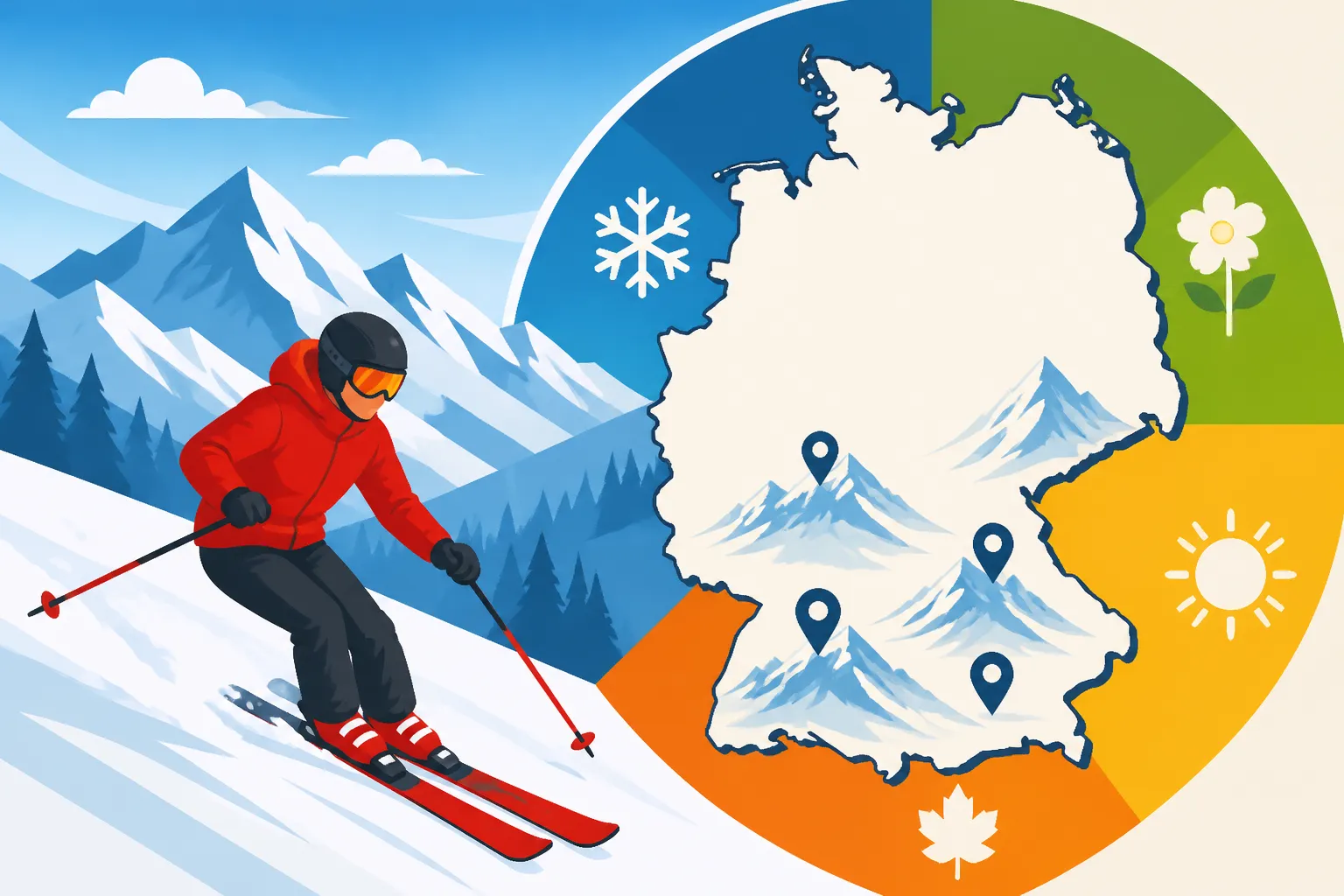
When you first arrive in Germany, the sheer variety of mountain ranges can be overwhelming. Unlike the singular massive wall of the Alps in other countries, Germany’s topography is peppered with "Mittelgebirge" (low mountain ranges) that offer charming, accessible, and often more affordable skiing experiences. For a deep dive into the regions themselves, Bavaria for Travelers: Munich, the Alps, and Beyond is a great starting point for those heading south.
The Bavarian Alps
The Bavarian Alps are the crown jewel of German winter sports. This is where you will find the highest peaks and the most sophisticated infrastructure. Garmisch-Partenkirchen is the legendary hub here, famous for the Kandahar run and the Zugspitze, Germany’s highest mountain. Standing at nearly 3,000 meters, the Zugspitze offers glacial skiing that often remains viable when the lower valleys have already turned to spring green.
Skiing here isn’t just about the adrenaline; it’s about the atmosphere. You’ll find yourself sharing a gondola with locals who have been skiing these runs since they could walk. If you are staying in Munich or Innsbruck, you can easily use Booking.com to find traditional Alpine guesthouses that offer a much more authentic experience than the sterile hotels often found in purpose-built resorts. The Garmisch-Classic area, which connects the Hausberg, Kreuzeck, and Alpspitze mountains, provides a broader range of blue and red runs perfect for those who aren’t quite ready for the professional-grade drops.
The Black Forest (Schwarzwald)
Located in the southwest, the Black Forest offers a completely different vibe. It is moody, forested, and incredibly romantic. The highest point is the Feldberg, which serves as the heart of the region's skiing scene. While the elevation is lower than the Alps, the Feldberg lift network is surprisingly efficient. This area is a favorite for expats living in Stuttgart or Freiburg because it is so easy to reach for a weekend trip.
One thing I’ve learned from living here is that the Black Forest is particularly susceptible to wind. If you’re planning a trip, always check the lift status in the morning, as the higher chairs can close if the "Föhn" wind picks up. For those traveling from further away, using Omio to compare train and bus connections to Freiburg is the smartest way to navigate the region without the stress of driving on icy mountain roads. The scenery here, with snow-laden pines stretching as far as the eye can see, is straight out of a Grimm’s fairy tale.
The Harz Mountains and the Ore Mountains
For those based in Berlin, Leipzig, or northern Germany, the Harz Mountains (specifically Braunlage and Wurmberg) and the Ore Mountains (Erzgebirge) near the Czech border are the go-to spots. These regions are often overlooked by international tourists, which is exactly why you should go. They offer a much more localized, "down-to-earth" experience. Fichtelberg in the Ore Mountains is a fantastic spot for families, offering wide slopes and excellent ski schools.
The Erzgebirge is also famous for its wood-carving traditions. After a day on the slopes, you can wander through villages like Oberwiesenthal, where the windows are filled with glowing "Schwibbögen" (candle arches). It’s a cultural immersion that you simply don’t get in the high-octane resorts of the Alps. If you’re worried about the costs of a winter getaway, checking the Cost of Living in Germany: Budgeting Guide for Expats can help you benchmark what a typical weekend in these more affordable regions should cost.
Understanding the German Skiing Season
Timing is everything in Germany. Because many German resorts are at a lower altitude compared to those in France or Switzerland, the window for perfect "powder" can be narrower. You need to align your expectations with the current Weather in Germany: Seasonal Guide and How to Prepare to avoid showing up to a mountain of slush.
Peak Season: January to Early March
The most reliable time to hit the slopes is from mid-January through February. By this point, the "base" layer of snow has usually been established and supplemented by snow cannons. This is also when the schools have their "Winterferien" (winter holidays), so be prepared for crowds. If you hate waiting in lift lines, try to aim for mid-week trips.
During this peak period, the atmosphere in the mountain huts (Hütten) is electric. There is nothing quite like sitting on a wooden bench with a plate of Kaiserschmarrn (shredded pancakes) while the sun glints off the peaks. If you are a beginner looking for guided experiences or want to skip the rental lines, GetYourGuide often lists organized day trips from major cities that include transport and equipment, taking the logistical weight off your shoulders.
The Christmas Window and Late Season
Skiing in December is a gamble. While the "White Christmas" dream is strong, many lower-altitude resorts struggle with snow cover until after the New Year. The exception is the Zugspitze, which often opens in November. If you do go in December, focus on the "Après-Ski" and the Christmas markets in the resort towns rather than expecting 100km of open runs.
Late March and April can offer "sun skiing," where the air is warm but the snow holds up until midday. This is my personal favorite time because you can ski in a light jacket and spend the afternoon sunbathing on a terrace. However, be aware that by 2:00 PM, the snow often becomes "Sulz" (heavy and wet), which is notoriously difficult on the knees. If you’re pushing your physical limits during this time, it’s worth reviewing Stay Fit in Germany: Joining Gyms, Pools, and Sports Clubs to ensure your legs are prepped for the heavy spring snow.
Practical Logistics and Comparison
Planning a ski trip in Germany requires a bit more than just throwing your boots in the car. You need to consider the "Lage" (location) and the infrastructure of each resort. Below is a comparison of some of the most popular spots to help you decide which fits your skill level and location.
| Resort Name | Region | Max Elevation | Best For | Typical Season |
|---|---|---|---|---|
| Garmisch-Classic | Bavarian Alps | 2,050m | Intermediate / Advanced | Dec – March |
| Zugspitze | Bavarian Alps | 2,962m | Guaranteed Snow / Views | Nov – May |
| Feldberg | Black Forest | 1,493m | Families / Weekend Trips | Jan – March |
| Oberwiesenthal | Ore Mountains | 1,215m | Budget / Cultural Vibe | Dec – March |
| Wurmberg | Harz Mountains | 971m | Northern Residents | Jan – Feb |
Getting There and Gear Rental
Transportation can be a pain if you don't have a car, but the Deutsche Bahn (German Rail) is surprisingly well-connected to ski hubs. The "Garmisch-Ski-Express" is a classic example of how easy it can be to get from a city center to the base of a mountain. For those looking for the most cost-effective way to travel, especially if carrying bulky gear, Omio is an essential tool to compare the "Länder-Tickets" against private bus lines.
When it comes to gear, don't feel pressured to buy everything. Every major resort has a "Verleih" (rental shop) right at the base. Prices are generally standardized, and the equipment is usually high-quality and well-maintained. If you’re a regular, it might be worth looking into seasonal rentals in the city, which can be cheaper than daily rates at the resort. For more on managing your transit, see Public Transport Tickets and Passes: Navigating German Transit Systems.
Essential Expat Advice for the Slopes
Skiing in Germany has its own set of unwritten rules and cultural quirks. As an expat, you might find the directness of the lift lines or the specific "Hütten" etiquette a bit surprising at first.
Safety and Insurance
Germans take safety seriously. You will notice that almost everyone, from toddlers to seniors, wears a helmet. It isn't a legal requirement in most places, but it is a strong social norm. More importantly, check your Health Insurance in Germany: Understanding Public vs Private Coverage before you head out. While standard insurance covers the basics, some mountain-specific rescues (like a helicopter lift) might require additional private coverage or a membership with the ADAC or the German Alpine Club (DAV).
Accidents happen, and knowing the Emergency Numbers in Germany: Calling 112, Poison Control, and More is vital. Most resorts have their own "Pistenrettung" (piste rescue), but for anything serious, 112 is your universal line. If you are injured, the Healthcare in Germany: A Comprehensive Guide for Expats will help you navigate the follow-up care, which is generally excellent but involves its fair share of paperwork.
The Culture of the "Einkehr"
In Germany, skiing is often seen as a secondary activity to the "Einkehr"—the act of stopping at a mountain hut for food and drink. Don't be surprised to see people settling in for a two-hour lunch. If you see a sign that says "Selbstbedienung," it means self-service; grab a tray, line up for your Leberkäse or Gulaschsuppe, and then find a spot at a communal table.
Communal seating is the norm here. If there is a gap at a table, ask "Ist hier noch frei?" (Is this spot free?) and have a seat. It's one of the best ways to practice your German and meet locals who might tip you off on which runs are getting icy. If you’re planning your stay and want to ensure you’re near the best dining spots, Booking.com often features reviews that mention the proximity of hotels to the best local "Wirtshäuser."
Beyond the Downhill Slopes
Not everyone in your group might be a fan of hurtling down a mountain at 60 km/h. Fortunately, German winter resorts are fantastic for "Winterwandern" (winter hiking) and "Langlauf" (cross-country skiing).
Cross-country skiing is arguably more popular than downhill in regions like the Harz and the Black Forest. It is an incredible workout and a much quieter way to experience the winter landscape. Most downhill resorts will have a dedicated "Loipe" (cross-country track) nearby. If you find yourself enjoying the physical challenge, you might find that Stay Fit in Germany: Joining Gyms, Pools, and Sports Clubs offers similar endurance-based communities back in the city.
For a completely relaxed day, many ski regions are located near world-class thermal baths. After a day of freezing on the chairlift, soaking in an outdoor saltwater pool while snow falls around you is a quintessential German experience. You can often find vouchers or combined "Ski & Spa" tickets on GetYourGuide, which are perfect for those who want a bit of luxury with their adventure.
Disclaimer
The information provided in this guide is for informational purposes only. Skiing and snowboarding are inherently risky activities. Always check local weather and avalanche reports (Lawinenlagebericht) before heading out. Ensure you have appropriate insurance coverage and follow all posted safety signs and instructions from resort staff. The author and publisher are not responsible for any injuries or losses incurred while following the advice in this article.