Travelling With a Bike, Surfboard, or Skis in Germany: Transport Rules
Alright, my fellow expats and adventurers, let's talk about something that often throws a wrench into our perfectly planned German getaways: traveling with your beloved sports equipment. Whether it's your trusty bicycle, that sleek surfboard, or your skis ready to hit the slopes, lugging bulky gear around Germany's public transport system can feel like trying to fit a square peg into a very German, very efficient, but sometimes inflexible round hole. But fear not! This guide is here to help you navigate the rules, the costs, and the sheer logistical dance so you can get your gear where it needs to go, hopefully with less stress and more joie de vivre.
Disclosure: This post may contain affiliate links. We may earn a commission at no extra cost to you if you make a purchase through these links. Read full disclosure.
The Unique Challenges of Traveling with Sports Equipment in Germany
Ah, Germany. A land of incredible landscapes, from the Baltic Sea's windswept coasts to the majestic Bavarian Alps. Naturally, you'll want to bring your gear to enjoy it all! But if you're picturing effortlessly hopping on a train with your full-sized surfboard strapped to your back, you might be in for a rude awakening. Germany’s transport system is fantastic, but it's built on a foundation of order and efficiency, which often means specific rules for anything that deviates from standard luggage.
Navigating Public Transport Realities
One of the biggest hurdles for us expats is the assumption that public transport rules for oversized items are universal. They are absolutely not. In Germany, space is often at a premium, especially on popular routes or during peak hours. You might have dedicated bike carriages, sure, but on long-distance trains they require reservations. Trying to squeeze a surfboard onto a crowded S-Bahn during rush hour? You’ll likely be met with disapproving Blicke (looks) and a firm "Nein!" from the conductor. The rules vary wildly between long-distance trains, regional trains, and urban transport, making spontaneous travel with large equipment almost impossible. This isn't about being unhelpful; it's about adhering to safety regulations and passenger comfort. For us, it means planning every step.
Cost Implications and Hidden Fees
Beyond the logistical headaches, there’s the financial aspect. Many people assume that if their equipment is allowed, it’s simply part of their ticket. Wrong! For bikes, you'll almost always need a separate ticket, and often a reservation too. These costs can add up quickly, especially if you're traveling across different transport zones or with multiple pieces of gear. Surfboards, due to their size, might even be denied outright or require special, often expensive, courier services. Skis are generally a bit easier, often fitting into luggage racks or being carried by hand, but even then, there's no guarantee of space. Always budget for these extra costs – they're not usually hidden, but they're certainly not always obvious to a newcomer.
The Sheer Logistics: Planning and Preparation
The mental load of planning a trip with sports equipment can be exhausting. It’s not just about checking train times; it’s about figuring out which specific trains have the right compartments, if they’re available, if you need a separate booking, and how you’ll manage transfers. Imagine trying to sprint across a German train station with a bike, a backpack, and a surfboard to catch your connecting train, only to find the next one doesn’t allow bikes! Planning is paramount. You need to know the exact rules for each leg of your journey, and you need to book well in advance. This is where tools that simplify complex routes become invaluable, helping you see the full picture before you even leave your door.
Traveling with Your Bike: Deutsche Bahn, Regional Trains, and Beyond
Germany is a fantastic country for cycling, with countless scenic routes and well-maintained bike paths. Bringing your bike along can unlock some truly memorable experiences. However, transporting it by train or bus requires a solid understanding of the rules.
Long-Distance Trains ICE, IC/EC and Bike Transport
When it comes to Deutsche Bahn's long-distance services, like the sleek ICE (Intercity-Express) and IC/EC (Intercity/Eurocity) trains, transporting your bike isn't as straightforward as just rolling it on. You generally need a special Fahrradkarte (bike ticket) and, crucially, a mandatory reservation for a specific bike space. These spaces are limited, often just a handful per train, and they sell out quickly, especially during holidays or on popular routes.
Not all ICE trains even have bike compartments. While some newer ICE 4 models do, many older ICE trains do not, meaning your bike might be restricted to IC or EC connections. This is a critical detail that can throw a wrench into your plans if you're not careful. You can't just show up; you need to plan this weeks in advance, particularly for peak travel times. The process typically involves selecting the "bicycle transport" option when booking your ticket online or at a ticket counter. A great way to check these options and even integrate other transport methods is by using a platform like Omio. It allows you to search for routes and often indicates if bike spaces are available, although you'll still need to ensure your bike ticket and reservation are correctly added.
Regional and Local Trains RE, RB, S-Bahn
Regional trains (Regional-Express (RE), Regionalbahn (RB)) and urban S-Bahn networks are generally more accommodating for bikes, but with their own set of rules. Here, a separate Fahrradkarte is almost always required, but reservations are typically not necessary – it's more of a first-come, first-served basis for the designated bike areas.
However, there's a significant catch: peak hours. During morning and afternoon rush hours (usually Monday-Friday, roughly 6 AM – 9 AM and 4 PM – 6 PM), bikes are often either restricted or outright prohibited on many regional and S-Bahn lines. This is to ensure enough space for commuters. You’ll see signs indicating these restrictions, and conductors will enforce them. Always check the specific regional transport association's rules (e.g., MVV in Munich, VBB in Berlin, HVV in Hamburg) as they can vary.
The popular Deutschland-Ticket Explained offers a great way to travel regionally, but remember, it typically doesn't include bike transport. You'll still need to purchase a separate bike ticket for each journey if you're not folding your bike up small enough to count as hand luggage.
City Buses and Trams
For the most part, forget about taking your full-sized bike on city buses or trams. These are almost universally prohibited due to space limitations and passenger safety. The only exception might be very compact folding bikes, which, when fully folded, can sometimes be carried as regular hand luggage – but even this depends on the specific transport company and how much space is available. If you're planning on cycling around a city, it's best to rent a local bike or rely on the S-Bahn/U-Bahn (subway) where bikes might be allowed outside of peak hours with a valid bike ticket.
Here’s a quick overview of bike transport on different German train types:
| Train Type | Bike Ticket Required | Reservation Required | Space Guaranteed | Peak Hour Restrictions (Regional/S-Bahn) |
|---|---|---|---|---|
| ICE | Yes | Yes | Yes (if booked) | N/A |
| IC/EC | Yes | Yes | Yes (if booked) | N/A |
| Regional (RE/RB) | Yes | No (usually) | No | Yes |
| S-Bahn | Yes | No (usually) | No | Yes |
| U-Bahn | Yes | No (usually) | No | Yes |
| City Bus/Tram | No (usually prohibited) | No | No | Yes (often full prohibition) |
Catching Waves or Slopes: Surfboards and Skis
While bikes have specific rules, surfboards and skis fall into a slightly different category of "bulky items." The key difference is often whether they can be considered hand luggage or require specialized transport.
Surfboards: A Tricky Proposition on Public Transport
Let's be blunt: traveling with a full-sized surfboard on German public transport is a pain. These long, unwieldy items rarely fit into luggage racks and are generally too large to be considered standard hand luggage. Most train and bus operators will outright refuse them due to safety concerns and lack of space. Even if you're traveling to a coastal region, don't assume the trains there will be more accommodating.
If you absolutely must bring your surfboard, your options are limited:
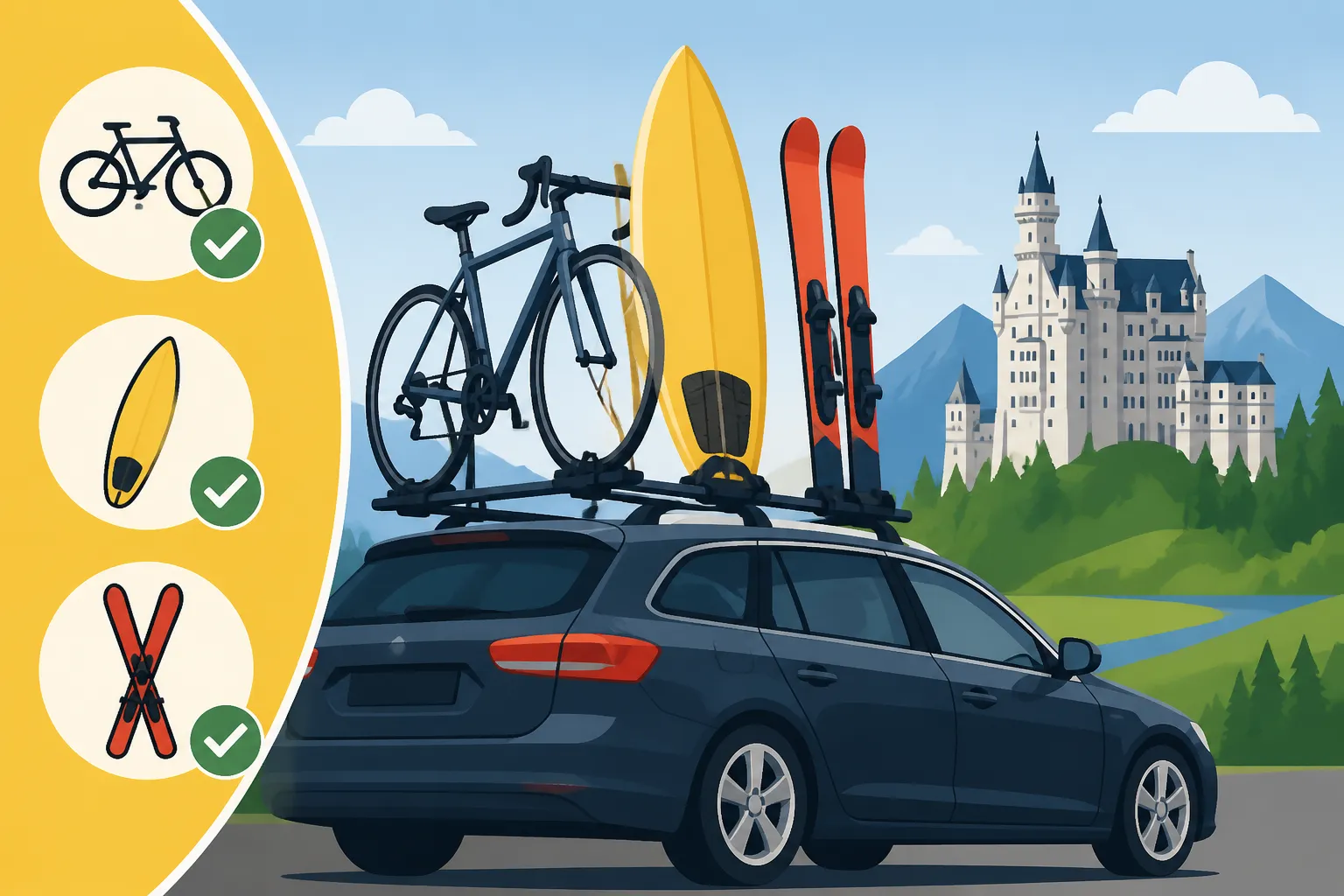
- Rental Car: This is, by far, the most practical solution. Renting a car, especially one with a roof rack or sufficient interior space (like a van), gives you the freedom to reach those remote surf spots without the stress of public transport. Many major rental companies like Sixt or Europcar offer vehicles with roof rack options or larger models. You can easily compare car rental options through a platform like Omio if you are looking for Getting Around Germany: Trains, Buses, Flights, and Car Hire.
- Specialized Courier Service: For longer distances or if you're staying put for a while, consider shipping your surfboard ahead of time via a parcel service like DHL or Hermes. This requires careful packaging and planning but removes the transport headache.
- Foldable/Inflatable Boards: If you haven't bought your board yet, consider a foldable or inflatable stand-up paddleboard or surfboard. These can often be packed into a large backpack and carried as regular luggage, making train travel much more feasible.
Skis and Snowboards: Easier, But Still Requires Planning
Good news! Skis and snowboards are generally treated more leniently than bikes or surfboards on German public transport. Their shape makes them easier to stow, often in overhead racks or designated luggage areas, provided they are safely packed in a proper ski bag. They are usually considered a form of oversized hand luggage, meaning you typically don't need an extra ticket.
However, "easier" doesn't mean "effortless."
- Space is Key: While generally permitted, if a train is extremely crowded, you might still face challenges or even be asked to wait for the next service by a conductor if your equipment obstructs aisles or exits.
- Dedicated Ski Buses: Many popular ski resorts in the German Alps or other winter sport regions offer dedicated "ski buses" (often included in a ski pass or paid separately) from the nearest train station directly to the slopes. This is a common and highly convenient way to get your gear to your destination. When planning your journey to the German Alps: Garmisch, Zugspitze, and Berchtesgaden, look for these integrated services.
- Regional Trains to Ski Areas: Regional trains heading to popular ski destinations often have slightly more generous luggage policies or even dedicated spaces, especially during winter. Booking your train tickets to the region in advance is always a good idea. Omio can help you find routes to these areas, and while it might not explicitly show ski baggage rules, it gives you the overall travel itinerary, from which you can then check local transport options.
Always remember to check the specific transport operator's rules before you travel, especially for long-distance journeys or if you have particularly large or numerous items.
Car Rentals and Specialized Transport: When Public Transport Just Won't Do
Sometimes, no matter how much you try to squeeze, strap, or argue, public transport just isn't designed for your gear. This is when you need to consider alternative solutions that offer more flexibility and space.
The Freedom of a Rental Car
For those with surfboards, multiple bikes, or a whole family's worth of ski equipment, renting a car often moves from "nice-to-have" to "essential." The autonomy a rental car provides in Germany is unparalleled, especially if you're heading to more remote areas not well-served by train or bus. Imagine driving along The Romantic Road: Villages Along the Romantic Road with your bikes ready to explore!
When booking a rental car in Germany, consider:
- Vehicle Size: Don't just book the cheapest compact car. Think about how much gear you have. An estate car (Kombi), SUV, or even a small van (Transporter) will offer significantly more space.
- Roof Racks: If you have bikes or surfboards, inquire about roof rack options or if the rental company allows you to bring your own. Most major companies like Sixt, Europcar, Avis, or Hertz offer accessories for an additional fee. Make sure to book these well in advance, as they are not always readily available.
- Insurance: Double-check your rental car insurance to ensure it covers damage to your equipment or the car while transporting it.
- Driving on the Autobahn: If you're not used to driving in Germany, read up on Renting a Car and Driving on the Autobahn beforehand.
Using a travel booking platform like Omio can be incredibly helpful here. While it’s renowned for comparing train and bus options, it also often integrates car rental comparisons. This means you can plan your core journey (say, a train to a major city) and then easily find a car rental for the "last mile" to your remote sports destination, all in one place. It truly simplifies the process of comparing prices and availability from various providers.
Package Delivery Services for Your Gear
Another excellent, albeit less spontaneous, option is to ship your equipment to your destination ahead of time. This is particularly useful for longer trips, if you're staying in one place for an extended period, or if you simply want to avoid the hassle of lugging heavy items through train stations.
Germany has several reliable parcel services:
- DHL: As the national postal service, DHL offers various shipping options, including larger parcels. You can drop off your well-packaged equipment at a Postamt (post office) or DHL Paketshop.
- Hermes: Known for competitive pricing and extensive Paketshop networks, Hermes is a popular choice for sending larger items within Germany. They often have specific services for sports equipment.
- DPD / GLS: These are other reputable courier services that can handle larger packages.
Pros of shipping your gear:
- Convenience: Travel light and pick up your gear at your destination (ensure your accommodation is set up to receive packages).
- Cost-Effective for Bulk: For very large items or multiple pieces, it can sometimes be cheaper than multiple bike tickets or specialized train transport fees.
- Reduces Stress: No wrestling with equipment on crowded platforms or worrying about it getting damaged during transfers.
Cons of shipping your gear:
- Timing: You need to plan well in advance to ensure your gear arrives before or shortly after you do. Delivery times can vary.
- Packaging: You are responsible for securely packaging your equipment to prevent damage during transit. This often requires specialized bags or boxes.
- Recipient: You need a reliable address at your destination where the package can be received and stored safely.
This option might not be visible on a booking platform like Omio, but it's an important alternative to consider when planning your trip. It adds a layer of flexibility that public transport often can't provide.
Smart Planning and Booking with Omio: Your Expat Travel Companion
Navigating Germany's transport system with sports equipment can be a minefield, even for seasoned expats. That's why having a reliable planning tool is an absolute game-changer. And let me tell you, when it comes to multimodal travel, Omio really stands out as a strong contender.
Why Omio is a Game-Changer for Sports Enthusiasts
For those of us schlepping bikes, boards, or skis, Omio offers a unique advantage: it simplifies the complex task of comparing different modes of transport across various providers. Instead of jumping between Deutsche Bahn's website, FlixBus, and various regional transport apps, Omio pulls it all into one interface.
Here’s why it's such a valuable tool for sports enthusiasts:
- Comprehensive Search: Omio allows you to search for trains, buses, and even car rentals for your chosen route. This is crucial because sometimes a bus might be more accommodating for your equipment than a train, or a car rental might be the only viable option.
- Time and Cost Comparison: You can instantly see the total travel time and cost for different routes and transport types. This helps you weigh the trade-off between speed, price, and the potential hassle of equipment transport. Maybe a slightly longer bus journey is worth it if it avoids a tricky train transfer with your gear.
- Provider Diversity: It’s not just DB. Omio includes options from other bus operators and, as mentioned, car rentals, giving you more choices for your specific needs.
- User-Friendly Interface: The platform is designed for ease of use, which is a blessing when you're trying to figure out convoluted travel plans.
- Booking Convenience: Once you've found your ideal route, you can often book directly through Omio, streamlining the entire planning process.
While Omio might not explicitly tell you "this train has bike space available" for every single regional connection, it gives you the fundamental route and options, empowering you to then do a targeted check with the specific operator for equipment rules. It's about centralizing your initial search to quickly identify the most promising paths. Think of it as your first, best port of call for any multi-leg journey in Germany.
Step-by-Step with Omio for Your Sports Trip
Let's walk through a hypothetical scenario. Say you want to take your bike to the Baltic Sea coast for a weekend cycling trip, or your skis to a resort in the Bavarian Alps.
- Input Your Journey: Head over to Omio and enter your departure city (e.g., Berlin) and your destination (e.g., Rostock for the Baltic Sea, or Garmisch-Partenkirchen for skiing).
- Select Your Dates: Choose your travel dates.
- Explore Options: Omio will display various combinations of trains and buses. You'll see different providers, travel times, and prices.
- Consider Equipment:
- For Bikes: Look for train routes, especially those that include IC/EC or longer regional connections. While Omio won't explicitly book your bike reservation, it gives you the train number and operator. You'll then go to the Deutsche Bahn website or a ticket counter with your Omio-identified train to specifically book your bike ticket and reservation. Alternatively, if Omio shows a bus route (like FlixBus), check their baggage policy directly; some long-distance buses do allow bikes for an extra fee, often requiring them to be in a bag.
- For Skis/Surfboards: For skis, look at train routes. Since skis are often considered regular luggage, you generally won't need an extra ticket. For surfboards, if train options seem too complicated, Omio's integrated car rental search becomes invaluable. You can see car rental prices and then pick a car suitable for your board.
- Book Your Human Ticket: Once you've identified the most suitable journey (and confirmed equipment rules with the operator if needed), book your passenger ticket through Omio.
- Add Equipment Booking (if necessary): For bikes, make sure to follow up directly with Deutsche Bahn for your Fahrradkarte and reservation for the specific train you selected via Omio. For ski buses from a train station, check the local transport authority’s website.
Using Omio in this way helps you quickly identify feasible routes and then narrow down the specific details for your sports equipment, saving you a ton of time and frustration compared to piecing it all together from scratch. It’s an essential tool for any expat planning a trip with a bit more baggage than usual.
Essential Tips for a Smooth Journey with Your Gear
After living here for ages, I've learned a thing or two about making things go as smoothly as possible. Even with Omio to help you find the best path, a little extra preparation can save you a world of hurt.
Pack Smart and Protect Your Equipment
German train stations can be bustling, and luggage compartments aren't always designed for delicate items.
- Bike Bags/Covers: For bikes, invest in a proper bike bag or at least a sturdy cover. This not only protects your bike from scratches and dings but can also make it easier to handle and less likely to snag on other passengers' luggage. Some regional trains might even appreciate bikes being covered, especially if they are in general compartments.
- Ski/Snowboard Bags: For skis and snowboards, a well-padded bag is a must. Many come with wheels, which is a godsend when navigating long platforms or changing trains.
- Surfboard Protection: If you're managing to take your surfboard on a journey (likely in a rental car or via courier), ensure it's in a heavy-duty board bag with extra padding around the nose, tail, and rails.
The better protected your gear is, the less you'll have to worry about it during transit, and the happier you'll be when you arrive at your destination.
Double-Check and Reserve Early
This cannot be stressed enough, especially for bikes on long-distance trains.
- Rules Change: Transport rules can, and do, change. Always double-check the latest regulations on Deutsche Bahn's website, or the specific regional transport provider (e.g., VBB, MVV, HVV) before each trip.
- Bike Reservations are CRITICAL: If you're taking your bike on an ICE, IC, or EC train, book your bike ticket and reservation the moment your human ticket is booked. These spots are extremely limited, especially on popular routes to places like the North Sea or the Alps during holidays. Waiting until the last minute almost guarantees you won't get a spot, forcing you to find alternative transport or leave your bike behind. A platform like Omio can help you find suitable train times, but you'll still need to make that specific bike reservation with the train operator.
- Peak Hours Matter: For regional trains and S-Bahns, be mindful of peak hour restrictions. If you can travel mid-morning or early afternoon, you’ll have a much easier time finding space. For more in-depth knowledge on utilizing the extensive network, check out our guide on Deutsche Bahn Guide: Using Trains for City and Long-Distance Travel.
Be Prepared for the Unexpected
Even with the best planning, things can go awry.
- Flexibility is Your Friend: A train might be unexpectedly full, or a connection might be missed. Have a mental Plan B, whether it's waiting for the next train (if allowed), looking up a last-minute car rental on Omio, or even checking local taxi services if you're close to your destination.
- Cash on Hand: While card payments are increasingly common, having some cash (Euros) is always a good idea, especially for smaller regional transport services or if you need to buy an unexpected bike ticket from a machine that only accepts certain payment methods. Learn more about Using Cash vs Card in Germany: Is Germany Going Cashless?.
- Allow Extra Time: Always, always build in extra time for transfers, especially if you have bulky equipment. Hauling a bike or skis through a crowded station to catch a tight connection is a recipe for stress. Give yourself at least 20-30 minutes for comfortable transfers.
Language Barrier Assistance
While many German train staff speak English, especially in larger cities, don't assume it. Being able to ask basic questions in German about your equipment can be incredibly helpful.
- "Gibt es Platz für ein Fahrrad?" (Is there space for a bike?)
- "Brauche ich ein Fahrradticket?" (Do I need a bike ticket?)
- "Ist es erlaubt, ein Surfbrett mitzunehmen?" (Is it allowed to bring a surfboard?)
- "Wo ist der Fahrradwagen?" (Where is the bike carriage?)
Having a translation app on your phone is a good backup, or brush up on some phrases from a guide like German Language and Everyday Communication for Visitors. Even a little German goes a long way in showing respect and often smooths over potential frustrations.
By combining smart preparation, using reliable tools like Omio for route planning, and having a realistic understanding of German transport rules, you can absolutely enjoy incredible sports adventures across Germany with your gear in tow. It just takes a bit more elbow grease than you might be used to!
Disclaimer
Please note that while this guide aims to provide accurate and up-to-date information for expats traveling in Germany, transport rules and regulations, especially concerning oversized luggage and sports equipment, can change without prior notice. It is always recommended to double-check the latest terms and conditions directly with the specific transport provider (e.g., Deutsche Bahn, regional bus companies, car rental agencies) before making your travel arrangements. This article offers general advice and personal insights and should not be considered legal or official guidance.