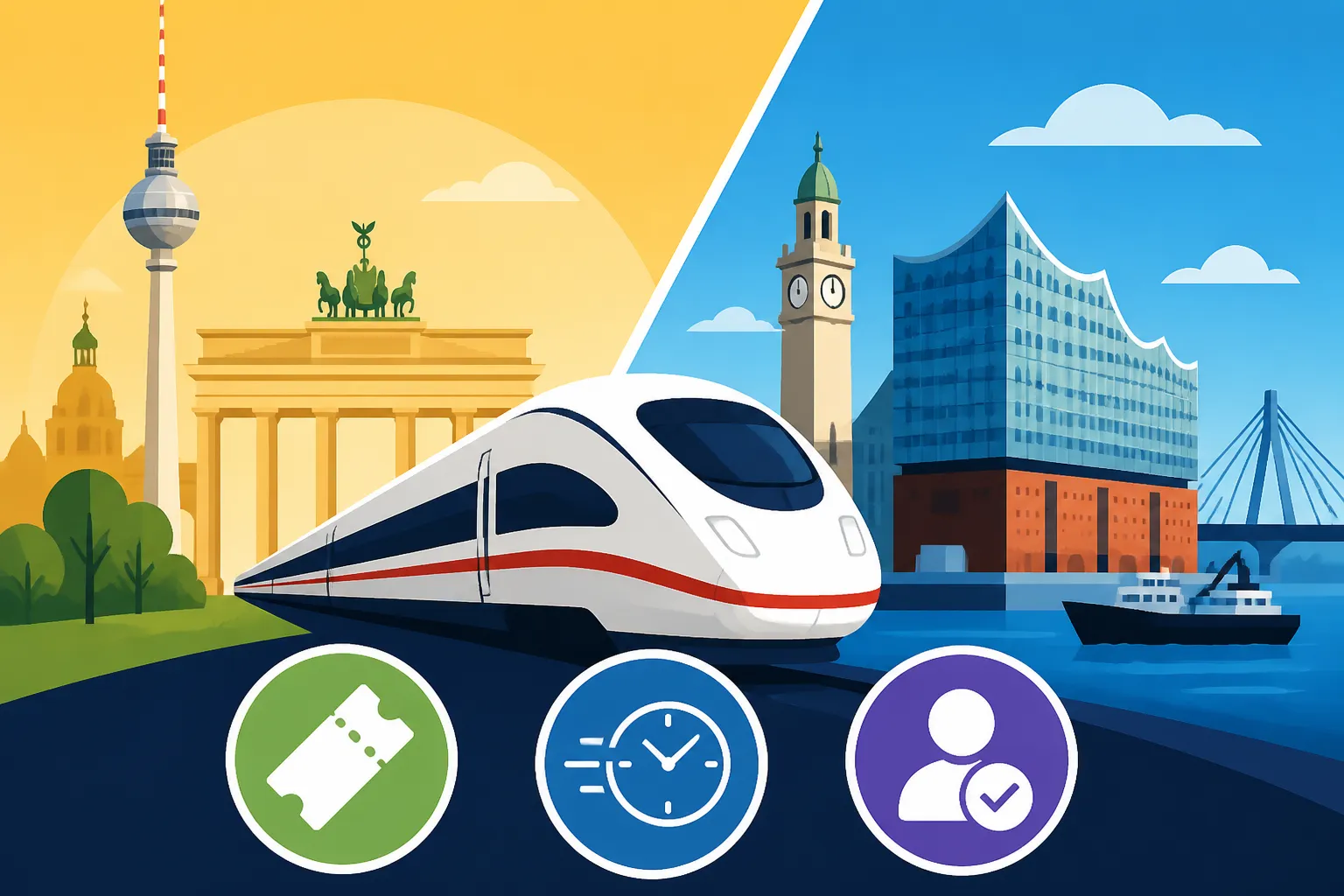
Berlin to Hamburg: Fares, Frequency, and Which Operator to Book
Oh, the quintessential German city-to-city journey! If you've just landed in Berlin and the allure of Hamburg's harbor calls your name, or vice versa, you're probably already feeling that familiar expat mix of excitement and mild dread about figuring out the logistics. Navigating Germany's transport system, while generally excellent, can still throw a few curveballs, especially when you're trying to compare options, understand pricing, and make sense of different operators. This guide is here to untangle all that for you, offering a clear path from the bustling capital to the sophisticated Hanseatic city, ensuring you find the best way to travel, whether you're pinching pennies or prioritizing speed and comfort.
Disclosure: This post may contain affiliate links. We may earn a commission at no extra cost to you if you make a purchase through these links. Read full disclosure.
Understanding Your Options: The Berlin to Hamburg Journey
When you're looking to bridge the distance between Berlin and Hamburg, you're in luck because it's one of Germany's most popular routes, meaning plenty of choices. This isn't like trying to get to a remote village in the Black Forest; these are two major hubs, and the infrastructure is designed to connect them seamlessly. However, "seamless" for a local might still mean a few head-scratchers for us expats! You've got trains, long-distance buses, and, of course, the option of driving yourself. Each has its charm, its quirks, and its particular benefits.
Rail Travel: The German Backbone
Ah, Deutsche Bahn (DB), the undisputed king of German intercity travel. For many, the train is the default and often the preferred choice for covering significant distances within Germany. And for good reason! The journey from Berlin Hauptbahnhof to Hamburg Hauptbahnhof is a prime example of German engineering efficiency.
You'll primarily be riding the InterCity Express (ICE), Germany's high-speed rail network. These sleek, white trains glide across the landscape at impressive speeds, often reaching 300 km/h (about 186 mph) on dedicated high-speed lines. The ICE trains are comfortable, generally punctual, and offer a range of amenities. You'll find power outlets at most seats, Wi-Fi (though signal strength can be patchy in some rural stretches, let's be real), a Bordrestaurant or Bordbistro for snacks and drinks, and often even family compartments. Sometimes, you might find an InterCity (IC) or EuroCity (EC) train on this route, which are slightly slower but often still very comfortable, using older but well-maintained rolling stock. The key thing with trains is the sheer frequency; you'll often find multiple connections every hour, especially during peak times, making it incredibly flexible even if you're making last-minute plans. It's truly part of the wider Getting Around Germany: Trains, Buses, Flights, and Car Hire experience.
Long-Distance Buses: The Budget-Friendly Alternative
Before the full liberalization of the long-distance bus market in Germany in 2013, if you wanted to travel affordably, trains were pretty much your only option. But now, FlixBus has taken the stage as the dominant player, offering a genuinely competitive and often significantly cheaper alternative. If you're on a tight budget or just prefer ground travel that offers a different perspective, the bus from Berlin to Hamburg is a solid contender.
FlixBus operates a vast network, and the Berlin-Hamburg route is one of its busiest. You’ll find direct services departing from several points in Berlin, often the Central Bus Station (ZOB – Zentraler Omnibusbahnhof) or popular spots like Südkreuz or even Alexanderplatz, heading straight to Hamburg ZOB. The coaches are generally modern, offering free Wi-Fi (again, manage expectations, but it's usually there!), power outlets, and onboard toilets. The seating isn't as spacious as an ICE train, of course, but for a 2.5 to 3.5-hour journey, it's perfectly adequate. It's an excellent way to keep your travel costs down, leaving more euros for Hamburg's delicious Fischbrötchen or a visit to the Elbphilharmonie. This option is certainly covered in more detail if you want to understand Long-Distance Buses in Germany: FlixBus and Networks.
Car Travel: Flexibility on the Autobahn
Then there's the classic road trip option. If you're traveling with family, have a lot of luggage, or simply prefer the freedom of your own schedule and the open road (or at least, the open Autobahn!), driving is a strong choice. The route between Berlin and Hamburg is primarily via the A24 Autobahn, a relatively straightforward stretch of road.
While the Autobahn is famous for its sections with no speed limit, it's crucial to remember that this isn't universally true, and speed restrictions are common, especially near cities or construction zones. Still, for many, the allure of German roads and the ability to stop wherever you please is undeniable. The journey itself is scenic enough in parts, traversing the flat plains and forests of Brandenburg and Mecklenburg-Vorpommern before reaching the bustling port city of Hamburg. Of course, you’ll need to factor in fuel costs, potential rental car fees if you don’t own a vehicle, and parking costs in both cities, which can add up quickly. But for sheer independence and the option to take a detour to a charming little German town along the way, driving can't be beaten. If you're considering this, definitely check out our guide on Renting a Car and Driving on the Autobahn.
Comparing Travel Modes: Fares, Frequency, and Journey Times
Now for the nitty-gritty, the practical considerations that often make or break your travel decision. We all want the best balance of cost, convenience, and comfort, right? Let's stack them up against each other specifically for the Berlin to Hamburg route.
The Speed and Comfort of Trains
When it comes to speed, trains win hands down. An ICE train can whisk you from Berlin Hbf to Hamburg Hbf in as little as 1 hour and 45 minutes, often closer to 2 hours. The frequency is truly remarkable; during peak hours, you might find a train every 15-30 minutes, giving you immense flexibility. This is especially true when booking through platforms like Omio, which pulls up all available train times, making it effortless to pick one that suits your schedule.
However, this speed and comfort come with a price, which can fluctuate wildly. If you book far in advance (think several weeks or months), you can snag a Saver Fare (Sparpreis) starting from around €17.90 to €29.90. These tickets are typically non-refundable and non-changeable, so commit wisely! If you're booking last minute or during a busy holiday period, you could be looking at Flex Tickets that range from €60 to €80+ for a single journey in 2nd class. First-class tickets offer even more comfort and service, but at an even steeper price. For understanding these nuances, platforms like Omio are incredibly useful because they display all these options clearly, so you're not left guessing about the best deal.
The Affordability of Buses
If your wallet is feeling a bit light after settling into Germany, or if you're just a savvy traveler, long-distance buses like FlixBus are often the most economical choice. You can frequently find tickets from Berlin to Hamburg starting from as low as €7.99 to €15, even for bookings made just a few days in advance. Even last-minute tickets rarely climb above €25-€30, making them a consistently cheaper option than trains, especially if you're spontaneous.
The trade-off, of course, is time. The bus journey typically takes longer than the train, usually somewhere between 2 hours 30 minutes and 3 hours 30 minutes, depending on the specific route and traffic conditions. While this isn't a massive difference for a single trip, if you're particularly time-sensitive, those extra 45-90 minutes might matter. FlixBus also offers decent frequency, with many departures throughout the day, so you still have options. When you're comparing prices for your trip, using Omio allows you to see both train and bus options side-by-side, so you can easily weigh the cost-time balance.
Driving: Costs and Considerations
Driving offers unparalleled flexibility, but it's important to calculate the true cost. The distance between Berlin and Hamburg is roughly 280-300 kilometers (174-186 miles). At current German fuel prices (which can fluctuate quite a bit, so check current rates), you're looking at a significant fuel bill for a round trip. For a standard petrol car, expect to pay around €30-€40 just in fuel for a one-way trip, possibly more for larger vehicles or if you opt for faster speeds.
The journey time by car is usually around 2 hours 45 minutes to 3 hours 30 minutes, assuming no major traffic jams or construction. However, German Autobahns, particularly around major cities, are prone to congestion, especially during rush hour or holiday weekends. A seemingly quick trip can easily extend to 4-5 hours or more if you hit bad traffic. Then there's parking: both Berlin and Hamburg have costly city-center parking, which can add another €15-€30 per day to your expenses. So, while driving offers freedom, it's often more expensive and potentially less predictable in terms of total travel time than a train, and often even more than a bus.
Here's a handy comparison table to help visualize these differences:
| Travel Mode | Typical Duration | Frequency (approx.) | Typical Fares (one-way) | Pros | Cons |
|---|---|---|---|---|---|
| Train (ICE) | 1h 45m – 2h | Multiple per hour | €17.90 – €80+ | Fastest, most comfortable, city-center stations, reliable | Can be expensive if not booked in advance |
| Bus (FlixBus) | 2h 30m – 3h 30m | Several per day | €7.99 – €30 | Most affordable, decent comfort, onboard amenities | Slower, susceptible to traffic, often departs from specific bus terminals (ZOB) |
| Car | 2h 45m – 3h 30m | N/A (personal choice) | Fuel costs + rental/parking | Maximum flexibility, private space, ability to detour | Fuel & parking costs, potential for traffic delays, stressful for some |
Booking Your Trip: Why Omio Makes Life Easier
Alright, you've got your options, you know the pros and cons. Now, how do you actually book the darn ticket without tearing your hair out? This is where a fantastic platform like Omio truly shines and becomes your go-to hero for travel planning in Germany. Seriously, as someone who's wrestled with different German booking systems and language barriers for years, I wish I had Omio when I first moved here.
Simplifying Complex German Ticketing
Let's be honest, dealing with various transport operators, especially in a new country, can be a headache. You might go to Deutsche Bahn's website for trains, then switch to FlixBus's site for buses, then maybe Google Maps for driving routes. Each has its own interface, its own language (even if you select English, sometimes the German quirks creep in), and its own way of presenting information. It's a fragmented experience that can lead to confusion and missed deals.
Omio pulls all of this together into one simple, intuitive platform. Instead of bouncing between different websites, you enter your origin (Berlin), destination (Hamburg), and dates once. With one search, Omio instantly displays all available train, bus, and even flight options (though for Berlin-Hamburg, flights are generally not practical due to travel time to/from airports). It's like having a universal translator and travel agent rolled into one. This unified view not only saves you time but also reduces the mental load of comparing different providers. Plus, with the new How to Use the DB Navigator App in Germany, you might think you're covered, but Omio offers a wider scope.
Finding the Best Deals Across All Operators
This is where Omio truly becomes invaluable for expats and tourists alike. Because it aggregates data from multiple providers – like Deutsche Bahn and FlixBus – it empowers you to find the absolute best fare for your specific needs, whether that's the cheapest ticket or the fastest journey.
Imagine this scenario: you're planning a weekend trip and want to leave Friday evening. You search on Omio. You might see a super-fast ICE train for €65, a slightly slower IC train for €45, and a FlixBus for €12. Then, you look at Saturday morning. Perhaps an early bird ICE fare appears for €22, making the train suddenly a more attractive option. Without Omio showing you all these possibilities side-by-side, you'd have to manually check each operator, compare times, and mentally calculate cost savings. This is particularly crucial for train tickets, where prices for specific departures can vary dramatically based on demand and how far in advance you book. Omio takes the guesswork out of it, letting you quickly identify those elusive Sparpreis tickets on Deutsche Bahn or the cheapest bus seats on FlixBus, ensuring you don't miss out on savings.
Managing Your Journey On-the-Go
Let's face it, expat life often means being on the move, and having your travel details easily accessible is a game-changer. Once you've booked your ticket through Omio, everything is conveniently stored in your account, accessible via their user-friendly mobile app. No more scrambling for printouts or digging through emails for booking confirmations. Your e-ticket is right there on your phone.
This seamless mobile integration means you can check your departure gate or platform, view real-time updates (like delays or platform changes), and access your ticket with ease. If you're running late or need to make a quick change, having all your details in one place through Omio simplifies things immensely. Plus, their customer support can assist if you encounter any issues, providing an extra layer of peace of mind when navigating the German transport network. You can also explore options for Mobile Data and eSIMs for Travel in Germany to ensure you always have access to your Omio app.
Practical Tips for a Smooth Journey
Even with the best booking platform (like Omio!) and a clear understanding of your options, a little extra knowledge can go a long way in making your Berlin to Hamburg trip truly stress-free. Germany is big on order, and knowing a few key things can prevent unnecessary hiccups.
Navigating Berlin's Hauptbahnhof and Hamburg's Hauptbahnhof
Both Berlin Hauptbahnhof (Hbf) and Hamburg Hauptbahnhof are impressive, bustling transport hubs. For us foreigners, they can also feel a bit overwhelming, especially during peak hours.
Berlin Hauptbahnhof is a multi-level marvel. It's often compared to a giant, modern cathedral of travel. Long-distance trains (ICE, IC/EC) typically depart from the upper levels (tracks 1-8, going east-west) or lower levels (tracks 11-16, going north-south). S-Bahn (city trains) and regional trains run on different levels. Give yourself ample time – at least 20-30 minutes before departure – to find your platform (Gleis). There are plenty of signs, but it's a big place. Grab a coffee, check the departure boards carefully, and remember the Omio app will usually tell you your platform.
Hamburg Hauptbahnhof is similarly central and busy. It's a classic terminus station, meaning trains mostly arrive and depart from ground-level platforms. It's easier to navigate in terms of levels compared to Berlin Hbf, but it's still sprawling and serves millions of passengers. Again, rely on the large departure boards and your Omio ticket for platform information. Both stations have plenty of shops, restaurants, and services, so if you arrive early, you won't be bored. They're also excellently connected to the local U-Bahn (subway) and S-Bahn networks, making onward travel within each city very easy. For more on living in these cities, check out Living in Berlin: Expat Guide to Neighborhoods and Lifestyle and Living in Hamburg: A Guide to Germany’s Port City for Newcomers.
What to Expect Onboard (Trains and Buses)
Once you're on your way, whether by train or bus, there are a few common aspects of German travel to keep in mind.
On trains, especially ICE, you'll find seats are generally comfortable with a good amount of legroom. There are typically luggage racks above the seats, and larger luggage areas at the ends of the carriages. Don't be surprised if the train isn't always perfectly on time – while Deutsche Bahn strives for punctuality, delays do happen, especially on busy routes. However, they are usually communicated well via announcements and on digital displays. The Bordrestaurant/Bordbistro offers hot meals, sandwiches, and drinks – prices are what you'd expect on a train, so a bit higher than a supermarket. For further insights, you might want to delve into High-Speed Trains in Germany (ICE): Deutsche Bahn Routes and Savings.
On FlixBus, the experience is a bit more no-frills but still comfortable for the duration. Luggage space is in the undercarriage, which you'll usually load yourself with assistance from the driver. Keep valuables and essential items in a small bag with you. Seating is usually 2+2 across, similar to an airplane. Rest stops are rare on this direct route, so use the onboard toilet if needed. While usually reliable, buses can definitely be affected by traffic, so if timing is critical, factor in extra buffer. Your Omio app will help keep you updated on any delays.
Packing Smart for German City-to-City Travel
Light and practical packing is always a good idea, especially when traversing German cities. Both Berlin and Hamburg are very walkable, and you'll likely be doing a lot of exploring on foot or using public transport.
Consider a backpack or a small rolling suitcase that you can comfortably manage yourself. Public transport, particularly the U-Bahn and S-Bahn in city centers, can get crowded, and maneuvering large, unwieldy luggage is a hassle. If you're traveling by train, especially with a Saver Fare, you might not have a reserved seat, so having luggage that fits in the overhead racks is useful if you end up in a crowded carriage. For bus travel, remember there's usually a limit on checked luggage size and weight, so check your Omio booking details or the FlixBus website beforehand. Layers of clothing are always a good idea in Germany, as the weather can be quite variable, even on a single day. And don't forget a reusable water bottle – hydration is key, and it's environmentally friendly!
Taking the time to understand these little details can transform your travel experience from a potential source of frustration into a smooth, enjoyable part of your German adventure. And remember, platforms like Omio are designed to empower you with choices and simplicity, making those intercity trips far less daunting.
Disclaimer
Please note that while we strive to provide accurate and up-to-date information, travel details such as fares, schedules, and specific regulations can change. It is always recommended to check the official websites of transport providers and consult the Omio platform for the most current information before making your travel arrangements. This guide is for informational purposes only and does not constitute professional advice.