Living in Berlin: Expat Guide to Neighborhoods and Lifestyle
I spent my first three months in Berlin sleeping on an air mattress in a windowless sublet because I completely underestimated the city’s neighborhood dynamics and its brutal rental crisis. The transition to the German capital is exhilarating but deeply chaotic. This guide breaks down exactly how to navigate Berlin’s diverse districts, secure your apartment, and embrace the local lifestyle.
Disclosure: This post may contain affiliate links. We may earn a commission at no extra cost to you if you make a purchase through these links. Read full disclosure.
The Brutal Reality of the Berlin Housing Market
The Intense Competition for Flats
Finding a long-term apartment in Berlin is widely considered an extreme sport. Gone are the days of the early 2000s when the city was famously “poor but sexy” and massive lofts were rented for pennies. Today, the influx of international tech workers and the lack of new housing construction have created a highly pressurized market. When a reasonably priced apartment is listed online, it is not uncommon for the landlord to receive over five hundred inquiries within the first hour. If you manage to score an invitation to a viewing, prepare to stand in a line stretching down the street with fifty other desperate applicants holding pristine application folders.
To even be considered by a German landlord or property management company (Hausverwaltung), your bureaucratic ducks must be perfectly in a row. You need a flawless SCHUFA (credit score), proof of income usually equaling three times the warm rent, and a certificate from your previous landlord stating you have no rent arrears (Mietschuldenfreiheitsbescheinigung). For an expat who has just stepped off the plane, acquiring these documents is literally impossible. You do not have a German credit history, and your probationary work contract makes landlords incredibly nervous. Understanding this brutal reality is the first step, and thoroughly studying Finding an Apartment in Germany: Best Websites and Tips for Expats will help you build your application dossier before you begin the hunt.
Furnished vs. Unfurnished Apartments
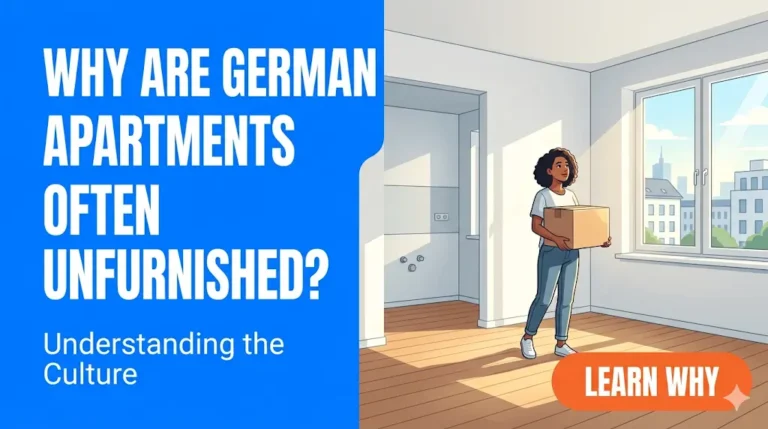
The second shock for newcomers is the strict definition of an “unfurnished” apartment in Germany. When you rent a standard, long-term flat in Berlin, it is completely bare. There are no light fixtures hanging from the ceiling, no closets in the bedrooms, and, most shockingly, absolutely no kitchen. You are renting a concrete box with plumbing hookups. You must purchase, transport, and install the entire kitchen block—including the sink, oven, and cabinets—entirely at your own expense, often ordering the heavy-duty power tools and fixtures required for installation directly from Amazon Germany to save time. When you eventually move out, you must either tear the kitchen down and take it with you or negotiate a buyout (Abschlag) with the incoming tenant.
For an expat on a potentially limited visa or work contract, investing thousands of euros into a custom-built kitchen is a terrible financial decision. This is why utilizing managed platforms like Wunderflats has become the standard survival strategy for international arrivals. By booking a mid-term, fully furnished apartment, you bypass the immediate need to purchase appliances, beds, and washing machines. You can walk in with a suitcase, connect to the pre-installed Wi-Fi, and focus on your new job. This allows you to explore the city at your own pace before committing to the massive financial undertaking of a long-term lease.
The Anmeldung Catch-22
The most infuriating administrative loop in Berlin, and indeed all of Germany, is the Anmeldung (address registration) catch-22. To open a standard German bank account, secure a tax ID number, or even get a local mobile phone contract, you must present a certificate proving you are officially registered at a local address (Meldebescheinigung). However, to secure a long-term apartment to register at, landlords will demand a local bank account and a German credit history. You are paralyzed before you even begin.
Many expats attempt to solve this by crashing on a friend’s couch or finding a sketchy, under-the-table sublet on Facebook. Be warned: if a sublessor refuses to give you the crucial Wohnungsgeberbestätigung (landlord confirmation form) required for the Anmeldung, the sublet is illegal, and you cannot legally register. Operating without a legal registration leaves you in bureaucratic limbo, unable to properly process your visa, sign up for health insurance, or get paid by your employer.
This is another area where corporate housing or platforms like Wunderflats prove invaluable. These platforms exclusively offer legally compliant rentals where the landlord provides the mandatory confirmation document upon move-in.
Decoding the Kiez: A Guide to Berlin Neighborhoods
Mitte and Prenzlauer Berg: The Polished Center
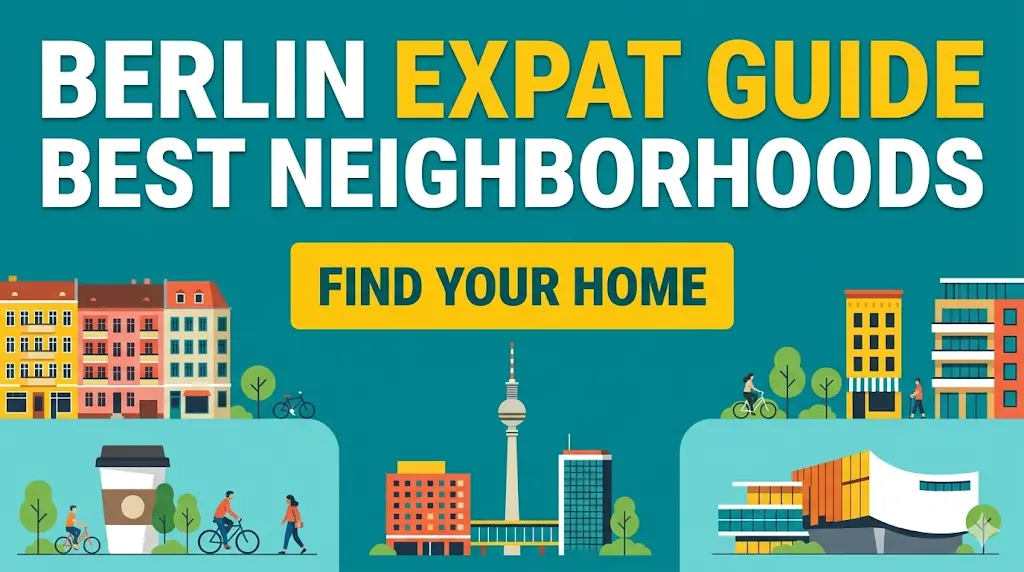
Berlin is a massive, sprawling city that operates more like a collection of distinct, interconnected villages rather than a single unified metropolis. Locals fiercely identify with their specific Kiez (neighborhood). Mitte, which literally translates to “Middle,” is the historical, polished, and highly commercial center of the city. It houses the iconic Brandenburg Gate, Museum Island, and the glittering tech offices around Rosenthaler Platz. Living in Mitte offers unparalleled convenience and pristine architecture, but it lacks the gritty, alternative charm Berlin is famous for. It is the most expensive district and is heavily populated by tourists, politicians, and high-earning startup executives.
Just north of Mitte lies Prenzlauer Berg, a neighborhood that serves as the ultimate case study in extreme gentrification. Following the fall of the Berlin Wall, it was a crumbling hub for artists, anarchists, and squatters. Today, it is arguably the most manicured, affluent, and family-friendly district in the capital. The streets are lined with beautifully restored Altbau (old-build) apartment blocks, organic supermarkets (Bio-Märkte), artisan bakeries, and high-end baby boutiques.
For expat families moving to Berlin, Prenzlauer Berg is often the holy grail. The neighborhood boasts numerous bilingual kindergartens, wide sidewalks perfect for massive strollers, and a very calm, safe atmosphere. However, the rent prices are astronomical, and younger, single expats often find the atmosphere slightly sterile or “too perfect” compared to the chaotic energy found further south. If you are debating where to base your family, weighing the benefits here against other hubs in Best Cities in Germany for Expats: Pros and Cons of Each is a smart comparative exercise.
Kreuzberg and Neukölln: Gritty, Hip, and Loud
If you are moving to Berlin to experience the famous bohemian, techno-driven, counter-culture lifestyle, you will inevitably gravitate toward Kreuzberg or Neukölln. Kreuzberg (affectionately divided into SO36 and Bergmannkiez) has a deep history of Turkish immigration, punk rock rebellion, and alternative artistry. Today, it remains vibrant, loud, and densely packed with third-wave coffee shops, incredible street food, and independent vintage boutiques. The streets around Kottbusser Tor and Görlitzer Park buzz with energy around the clock, though they also struggle visibly with urban grime.
Immediately south of Kreuzberg is Neukölln, which has rapidly transformed from a working-class, marginalized district into the absolute epicenter of the international hipster scene. The streets of northern Neukölln (Kreuzkölln) are lined with natural wine bars, vegan donut shops, and dive bars that stay open until breakfast. English is spoken here far more frequently than German. It is the cultural heart of the modern, young expat community.
Living in these districts requires a certain tolerance for chaos. The streets are loud, graffiti covers every available inch of brickwork, and the sidewalks are constantly crowded. However, the sense of community, the culinary diversity, and the proximity to the city’s legendary nightlife make it the most exciting place to live. If you thrive on constant stimulation and want to build a vast international network rapidly, this is exactly where you belong.
Charlottenburg and Schöneberg: The Classic West
Many newcomers focus entirely on the trendy eastern districts, completely ignoring the elegant, established neighborhoods of former West Berlin. Charlottenburg represents the classic, wealthy heart of the West. It is defined by grand, wide boulevards like the Kurfürstendamm (Ku’damm), luxury retail shopping, high-end gastronomy, and stately pre-war architecture. The demographic here is older, more conservative, and deeply rooted. It is incredibly clean, safe, and offers fantastic access to massive green spaces like the Tiergarten and the Charlottenburg Palace gardens.
Schöneberg, located slightly south, offers a beautiful middle ground. It maintains the elegant, historic architecture of the West but possesses a vibrant, welcoming, and slightly alternative spirit. Schöneberg has been the historical center of Berlin’s LGBTQ+ community since the 1920s (most famously around Nollendorfplatz) and retains a thriving, inclusive bar and cafe culture today. It is less chaotic than Kreuzberg but significantly more energetic than the deep residential pockets of Charlottenburg.
For professional expats who want a beautiful, quiet place to sleep while remaining well-connected to the corporate hubs via the U-Bahn, the Western districts offer an incredible quality of life. Because the permanent housing market here is exceptionally tight for high-quality properties, many corporate executives use Wunderflats to secure elegant, furnished interim housing in Charlottenburg while they navigate the long-term luxury market.
| Neighborhood (Kiez) | Primary Vibe | Average Rent Cost | Best Suited For |
| Mitte | Polished, commercial, touristy | Very High | High-earning professionals, executives |
| Prenzlauer Berg | Family-friendly, organic, restored | High | Expat families, established couples |
| Kreuzberg | Alternative, loud, culinary hub | High | Creatives, nightlife enthusiasts |
| Neukölln | Gritty, hipster, highly international | Medium/High | Students, young expats, artists |
| Charlottenburg | Elegant, classic West, wealthy | Very High | Corporate expats, older professionals |
| Schöneberg | Inclusive, historic, balanced | Medium/High | LGBTQ+ expats, professionals seeking balance |
Lifestyle and Culture: Embracing the Berlin Chaos
The Späti Culture and Street Life
The defining feature of Berlin’s casual social life is the Späti (short for Spätkauf). These are late-night convenience stores located on almost every street corner in the city. Unlike standard German supermarkets, which strictly close at 20:00 or 21:00 and observe total closure on Sundays (Sonntagsruhe), Spätis exploit legal loopholes to remain open late into the night, and often on Sundays. They sell tobacco, snacks, and most importantly, incredibly cheap beer.
In Berlin, you do not need to spend fifteen euros on a cocktail in a fancy bar to socialize. The Späti serves as the neighborhood living room. It is entirely culturally acceptable to buy a two-euro bottle of local beer, ask the owner to pop the cap off, and sit on the wooden benches directly outside the store, chatting with friends for hours. Drinking in public is completely legal and deeply embedded in the local lifestyle. During the summer, entire neighborhoods migrate to the sidewalks and local parks, clutching Späti beers.
Understanding this casual, unpretentious approach to socializing is critical for new arrivals. The city despises overt displays of wealth or exclusivity. If you try to organize rigid, formal networking dinners, you will likely fail.
Nightlife and the Techno Scene
Berlin’s nightlife is legendary, operating on a scale and intensity unmatched anywhere else in the world. The city is the global mecca for techno music. Clubs like Berghain, Tresor, and Sisyphos are not just party venues; they are cultural institutions that operate non-stop from Friday night until Monday morning. For many expats, accessing and participating in this scene is the primary reason they relocated to the city.
However, navigating the club scene requires understanding strict, unwritten rules. The door policies (Türpolitik) are notoriously harsh and entirely subjective. Bouncers will turn people away simply because the club is full, because they are acting too loud in the queue, or because their energy doesn’t match the specific vibe of the night. The standard uniform is minimalist, dark, and highly functional clothing. You wear comfortable sneakers because you are expected to dance for eight straight hours, not stand around looking glamorous.
Surviving this nightlife requires a robust recovery strategy. If your apartment faces a busy street, or if you regularly return home at 9:00 AM on a Sunday morning as the sun is rising, you must optimize your sleeping environment. Proactively ordering heavy-duty, premium blackout curtains and high-fidelity silicone earplugs from Amazon Germany is the absolute best investment you can make for your mental health. Balancing this intense nocturnal culture with your daily professional life is a unique challenge, but participating in these social arenas is often highly effective for Making Friends in Germany: Social Tips for Expats.
Green Spaces and Escaping the Concrete
Despite the endless concrete, brutalist architecture, and urban grime, Berlin is actually one of the greenest cities in Europe. The city breathes through its massive, sprawling parks and extensive network of surrounding lakes. The absolute crown jewel of this outdoor culture is Tempelhofer Feld. This massive, abandoned airport in the center of the city was reclaimed by the public and is now a sprawling recreational space. On a sunny weekend, tens of thousands of Berliners flock to the old runways to cycle, wind-skate, barbecue, and watch the sunset.
Beyond Tempelhof, the massive Tiergarten cuts directly through the center of the city, offering dense forest trails that make you forget you are in a metropolis of nearly four million people. In the summer, the lifestyle completely shifts to the water. The city is surrounded by incredibly clean, swimmable lakes like the Müggelsee, Schlachtensee, and Wannsee. Fleeing the sweltering, un-airconditioned apartments to spend the weekend swimming and drinking radlers by the lake is a mandatory seasonal ritual.
Because outdoor living is so vital, you must properly equip yourself for the summer park culture. No Berliner goes to the park without a massive, heavy-duty picnic blanket, a portable Bluetooth speaker, and a reusable grill. Sourcing these durable outdoor essentials from Amazon Germany before the first heatwave hits ensures you are always ready to join a spontaneous weekend barbecue at the Hasenheide or Treptower Park.
Logistics of Daily Life in the Capital
Public Transit: Navigating the Ringbahn
Berlin is geographically massive—it is roughly nine times the size of Paris. Walking everywhere is simply not an option. Fortunately, the Berliner Verkehrsbetriebe (BVG) operates an incredibly dense, highly functional network of subways (U-Bahn), commuter trains (S-Bahn), trams (MetroTram), and buses. The system operates 24/7 on weekends, making the legendary nightlife logistically possible and ensuring you can always get home safely.
The defining geographical and psychological feature of the transit system is the Ringbahn (the Ring Train). This S-Bahn route forms a massive circle around the inner city, taking exactly sixty minutes to complete a full loop. For many locals, the Ringbahn is an invisible border. Living “inside the Ring” (Zone A) means you are in the vibrant, hyper-connected core. Living “outside the Ring” (Zone B or C) means longer commutes, quieter streets, and a more suburban feel. When apartment hunting, proximity to a U-Bahn or S-Bahn station is the single most important metric for your quality of life.
While the system is vast, purchasing and validating tickets is a common trap for tourists and new expats. If you buy a paper ticket from a machine, you must stamp it in the small yellow validation boxes on the platform before boarding the train. Plainclothes ticket inspectors (Kontrolleure) patrol the trains ruthlessly. If you hand them an un-stamped ticket, you will be hit with an immediate €60 fine, and they will not accept “I’m new here” as an excuse.
Language Barriers and the “English Bubble”
One of the most dangerous illusions of moving to Berlin is the belief that you never need to learn German. In specific neighborhoods like Neukölln, Kreuzberg, and Mitte, and within the tech, creative, and hospitality industries, you can easily live your entire daily life entirely in English. The barista taking your coffee order, your yoga instructor, and your startup CEO will all happily communicate in fluent English.
However, this “English Bubble” instantly shatters the moment you need to interact with the foundational infrastructure of the country. When your boiler breaks and you need to call a plumber, when you receive a massive, complex tax document in the mail, or when you need to negotiate a dispute with your internet provider, English will not save you. German tradespeople, customer service reps, and landlords are rarely willing or legally permitted to conduct complex, liability-heavy business in English.
Relying entirely on translation apps or constantly begging bilingual friends to make phone calls for you leads to a deep sense of helplessness and isolation. You must treat language acquisition as a survival tool, not a hobby.
Dealing with Berlin Bureaucracy (Bürgeramt)
The ultimate test of your resilience as a Berlin expat is dealing with the city’s notorious civil administration. The Bürgeramt (citizen’s office) is where you handle your mandatory address registration, and the Ausländerbehörde (immigration office, now LEA) is where you handle your visa. These offices are chronically understaffed, technologically outdated, and utterly overwhelmed by the city’s rapidly growing international population.
Securing an appointment (Termin) at a Bürgeramt feels like winning the lottery. You will often log onto the official city portal only to see that there are absolutely zero appointments available for the next three months across all twelve city districts. Expats resort to waking up at 7:00 AM and constantly refreshing the booking page, hoping to catch a cancellation slot for that same day. Showing up without an appointment is generally not permitted and will result in you being turned away by security.
Furthermore, the official language of these offices is legally mandated as German. The civil servant (Beamter) processing your paperwork is under no obligation to speak English, and many will actively refuse to do so to avoid legal liability for mistranslations. If your German is not at a strong conversational level, you absolutely must bring a native speaker with you to translate.
References
Primary sources (official)
- Berlin.de – Official Portal of the State of Berlin: https://www.berlin.de/en/
- BVG – Berliner Verkehrsbetriebe (Public Transport): https://www.bvg.de/en
Other helpful sources
- Wunderflats – Moving to Berlin Guide: https://wunderflats.com/en/living-in/berlin
- Expatica – Living in Berlin: https://www.expatica.com/de/moving/location/living-in-berlin-107871/
Disclaimer
The neighborhood descriptions, rental market conditions, and bureaucratic procedures detailed in this guide are based on widespread expat experiences and the current reality of living in Berlin. The housing market is highly volatile, and civil administration booking systems undergo frequent changes. Always verify current visa requirements, rental laws, and registration procedures directly through the official Berlin.de service portal before finalizing your relocation plans or signing legally binding lease agreements.