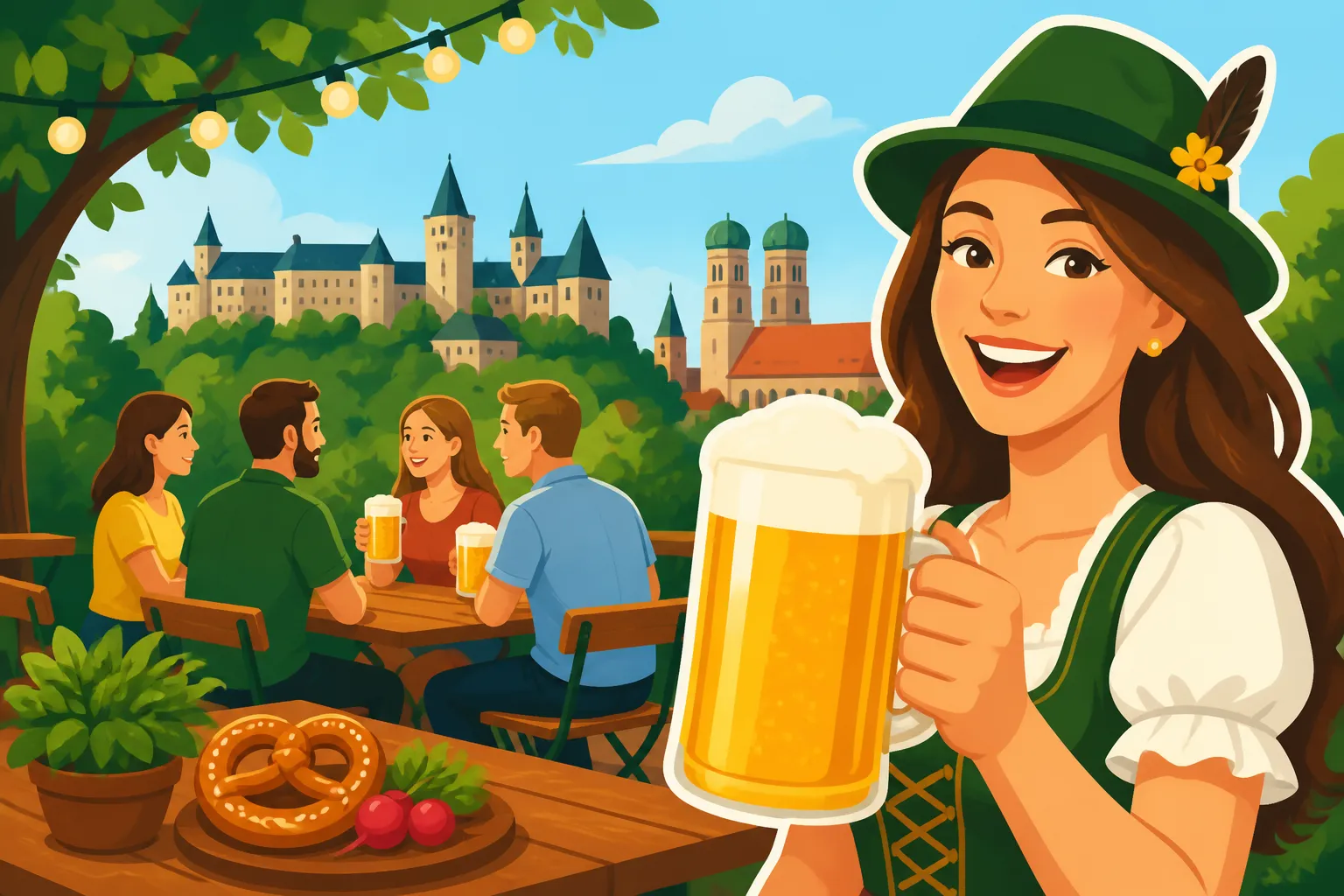
How to Find the Best Beer Gardens in Germany
Finding yourself in a crowded, overpriced tourist trap when you just wanted an authentic German beer experience is a rite of passage for many, but it doesn’t have to be yours. This guide breaks down the cultural nuances, secret locations, and specific etiquette required to find and enjoy the best beer gardens in Germany, ensuring you experience the true local "Gemütlichkeit" without the "tourist tax."
Disclosure: This post may contain affiliate links. We may earn a commission at no extra cost to you if you make a purchase through these links. Read full disclosure.
Understanding the Authentic German Beer Garden Culture
To find the best beer gardens, you first have to understand what a "real" one actually is. In Germany, especially in Bavaria, a true Biergarten is legally defined by specific regulations that date back to the 19th century. Many newcomers see any restaurant with outdoor seating and think they’ve found a beer garden. Usually, they’ve just found a "Wirtsgarten" (a restaurant garden), which is a completely different vibe. A real beer garden is a place of social leveling where the CEO sits next to the construction worker, and everyone is there for the atmosphere as much as the brew.
One of the most important aspects of Beer, Wine, and German Drinking Culture is the tradition of the "Brotzeit." Historically, beer gardens were created above deep cellars where brewers stored their barrels. To keep the ground cool, they planted chestnut trees and covered the area with gravel. Because these spots began competing with local taverns, a law was passed: beer gardens could sell beer, but they couldn't sell hot food. This led to the "Brotzeitrecht," the right for patrons to bring their own picnic. If you see a place where families are unpacking baskets of bread, cheese, and radishes, you’ve found the real deal.
Authentic spots almost always feature large, sprawling chestnut trees (Kastanienbäume) and gravel (Kies) underfoot. The trees provide natural shade, which is essential during the humid German summers. If you are browsing Booking.com for a place to stay, look for hotels near large parks like the Englischer Garten in Munich or the Tiergarten in Berlin, as these are the natural habitats for the most historic beer gardens. The absence of umbrellas and the presence of massive, leafy canopies is a primary visual cue that you are in an establishment that respects tradition.
Practical Tips for Finding Hidden Gems in Any City
The best beer gardens aren't always on the front page of travel brochures. To find the true local favorites, you need to look for specific signs. First, avoid any place where the menu is translated into six different languages on a giant board outside. True locals frequent spots that might only have a chalkboard with the "Tageskarte" (daily menu) written in German. Use tools like How to Find Authentic Restaurants in Germany (Not Tourist Traps) to refine your search parameters beyond the standard "near me" results.
I always recommend looking for "Viktualienmärkte" or searching near old monasteries. Monks were the original master brewers in Germany, and many of the most spectacular beer gardens are still attached to active or former monasteries, such as Kloster Andechs outside of Munich. You can easily use Omio to book a regional train ticket for a day trip to these rural gems. When searching online, look for keywords like "traditionell," "schattig" (shady), and "selbstbedienung" (self-service). The self-service aspect is a hallmark of a genuine experience; if a place only offers table service, it is likely more of an outdoor restaurant than a classic beer garden.
Another tip is to follow the "Cast-Iron Table" rule. While modern spots might have plastic furniture, the legendary institutions almost always use heavy folding tables with wooden slats and green or orange metal frames. These tables are designed to be moved and shared. In a real beer garden, you don’t wait to be seated. You find a gap at a long table, ask "Ist hier noch frei?" (Is this spot free?), and sit down. This social interaction is part of German Social Etiquette for Visitors: Greetings and Punctuality. If the atmosphere feels a bit chaotic and communal, you are exactly where you need to be.
Regional Varieties: From Munich's Mass to Berlin's Craft Scene
While the concept originated in the south, the "Biergarten" has evolved as it moved north. Understanding these regional differences will help you manage your expectations. In Bavaria, the experience is dominated by the "Mass" (a one-liter glass). If you’re exploring Bavaria for Travelers: Munich, the Alps, and Beyond, you’ll find that the beer gardens are often massive, some seating thousands of people. The focus here is on Helles (light lager) and Weissbier (wheat beer).
In Berlin, the scene is a bit different. You might find more "Strandbars" (beach bars) along the Spree or craft-focused beer gardens in districts like Prenzlauer Berg. For those following a Berlin for First-Time Visitors: Neighborhoods and Highlights itinerary, the Prater Biergarten is a must-see. It’s the city’s oldest, dating back to 1837, and it captures that gritty, leafy Berlin charm perfectly. The beer of choice here might be a Berliner Weisse (often served with a shot of raspberry or woodruff syrup) or a classic Pilsner.
| Feature | Bavarian Biergarten (South) | Berlin/North Biergarten |
|---|---|---|
| Typical Beer Size | 1.0L (Mass) | 0.3L or 0.5L |
| Common Beer Type | Helles, Weissbier | Pilsner, Berliner Weisse |
| Food Tradition | Bring your own (Brotzeit) | Mostly purchased on-site |
| Seating | Massive communal benches | Smaller tables, often mixed styles |
| Vibe | Traditional, brass music | Urban, often indie/alternative |
When moving between these regions, using a service like Omio is incredibly helpful for navigating the various state-run and private rail lines. Each region has its own "Stammtisch" culture—the reserved table for regulars—which you should be careful not to sit at. For a deeper dive into these nuances, check out Beer Gardens and Beer Halls in Germany. Even within a single city, the "best" spot can change depending on whether you want a view of a river, a forest setting, or a bustling urban courtyard.
Making the Most of Your Visit: Etiquette and Logistics
Once you’ve located a promising spot, there are a few logistical hurdles that often trip up expats and tourists. The first is the "Pfand" (deposit) system. In almost every self-service beer garden, you will pay a small deposit (usually 1 to 2 Euros) for your glass or mug. You’ll often receive a small plastic token (a "Marke") along with your drink. Do not lose this! You need to return both the glass and the token to the "Leergut" (empties) counter to get your money back. Understanding Money for Travel in Germany: Cash, Cards, and ATMs is vital here, as many traditional gardens are strictly cash-only for these transactions.
Ordering food can also be a bit of a puzzle. In a true beer garden, there are usually two sections: "Selbstbedienung" (self-service) and "Bedienung" (table service). The tables with tablecloths are almost always for table service, where you are expected to order a full meal from the menu. The bare wooden tables are for the self-service crowd. If you’ve decided to book a tour through GetYourGuide to learn about local history, your guide will likely explain that the self-service area is where you can also consume your own brought-in food. For more on the timing of these visits, see German Meal Times and Restaurant Basics for Visitors.
Finally, don't forget about tipping. Even in self-service areas, if there is a "Trinkgeld" jar at the bar or if you’re at a table-service section, a small tip is expected. Usually, you "round up" the bill. If your beer is €4.60, you give the server €5.00 and say "Stimmt so" (keep the change). For a full breakdown of the math, refer to Tipping in Germany: When, Where, and How Much. Staying at a centrally located spot found on Booking.com allows you to enjoy a few "Mass" without worrying about navigating the U-Bahn late at night, making the whole experience much more relaxed.
Finding the Best Atmosphere and Avoiding Crowds
If you want to find the "best" beer garden, timing is everything. On a sunny Saturday at 2:00 PM, every famous spot in the country will be packed to the rafters. To get that idyllic, peaceful experience, try going on a weekday afternoon or "Feierabend" (after-work) time. Seeing the locals filter in after a day at the office is the most authentic way to witness German Beer Culture: Styles, Beer Gardens, and Breweries.
Look for beer gardens that are slightly out of the city center. In Munich, everyone goes to the Chinesischer Turm, which is beautiful but can feel like a theme park. Instead, head to the Hirschgarten—it’s the largest in the world but because it’s a bit further out, it maintains a much more local, neighborhood feel. You can find these more "hidden" spots by checking local neighborhood blogs or using GetYourGuide to find walking tours that specifically focus on "hidden gems" or "local haunts" rather than just the major landmarks.
Lastly, consider the weather and the season. While we associate beer gardens with summer, many of the best locations have a "Winterbiergarten" setup with heat lamps and Glühwein. However, the true "best" experience is always during the first warm days of April or May, when the "Anstich" (the first tapping) happens. During these times, the excitement in the air is palpable. No matter when you go, remember that the "best" beer garden is often the one where you feel most comfortable striking up a conversation with a stranger. That is the soul of the German beer garden.
Disclaimer
This guide is for informational purposes only. Alcohol consumption should be handled responsibly. Local laws and establishment rules regarding the "Brotzeitrecht" (bringing your own food) can vary by federal state and individual business policy. Always check for posted signs or ask staff before unpacking your own food.