How to Plan a First Trip to the German Alps
Planning your first foray into the German Alps often feels like a logistical puzzle, with travelers frequently overwhelmed by choosing between iconic peaks, navigating complex train schedules, and figuring out which mountain town actually matches their pace. This guide solves that confusion by providing a battle-tested roadmap to the regions best suited for beginners, ensuring you spend less time squinting at maps and more time breathing in crisp mountain air.
Disclosure: This post may contain affiliate links. We may earn a commission at no extra cost to you if you make a purchase through these links. Read full disclosure.
Choosing Your Hub Garmisch-Partenkirchen vs Berchtesgaden
The biggest mistake most first-timers make is trying to "see the Alps" in a single weekend. Germany’s Alpine border stretches across the southern edge of Bavaria, and while it looks small on a map, the winding mountain roads and deep valleys make travel slower than you’d expect. For a first trip, you really have two main contenders for your home base: Garmisch-Partenkirchen or Berchtesgaden.
Garmisch-Partenkirchen The Gateway to the Zugspitze
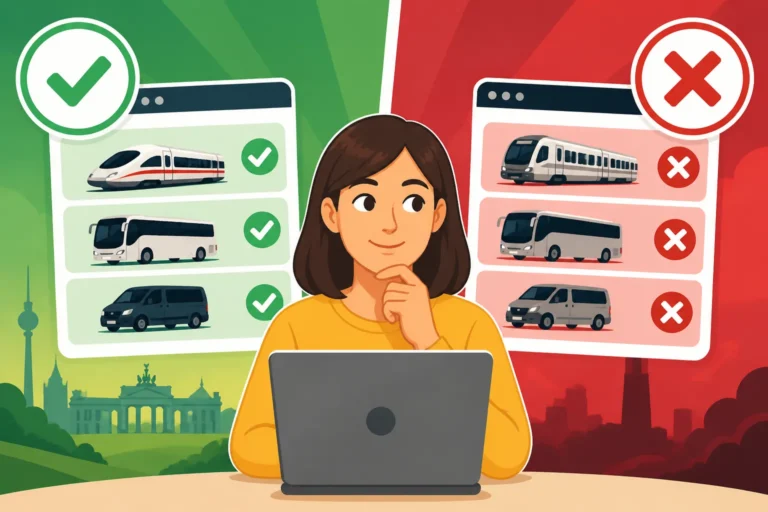
Garmisch-Partenkirchen is the heavy hitter of German mountain tourism. It is where you go if you want the highest peaks and the most developed infrastructure. This town is actually two distinct villages that merged for the 1936 Winter Olympics, and you can still feel that sporting legacy today. If you are starting your journey in Munich, you can easily use Omio to compare the hourly regional train prices against long-distance bus options, making the transit down to the border almost effortless.
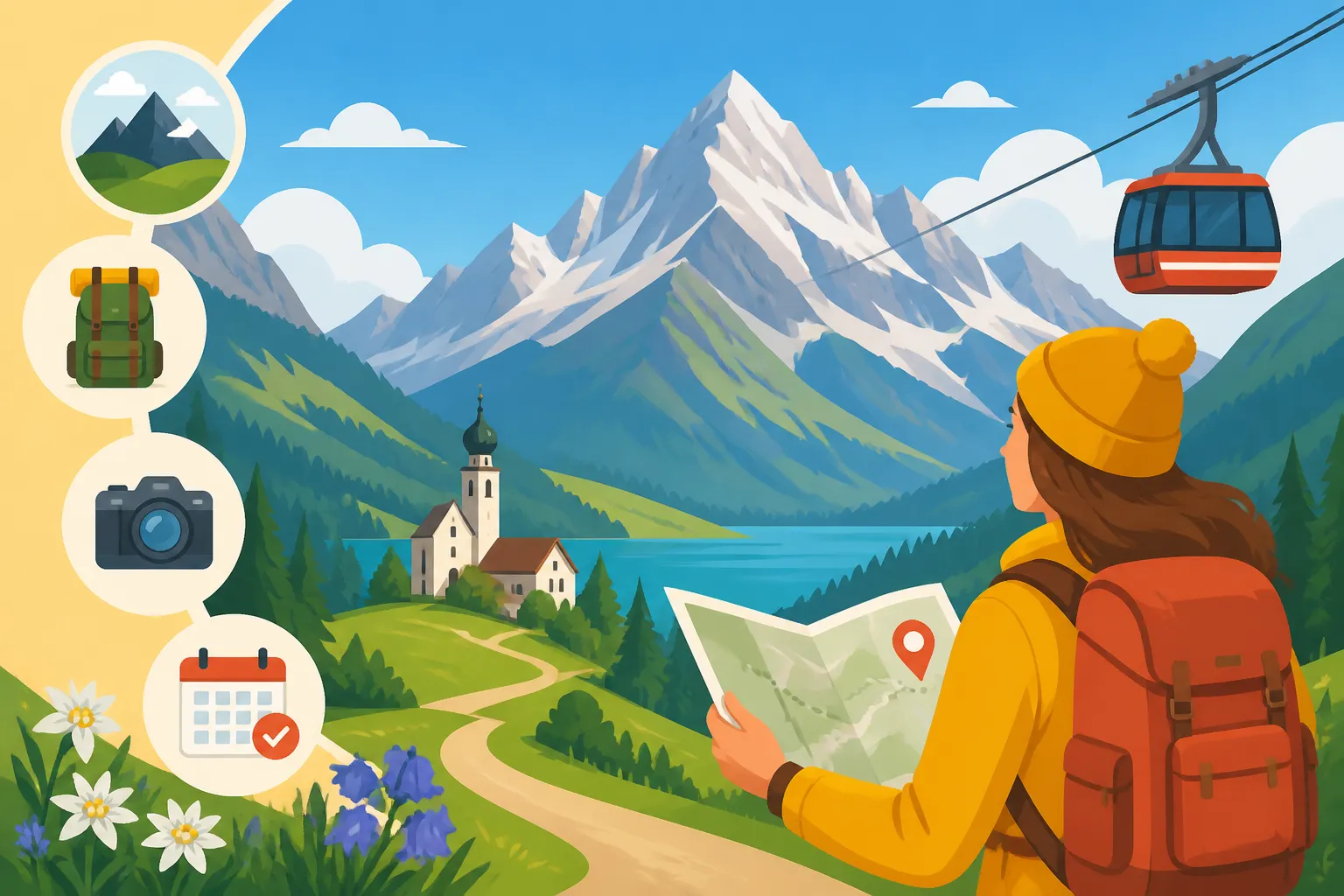
The crown jewel here is the Zugspitze, Germany’s highest point at 2,962 meters. For a first-timer, the experience is meticulously organized. You take a cogwheel train from the town center, which tunnels through the mountain, and then return via a record-breaking cable car that offers views stretching across four countries. When I first visited, I was worried about the cost, but using GetYourGuide to secure tickets in advance can help you skip the massive queues at the ticket window, especially during the peak summer months. If you’re looking for where to stay, the Partenkirchen side of town offers more traditional, fresco-painted buildings, and you can find everything from luxury spa hotels to cozy guesthouses on Booking.com to suit your budget.
Berchtesgaden Nature and History Combined
Located in the southeastern corner of Germany, Berchtesgaden offers a completely different vibe. While Garmisch feels like a bustling mountain city, Berchtesgaden feels like a fairytale that has been preserved in amber. This is the region for those who want deep, emerald-green lakes and jagged, dramatic limestone massifs like the Watzmann.
The logistics here are slightly more niche. You’ll likely arrive via Salzburg in Austria or a longer train ride from Munich. For a deeper look at the geography, check out Bavaria for Travelers: Munich, the Alps, and Beyond to see how this region fits into your broader Bavarian itinerary. The highlight here is the Königssee, a fjord-like lake that you can only traverse by electric boat. It is incredibly serene, though it requires a bit of patience as the boats fill up quickly. I highly recommend staying in the town center rather than out in the valley if you don't have a car, as the bus network is reliable but infrequent in the late evening.
Oberstdorf The Sporty Alternative
If you find the crowds of Garmisch a bit too much, Oberstdorf in the Allgäu region is the veteran’s choice. It is a car-free town center, which makes it remarkably peaceful. It’s famous for the Nebelhorn, a peak that offers a 400-peak view on a clear day. The hiking trails here are arguably the best-marked in the country.
For those traveling with families, Oberstdorf is often more approachable because many of the local hotels listed on Booking.com participate in a "Bergbahnen inklusive" program during the summer. This means your stay includes free use of the local cable cars, which can save a family of four over a hundred euros a day. It is a fantastic way to experience The German Alps: Garmisch, Zugspitze, and Berchtesgaden without the financial sting often associated with high-altitude tourism.
Transportation and Logistics in the Mountains
One of the most common anxieties for expats and tourists alike is whether they need a car. In the German Alps, the answer is a nuanced "it depends." Germany has an incredible rail network, but once you get into the deep valleys of the Ammergau or the Allgäu, those last few miles to a trailhead can be tricky.
Navigating Public Transport vs Car Rentals
If you stick to the major hubs like Garmisch or Berchtesgaden, you absolutely do not need a car. In fact, having one can be a liability. Parking in these towns is expensive and often restricted to residents. Most hotels will provide you with a Gästekarte (Guest Card) upon check-in, which gives you free access to local buses. This is a lifesaver when you want to hike from point A to point B without having to loop back to a parking lot.
For the initial journey from major cities, I always suggest checking Omio for the "Deutschland-Ticket" compatibility if you are staying for a while, as it covers all regional transport. However, if you want to see "fairytale" spots like Neuschwanstein Castle and then head deep into the mountains on the same day, a rental might be worth the freedom. If you choose the train route, be sure to read up on High-Speed Trains in Germany (ICE): Deutsche Bahn Routes and Savings to understand the difference between the fast trains to Munich and the slower regional spurs that actually take you into the mountains.
Using Cable Cars and Mountain Railways
The German Alps are accessible in a way that many mountain ranges are not. You don't have to be an elite athlete to see the views. Every major peak has a Bergbahn (mountain railway or cable car). These are marvels of engineering, but they are expensive. A round trip on the Zugspitze can cost upwards of 70 Euros per person.
To manage your budget, I recommend grouping your high-altitude days. If you're in Garmisch, spend one full day using the Garmisch-Classic pass, which covers three different lifts. You can find guided day-trip packages on GetYourGuide that bundle these costs with transport from Munich, which is often cheaper than trying to pay for everything individually. For more details on managing your travel funds, Money Matters in Germany: Complete Financial Guide for Expats offers great insights into how to handle these larger recreational expenses.
| Feature | Garmisch-Partenkirchen | Berchtesgaden | Oberstdorf |
|---|---|---|---|
| Best For | High Peaks & Accessibility | Lakes & History | Hiking & Peace |
| Highest Point | Zugspitze (2,962m) | Watzmann (2,713m) | Nebelhorn (2,224m) |
| Train Access | Direct from Munich | Change at Freilassing | Direct from Ulm/Munich |
| Key Activity | Partnachklamm Gorge | Königssee Boat Tour | Breitachklamm Gorge |
| Crowd Level | High | Medium-High | Medium |
Essential Alpine Experiences and Activities
Your first trip shouldn't just be about looking at the mountains from a distance; it should be about getting into them. Even if you aren't a "hiker," there are ways to experience the terrain that don't involve scaling vertical rock faces.
Gorges and Waterfalls
The Alps are carved by water, and the gorges (called Klamms) are some of the most spectacular sites in Bavaria. In Garmisch, the Partnachklamm is a must-see. You walk through tunnels and over narrow paths while the river thunders just inches away. It’s open year-round, and seeing it with giant icicles in the winter is just as magical as the misty cool of summer.
If you are based in Berchtesgaden, the Wimbachklamm is the local favorite. These sites usually have a small entry fee (often 5-10 Euros), and they are perfect "low-effort, high-reward" activities. Since these spots are popular, check for tickets or guided photography tours on GetYourGuide to ensure you get in during the busier weekend hours. For those looking for more active wellness, Healthy Living in Germany: Wellness, Fitness, and Mental Health Guide discusses how these natural escapes are integrated into the German concept of Kur (health retreats).
Alpine Lakes and High-Altitude Relaxation
After a morning of exploring, there is nothing quite like an Alpine lake. The Eibsee, located at the base of the Zugspitze, is often called the "Caribbean of the Alps" because of its clear turquoise water. There is a flat, 7km loop trail around the lake that is perfect for strollers or a casual stroll.
In Berchtesgaden, the Hintersee is equally stunning and often less crowded than the famous Königssee. If you want to stay right on the water, look for Alpengasthöfe (Alpine inns) on Booking.com. Staying at a place like this allows you to see the lakes at sunrise before the tour buses arrive from the cities. To truly embrace the local way of life, you might even consider a spa day; many mountain hotels offer world-class sauna facilities, a staple of Spa and Sauna Culture in Germany: Wellness for Health and Relaxation.
Practical Tips for a Smooth First Visit
Germany is famous for its rules, and the mountains are no exception. Knowing the "unwritten" laws of the Alps will save you from dirty looks or, worse, dangerous situations.
Weather Preparation and Safety
The weather in the Alps is fickle. You can start the day in a t-shirt in Garmisch and find yourself in a blizzard at the top of the Zugspitze thirty minutes later. Always check the "Bergfex" app for specialized mountain weather forecasts rather than relying on standard phone apps.
Packing layers is non-negotiable. Even in August, the summit temperatures can hover near freezing. If you're planning on doing some of the more rigorous trails, make sure you've read Staying Fit in Germany: Joining Gyms, Pools, and Sports Clubs to gauge your readiness for high-altitude exertion. Proper footwear—think sturdy boots with ankle support—is the difference between a great trip and a call to mountain rescue.
Cultural Nuances and Mountain Etiquette
In the mountains, Germans become surprisingly social. It is standard etiquette to say "Servus" or "Grüß Gott" to everyone you pass on a hiking trail. If you stop at a Hütte (mountain hut) for lunch, remember that many are cash-only. Despite Germany's slow move toward digitalization, high-altitude cabins often have no internet for card terminals.
Another thing to keep in mind is the Mittagspause. Many smaller shops in mountain villages will close between 12:00 PM and 2:00 PM. Plan your grocery runs accordingly. If you find yourself in a bind, The German Apotheke Experience: Why Pharmacies Are More Than Just Medicine can be a great resource for finding emergency supplies or sunblock, but even they have strict Sunday closing hours. For a complete look at these social norms, dive into German Culture & Etiquette: A Guide to Social Life and Customs.
Summary of Planning Steps
To pull this all together, your first trip should follow a simple logic: pick one base (Garmisch for heights, Berchtesgaden for scenery), book your transport via Omio early to save on "Sparpreis" tickets, find a traditional guesthouse on Booking.com for the authentic experience, and use GetYourGuide for the "big" tickets like the Zugspitze or Neuschwanstein. By narrowing your focus, you’ll actually experience the soul of the Alps rather than just seeing it through a train window.
Disclaimer
This guide is intended for informational purposes only. While every effort has been made to provide accurate and up-to-date information regarding travel in the German Alps, local conditions, prices, and regulations can change rapidly. Always check official local sources and weather reports before embarking on mountain activities. Mountaineering and high-altitude hiking involve inherent risks; ensure you have appropriate insurance and physical conditioning before attempting difficult trails.