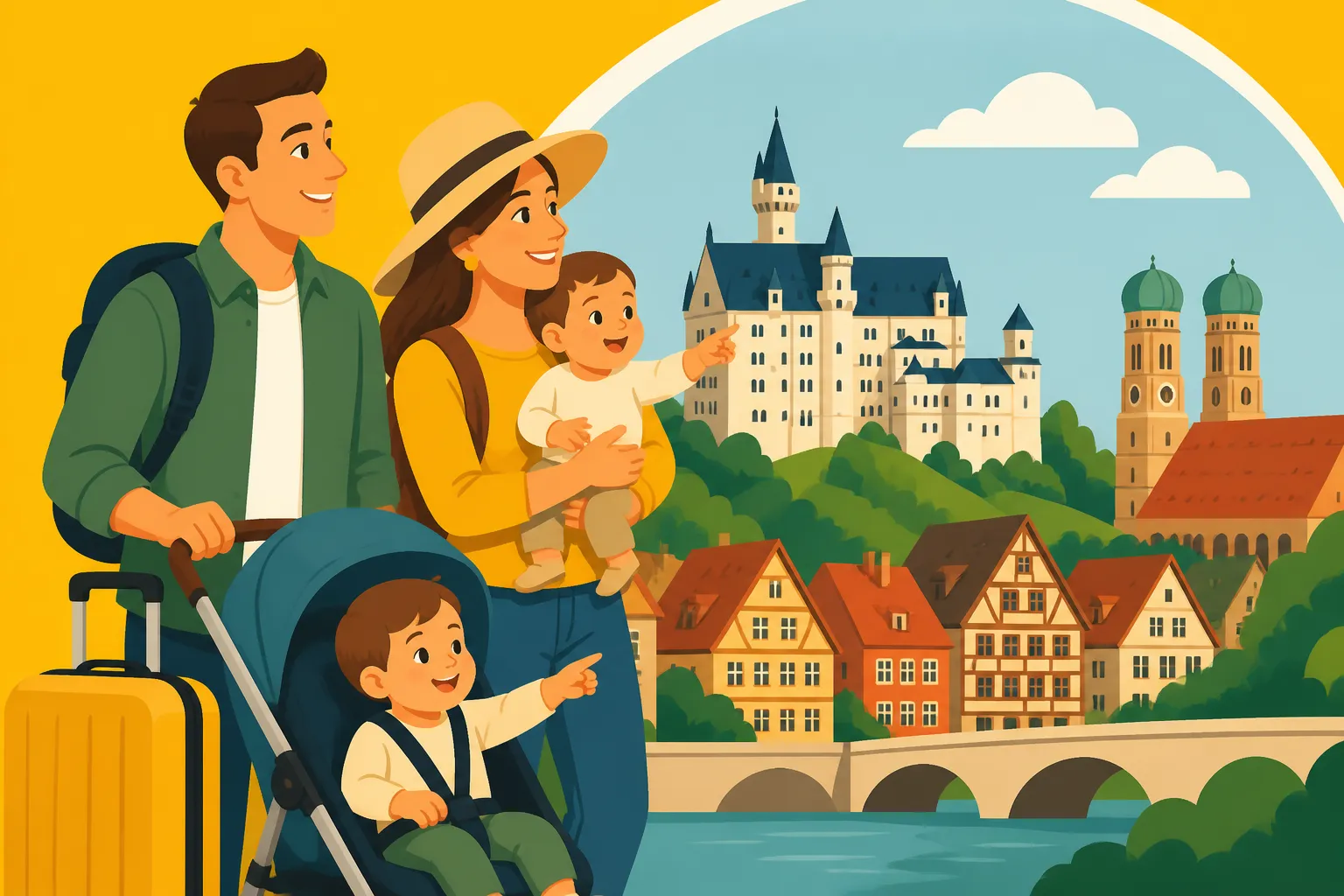
How to Travel Germany With a Baby or Toddler
Traveling through Germany with a baby or a toddler might sound like a daunting prospect – I get it, I’ve been there, wrangling strollers and snack attacks while trying to decipher train schedules in a foreign language. But trust me, it’s not only possible, it can be incredibly rewarding. This guide is here to walk you through the real-world ins and outs, sharing practical tips and validating every single one of your parental anxieties, so you can actually enjoy the journey with your tiny explorers.
Disclosure: This post may contain affiliate links. We may earn a commission at no extra cost to you if you make a purchase through these links. Read full disclosure.
Embracing the Adventure: Why Travel Germany with Little Ones?
The thought of traveling with a baby or a toddler can induce a cold sweat in even the most seasoned parents. The logistics alone—nappies, feeding schedules, meltdowns, and mountains of gear—can feel overwhelming enough at home, let alone in a foreign country. But I’m here to tell you that Germany is surprisingly well-equipped for families, making it an excellent choice for venturing out with your littlest ones. You’ll find that while some things are definitely different, the German focus on order and family often works in your favor.
The German Advantage for Families
One of the biggest reliefs you'll discover when traveling in Germany with young children is the sheer level of infrastructure designed with families in mind. From public transport to public spaces, there's often an implicit understanding that parents need a bit of support. Most cities boast an abundance of playgrounds, often beautifully maintained and thoughtfully designed, providing essential respite for overtired toddlers (and parents!).
You'll also notice changing facilities are widely available and usually clean in department stores, larger train stations, and public attractions. Restaurants, particularly family-friendly ones or larger establishments, will frequently offer high chairs and often have a dedicated corner for kids. This isn't always something you can count on everywhere in the world, so it's a huge plus here. The healthcare system, while a maze to set up, is incredibly reliable if you ever need it – which, let's face it, is a constant worry when traveling with little ones. Knowing you have access to excellent medical care, as detailed in our guide on Healthcare in Germany: A Comprehensive Guide for Expats, can be a huge weight off your mind.
Managing Expectations and Embracing Flexibility
Now, let's be realistic. Traveling with small children anywhere in the world means your itinerary will never look like it did in your pre-kid days. Spontaneity will take a backseat, and efficiency will often be sacrificed for nap times or sudden demands for a specific snack. In Germany, while the infrastructure helps, you still need to manage your own expectations. Long days of sightseeing might need to be broken up with extended playground stops, or even a full afternoon "home" at your accommodation.
Embrace flexibility as your new best friend. If your toddler decides they absolutely cannot, under any circumstances, get back in the stroller, then it’s time for a park break, even if it throws your schedule off. This isn't a failure; it's just the reality of traveling with tiny humans. Allow for extra time, build in plenty of downtime, and don't try to cram too much into one day. It’s better to see one or two things calmly and enjoyably than rush through five and end up with a tearful meltdown (from either you or the child!). Remember, the goal is to create happy memories, not to check off every single item on a rigid list.
Logistics with Little Legs: Planning Your German Journey
Planning is paramount when traveling with babies and toddlers, and Germany, with its efficient systems, actually rewards good preparation. From getting around to finding a place to sleep, knowing what to expect can save you a world of stress.
Transportation Triumphs: Trains, Cars, and Strollers
Getting around Germany with little ones offers a few excellent options, each with its own perks and quirks.
Trains (Deutsche Bahn): Germany's train system, Deutsche Bahn (DB), is fantastic for covering longer distances. High-speed ICE trains are comfortable, generally on time, and often have dedicated family compartments (Familienabteil) or areas with more space, which can be a lifesaver. Booking these in advance is highly recommended, especially during peak travel times. You can check schedules and book tickets easily online, or through platforms like Omio, which can sometimes simplify the process for international travelers. Children under 6 travel free, and often even older kids get significant discounts. Stroller access is generally good, with ramps and lifts at most major stations, though smaller stations can sometimes be a challenge with stairs. Just be ready to lift your stroller now and then! For navigating the network, our guide on High-Speed Trains in Germany (ICE): Deutsche Bahn Routes and Savings offers further insights.
Rental Cars: For ultimate flexibility, especially if you plan to visit more rural areas or prefer to pack a lot of gear, renting a car is a great option. Germany's Autobahn system is world-renowned, and generally, roads are well-maintained. Remember that child seats are mandatory, and rental companies will provide them, but it’s often best to reserve them in advance. Be aware of parking in city centers, which can be expensive and hard to find. For tips on driving here, refer to our comprehensive article on Renting a Car and Driving on the Autobahn.
Public Transport in Cities: German cities boast excellent public transport networks (U-Bahn, S-Bahn, trams, buses). Most are very stroller-friendly, with designated areas for strollers and wheelchairs. During rush hour, however, things can get very crowded, which can be a bit tricky with a bulky stroller. A baby carrier or a compact travel stroller can be a godsend in these situations. Tickets can be bought at machines in stations or on buses/trams, and family day tickets are often a good value. Understanding these systems can greatly enhance your city explorations, as detailed in Getting Around German Cities: U-Bahn, S-Bahn, Trams, and Buses.
| Transportation Method | Pros for Families with Babies/Toddlers | Cons for Families with Babies/Toddlers | Typical Cost (Example) |
|---|---|---|---|
| Trains (DB) | Comfortable, spacious, family compartments, free for under 6s, good for long distances, eco-friendly. | Can be expensive last minute, luggage limits, some smaller stations lack lifts. | €30-100+ per person for long distances (Saver Fare to Flexpreis) |
| Rental Car | Ultimate flexibility, easy to store luggage, car seats available. | Expensive parking in cities, navigating unfamiliar roads, potentially stressful driving in unknown areas. | €30-80+ per day (plus fuel and insurance) |
| City Public Transport | Affordable, efficient, widely available, mostly stroller-friendly. | Can get very crowded during peak hours, occasional stairs at older stations, deciphering ticket zones. | €7-10 for a day pass (often covers family) |
| Taxi/Ride-share | Door-to-door convenience, good for emergencies. | Requires car seats (often needs advance booking), can be very expensive. | €15-30+ for short city trips |
Accommodation Choices: From Hotels to Holiday Homes
Finding the right place to stay can make or break your trip. Germany offers a fantastic range of options, each suitable for different family needs.
Hotels: Many German hotels, especially those catering to tourists, are increasingly family-friendly. Look for hotels that advertise "Familienzimmer" (family rooms), which often have extra beds, or even connecting rooms. Many will provide a crib or cot free of charge, but always confirm this when booking. Websites like Booking.com are excellent for filtering by "family-friendly" or "cribs available" options. Remember to check if breakfast is included; a good breakfast buffet can be a huge time-saver with hungry little ones.
Holiday Apartments (Ferienwohnungen): For longer stays or if you prefer the convenience of having your own kitchen and separate sleeping areas, a Ferienwohnung is a brilliant choice. These self-catering apartments are abundant across Germany, from bustling cities to serene countryside. Having a kitchen means you can prepare meals and snacks, which is often easier and more cost-effective with toddlers who might not appreciate restaurant dining every night. Many also come with washing machines, a true godsend when dealing with baby messes! Our Accommodation in Germany: Hotels, Pensionen, and Hostels guide has more on what to expect.
Farm Stays (Urlaub auf dem Bauernhof): If you're looking for a unique and incredibly child-centric experience, consider a farm stay, particularly popular in regions like Bavaria or the Black Forest. These often offer simple but comfortable accommodation, sometimes with shared kitchens, and allow children to interact with farm animals, play in safe environments, and often enjoy fresh, local produce. It’s a fantastic way to immerse your family in German rural life.
Packing Smart: Essentials for Babies and Toddlers
The eternal packing dilemma! With little ones, it feels like you're moving house, not just taking a trip. Here are some German-specific considerations for your packing list:
- Diapers and Wipes: While readily available and of good quality in German supermarkets (like Rewe, Edeka, DM, Rossmann), if your child has sensitive skin or you prefer a specific brand, bring enough for the first few days. Prices are comparable to most Western countries.
- Formula/Baby Food: German supermarkets stock a wide range of baby food (jars, pouches), formula, and cereals. Brands like Hipp and Holle are popular and organic. Again, if your child is particular, bring a starter supply.
- Medication: Pack any essential prescription medications, plus over-the-counter staples like infant paracetamol (Fieberzäpfchen – suppositories, or Saft – syrup, often Nurofen or Paracetamol-ratiopharm are popular brands), a thermometer, and basic first-aid supplies. While pharmacies (Apotheke) are excellent resources, it's easier to have your go-to items on hand. You can find more info on Pharmacies in Germany (Apotheke): How to Get Medication and Advice if you need to stock up.
- Weather-Appropriate Clothing: Germany's weather can be changeable. Layering is key! Even in summer, evenings can be cool, and in winter, it gets genuinely cold. Our guide on What to Pack for Hiking in the German Alps might be focused on mountains, but the principles of layering for variable weather apply broadly.
- Comfort Items: Don't forget their favorite toy, blanket, or book. These familiar items can be crucial for comfort in new surroundings and for maintaining some semblance of routine.
- Power Adapters: Germany uses Type F (Schuko) sockets, which are compatible with Type C and E plugs. Don't forget the necessary adapters for your electronics!
Navigating Daily Life: Food, Fun, and Fuss-Free Explorations
With the logistics squared away, the next hurdle is the daily rhythm of travel with small children. Germany offers many solutions, but a little insider knowledge goes a long way.
Dining Out with Darlings: High Chairs, Menus, and Meal Times
Eating out with a baby or a toddler can be a roll of the dice. In Germany, generally speaking, families are welcomed, but expectations for quiet children in fine dining establishments remain.
Family-Friendly Eateries: Look for places that explicitly state they are kinderfreundlich (child-friendly). Pubs (Brauhäuser) and traditional German restaurants often have a more relaxed atmosphere and might offer a specific kids' menu (Kindermenü). Bakeries (Bäckerei) are fantastic for quick, affordable snacks and simple lunches, and many have a few tables. Large department stores often have cafeterias with plenty of seating and simple food options, perfect for a mid-day break. For general insights into German dining, check out German Meal Times and Restaurant Basics for Visitors.
High Chairs and Changing Facilities: As mentioned, most larger restaurants will have high chairs (Kinderstuhl). Don't hesitate to ask! Changing facilities are also generally available in bigger eateries and public restrooms, often marked with a baby symbol.
German Food for Little Ones: While German cuisine can be hearty, there are options for toddlers. Spätzle (soft egg noodles), Kartoffelsuppe (potato soup), Frikadellen (meatballs), and simple Würstchen (sausages, usually Frankfurter or Wiener style) can often be found. Brot (bread) and Brötchen (rolls) are staples and universally loved. Supermarkets also have a great selection of fresh fruit, yogurt, and snacks. Don't be afraid to bring your own baby food jars or pouches into restaurants if necessary.
Activities for All Ages: Parks, Playgrounds, and Kid-Friendly Sights
Germany truly shines when it comes to activities for families. You won't struggle to find things to do that will engage both you and your little ones.
Playgrounds Galore (Spielplätze): Seriously, Germany loves its playgrounds. You’ll find them in almost every neighborhood, often beautifully themed, well-maintained, and designed for different age groups. They are a fantastic, free way to break up sightseeing and let toddlers burn off steam. Schedule them into your day!
Museums and Zoos: Many museums, even those not explicitly for children, often have child-friendly sections or interactive exhibits. Zoos, like the famous Berlin Zoo or Tierpark Hagenbeck in Hamburg, are always a hit with little ones. Many cities also have dedicated children's museums. Websites like GetYourGuide can be great for finding and booking family-friendly tours and activities in advance, saving you time and hassle.
Nature and Outdoors: Germany boasts stunning natural landscapes. Whether it's a gentle hike in the Black Forest, a stroll along a lake like Lake Constance, or simply exploring a city park (like Berlin's Tiergarten), getting outdoors is a wonderful way to entertain babies and toddlers. Check out our guide on Family Travel in Germany: Kid-Friendly Cities and Activities for specific recommendations.
Health and Emergencies: What to Do When Oops Happens
It's every parent's nightmare: a sick child abroad. But take a deep breath; Germany has an excellent healthcare system.
Finding a Doctor: If you need to see a doctor for your child, your first port of call would typically be a pediatrician (Kinderarzt). If it's an emergency, head straight to the Notaufnahme (emergency room) at the nearest hospital. For less urgent but still pressing matters outside of regular clinic hours, you can call the nationwide medical on-call service at 116117 to find a doctor or specialist who is available.
Pharmacies (Apotheke): German pharmacies are very knowledgeable. If you have a minor ailment or need advice on over-the-counter remedies, the pharmacists (Apotheker) are usually very helpful, and many speak English. If you have a prescription from a German doctor, you can fill it there. Be aware that most pharmacies close on Sundays and public holidays, but there's always an emergency pharmacy (Notdienstapotheke) open in every area – look for signs outside pharmacies or search online for "Apotheken Notdienst" in your vicinity.
Emergency Numbers: For serious emergencies, always call 112. This number works for ambulance, fire, and police services throughout Germany. It’s vital to know this, just in case. Our article on Emergency Numbers in Germany: Calling 112, Poison Control, and More provides crucial details for peace of mind. For general health advice while traveling, our Health Tips for Travelers: Staying Healthy During Trips Around Europe is a good resource.
Keeping the Harmony: Tips for Happy Traveling Parents
Ultimately, if the parents are stressed, the kids pick up on it. Keeping yourselves sane and happy is just as important as keeping your little ones entertained.
Language Barriers and Local Helpers
While many Germans, especially in tourist areas and among younger generations, speak excellent English, don't assume everyone will. Learning a few basic German phrases can go a long way. "Danke" (thank you), "Bitte" (please/you're welcome), "Entschuldigung" (excuse me/sorry), and "Sprechen Sie Englisch?" (Do you speak English?) are good starts. Most importantly, don't be shy! Germans, though sometimes perceived as reserved, are often very helpful when they see someone struggling, especially a parent with small children. Pointing, smiling, and using a translation app can bridge most gaps. If you're really stuck, look for younger people or those working in service industries; they're usually your best bet for English speakers.
Surviving Jet Lag and Sleep Schedules
Ah, the eternal struggle of sleep! Jet lag, combined with new surroundings, can wreak havoc on a baby or toddler's sleep schedule. Try to adjust to local time as quickly as possible. Expose your child to daylight in the morning and early afternoon, and keep evening routines consistent, even if they're a bit later than usual. A consistent bedtime routine (bath, book, quiet time) can be a powerful tool for signaling sleep, regardless of your location. Don't be afraid to use a portable white noise machine or download a white noise app to help block out unfamiliar sounds in your accommodation. Sometimes, embracing a slightly altered "holiday schedule" for a few days can be less stressful than fighting for their usual sleep times.
Making Memories, Not Meltdowns
It’s easy to get caught up in the stress of travel and lose sight of the joy. Remember why you’re doing this: to experience new places, create family memories, and expose your children to different cultures. Not every moment will be perfect; there will be tantrums, spills, and probably a few tears. That’s just life with babies and toddlers, amplified by travel.
When a meltdown strikes, take a deep breath. Find a quiet corner, offer a snack, a hug, or a distraction. Don’t worry about other people – most parents have been there, and those who haven’t probably don’t get it anyway. Celebrate the small victories: the first time your toddler points out a train, their awe at a castle, or a peaceful café moment. Those are the real gems of traveling with little ones. Germany offers a rich tapestry of experiences, and with a bit of planning and a lot of patience, you and your family can enjoy an incredible adventure together.
Disclaimer
The information provided in this guide is for general informational purposes only and does not constitute professional advice. While we strive to ensure accuracy, details such as prices, opening hours, and regulations in Germany can change. Always verify information with official sources or local authorities before making travel plans. Travel insurance is highly recommended for all travelers.