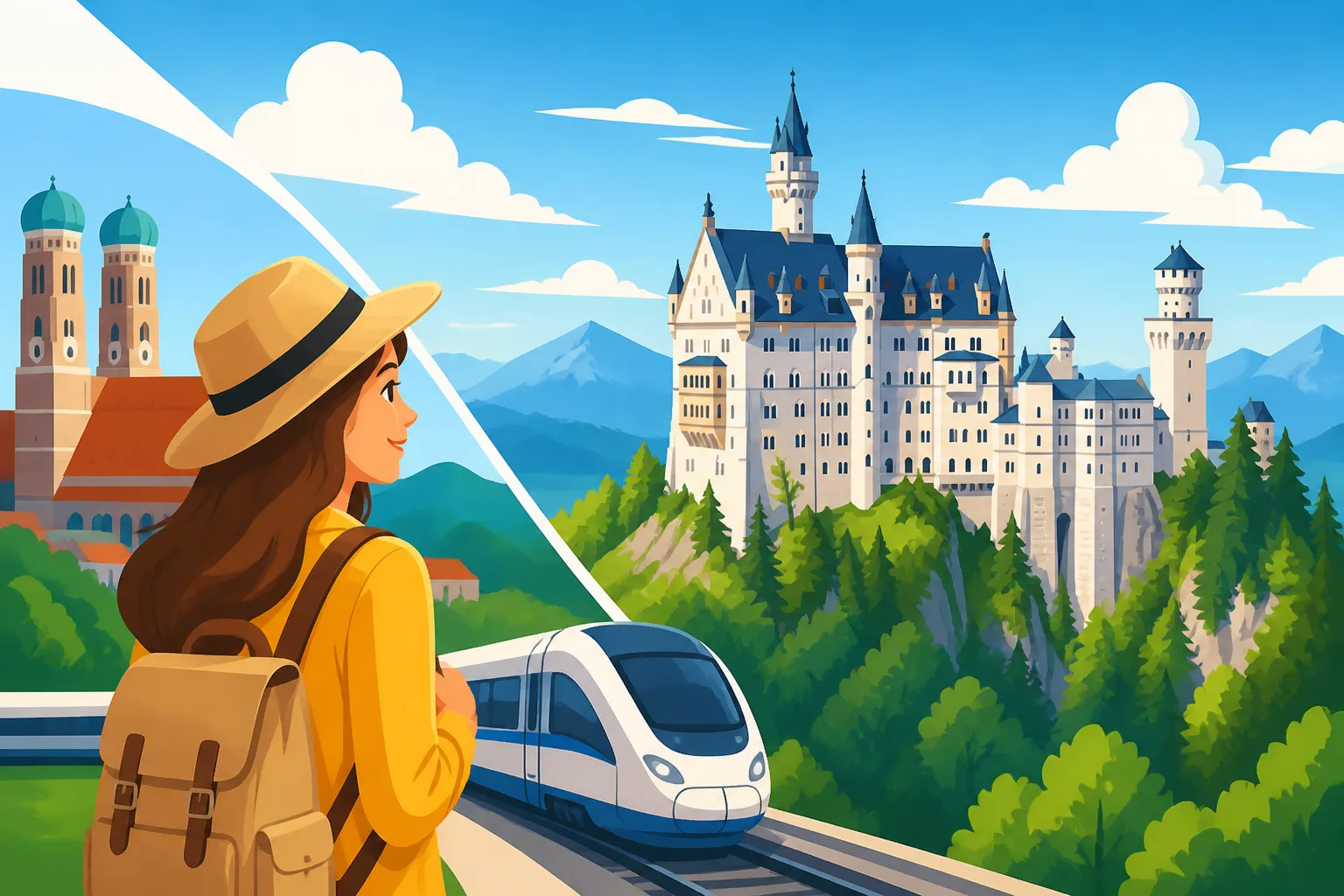
How to Visit Neuschwanstein Castle From Munich
Most people land in Munich with a dream of seeing the "Disney Castle," only to realize that Neuschwanstein is tucked away in the rugged Bavarian Alps, nearly two hours from the city. Navigating regional train schedules, elusive ticket reservations, and the steep climb to the gates can be an administrative headache. This guide solves every logistical hurdle to ensure your fairytale day trip doesn't turn into a travel nightmare.
Disclosure: This post may contain affiliate links. We may earn a commission at no extra cost to you if you make a purchase through these links. Read full disclosure.
Getting from Munich to Füssen: Transport Options
The journey from Munich to the village of Hohenschwangau (where the castle is located) is the first hurdle. While many veterans of the German rail system find it intuitive, newcomers are often baffled by the different ticket types and the "hidden" requirements of regional travel. You have three primary ways to make this trek: the regional train, a rental car, or a pre-arranged tour.
The Train Route: Bayern-Ticket and the Regional Express
Taking the train is the quintessential expat experience. You’ll want to catch the Regional-Express (RE) from München Hauptbahnhof toward Füssen. One of the most important things to understand is the Bayern-Ticket. This is a day-pass that allows up to five people to travel together on regional trains for a fraction of the cost of individual tickets. However, there is a catch that trips up many: on weekdays, the Bayern-Ticket is only valid starting at 9:00 AM. If you try to board an 8:00 AM train with it, the conductor will likely hand you a hefty fine. For those who want to compare different departure times and perhaps look at bus alternatives, using a platform like Omio can help you see the full schedule and prices in one place.
Once you arrive at the Füssen station, the journey isn't over. You must hop on the 73 or 78 bus, which waits right outside the station to whisk travelers to the Hohenschwangau village. It’s a well-oiled machine, but it can feel chaotic when three hundred people exit a train simultaneously. Having your Public Transport Tickets and Passes: Navigating German Transit Systems knowledge ready will save you from fumbling at the bus door.
Driving the Autobahn: Freedom on Four Wheels
If you prefer the flexibility of stopping at a roadside bakery or exploring a hidden lake along the way, renting a car is a solid choice. The drive takes about an hour and forty-five minutes via the A95 or A96. While the idea of the Autobahn is exciting, remember that the roads leading into the Alps can become quite narrow and winding. Parking in Hohenschwangau is also a bit of a localized racket—expect to pay around 10 to 15 Euros for the day, and be prepared for queues just to enter the parking lots during peak summer months.
Before you get behind the wheel, make sure you are familiar with the rules of the road, especially regarding Renting a Car and Driving on the Autobahn. Speed limits are strictly enforced in construction zones, and the "no speed limit" rule only applies to specific stretches of the highway. Driving yourself also allows you to visit nearby gems like the Wieskirche or Linderhof Palace, which are nearly impossible to reach via public transport in a single day.
Organized Tours: The Stress-Free Alternative
For those who simply want to show up and be told where to go, a guided tour is the way to go. These usually depart from near the Munich central station and include your bus transport and, crucially, a guaranteed entry time for the castle. Many people find the official ticket portal for Neuschwanstein impossible to navigate because it sells out almost instantly. Booking through a service like GetYourGuide often provides a workaround because they have pre-allocated slots for their groups.
The downside of a tour is the lack of autonomy. You are on a strict schedule, and you won't have time to wander the streets of Füssen for a leisurely German Cafés and Kaffee und Kuchen Culture experience. However, if your primary goal is to see the castle without worrying about missed train connections or bus transfers, the convenience of a tour often outweighs the loss of flexibility.
Securing Your Tickets: Avoiding the Sold-Out Heartbreak
The most heartbreaking sight at Neuschwanstein is the crowd of tourists standing in front of the ticket office at 11:00 AM, only to be told that the next available tour is at 6:00 PM—or worse, that everything is sold out for the day. You cannot simply walk into the castle and wander around; you must be part of a strictly timed guided tour.
The Official Reservation System
The official way to get tickets is through the Hohenschwangau online portal. These tickets are released weeks in advance and disappear almost instantly. When booking officially, you must select a specific time slot. If you are even five minutes late for your tour, the automated turnstiles will reject your ticket, and there are no refunds.
If you manage to snag an official ticket, you still have to "activate" it or pick it up at the ticket center in the valley before you head up the hill. This is a point of confusion for many. You aren't just walking to the castle with a PDF on your phone; you often need the physical voucher provided by the center. Always leave at least 90 minutes between your arrival in the village and your scheduled tour time to account for these administrative steps and the climb itself.
Last-Minute Solutions and Guided Groups
If the official site says "Sold Out," don't panic yet. As mentioned, third-party providers like GetYourGuide frequently have tickets bundled with transportation. Another "pro tip" from someone who has lived here: check the website again exactly 48 hours before your desired date. Sometimes cancellations are processed and a handful of tickets reappear in the system.
If you absolutely cannot get a ticket for the interior, is it still worth going? Honestly, yes. The interior tour is relatively short (about 30-35 minutes) and can feel a bit rushed as you are ushered from room to room. The real magic of Neuschwanstein is the exterior architecture and the surrounding Alpine scenery. You can still hike up to the castle, walk around the courtyard, and visit the famous bridges without an interior ticket. You'll still get those iconic photos and a great workout, while saving yourself the stress of the ticking clock.
| Transport Method | Cost (Approx.) | Travel Time | Flexibility |
|---|---|---|---|
| Regional Train (Bayern-Ticket) | €29 – €50 (for a group) | 2.5 – 3 Hours | Moderate |
| Rental Car | €80 – €150 + Fuel/Parking | 1.45 Hours | High |
| Guided Bus Tour | €60 – €100 per person | 2 Hours | Low |
On the Ground: Navigating Hohenschwangau and the Climb
Once you arrive in the village of Hohenschwangau, you are at the bottom of a very steep hill. The castle sits perched high above, and you have to decide how you’re going to get there. This is where the physical reality of the trip sets in.
Walking, Horse Carriages, or the Shuttle Bus?
The walk up to the castle takes about 30 to 40 minutes for someone with average fitness. It is a paved road, but it is a consistent incline. If you have kids or mobility issues, this can be a slog. For those who want a more "authentic" experience, there are horse-drawn carriages. While they look charming, be warned: the smell is pungent, the wait times can be an hour long, and the horses don't take you all the way to the gate—you still have a 5-to-10-minute uphill walk at the end.
The shuttle bus is the most popular option. It departs from near the P4 parking lot and takes you up to a spot near the Marienbrücke (Mary’s Bridge). From there, it’s a downhill walk to the castle. The bus is affordable, but it does not run during heavy snow or icy conditions. If you're visiting in the winter, always check the local weather. For more on handling the German climate, see our guide on Coping with Dark Winters in Germany.
Marienbrücke and the Best Photo Spots
If you want that postcard-perfect shot of the castle, you must go to the Marienbrücke. This bridge spans a deep gorge and offers a side-profile view of Neuschwanstein with the flatlands of Bavaria stretching out behind it. Be prepared for crowds; the bridge has a maximum capacity, and during the summer, there is often a queue just to step onto the wooden planks.
For the more adventurous, there are hiking trails that lead further up the mountain from the far side of the bridge. These trails offer even higher vantage points where you can look down on both Neuschwanstein and the older Hohenschwangau Castle simultaneously. Just ensure you are wearing proper footwear. This is the Alps, not a city park, and the weather can change in an instant. For safety tips, refer to Staying Safe in Germany: Common-Sense Tips for Travelers.
Pro Tips for a Smooth Experience
After several trips to the region, I’ve learned that the "perfect" visit is all about timing and preparation. Germany is a country that rewards those who follow the rules and plan ahead, but it can be unforgiving to those who "wing it."
Timing Your Visit: The Early Bird Rule
The absolute best advice I can give is to take the earliest train or drive out before sunrise. By 11:00 AM, the village is swamped with tour buses from all over Europe. If you can get to the Marienbrücke by 9:00 AM, you will have a much more peaceful experience. If you really want to beat the crowds, consider staying overnight in Füssen. You can find great local hotels on Booking.com that allow you to wake up just minutes from the castle.
Staying overnight also gives you time to visit the Alpsee, a stunning turquoise lake at the base of the mountains. It is one of the cleanest lakes in Germany and offers a peaceful respite from the tourist frenzy at the castle gates. You can even rent a small rowboat and look up at the castles from the water, which is a view most day-trippers never get to see. This kind of "slow travel" is highly recommended for a better Bavaria for Travelers: Munich, the Alps, and Beyond experience.
What to Pack and Wear for the Alpine Weather
The weather at the foot of the mountains in Munich can be completely different from the weather up at the castle. I have seen tourists in flip-flops shivering in a sudden Alpine rainstorm. Layers are your best friend. Even in the summer, it can be breezy and cool at the higher elevations. A lightweight, waterproof jacket is essential.
Additionally, bring water and snacks. While there are kiosks and a café at the castle, the prices are "tourist-tier" and the lines are long. Bringing your own pretzels or fruit will keep your energy up for the climb. If you're curious about what else to expect when dining in the area, our German Dining Etiquette: Eating Out, Tipping, and Table Manners guide will help you navigate the local restaurant scene once you're back down in the village or in Füssen.
Detailed Disclaimer
The information provided in this guide is for informational purposes only. While we strive to provide the most up-to-date details regarding transport, ticketing, and local conditions, German regulations and prices can change frequently. Always check official government websites or the specific service providers (like Deutsche Bahn or the Bavarian Palace Department) before making final travel arrangements. Travel involves inherent risks, and we are not liable for any disruptions, losses, or injuries incurred during your trip.