German for Retirees: Slow-Track Lesson Plans for Later Starters
Moving to Germany later in life is a grand adventure, but let's be honest, the thought of tackling a whole new language like German can feel a bit daunting, especially if your school days are a distant memory. Many retirees dream of truly integrating but worry about the steep learning curve. This guide isn't about cramming for exams or achieving perfect fluency overnight; it's about embracing a relaxed, "slow-track" approach to learning German, designed specifically for later starters who want to enrich their life here at their own pace, making it enjoyable and stress-free.
Disclosure: This post may contain affiliate links. We may earn a commission at no extra cost to you if you make a purchase through these links. Read full disclosure.
Why Learn German Later in Life? More Than Just the Language
When you've already lived a full life, the idea of going back to "school" can feel utterly exhausting. You might be thinking, "Why bother now? I can get by with English." And while it's true that in many cities, you can indeed navigate daily life with English, truly embracing the German experience means engaging with the local language. It's not just about communication; it's about connection, respect, and opening up a whole new world of understanding the nuances of German culture that no guidebook can fully convey.
Learning German as a retiree isn't about impressing anyone or landing a job; it's about personal growth, mental stimulation, and deepening your enjoyment of your adopted home. Imagine being able to chat with your neighbors in their native tongue, understand the local news, or even just confidently order your Lieblingskaffee without hesitation. These small victories are incredibly rewarding and build a sense of belonging that's hard to achieve otherwise.
The Joys and Challenges of Learning German as a Retiree
Let's face it, learning a new language when you're older presents a unique set of circumstances. Your memory might not be as sharp as it once was, and you certainly don't have the same capacity for rote memorization that a school kid does. Plus, you probably have a lifetime of habits and commitments that make carving out dedicated study time feel like a luxury. It's easy to get frustrated when progress feels slow or when you stumble over pronunciation. I’ve been there, trust me. It takes a different kind of patience and self-compassion.
However, being a retiree also brings significant advantages! You likely have more time to dedicate to activities you truly enjoy, without the pressure of work deadlines or academic performance. You can choose how and when you learn, tailoring your approach to your energy levels and interests. Furthermore, your life experience gives you a richer context for understanding cultural nuances, making the learning process more meaningful. You're not just learning words; you're connecting them to real-life situations and the vibrant community around you. You'll find that many Germans genuinely appreciate the effort you put in, even if your German is far from perfect. It's about showing up and trying.
Setting Realistic Expectations for Your German Learning Journey
The biggest mistake many later starters make is setting unrealistic expectations. You're not aiming for a C1 Goethe certificate unless you genuinely want it. Instead, focus on conversational fluency for daily interactions. This means prioritizing listening comprehension and speaking practice over perfect grammar or a massive vocabulary. Don't compare yourself to younger expats or those who seem to pick things up quickly. Everyone's journey is different, and yours is about enjoyment and practical application.
Think of it as a marathon, not a sprint. Celebrate every small victory: understanding a sign, asking a simple question at the bakery, or following a short conversation. It's these consistent, small steps that accumulate into significant progress over time. Remember, the goal is to enhance your life in Germany, not to add another stressful chore to your retirement. Focus on understanding key phrases for social situations, shopping, public transport, and navigating appointments. Common German Medical Terms: A Mini Dictionary for Patients can be incredibly helpful for healthcare interactions, for instance.
Crafting Your "Slow-Track" German Lesson Plan
The beauty of the "slow-track" approach is its flexibility and personal tailoring. There's no one-size-fits-all, rigid curriculum here. It’s about what works for you, your lifestyle, and your learning preferences. This means consciously shedding the pressure of traditional classroom settings and embracing methods that foster consistent, low-stress engagement.
Understanding Your Learning Style and Pace
Before diving in, take a moment to reflect on how you learn best. Are you a visual learner who benefits from flashcards and seeing words written down? Or do you thrive on auditory input, preferring podcasts and listening exercises? Perhaps you're more kinesthetic, needing to physically practice phrases, role-play, or even gesture to internalize new concepts. Identifying your dominant learning style will help you choose materials and activities that resonate with you, making the process much more effective and enjoyable.
Your pace is equally important. There will be days when you feel motivated and can absorb a lot, and other days when even a simple German word feels like climbing Mount Everest. That’s perfectly normal! Don't push yourself to the point of burnout. Instead, aim for consistency. Even 15-20 minutes a day of focused, enjoyable practice can yield incredible results over time. If you miss a day, don't fret. Just pick it up again when you feel ready. This gentle, self-paced approach is key to long-term success and preventing discouragement.
Breaking Down German into Manageable Chunks
German can seem intimidating with its long words and complex grammar. The trick is to break it down into tiny, digestible chunks. Forget trying to master verb conjugations or case endings from day one. Start with practical, everyday phrases that you'll use constantly.
Here's an example of how to chunk it:
- Greetings and Farewells: Guten Tag, Hallo, Auf Wiedersehen, Tschüss.
- Basic Courtesy: Bitte, Danke, Entschuldigung.
- Simple Questions: Wie geht es Ihnen? Was kostet das? Sprechen Sie Englisch?
- Self-Introduction: Ich heiße [Your Name]. Ich komme aus [Your Country].
- Numbers 1-10: Essential for shopping and making appointments.
- Food & Drink: Kaffee, Wasser, Brot, Milch.
Once you have these down, you can slowly add more. Maybe next, you focus on phrases for the supermarket, like "Ich hätte gerne…" (I would like…). The goal is to build a small, functional vocabulary and set of phrases that you can immediately use. Repetition is your best friend here. Don't be afraid to say the same phrases over and over again until they feel natural. This builds confidence and creates a foundation. You'll soon realize how much easier it is to navigate Navigating German Supermarkets: Grocery Shopping Tips and Tricks when you know a few key phrases.
Integrating German into Daily Life Without Overwhelm
The best way to learn any language, especially when you're not in a formal school setting, is to integrate it naturally into your daily routine. This doesn't mean you have to abandon English completely or dive headfirst into complex German literature. It's about small, consistent exposures that add up.
- Label Everything: Get some sticky notes and label objects around your house with their German names (e.g., der Tisch, die Lampe, das Fenster). Say the words aloud each time you see them.
- Listen Passively: Put on a German radio station, a children's show, or a simple podcast in the background while you're doing chores. Don't worry about understanding every word; just let the sounds and rhythm of the language wash over you. Slowly, individual words will start to pop out.
- Practice Greetings: Make a conscious effort to greet everyone you encounter – in shops, at the doctor's office, your neighbors – with a "Guten Tag" or "Hallo." The more you speak, the more comfortable you'll become.
- Change Phone Language: Switch your phone or smart device interface to German. You already know where everything is, so you'll naturally associate the German words with their functions.
- Read Simple Texts: Pick up a local newspaper and try to read headlines, or look for children's books. Don't aim for full comprehension, just try to grasp the main idea or identify familiar words. This can also help you understand important local information, especially around German Public Holidays: How They Affect Life and Work.
| Learning Method | Best For | Pace | Pros | Cons |
|---|---|---|---|---|
| iTalki (Online Tutors) | Personalized instruction, conversational practice | Flexible | Tailored lessons, native speakers, convenient | Requires internet, costs money |
| Language Apps (e.g., Duolingo) | Vocabulary, basic grammar, gamified learning | Self-paced | Accessible, free/low cost, bite-sized lessons | Lacks conversational practice, limited depth |
| Local Volkshochschule (VHS) | Structured learning, group interaction | Fixed | Social aspect, certified teachers, broader curriculum | Less flexible, pace may be too fast, group setting |
| German TV/Radio/Podcasts | Listening comprehension, cultural immersion | Self-paced | Authentic language, passive learning, free | Can be overwhelming initially, no direct feedback |
| Language Exchange Groups | Conversational practice, making friends | Flexible | Free, real-life interaction, cultural exchange | Finding suitable partners can be tricky |
The Best Tools and Resources for Later Starters
With so many resources available today, it can feel overwhelming to choose where to start. For retirees on a "slow-track" learning journey, the emphasis should be on flexibility, comfort, and personalized attention.
Leveraging Online Tutoring for Personalized Learning
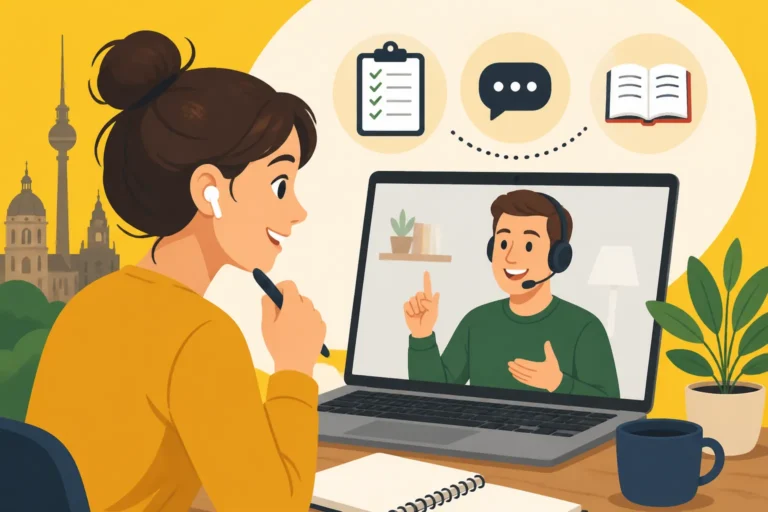
This is where a platform like iTalki truly shines for later starters. Instead of being stuck in a rigid classroom schedule or trying to keep up with younger students, iTalki connects you with native German speakers for one-on-one lessons at your own pace. You can find professional teachers or community tutors, many of whom are incredibly patient and experienced with learners of all ages and levels. The beauty of iTalki is that you control the entire learning experience.
Here’s why iTalki is such a fantastic option:
- Flexibility: You can schedule lessons whenever suits your retirement lifestyle – morning, afternoon, or evening. No need to commute, just log in from your comfy chair. This flexibility is priceless, especially if you have other hobbies or travel plans.
- Personalized Curriculum: You and your iTalki tutor can focus on exactly what you want to learn. Want to practice ordering coffee at your local Bäckerei? Great! Need help understanding a utility bill? Your iTalki tutor can walk you through it. This bespoke approach ensures every minute of your lesson is productive and relevant to your daily life in Germany.
- Low Pressure Environment: One-on-one lessons on iTalki remove the pressure of a group setting. You can ask "silly" questions, make mistakes without embarrassment, and take your time to formulate responses. This builds confidence far more effectively than trying to compete in a classroom.
- Affordability: You can often find highly-rated community tutors on iTalki for very reasonable rates, making consistent learning accessible without breaking the bank. You pay per lesson, so there's no long-term commitment if your plans change.
- Focus on Conversation: Many retirees want to speak German, not just read or write it. iTalki excels at conversational practice. You can simply chat with a native speaker, discuss current events, or role-play real-life scenarios. This is invaluable for building practical fluency and confidence. I've heard countless expats say that regular, low-stakes chats on platforms like iTalki made the biggest difference in their spoken German.
Consider booking a few trial lessons with different iTalki tutors to find someone whose teaching style and personality align with yours. Once you find a good match, consistent, gentle sessions with them will be a cornerstone of your slow-track journey.
Supplementary Resources for Gentle Immersion
While one-on-one lessons are a game-changer, supplementing your learning with other gentle resources can enhance your progress and keep things interesting.
- Beginner German Podcasts: Look for podcasts specifically designed for learners. They often speak slower, explain vocabulary, and cover basic topics. Listen during your morning walk or while making dinner.
- Simple German TV Shows/News: Start with children's shows (like Die Sendung mit der Maus) or simplified news broadcasts (such as Nachrichtenleicht). The visual context helps immensely, and the language is often clearer and slower. Don't be afraid to put on German subtitles if available.
- Language Exchange Meetups: Look for local "Stammtisch" (regular table) groups or language exchange meetups in your area. Many cities have groups where Germans want to practice English and are happy to help you with German. This is a fantastic way to meet people and get real-world practice in a casual setting. Making Friends in Germany: Social Tips for Expats can offer great advice on finding these groups.
- Reading Material: Once you have some basic vocabulary, try simple German graded readers (books written for language learners), or even German magazines on topics you enjoy. If you're into gardening, find a German gardening magazine! This makes learning feel less like a chore.
The key is to integrate these resources without feeling overwhelmed. If a podcast is too fast, try another. If a show is too complex, switch to something simpler. The goal is consistent, low-stress exposure.
Embracing the Journey: Motivation and Mindset
Learning German as a retiree is as much about mindset as it is about memorization. There will be days you feel like you're not making any progress, or that you're just not "getting it." This is normal for all language learners, regardless of age! The key is to acknowledge these feelings, be kind to yourself, and remember your reasons for starting this journey.
Overcoming Frustration and Celebrating Small Victories
There will be moments of frustration. You'll mix up der, die, das, forget a word you just learned, or completely misunderstand someone. When this happens, take a deep breath. It's not a failure; it's part of the process. Remind yourself that you are actively engaging with a new language, which is an incredible feat in itself. Acknowledge the effort, not just the outcome.
Celebrate every small victory, no matter how tiny. Did you successfully order a coffee at the café? That's a win! Did you understand a sentence your neighbor said? Huge win! Did your iTalki tutor understand your explanation, even if it wasn't perfectly grammatical? Another win! Keep a little mental scorecard of these triumphs. They build momentum and remind you that you are making progress, even if it feels slow. Don't forget that even Understanding German Bills and Letters: Decoding Official Mail is a huge practical victory.
Connecting with Local Germans and Expat Communities
The ultimate goal of learning German for many retirees is to connect more deeply with their new home. Don't wait until you're "perfect" to start engaging. Germans, generally, are very appreciative when you try to speak their language, even if you make mistakes. They understand it's a difficult language, and your effort speaks volumes.
- Strike up Conversations: Start with simple interactions. At the bakery, ask "Guten Tag, ein Brötchen, bitte?" (Good day, one roll, please?). At the market, "Was kostet das?" (How much does that cost?). These small exchanges build confidence.
- Join a Club or Activity: Whether it's a hiking group, a choir, a book club, or even a local Stammtisch (regular table) at a pub, joining a German-speaking activity will naturally immerse you in the language. You’ll be surprised how quickly you pick up context-specific vocabulary. For general social tips, German Social Etiquette for Visitors: Greetings and Punctuality can be a useful read, even if you're a long-term resident.
- Seek Out Expat Groups: Sometimes, it’s easier to practice with fellow learners or get advice from other expats who have walked a similar path. Expat groups are a fantastic resource for support, shared experiences, and finding language exchange partners.
- Utilize Your iTalki Skills: Remember, iTalki isn't just about structured lessons; it's a safe space to practice for those real-world interactions. You can role-play scenarios with your tutor, which can significantly boost your confidence when faced with similar situations in daily life.
The journey of learning German as a retiree is a unique and rewarding one. Embrace the "slow track," be patient with yourself, celebrate every step, and most importantly, enjoy the process of unlocking new connections and deepening your experience in Germany.
Disclaimer
This article is for general informational purposes only and does not constitute professional advice. Laws, prices and regulations vary by location and change over time. Consult a qualified professional for guidance on your specific situation.