How to See Saxony: Dresden and Leipzig in a Weekend
Many travelers arriving in Germany find themselves paralyzed by the choice between the classic, baroque beauty of Dresden and the gritty, creative pulse of Leipzig. Attempting to see both in a single weekend often leads to "museum fatigue" and hours wasted on train platforms. This guide provides a battle-tested itinerary from a long-term resident to help you balance imperial history with modern cool, ensuring you experience the true soul of Saxony without the typical tourist burnout.
Disclosure: This post may contain affiliate links. We may earn a commission at no extra cost to you if you make a purchase through these links. Read full disclosure.
Planning Your Saxon Weekend: Transport and Logistics
When you first look at a map of Saxony, Dresden and Leipzig appear close enough to be neighbors, but they are distinct worlds. The secret to a successful weekend is not just knowing where to go, but how to move between these hubs efficiently. Most expats will tell you that the regional trains are the lifeblood of the East, but they can be confusing if you are used to a single-service city.
Getting There and Around with Omio
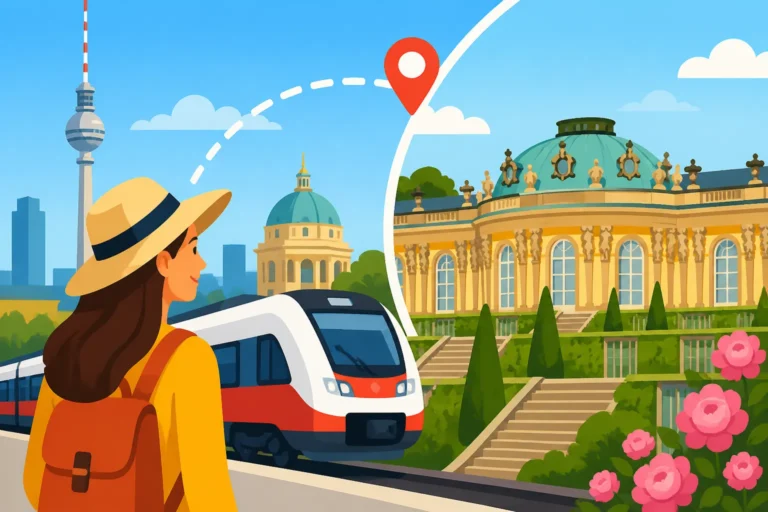
To maximize your 48 hours, you need to decide whether you value speed or budget. The high-speed ICE trains connect the two cities in just over an hour, while the regional RE trains take about 90 minutes. I personally recommend using Omio to compare these options in real-time. Sometimes a last-minute ICE ticket is barely more expensive than the regional fare, and saving those thirty minutes can mean the difference between seeing the Green Vault and standing in a ticket line.
If you are coming from Berlin or Prague, the connections are frequent. Using Omio allows you to see the bus options as well, which can be a lifesaver if there is a strike on the Deutsche Bahn network—a reality every veteran expat has faced at least once. Once you arrive, remember that both cities are incredibly walkable, but their tram networks are among the best in Germany. You do not need a car; in fact, trying to park near Dresden’s Altstadt is a recipe for a headache that will ruin your morning. You can find more details on How to Buy Deutsche Bahn Tickets and Save Money to keep your transit costs down.
Regional Transit and the Saxon Spirit
If you choose the regional route, look into the Länderticket (Saxony Ticket). It allows up to five people to travel together for a fixed price, which is unbeatable for groups. However, keep in mind that this ticket is only valid after 9:00 AM on weekdays, though it works all day on weekends. Understanding What Is the Deutschland-Ticket and Is It Worth It? is also crucial if you plan on extending your trip beyond just the weekend, as it covers all local transit across the country.
One thing you will notice immediately is the Saxon pride. The local dialect is distinct, and the pace of life feels slightly more intentional than the frantic energy of Munich or Frankfurt. When you are on the platform, don't be surprised if people are direct; it is not rudeness, but a local efficiency. Knowing a bit about German Social Etiquette for Visitors: Greetings and Punctuality will help you navigate these small social interactions at the ticket machines or on the platforms.
Saturday in Dresden: The Jewel Box of the Elbe
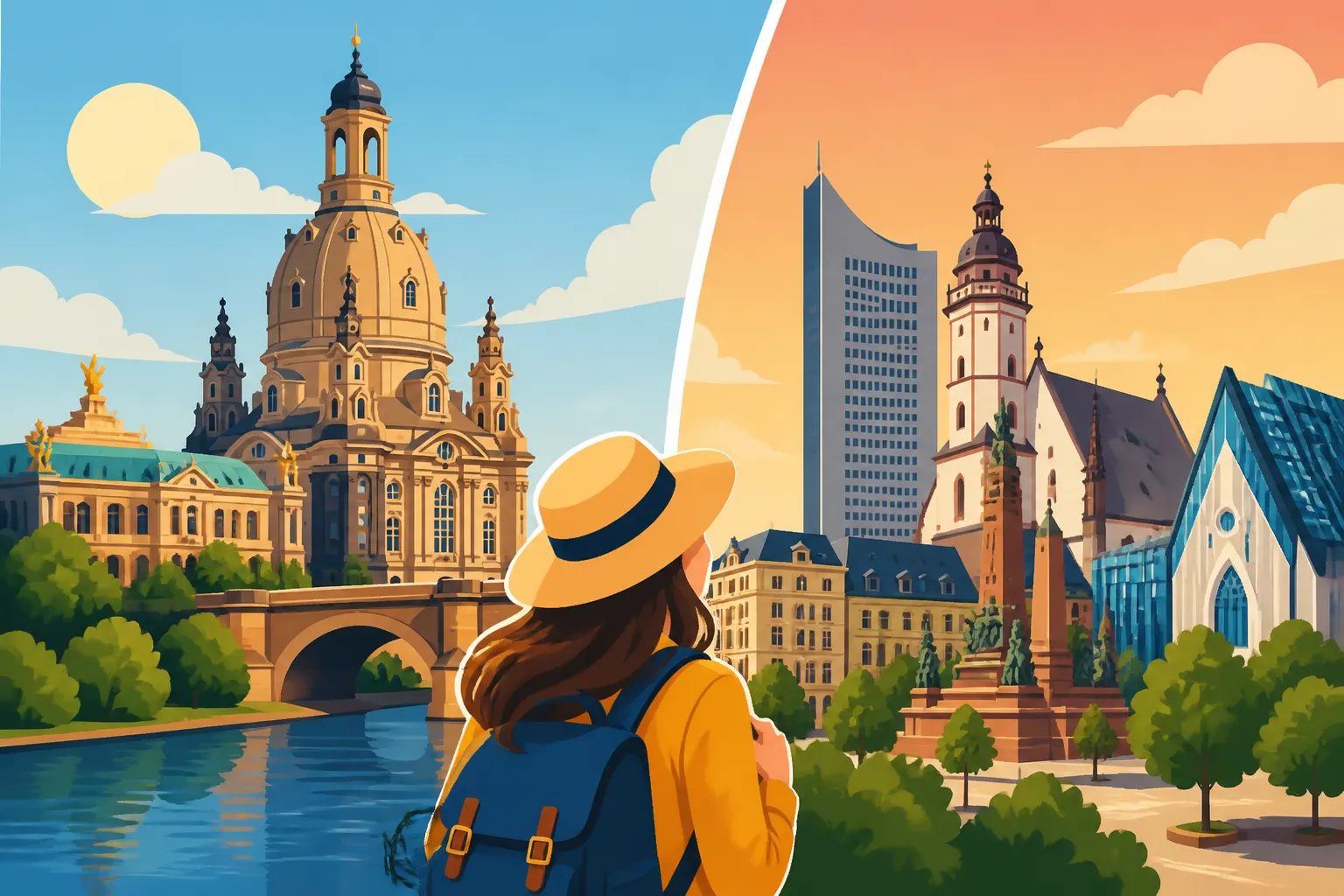
Dresden is often called "Florence on the Elbe," and for good reason. The city was meticulously rebuilt after the devastation of 1945, and standing in the Neumarkt today, it is hard to believe that much of what you see was a pile of rubble just a few decades ago. Saturday should be dedicated to the grandeur of the monarchy and the resilience of the local culture.
Baroque Masterpieces and Museum Island Vibes
Start your morning early at the Zwinger. This palatial complex is the pinnacle of Baroque architecture. I always suggest travelers use GetYourGuide to book tickets for the Old Masters Picture Gallery or the Royal Cabinet of Mathematical and Physical Instruments in advance. The lines for the Green Vault (Grünes Gewölbe) are legendary, and showing up without a reservation is a gamble you don't want to take on a short trip. GetYourGuide often has combined tour options that give you a historical overview of the Wettin dynasty, which ruled Saxony for centuries.
After the Zwinger, walk over to the Frauenkirche. The interior is stunning, but for the best experience, climb to the dome. You will see the contrast between the reconstructed "Old Town" and the socialist-modernist architecture further out. While exploring the historic center, you might find yourself comparing the local architecture to other famous German landmarks. For instance, you can see how it stacks up against Germany's Best Castles: Neuschwanstein and Beyond in terms of sheer imperial scale.
Sunset on the Elbe and Neustadt Nightlife
As the sun begins to dip, cross the Augustus Bridge to the Neustadt (New Town). This is where the "real" Dresden lives. While the Altstadt is for the kings, the Neustadt is for the artists, students, and expats. The Alaunstraße and Louisenstraße are packed with international eateries and cozy bars. If you are looking for a place to stay that feels less "touristy," I recommend checking Booking.com for boutique hotels or apartments in the Äußere Neustadt area. It is much more vibrant than the quiet, museum-heavy Altstadt.
For dinner, try some local Saxon fare. You should definitely look for Sächsischer Sauerbraten, which is a pot roast traditionally served with red cabbage and potato dumplings. For more ideas on what to order, check out our guide on German Regional Dishes Every Visitor Should Try. When the bill comes, remember the local customs. It is standard to round up the bill or add about 5-10%. You can find a deep dive on this in our article on Tipping in Germany: When, Where, and How Much.
Sunday in Leipzig: Freedom, Music, and Industrial Chic
Sunday morning, hop back on the train to Leipzig. If Dresden is the refined grandmother of Saxony, Leipzig is the cool, rebellious cousin. It is a city defined by the "Peaceful Revolution" of 1989 and a musical legacy that includes Bach, Mendelssohn, and Wagner.
The City of Heroes and Musical Legacies
Begin your Sunday at St. Thomas Church (Thomaskirche), where J.S. Bach served as cantor. If you time it right, you can hear the world-famous Thomanerchor perform. From there, it is a short walk to Nikolaikirche. This was the starting point of the Monday Demonstrations that eventually led to the fall of the Berlin Wall. The energy in the square is still palpable. Leipzig is significantly more spread out than Dresden, so you might want to use GetYourGuide to find a guided walking tour that focuses on the 1989 revolution; the history is dense, and having a local guide explain the significance of the "Round Table" and the Stasi headquarters (Runde Ecke) adds layers to the experience.
Leipzig’s city center is a maze of beautiful historic "Passages" (shopping arcades). On Sundays, however, you will encounter a classic German hurdle: nearly everything is closed. Retail shops will be shuttered, but cafes and museums remain open. We have a full explanation of this cultural quirk in Why Are Shops Closed on Sundays in Germany? so you can plan your snacking and souvenir hunting accordingly. For a place to rest your head before a Monday departure, Booking.com has several great options near the Augustusplatz, which puts you right in the heart of the cultural district.
Plagwitz and the Art of Creative Reclamation
In the afternoon, head west to Plagwitz. This former industrial district has been transformed into a haven for creatives. The Spinnerei, once the largest cotton mill in continental Europe, now houses dozens of art galleries and studios. It is the perfect example of Leipzig's "Hypezig" transformation. You can walk along the Karl-Heine-Kanal or even rent a kayak to see the red-brick industrial lofts from the water.
While in Plagwitz, you will likely stumble upon small craft markets or independent kiosks. Be aware that many of these smaller venues do not accept credit cards. Despite Germany's push toward digitalization, "Nur Barzahlung" (Cash only) is a phrase you will hear often in the East. Check out our tips on Cash vs Card in Germany: What Visitors Should Know to avoid being stuck at a cafe without a way to pay for your flat white.
| Feature | Dresden (Altstadt) | Leipzig (Plagwitz/Center) |
|---|---|---|
| Primary Vibe | Baroque, Imperial, Formal | Industrial, Creative, Edgy |
| Main Attraction | Zwinger & Frauenkirche | St. Thomas Church & Spinnerei |
| Best For | History & Art Lovers | Music & Nightlife Seekers |
| Architecture | Reconstructed Masterpieces | Gritty Lofts & Renaissance Arcades |
| Crowd | Tourists & Families | Students & Young Professionals |
Practical Tips for a Smooth Saxon Journey
Navigating two cities in forty-eight hours requires some insider knowledge. From booking your bed to understanding why everyone is staring at you if you cross the street on a red light, the details matter.
Booking Accommodations and Tours
For a weekend trip, location is everything. In Dresden, I always tell people to look on Booking.com for something within walking distance of the Postplatz. It’s a major tram hub that connects the Altstadt and the Neustadt. In Leipzig, staying near the Hauptbahnhof (Central Station) is actually a great move; it's one of the most beautiful stations in Europe and features a multi-level shopping mall that stays open later than most.
When it comes to tours, don't just stick to the city centers. GetYourGuide offers some fantastic day trips to the Bastei Bridge in Saxon Switzerland, which is only 30 minutes from Dresden by S-Bahn. If you have an extra half-day, the rock formations and Elbe Sandstone Mountains are a must-see. It's one of the many reasons Saxony is featured so prominently in Germany's Regions and Where to Go: A Traveler's Overview.
Cultural Nuances and Local Flavors
You might find the service in Saxony a bit "brusque" compared to North American or Asian standards. In Germany, efficiency is valued over bubbly friendliness. Don't take it personally; it's just the way things work here. You can learn more about these "shocks" in our guide on Common Cultural Surprises for First-Time Visitors to Germany.
Finally, keep an eye on your transit times. If you are using Omio to book your return journey, give yourself at least 15 minutes at the station. German trains are generally punctual, but the stations in both Dresden and Leipzig are massive. Missing your train because you couldn't find the right platform is a common expat rite of passage that you should try to avoid.
Disclaimer
The information provided in this guide is for informational purposes only. While we strive to keep our content accurate and up-to-date, travel conditions, opening hours, and local regulations in Germany can change frequently. Always verify specific details with official local sources or service providers before making travel arrangements.