DB Strikes and Delays: Your Rights, Compensation, and Rebooking
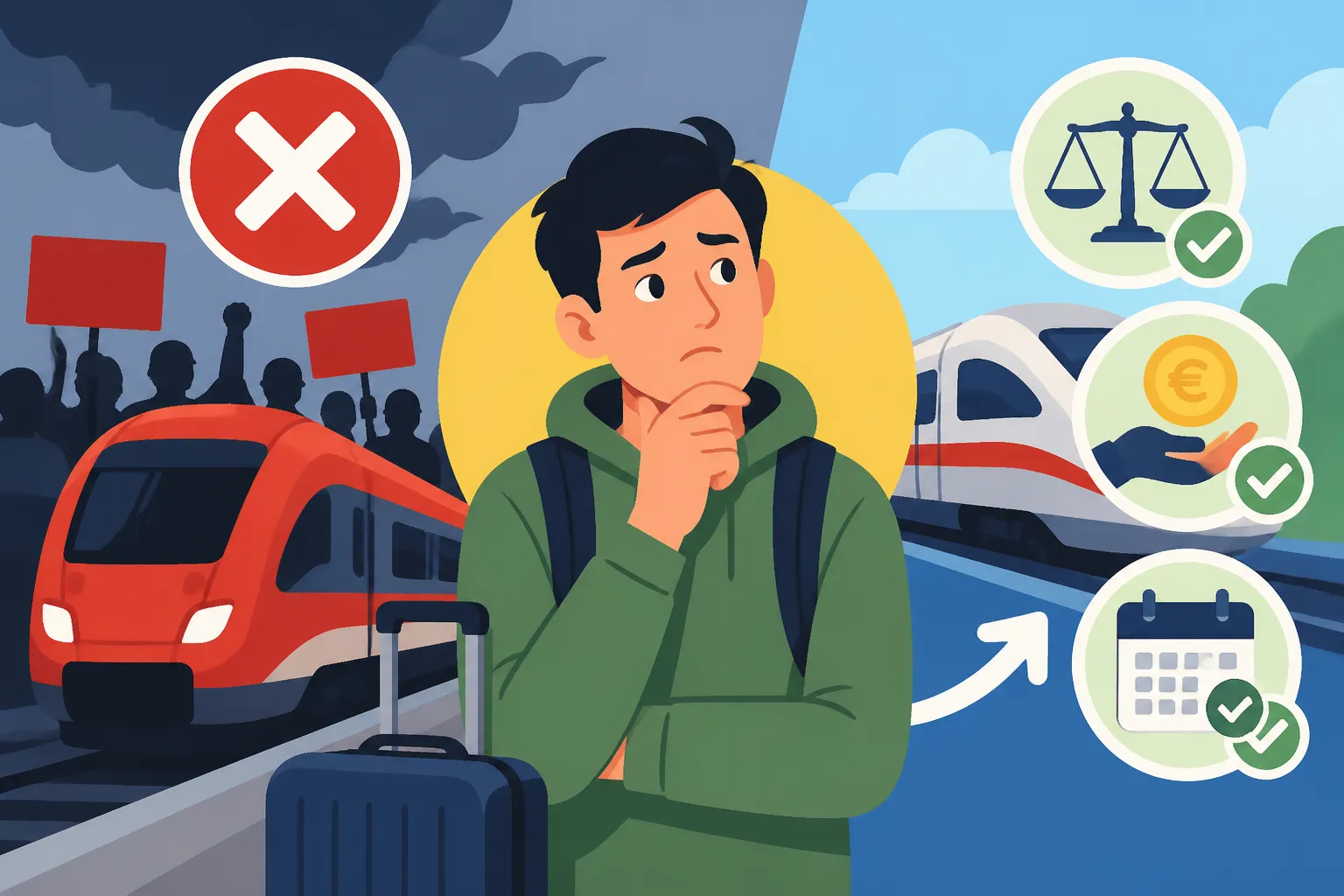
Ah, the romance of German train travel – until that dreaded announcement blares over the loudspeaker: "Aufgrund einer technischen Störung kommt es zu einer Verzögerung…" or worse, "Streik!" It's enough to make any expat or tourist throw their hands up in despair, turning what should be an efficient journey into a bureaucratic nightmare. This guide is here to cut through the confusion, helping you understand your rights, claim compensation, and, most importantly, find reliable alternative travel options when Deutsche Bahn (DB) decides to play hard to get.
Disclosure: This post may contain affiliate links. We may earn a commission at no extra cost to you if you make a purchase through these links. Read full disclosure.
The Inevitable Reality of German Train Disruptions
Germany is famous for its engineering prowess and punctuality, a reputation that, when it comes to the national railway, Deutsche Bahn, can often feel like a cruel joke. While many journeys go off without a hitch, it's almost a rite of passage for anyone living or traveling here to experience a significant delay or, even more dramatically, a strike. It’s not just a minor inconvenience; it can mean missed flights, botched appointments, or entire holiday plans derailed.
Strikes: When Unions Bring Trains to a Halt
Strikes by railway staff, particularly the Gewerkschaft Deutscher Lokomotivführer (GDL) for train drivers or EVG for other rail workers, are unfortunately a recurring theme in Germany. When they happen, they usually involve national, widespread disruptions that can last for days. The notice period for a strike can vary, sometimes giving you a few days to prepare, other times leaving you scrambling just hours before your departure. The sheer scale of these events means that simply checking the DB Navigator app might not be enough; you'll often find entire routes canceled with no easy alternative presented. This is where the frustration really sets in – the feeling of being completely stranded with no clear path forward. Trying to find alternative connections can feel like searching for a needle in a haystack, especially if you're not fluent in German and DB's own services are overwhelmed.
Everyday Delays: The Usual Suspects
Beyond the headline-grabbing strikes, daily life on German railways is punctuated by a myriad of smaller, yet equally annoying, delays. These can range from a few minutes to several hours, accumulating throughout the day and causing a domino effect across the network. Common culprits include:
- Technical Issues: A train breaks down mid-journey, or a signal malfunctions.
- Infrastructure Problems: Construction work, track repairs, or even a tree falling on the tracks after a storm can bring everything to a standstill.
- Weather: Heavy snow, storms, or extreme heat can all lead to speed restrictions or cancellations, especially on the high-speed ICE lines.
- "Personen im Gleis" (People on the tracks): A sad and disruptive cause, often leading to immediate and prolonged shutdowns.
- "Verspätung eines vorausfahrenden Zuges" (Delay of a preceding train): The classic, vague explanation that often means everything is just running late down the line.
These routine delays, while less dramatic than a full-blown strike, chip away at your patience and planning. The "Pünktlichkeit" (punctuality) statistic that DB proudly publishes often feels disconnected from the actual travel experience of many passengers, especially those relying on regional trains or making long-distance connections. Knowing that delays are a regular occurrence helps manage expectations, but it doesn't make missing your connection any less irritating.
Knowing Your Rights: Compensation and Rebooking
When your train journey goes south, you're not entirely powerless. German and EU passenger rights are quite robust, ensuring you have certain entitlements, especially regarding compensation and alternative travel. Understanding these rights is your first line of defense against travel chaos.
The German Passenger Rights (Fahrgastrechte)
The Fahrgastrechte are enshrined in EU law (Regulation 1371/2007) and apply to all rail passengers in Germany. These rights come into play for significant delays, cancellations, and missed connections. It's crucial to know that these rights apply regardless of the reason for the delay – whether it's a strike, bad weather, or a technical fault. The railway company cannot simply waive these obligations.
Here’s a quick breakdown of the compensation you’re entitled to:
| Delay Duration (Arrival at Destination) | Compensation Amount |
|---|---|
| 60 minutes or more | 25% of the ticket price |
| 120 minutes or more | 50% of the ticket price |
Important Considerations:
- Minimum Claim: The compensation amount must be at least €4 to be paid out. So, if 25% of your ticket is €3, you won't get anything.
- Season Tickets: If you have a Deutschland-Ticket or a weekly/monthly pass, compensation is calculated differently, usually as a fixed amount per delay, up to a maximum percentage of the pass's value. For example, with a Deutschland-Ticket, you can get €1.50 for a 60+ minute delay and €2.25 for 120+ minutes, but only a maximum of 25% of the monthly price overall.
- Proof of Delay: You'll need a "Bestätigung" (confirmation) of the delay from DB staff or print it from the DB Navigator app (often found under "Meine Reisen" for past trips).
Beyond monetary compensation, if your train is delayed by more than 60 minutes, you have additional options:
- Cancellation and Reimbursement: You can cancel your journey and get a full refund if you haven't started your trip, or a partial refund for the unused portion if you've already started. If the delay makes your original travel purpose obsolete (e.g., missing a concert), you can also return to your starting point and get a full refund.
- Alternative Transport: You can take the next available train to your destination, even if it's a higher class (e.g., ICE instead of Regionalbahn) without paying extra. If your train is delayed by more than 60 minutes and the estimated arrival time is between midnight and 5 am, or if the last scheduled train of the day is canceled and you wouldn't reach your destination before midnight, DB will cover "reasonable" costs for alternative transport like a taxi (up to €120). This is usually a last resort and often requires clear communication with DB staff.
Rebooking and Alternative Travel: When DB Helps (and When They Don't)
During a significant delay or strike, your immediate concern is usually getting to your destination. DB's rules on rebooking are generally passenger-friendly, but the practical execution can be messy.
Automatic Ticket Validity:
If your train is canceled or delayed by more than 20 minutes, your ticket automatically becomes valid for any other DB train on the same route, even if it's a higher-speed or higher-class train like an ICE, without needing to buy a new ticket. This is incredibly helpful, but during a strike, "any other train" might mean no trains at all. You can even use a different route to reach your destination, as long as it's a reasonable alternative.
Using Other Public Transport:
If an ICE or IC/EC train is delayed by more than 20 minutes at the departure station, or it's canceled, you can use local public transport (S-Bahn, U-Bahn, tram, bus) to reach your departure station or your destination, even if your ticket doesn't normally cover it. This doesn't usually apply to Regionalbahn tickets, which are already designed for local transport.
The Catch: While these rights sound good on paper, during a major strike, the "next available train" might be tomorrow, or the capacity on the few trains running might be completely overwhelmed. The official DB Navigator app, while generally good for real-time updates, can sometimes struggle to provide comprehensive alternative routes during widespread disruptions. This is precisely where a solution like Omio becomes indispensable, offering a broader view of all available transport options. When DB's network is gridlocked, you need to look beyond rail. If you're trying to figure out what to do, you might find it helpful to consult our guide on How to Use the DB Navigator App in Germany.
Navigating the Chaos: Practical Steps and Solutions
So, you're standing on a platform, or worse, stuck on a motionless train, and the inevitable announcement comes. What do you actually do?
Immediate Actions: Information is Power
- Check the DB Navigator App: This should always be your first port of call. It provides real-time updates on your specific train, platform changes, and often suggests alternative connections within the DB network. Look for the "Reiseauskunft" (travel information) or "Meine Reisen" (my journeys) sections.
- Listen to Announcements: While often in German, critical announcements are sometimes repeated in English, especially at major hubs. Even if they're not, key German words like "Verspätung" (delay), "Zugausfall" (train cancellation), "Anschlusszug" (connecting train), and "Gleiswechsel" (platform change) can give you the gist.
- Consult Information Boards: These electronic displays at platforms and in stations show departure/arrival times, delays, and platform changes.
- Seek Out Staff: If available, DB staff at the station (at the Reisezentrum or information desks) can provide personalized advice. Be prepared for long queues during major disruptions. They can often stamp your ticket as proof of delay, which is essential for compensation claims.
- Don't Rush: If your connecting train is delayed, resist the urge to immediately jump on another train without confirming it's the right move. Sometimes, your original connection might be held, or a better alternative might appear.
Beyond DB: Finding Alternatives with Omio
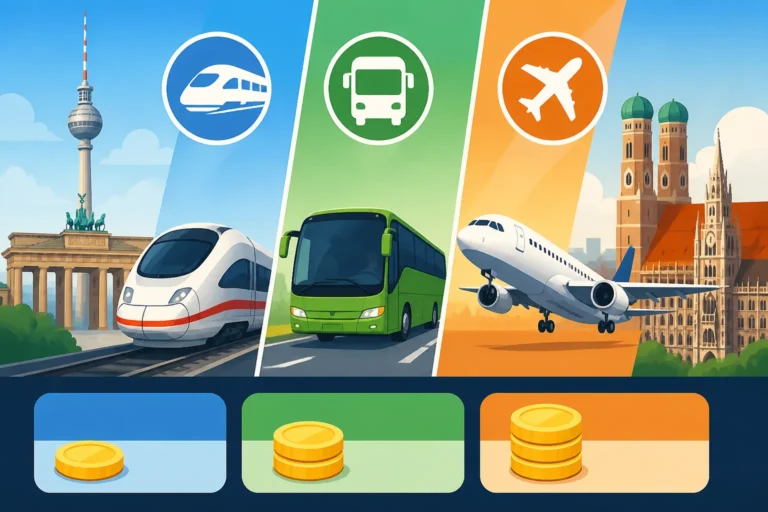
When DB's own network is failing you, you absolutely need to widen your search. This is where tools like Omio truly shine as your ultimate travel companion in Germany. Instead of being stuck looking only at train options that are clearly not working, Omio provides a multi-modal search, showing you not just trains, but also long-distance buses and even flights to your destination.
Imagine this scenario: your ICE from Munich to Berlin is canceled due to a strike. You could frantically refresh the DB Navigator, only to see "canceled" repeatedly. Or, you could pull up Omio on your phone. In one single search, Omio will display if there are still any rare DB trains running, but more importantly, it will show you available FlixBus routes, other bus providers, or even regional flights that might get you there faster or with less hassle. This is a game-changer because during a strike, other modes of transport become highly competitive. Finding all options in one place, with prices and travel times, is invaluable.
Omio's power lies in its ability to present you with a full spectrum of travel choices. You can easily compare the journey time, price, and convenience of taking a train (if any are available), a bus (which might have more availability during rail strikes), or a short-haul flight. During stressful situations like mass cancellations, this clarity and breadth of options can save your day. When the official DB channels are overwhelmed, having Omio as your alternative search engine gives you a significant advantage. This platform makes it incredibly easy to quickly rebook your journey across different transport providers, ensuring you're not left stranded. If you're stressed about finding reliable alternatives, Omio is often the fastest way to cut through the noise and get back on track.
Filing for Compensation: The Bureaucratic Maze
Once you've safely reached your destination (hopefully with Omio's help!), it's time to claim your due compensation. The process, while bureaucratic, is straightforward if you have the necessary documentation.
- Get a Compensation Form (Fahrgastrechte-Formular): These light blue envelopes are usually available at DB Reisezentren (travel centers) in larger stations or can be downloaded from the DB website. You can also pick them up directly from train staff on delayed trains if they have them.
- Fill Out the Form: Provide your personal details, ticket information, the specific train connection, and the reason for the delay (if known). Attach your original ticket (or a copy if it's an online ticket) and the delay confirmation.
- Submit the Form: You can mail it to the address provided on the form or hand it in at any DB Reisezentrum. You can also submit claims online via the DB website, which is often the most convenient method for digital tickets.
- Wait: Processing times can vary, but expect to hear back within a few weeks to a couple of months. The compensation is usually paid via bank transfer to a German or SEPA-compatible bank account.
Keep in mind that while the bureaucracy can feel a bit much, especially for non-German speakers, the system is designed to protect your rights. Don't be shy about claiming what you're owed. For more in-depth financial planning around travel, you might consider reading our guide on Money for Travel in Germany: Cash, Cards, and ATMs.
Why Omio is Your Essential Travel Companion During Disruptions
Let's be honest, living in or visiting Germany means you'll eventually encounter a train disruption. And when you do, your primary goal is to get where you need to go with as little extra stress as possible. This is where Omio truly stands out as an indispensable tool, far more than just another booking site.
The Power of Multi-Modal Search: Trains, Buses, Flights at Your Fingertips
During a strike or a severe delay, relying solely on Deutsche Bahn's own information channels can leave you feeling trapped. The strength of Omio is its comprehensive search engine that doesn't just look at trains. It integrates schedules and prices from various transport providers, including:
- Trains: Of course, it shows DB connections, but when those are down, it automatically highlights other options.
- Long-Distance Buses: Companies like FlixBus offer extensive networks across Germany and Europe, often serving the same routes as trains and proving to be a reliable alternative when the rails are silent. When your train is canceled, an Omio search will immediately present you with bus options, often at competitive prices.
- Flights: For longer distances, especially during major disruptions, a quick flight might be the most efficient (and sometimes only) way to reach your destination. Omio includes these options, letting you compare speed against cost.
This multi-modal approach is incredibly powerful. Imagine you're trying to get from Berlin to Frankfurt during a major GDL strike. While DB might only show you canceled trains, Omio can instantly pull up numerous bus departures and perhaps even a couple of regional flights from Berlin Brandenburg Airport (BER) to Frankfurt Airport (FRA), giving you actionable choices now. This capability makes Omio a crucial lifeline during unexpected travel chaos. If you want to compare how to travel between major cities, check out our piece on How to Travel Between German Cities Without a Car.
Seamless Rebooking and Proactive Planning with Omio
Beyond simply finding alternatives, Omio makes the rebooking process as smooth as possible. With a few taps, you can often secure a ticket on an alternative mode of transport without having to switch between multiple apps or websites. This saves precious time and reduces stress when you're under pressure.
Furthermore, Omio can also be used for proactive planning. Before you even set off, you can use Omio to scout potential backup options for your journey. If you know a strike is looming, or if your route is prone to delays, you can check bus or flight alternatives beforehand, giving you peace of mind.
Why Omio is your go-to solution:
- Comprehensive Overview: See all your options (trains, buses, flights) in one place.
- Real-Time Updates: While DB Navigator is good for trains, Omio integrates updates for all modes, giving you a wider picture.
- Easy Comparison: Quickly weigh speed, cost, and convenience across different transport types.
- Instant Booking: Book your alternative journey directly through the app, saving valuable time.
- Stress Reduction: During a strike or severe delay, having clear alternatives laid out dramatically reduces panic.
Next time you hear that ominous "Verspätung" or "Streik" announcement, don't let it ruin your day. Remember your rights, but more importantly, remember that Omio is there to help you find your way forward, offering a clear path through the chaos. For quick tips on getting connected while you're traveling, our guide on Mobile Data and eSIMs for Travel in Germany could also be quite useful.
Alternative Travel Options Beyond Rail
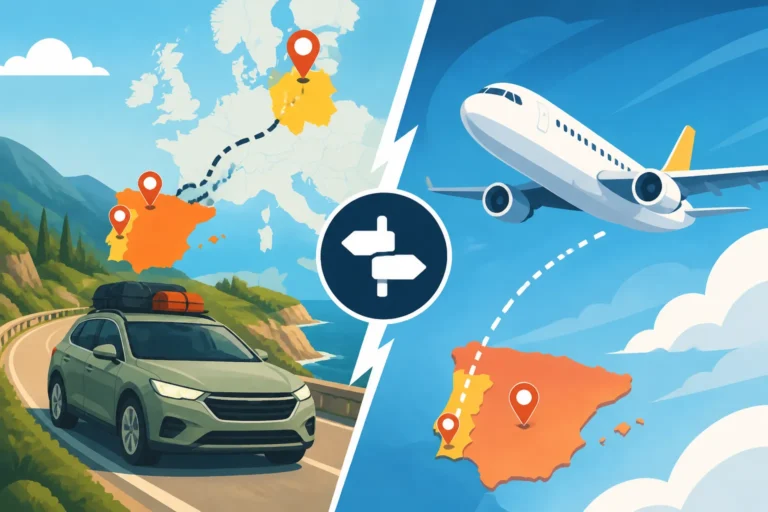
While Omio helps you find them, it's good to know what other options exist when trains aren't running. These modes of transport often pick up the slack when DB fails, but be aware that increased demand can lead to higher prices and full bookings during strikes.
Long-Distance Buses (Fernbusse)
Germany has an excellent network of long-distance buses, with FlixBus being the dominant player. These buses are often cheaper than trains, especially if booked in advance, and can be a fantastic alternative during rail strikes.
- Pros: Extensive network, often more frequent departures during strikes, comfortable, usually cheaper.
- Cons: Slower than ICE trains, can get stuck in traffic, limited luggage space compared to trains.
- Booking: Easily found and booked through Omio, as well as directly via the FlixBus website or app. For a deeper dive into this, you might want to read Long-Distance Buses in Germany: FlixBus and Networks.
Car Sharing and Ride Sharing
Services like BlaBlaCar (ride-sharing) or car-sharing platforms like Share Now, Miles, or Sixt Share (for short-term car rentals) can be an option, particularly for shorter or less conventional routes.
- Pros: Can be door-to-door, sometimes faster than buses, offers flexibility.
- Cons: BlaBlaCar depends on available drivers, car-sharing requires registration and finding available vehicles, potentially higher cost, especially with fuel.
Rental Cars
If you're traveling as a family or a group, or if you simply need the ultimate flexibility, renting a car can be a viable (though often expensive) option during a major disruption.
- Pros: Complete freedom and flexibility, good for groups, guaranteed space.
- Cons: Can be very expensive, especially last-minute during a strike, dealing with German traffic and parking, finding available cars.
- Driving: Remember the rules of the Renting a Car and Driving on the Autobahn.
Remember, during widespread strikes, demand for all these alternatives skyrockets, so act fast! Using Omio allows you to quickly see the availability across all these options and book before they sell out.
Conclusion and Looking Ahead
Dealing with DB strikes and delays in Germany is, unfortunately, a part of the expat and traveler experience. It's frustrating, it's disruptive, but it doesn't have to completely derail your plans. By understanding your passenger rights, knowing how to gather information, and crucially, leveraging tools like Omio to explore the full spectrum of alternative transport options, you can navigate these challenges with confidence.
Don't let a "technische Störung" turn your German adventure into a nightmare. Be informed, be proactive, and empower yourself with the right tools. Your journey might hit a snag, but with a little preparation and the right approach, you'll still get to your destination.
Disclaimer
Please note that while this guide provides comprehensive information, travel regulations and service conditions can change. Always consult the latest information from Deutsche Bahn directly or from your chosen travel platform for the most up-to-date details regarding delays, compensation, and alternative travel options. This guide is for informational purposes only and does not constitute legal advice.