German SIM Card for Tourists vs Residents: What’s the Difference?
Landing at Frankfurt or Berlin airport with a dead phone and no local data is a rite of passage for every newcomer, but the real headache starts when you realize you can’t just buy a SIM card and start browsing. I vividly remember my first week in Munich, standing in a crowded electronics store, only to be told I couldn't activate a basic plan because my temporary hotel address wasn't "official" enough. This guide solves the confusion between tourist and resident SIM cards, ensuring you stay connected from day one without falling into expensive roaming traps.
Disclosure: This post may contain affiliate links. We may earn a commission at no extra cost to you if you make a purchase through these links. Read full disclosure.
The Identity Crisis: Why Getting a SIM Card in Germany Isn't Plug and Play
In many countries, you can buy a SIM card at a newsstand and be on Instagram five minutes later. In Germany, a 2017 anti-terror law changed everything. Every single SIM card, whether it's for a two-week vacation or a ten-year residency, must be registered with a valid ID. This is the first hurdle where the distinction between a "tourist" and a "resident" starts to blur and then sharply diverge.
The most common method of activation is the VideoIdent process. You’ll sit in front of your smartphone camera while a representative from the provider asks you to tilt your passport to show the holograms. For tourists, this can be a nightmare if the provider’s system doesn't recognize certain international passports. For residents, this process usually requires a German address, which brings us to the first major bottleneck: the Registering Your Address (Anmeldung): Step-by-Step Guide. Without that piece of paper, many "resident-style" contracts remain out of reach.
If you are currently staying in Short-Term Accommodation in Germany: Options for Your First Weeks, you might feel like you’re in a legal limbo. You aren't quite a tourist, but you don't have the permanent documents to be a full "resident" in the eyes of a major telecom provider like Deutsche Telekom or Vodafone. Understanding this gap is crucial so you don't waste hours in a shop only to be rejected.
Tourist SIM Cards: Speed, Freedom, and the Cost of Convenience
When we talk about "tourist" SIMs in Germany, we are generally referring to prepaid (Vorkasse) cards. These are the cards you see hanging on the racks at supermarkets like Lidl or Aldi, or available for quick delivery via Amazon Germany. They are designed for people who need immediate access and don't want to sign a life-long commitment.
The Myth of the "Tourist Only" Card
There isn't actually a card labeled "For Tourists Only." Instead, there are plans that don't require a German bank account. Most traditional German contracts require an IBAN for a monthly SEPA direct debit. Tourists, however, can usually top up their balance using vouchers (Guthabenkarten) bought at gas stations or kiosks. This is the ultimate "tourist" feature—anonymity from the German banking system.
Where to Source Your First SIM
If you are planning ahead, you can actually order certain prepaid cards from Amazon Germany before you even depart, though you will still have to go through the identification process once you arrive. Alternatively, the "Big Three" providers (Telekom, Vodafone, and O2) have shops in every major city center and airport. Be warned: airport SIM cards are notoriously overpriced, often sold as "special tourist packages" that cost double what you’d pay at a store in the city.
For a smoother start, many expats follow the Settling in Quickly: A Newcomer’s Checklist for Your First Weeks in Germany and opt for a supermarket brand like Aldi Talk or Lidl Connect. These run on major networks but are significantly cheaper. The catch? The registration apps are almost exclusively in German, and the customer support might not speak English.
Pros and Cons of the Prepaid Path
The biggest "pro" is flexibility. You can cancel at any time—or simply stop putting money on the card. This is ideal if you are waiting for your Opening a Bank Account in Germany: Step-by-Step for Newcomers to be finalized. The "con" is that you generally pay more per gigabyte of data compared to a long-term contract, and you have to remember to top up. There’s nothing worse than having your GPS cut out in the middle of a forest because your 10€ credit ran out.
Resident SIM Cards: Long-term Contracts and the 24-Month Trap
Once you’ve moved out of your temporary flat and into a more permanent home—perhaps one you found through Wunderflats while searching for a long-term base—you’ll likely want to switch to a resident contract. These are called "Laufzeitverträge" (term contracts).
The Power of the IBAN and Schufa
To get a resident SIM, you almost always need two things: a German bank account and a decent credit score. This is where All About SCHUFA: Building Credit as a Foreigner in Germany becomes relevant. Major providers will run a "Schufa check" before they let you sign a contract. If you just arrived and have no credit history, you might actually be denied a premium contract with a free iPhone, even if you have a high-paying job.
Using a resident contract allows you to pay via direct debit, which is the backbone of the German financial system. It simplifies your Cost of Living in Germany: Budgeting Guide for Expats because the bill is automated. However, you must be careful with the contract length.
The Dreaded 24-Month Commitment
Historically, German mobile contracts were famous for being 24 months long with "automatic" renewals. If you didn't cancel three months before the end date, you were locked in for another year. Thankfully, recent laws have made this easier, allowing for monthly cancellations after the initial period. Still, as an expat, I always recommend looking for "monatlich kündbar" (monthly cancellable) contracts. Providers like WinSim, PremiumSim, or the digital-only provider Fraenk offer these.
Digital-First Providers for Modern Residents
If you don't want to deal with a physical shop, there is a new wave of "resident" providers that operate entirely via app. Providers like Fraenk or Simon Mobile are fantastic for expats. They usually offer flat rates for calls and large data packages for a low monthly fee. They still require a German address and bank account (or PayPal), making them true "resident" options, but they bypass the bureaucracy of traditional storefronts. You can find more about these in our guide on Internet and Mobile Phone Plans in Germany: Getting Connected Fast.
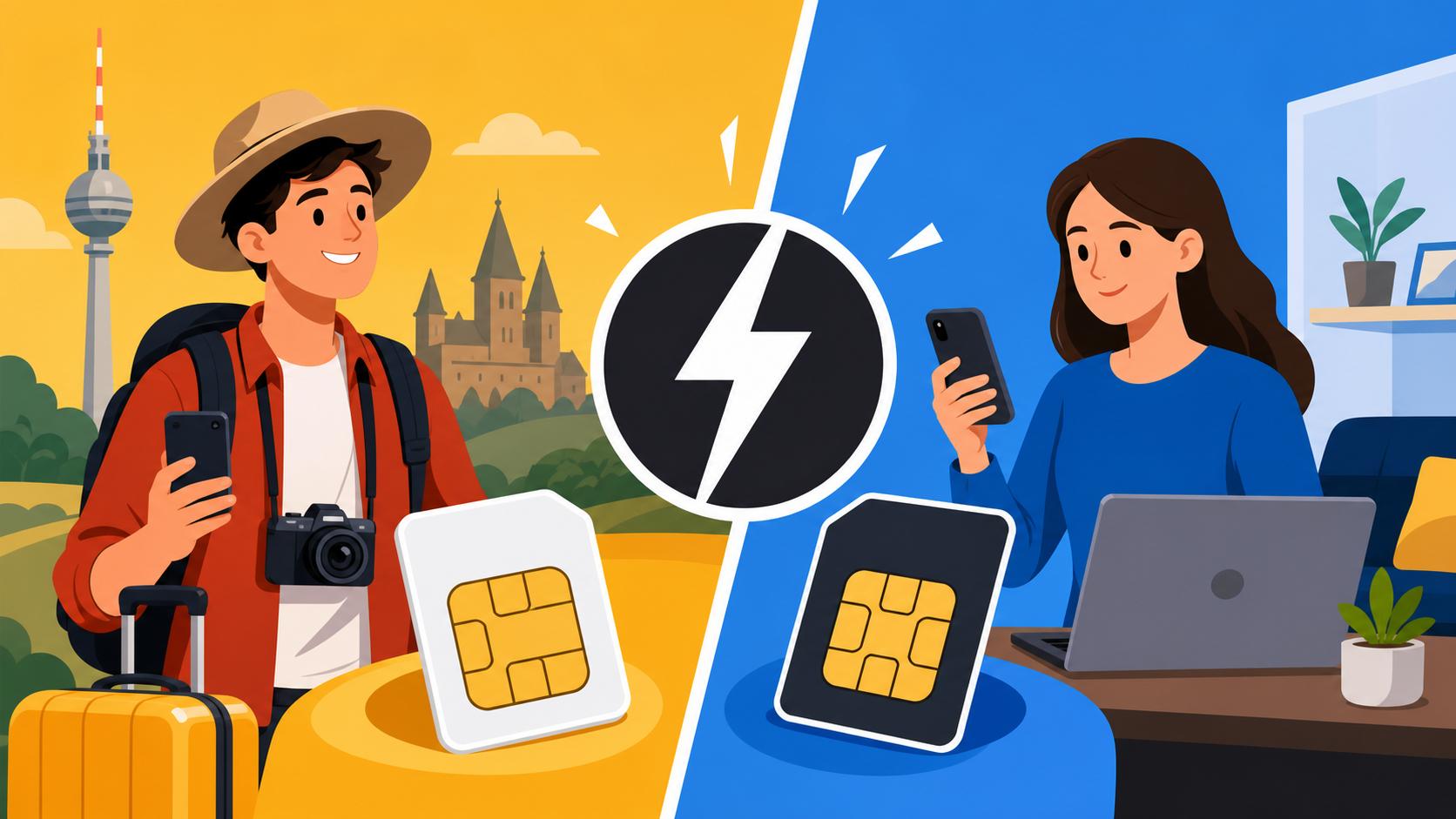
Comparison: Tourist (Prepaid) vs. Resident (Contract)
| Feature | Tourist (Prepaid) | Resident (Contract) |
|---|---|---|
| Contract Length | None (Pay-as-you-go) | Usually 24 months or Monthly |
| Payment Method | Cash vouchers or Credit Card | SEPA Direct Debit (German IBAN) |
| Identity Verification | Required (Passport/ID) | Required (Passport + Anmeldung) |
| Average Cost | Higher per GB | Lower per GB |
| Credit Check | No | Yes (Schufa check) |
| Flexibility | High (Stop anytime) | Low to Medium |
| Language Support | Limited (Usually German apps) | Varies (Major providers offer English) |
Practical Tips for a Smooth Connection
Navigating the German mobile landscape requires a bit of strategy. I've seen many people get stuck with a 50€-a-month bill they can't cancel, simply because they signed the first thing they saw at the mall.
Dual SIM and eSIM: The Expat’s Secret Weapon
If your phone supports it, keep your home country SIM as an eSIM and use the physical slot for your German card. This allows you to receive 2FA (Two-Factor Authentication) texts from your bank back home while using cheap German data for your daily life. You can order eSIMs for many German providers now, which speeds up the activation process significantly since you don't have to wait for the mail.
The "English-Friendly" Workaround
If your German is still at the "Guten Tag" level, you might struggle with the fine print of a contract. In this case, stick to providers that are known for being expat-friendly. Some boutique providers specifically target the international community, though they may charge a small premium for the English service. Alternatively, check out the Best Banks in Germany for Expats: Low Fees and English Support to ensure your payment method is set up to handle these recurring bills without hidden fees.
Transitioning from Tourist to Resident
You don't have to change your phone number when you "become" a resident. In Germany, you have a legal right to "Rufnummernmitnahme" (number porting). If you start with a prepaid Lidl SIM and later want to join a big Vodafone contract, you can take your number with you. In fact, many providers will give you a "Wechselbonus" (switching bonus) of 10€ to 50€ just for bringing your number over.
When you finally move from your Wunderflats apartment into your own unfurnished place, that is the perfect time to audit your mobile spend. Most people find that once they have home internet, their mobile data needs drop, allowing them to switch to a cheaper resident plan.
Important Note on Emergency Numbers
Regardless of whether you have a tourist SIM or a resident contract, your phone is legally required to allow emergency calls to 112 (Medical/Fire) and 110 (Police) even if you have zero credit or no active plan. Always ensure your phone is charged; in the German bureaucracy, your smartphone is more than a toy—it is your lifeline to every service from navigation to identity verification.
Disclaimer
The information provided in this article is for informational purposes only and does not constitute legal or financial advice. Telecommunications laws and provider offerings in Germany change frequently. Always check the specific terms and conditions of a provider before signing any contract or purchasing a SIM card.