Internet and Mobile Phone Plans in Germany: Getting Connected Fast
Arriving in Germany only to realize you can’t even look up a train schedule because your foreign SIM is blocked is a classic expat “welcome.” I spent my first two days in Berlin wandering between coffee shops just to use their Wi-Fi for basic survival. This guide solves your connectivity crisis by detailing the fastest ways to get a local number and high-speed home internet without the legendary bureaucratic wait.
Disclosure: This post may contain affiliate links. We may earn a commission at no extra cost to you if you make a purchase through these links. Read full disclosure.
The First Step: Mobile Connectivity Without the Wait
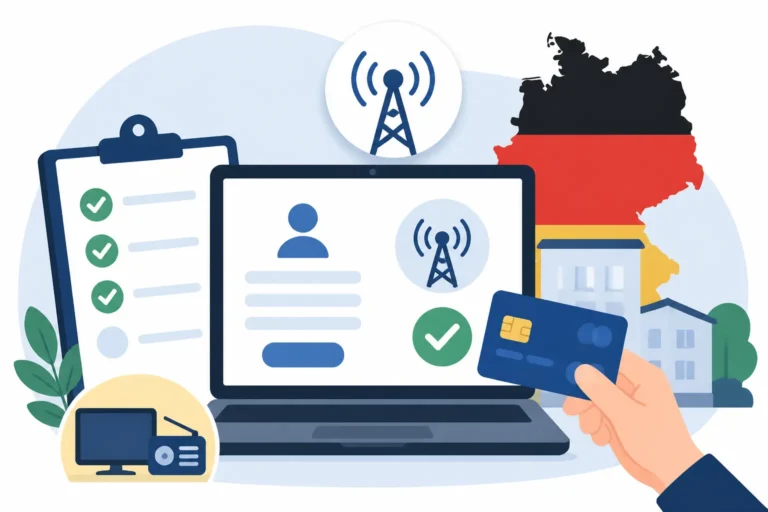
Getting reliable internet and a mobile phone connection is one of the first priorities for newcomers settling in Germany. The country has a well-developed telecommunications infrastructure, with multiple providers offering a range of plans for mobile data, broadband internet, and bundled services. Major telecommunications companies include Deutsche Telekom, Vodafone Germany, and Telefónica Germany. These providers offer nationwide coverage and a variety of contract options for both residents and expatriates. Smaller providers and budget brands often use the same networks but offer lower prices with fewer additional services.
For mobile phone services, customers can choose between prepaid plans and long-term contracts. Prepaid SIM cards are popular among newcomers because they are easy to obtain and usually require minimal documentation. These plans allow users to pay in advance for data, calls, and messages without committing to a long-term agreement. They can often be purchased at electronics stores, supermarkets, or directly from telecom providers. Contract plans usually provide better value for larger data packages but often require a minimum commitment period, commonly 12 or 24 months. Some providers may require a German bank account or credit check before approving a contract. These plans often include unlimited national calls and text messages along with varying amounts of high-speed mobile data.
Prepaid SIMs vs. Monthly Contracts
When you first land, the temptation is to walk into a glossy Telekom or Vodafone shop and sign a 24-month contract for the latest iPhone. Don’t do it yet. Long-term contracts (Laufzeitverträge) almost always require a German bank account and, more importantly, a registered address (Anmeldung). If you are still staying in Short-Term Accommodation in Germany: Options for Your First Weeks, you likely won’t have the paperwork needed for a premium contract.
Prepaid SIMs are your best friend during those first chaotic weeks. You can pick them up at any supermarket like ALDI (Aldi Talk) or Lidl (Lidl Connect), or even order them via Amazon Germany to be delivered to your hostel or temporary flat. Most expats eventually switch to a monthly “no-contract” plan once they have their feet under them, using app-based providers like fraenk or Congstar which use the premium Telekom network but allow you to cancel at any time.
The trade-off is usually between network quality and price. Telekom (D1) has the best coverage, especially in rural areas, followed by Vodafone (D2), and then O2 (Telefónica), which is often the cheapest and perfectly fine for urban dwellers.
The Identification Hurdle: VideoIdent and PostIdent
Since 2017, German law has required strict identity verification for every SIM card, including prepaid ones. You cannot simply “plug and play.” You will need your passport (and often your residence permit/visa) to verify your identity. If you buy a SIM from a supermarket, you’ll usually have to use “VideoIdent”—a short video call with an agent through the provider’s app where you show your face and your passport’s holograms to the camera.
I remember my first VideoIdent attempt: I was in a noisy cafe with terrible lighting, and the agent kept asking me to tilt my passport “exactly 45 degrees” to see the security features. It was infuriating. Pro tip: do this in a quiet room with bright, natural light. If VideoIdent fails (which it often does for certain non-EU passports), you’ll have to use “PostIdent.” This involves taking a printed coupon and your passport to any Deutsche Post branch, where a clerk verifies you in person.
ESIM: The Real “Fast” Option
If you have a modern smartphone, an eSIM is the absolute fastest way to get a German number. Providers like fraenk or N26 (through their partnership with Vodafone) allow you to download a digital SIM directly onto your phone via an app. You still have to go through the VideoIdent process, but you don’t have to wait for a physical piece of plastic to arrive in the mail.
This is a lifesaver if you’ve just moved into a temporary apartment—maybe one you found on Wunderflats—and you need a local number to put on your How to Rent an Apartment in Germany: Application Process and Requirements folder. Having a DE number (+49) immediately makes you look more “settled” to potential landlords and employers.
However, be careful with roaming. While EU roaming is free on German SIMs, using your German data in Switzerland or the UK can still lead to unexpected charges depending on the fine print. Always check your data roaming settings the moment you cross a border. If you need a backup, you can always find cheap, international roaming-ready devices on Amazon Germany to keep as a “burner” for travel.
Home Internet: Navigating the Technician Wait Times
DSL, Cable, and Fiber Options
Once you move into your Furnished vs Unfurnished Apartments in Germany: Pros and Cons, getting Wi-Fi becomes the next boss battle. Germany offers three main types of home internet: DSL, Cable (Kabel), and Fiber (Glasfaser). DSL is available almost everywhere but is the slowest. Cable is dominated by Vodafone and can offer gigabit speeds, but it’s shared with your neighbors, meaning speeds can drop during “Netflix prime time” in the evening.
Fiber is the gold standard, but it’s still being rolled out across the country. If you’re lucky enough to live in a newly built block, you might have it. The real kicker? Installing any of these usually requires a “Technikertermin” (technician appointment). In major cities, the wait for a technician can be anywhere from two to six weeks. I once spent a month in a new flat using my phone as a hotspot for my laptop because the technician “couldn’t find the doorbell” and just left.
When you sign a contract—usually 24 months—the provider will send you a router. If you want to save money, you can often buy your own Fritz!Box (the German standard for routers) on Amazon Germany instead of paying a monthly rental fee to the provider. Just make sure it’s compatible with your specific type of connection (DSL vs. Cable).
The “Quick Fix”: LTE and 5G Home Routers
If you cannot wait a month for a technician, there is a brilliant workaround: the “Homespot” or “GigaCube.” These are 4G/5G routers that you simply plug into a wall socket. They use the mobile network to create a Wi-Fi bubble in your home. You can get these from Vodafone (GigaCube) or O2 (Homespot) and often walk out of the shop with the device in your hand, online within minutes.
It avoids the 24-month contract trap and doesn’t require any drilling or technician visits. I used a GigaCube for my first three months in Munich, and it was fast enough for Zoom calls and gaming. You can even find the hardware for these mobile routers on Amazon Germany and just pop in a high-data prepaid SIM if you want even more flexibility.
The downside? Latency (ping) can be higher than a fixed line, and “unlimited” data often has a “fair use” cap. If you’re a heavy downloader or a professional streamer, you’ll eventually want a proper fiber or cable line. But for the average expat starting out, these mobile routers are a sanity-saver. They allow you to stay productive while you wait for the permanent infrastructure to catch up.
Contract Flexibility and the “Sonderkündigungsrecht”
German law changed recently to be more consumer-friendly. While 24-month contracts are still the norm (and often come with the best deals), providers are now required to offer 1-month rolling contracts as well. They are slightly more expensive per month, but they are worth it if you aren’t sure where you’ll be in a year.
A very important term to know is the Sonderkündigungsrecht (special right of termination). If you move to a new apartment and your current provider cannot offer the same speed or service at the new address, you have the right to cancel your contract with only one month’s notice. This is essential if you move from a city like Berlin to a smaller town where your cable provider might not have coverage.
German companies are notorious for “missing” cancellation letters sent by regular mail. Always send your cancellations as “Einschreiben” (registered mail) with a signature required. It’s an extra €3 that can save you €500 in unwanted contract extensions.
Cost Comparison and Essential Savings Tips
Getting connected with internet and mobile phone services in Germany is one of the first practical steps after arrival. The country has several major providers, including Telekom, Vodafone, and O2, offering a wide range of plans for different needs and budgets. For mobile connections, you can choose between prepaid (Prepaidkarte) and postpaid (contract) plans. Prepaid options are flexible, require no long-term commitment, and are ideal if you are new and still settling in. Contract plans, usually lasting 12–24 months, often provide better data packages and lower per-month costs but require a German bank account and credit check.
To purchase a SIM card, you will need identification and must complete a registration process (SIM activation) due to legal requirements. This can often be done online via video identification or in-store. Many supermarkets and electronics stores sell prepaid SIM cards, making it easy to get started quickly. For home internet, options include DSL, cable, and fiber connections. Availability depends on your location, so it is important to check coverage before signing a contract. Setup can take a few days to several weeks, especially for DSL connections, so arranging this early is recommended. Some providers offer temporary solutions like mobile routers while waiting for installation.
Costs vary depending on speed and provider, but internet plans generally range from moderate to premium pricing based on bandwidth. Bundled packages that combine internet, TV, and phone services are also common. Pay attention to contract terms, including minimum duration, cancellation notice periods, and setup fees. Public Wi-Fi is available in many cafes, train stations, and public areas, but it may not always be reliable or secure. Overall, choosing the right plan depends on your usage, budget, and how long you plan to stay in Germany. Comparing providers and reading contract details carefully will help you avoid unexpected issues.
Bundling and “Young Talent” Discounts
If you get your mobile and home internet from the same provider (e.g., Vodafone or Telekom), you can often get a “Kombi-Vorteil” (bundle benefit). This usually means a €10 discount on your monthly bill and extra mobile data. If you’re under 28 (or sometimes 29), look for “Young” or “Junior” tariffs. These offer massive discounts and are a staple for students and young professionals.
For those looking to save every cent, check out comparison sites like Verivox or Check24. These sites often offer “Cashback” deals that are better than going directly to the provider’s website. I’ve seen deals where the cashback effectively made the first year of internet free. Just remember that you’ll need your German IBAN ready for the direct debit (Lastschrift), which is the standard way bills are paid here.
If you find that your apartment has poor Wi-Fi coverage in the back rooms—common in those thick-walled German buildings—don’t pay the provider for an expensive “mesh” system. You can find much better-rated Wi-Fi extenders and Powerline adapters on Amazon Germany for a fraction of the cost. A little bit of DIY tech setup can save you a lot of monthly rental fees.
Internet Speed: What Do You Actually Need?
Providers will try to sell you “Gigabit” internet, but most people don’t need it. A 50 Mbps connection is enough for two people to stream 4K video simultaneously. A 100 Mbps or 250 Mbps connection is the “sweet spot” for most expat households. If you are working from home and doing heavy video conferencing, prioritize the upload speed rather than just the download speed.
| Need Level | Recommended Speed | Best Connection Type |
| Single / Low Use | 16–50 Mbps | DSL / LTE Router |
| Couple / Streaming | 100 Mbps | DSL / Cable |
| Power User / Gaming | 250 Mbps+ | Cable / Fiber |
| Temp / Moving Fast | Unlimited 5G | 5G Homespot |
Keep in mind that the advertised speed is “up to” (bis zu). If you pay for 100 Mbps but only get 20 Mbps, you have the legal right to reduce your monthly bill or cancel the contract. Use the official “Breitbandmessung” app from the German Federal Network Agency to document your speeds if you plan on filing a complaint.
Troubleshooting and Common Expat Pitfalls
The “Doorbell” Problem
It sounds ridiculous, but many internet installations fail because the technician “couldn’t find the name on the doorbell.” In Germany, apartments aren’t usually numbered (like 4B). Instead, they are identified by the name on the door and the doorbell. Ensure your name is clearly printed on both before your appointment date. If you’re staying in a place via Wunderflats, the landlord usually handles this, but it’s always worth double-checking.
If you miss your appointment, you’ll likely be charged a “failed visit” fee of around €40–€60. Even worse, you’ll be put at the back of the queue for a new appointment. I’ve seen expats go weeks without internet just because they were in the shower when the technician buzzed. Be vigilant, stay near the door, and make sure your phone is charged—sometimes they will call if they are lost.
Regional Differences: East vs. West
Surprisingly, some cities in the former East Germany actually have better fiber-optic infrastructure than the West, due to more recent large-scale investment. If you are moving to Leipzig or Dresden, you might find gigabit fiber much more readily available than in a wealthy but “old-school” neighborhood in Munich or Stuttgart.
Before you commit to an area, check the “Availability Map” on the provider’s website. If you are moving for a tech job, having a stable, fast connection is a non-negotiable part of your Settling in Quickly: A Newcomer’s Checklist for Your First Weeks in Germany process. Don’t assume that because a city is famous, the internet is fast. Some of the richest districts in Berlin still struggle with aging copper wires.
Language Barriers and Support
Customer support for the big telcos is notoriously bad at English. If you have a technical issue, you might be stuck on a German-language phone menu for 20 minutes. If your German is shaky, try to use the “Live Chat” features on their websites so you can use translation tools, or ask a German-speaking friend to help you with the initial setup call.
This is why many expats choose providers like fraenk or Simon Mobile; their apps are intuitive, and while the support is still mostly German, the “digital-first” nature makes it much easier to manage without having to navigate a phone tree.
References
Primary sources (official)
- Bundesnetzagentur (Federal Network Agency) – Consumer Rights: https://www.bundesnetzagentur.de/EN/Areas/Telecommunications/Consumer/consumer_node.html
- Make it in Germany – Connectivity and Media: https://www.make-it-in-germany.com/en/living-in-germany/housing/internet-tv-telephone
Other helpful sources
- Verivox – Internet and Mobile Comparison: https://www.verivox.de/internet-vergleich/
- Check24 – Broadband Comparison: https://www.check24.de/dsl/
Disclaimer
The information provided in this guide is for informational purposes only and is based on personal expat experiences and publicly available data as of early 2026. Telecommunications laws, provider names, and network technology in Germany are subject to rapid change. This article does not constitute legal or financial advice. Always read your specific contract terms carefully and verify current requirements with your chosen provider or the German Federal Network Agency.