How to Register and Pay the Rundfunkbeitrag in Germany
Getting that first blue-and-white letter from the Beitragsservice feels like an unwelcome rite of passage for every newcomer in Germany, usually arriving just as you’ve finally unpacked your boxes. I remember staring at my first notice, convinced there was a mistake because I didn’t even own a television at the time. This guide breaks down exactly how to navigate the mandatory broadcasting fee so you can avoid fines and administrative headaches.
Disclosure: This post may contain affiliate links. We may earn a commission at no extra cost to you if you make a purchase through these links. Read full disclosure.
Decoding the German Broadcasting Fee Reality
If you are new to the country, you might hear people grumbling about the "GEZ" or the "TV Tax." While its official name is the Rundfunkbeitrag, the sentiment remains the same: it is a mandatory contribution that almost every household in Germany must pay. Unlike some countries where you only pay if you own a device, Germany operates on a "solidarity principle." This means the fee is tied to the dwelling itself, not the equipment inside it. Whether you are a hardcore cinephile with a 4K setup or someone who hasn't looked at a screen in a decade, the law assumes you have the potential to access public broadcasting.
The funds generated from this fee go toward financing public service broadcasters like ARD, ZDF, and Deutschlandradio. In a world of "fake news" and algorithmic echo chambers, the German government views this as a way to ensure independent, high-quality journalism and cultural programming remain accessible to everyone. While the philosophy is noble, the administrative process of paying it can feel like a labyrinth if you aren't prepared for the paperwork.
When you first arrive and are staying in temporary accommodation, perhaps through a provider like Wunderflats, you should check if the fee is already included in your "warm" rent. Many furnished apartment providers handle this for you, but you must verify this to avoid double-paying or, worse, falling into arrears. If it isn't included, the responsibility falls squarely on your shoulders the moment you complete your Registering Your Address (Anmeldung): Step-by-Step Guide.
Who Exactly Must Pay the Fee
The golden rule of the Rundfunkbeitrag is "one apartment, one fee." This is actually a saving grace for many expats. If you are living alone, you pay the full amount. However, if you are living in a shared flat, known locally as a WG, the total cost is split among the residents. Only one person needs to be registered and have a "Beitragsnummer" (contribution number) for the entire household.
The One Household One Fee Rule
This rule applies regardless of how many people live in the apartment or how many devices are present. If you move into a flatshare, ask your roommates for the existing Beitragsnummer. You will need this to tell the authorities that the fee for your address is already being covered. If you fail to do this, you might end up receiving individual bills, which creates a nightmare of "sorting out the bureaucracy" later on. Understanding how to navigate Flatshares (WGs) in Germany: How to Find and Live in a Shared Apartment is essential here, as communication with your flatmates about the TV tax is just as important as the cleaning schedule.
Exemptions and Reductions
While the fee is mandatory for most, there are specific groups who can apply for an exemption or a reduction.
- Students: If you receive BAföG (state student financial aid), you can be exempted. However, international students on a self-funded basis or scholarships usually still have to pay.
- Social Benefit Recipients: Those receiving Bürgergeld or other forms of social assistance are generally exempt.
- People with Disabilities: Depending on the type and degree of disability (specifically those with the "RF" mark on their disability ID), you may be eligible for a significant reduction or full exemption.
It is important to note that exemptions are not automatic. You must proactively apply and provide the necessary proof. If you are struggling with the German forms, don't worry; many people are in the same boat. My early days of Living in Germany Without Speaking German (Yet): Tips to Get By taught me that using translation tools and seeking help from local expat communities is the only way to survive the paperwork.
How to Register Your Household Step by Step
Usually, you don't even have to look for the Beitragsservice; they will find you. Shortly after you register your address at the Bürgeramt, the local registration office shares your data with the broadcasting service. Within a few weeks, a letter will arrive addressed to "An die Bewohner des Hauses" (To the residents of the house) or specifically to your name.
Receiving the Initial Correspondence
Do not ignore this letter. In my second year in Berlin, I made the mistake of "filing" it under a pile of magazines, only to receive a stern reminder with a late fee added. If you have just arrived and are using an eSIM from a provider like Airalo to stay connected while searching for a permanent home, keep an eye on your physical mailbox. The German administrative system still loves paper.
Filling Out the Online Registration
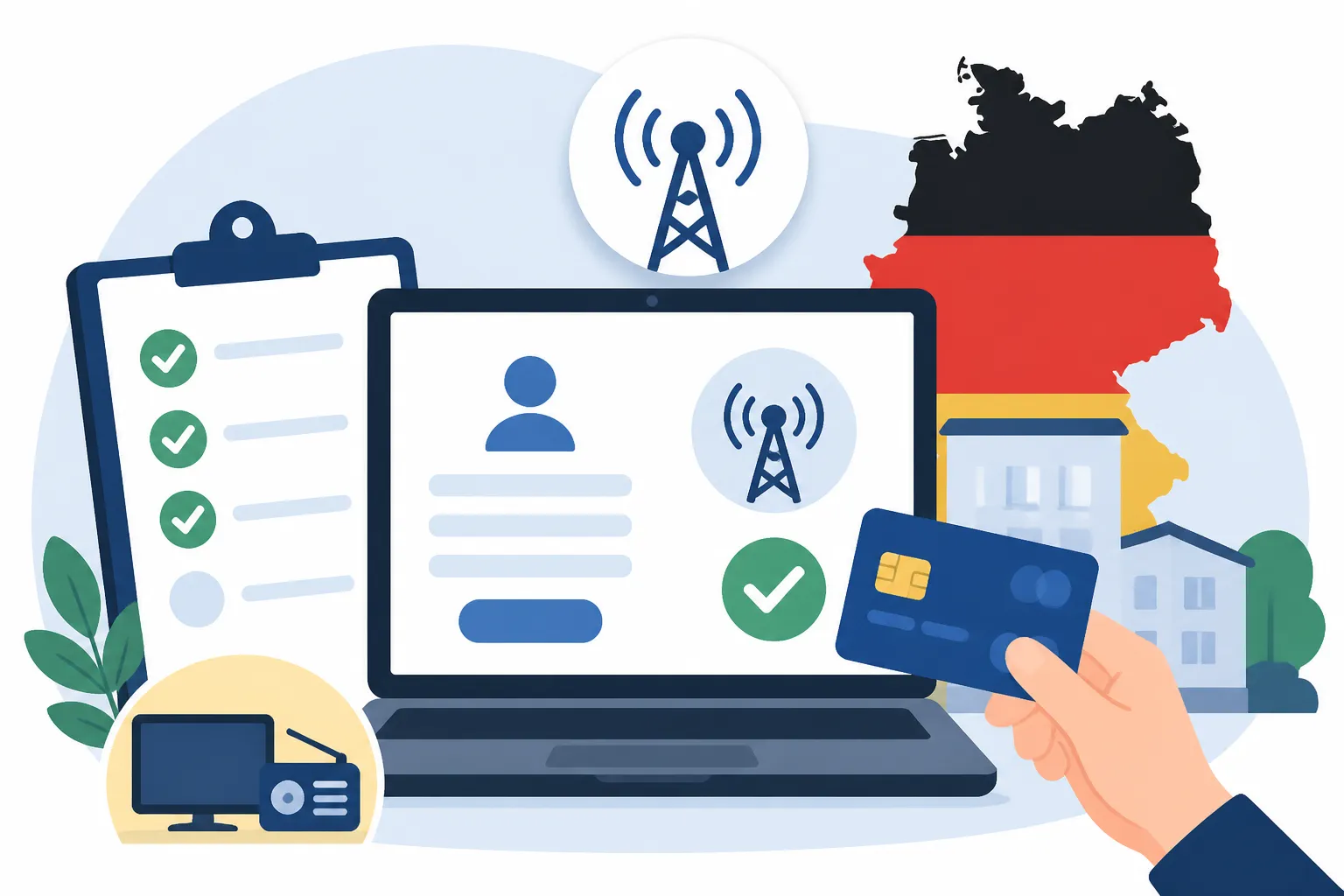
The easiest way to register is via their official website. You will be asked for your personal details, your date of move-in, and whether you are starting a new account or moving into an existing one. If you are setting up a new account, you will receive your own unique ten-digit Beitragsnummer. This number is your "ID" for all future communications with the service. For a better understanding of the types of mail you'll receive, check our guide on Understanding German Bills and Letters: Decoding Official Mail.
Payment Methods and Managing the Costs
As of the current regulations, the fee stands at €18.36 per month. While that might not seem like much, it adds up to over €220 per year, which is a significant chunk of an expat's Cost of Living in Germany: Budgeting Guide for Expats. You have a few options for how and when you pay this amount.
Choosing Your Payment Cycle
Most people choose to pay quarterly, but you can also opt for semi-annual or annual payments. Paying annually can be a great way to "set it and forget it," ensuring you don't have to think about that specific bill for another twelve months.
| Payment Frequency | Amount Due | Pros | Cons |
|---|---|---|---|
| Quarterly (3 months) | €55.08 | Standard option, easier on monthly cash flow. | Easy to forget if not on direct debit. |
| Semi-Annually (6 months) | €110.16 | Fewer transactions to track. | Larger lump sum required. |
| Annually (12 months) | €220.32 | Done for the year; no surprises. | Significant upfront cost. |
Direct Debit vs. Manual Transfer
I highly recommend setting up a "SEPA-Lastschrift" (Direct Debit). This allows the Beitragsservice to automatically deduct the fee from your account on the due date. Given how many things you have to manage when moving, from Opening a Bank Account in Germany: Step-by-Step for Newcomers to finding a job, automating your bills is a lifesaver. If you prefer manual transfers, you must be extremely diligent. They will not send you a bill every month; they expect you to know when the payment is due and to transfer it using your Beitragsnummer as the reference.
Special Scenarios for Expats and Travelers
Life as an expat is rarely a straight line. You might move apartments, leave the country for a few months, or stay in a hotel while waiting for your permanent rental. Each of these scenarios has its own rules regarding the Rundfunkbeitrag.
Moving Within Germany
When you move to a new apartment, you don't need a new Beitragsnummer. You simply log into the online portal and "update" your address. This is a crucial step. If you move and forget to update your details, the bills will continue to accumulate at your old address, and you may face "Säumniszuschläge" (late payment penalties). It’s a good idea to keep your documents organized; I found that buying a sturdy filing accordion from Amazon Germany was the best €15 I ever spent on my "German life" organization.
Leaving Germany Permanently
If you decide to leave Germany, you must "de-register" from the Rundfunkbeitrag. This is a separate step from your official Abmeldung at the city hall. You will need to provide a copy of your Abmeldung certificate as proof that you no longer reside in the country. If you forget this, the Beitragsservice will continue to bill you, and they have been known to pursue debts even across international borders.
Temporary Absences and Secondary Homes
If you have a secondary residence (Zweitwohnung) for work, you generally only have to pay the fee once for your primary home. However, you must apply for an exemption for the second home and provide proof of payment for the first. If you are just visiting or staying in a hotel, you are not responsible for the fee; the business owner handles it.
Common Pitfalls and How to Resolve Disputes
Even with the best intentions, things can go wrong. Maybe you moved into a WG where everyone thought someone else was paying, or perhaps you didn't realize you had to register separately from your spouse.
Dealing with "Double Billing"
If you and your partner both receive letters, only one of you should register. The other person should respond to the letter by stating that the fee is already being paid under the other person's Beitragsnummer. This is a common occurrence and usually resolved with a simple online form submission.
What Happens if You Don't Pay?
In my early, more "rebellious" years, I heard rumors that you could simply ignore the letters. Let me tell you from experience: that is a terrible idea. The Beitragsservice is a public-law entity, meaning they have significant power to collect debts. If you ignore the reminders, they will eventually send the case to a collection agency or the local "Finanzamt." This can negatively impact your The SCHUFA Credit Score in Germany: How It Works, making it impossible to rent a future apartment or get a mobile phone contract.
Understanding the Legal Changes
The rules around the broadcasting fee are subject to change based on court rulings and federal agreements.
Final Tips for a Stress-Free Experience
Dealing with the Rundfunkbeitrag doesn't have to be a source of constant stress. Once the initial registration is out of the way and your direct debit is set up, it becomes just another background noise of living in Germany.
- Keep your Beitragsnummer handy: Save it in a digital note or a physical folder. You will need it whenever you move or communicate with the service.
- Check your rental contract: Always clarify with your landlord if the "Nebenkosten" (utility costs) include the broadcasting fee. You can find more details in our guide on Understanding German Rental Costs: Kaltmiete, Warmmiete, Nebenkosten.
- Respond quickly: Even if you think you don't owe anything (e.g., you are moving into a WG), respond to the letters immediately to prevent the automated system from escalating your case.
The German system can be rigid, but it is also predictable. If you follow the steps, provide the documentation they ask for, and pay on time, you will never have an issue. It's just one more part of the unique experience of building a life in the Bundesrepublik.
Disclaimer
This article is for informational purposes only and does not constitute legal or financial advice. The regulations regarding the Rundfunkbeitrag in Germany can change, and individual circumstances may vary. Always consult the official Beitragsservice website or a qualified legal professional for the most up-to-date information regarding your specific situation.