Utilities Setup: How to Get Electricity, Gas, and Water in Your New Home
Moving into a beautiful Altbau only to realize you’re sitting in the dark because you didn’t know you had to register the electricity meter is a classic newcomer mistake. I spent my first night in a freezing Hamburg flat with only a phone flashlight to guide me. This guide solves the utility puzzle, walking you through the essential steps to get your power, gas, and water running efficiently.
Disclosure: This post may contain affiliate links. We may earn a commission at no extra cost to you if you make a purchase through these links. Read full disclosure.
The German Utility Landscape: What is Included and What is Not
Understanding Cold Rent versus Warm Rent
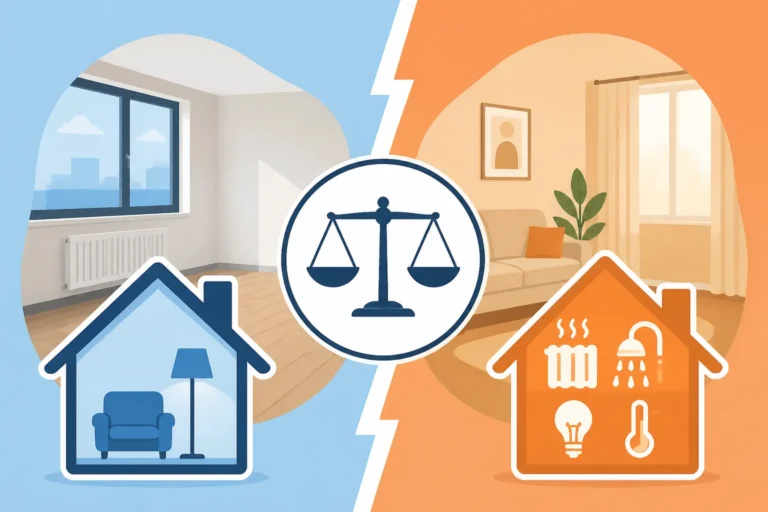
In Germany, the first thing you need to wrap your head around is the distinction between Kaltmiete (cold rent) and Warmmiete (warm rent). When you see a price on a listing, it is usually the cold rent—the price for the space alone. The warm rent adds on the Nebenkosten (ancillary costs), which typically cover water, trash collection, building insurance, and sometimes heating. If you are moving into a furnished apartment through Wunderflats, utilities are almost always bundled into the price, saving you from this initial administrative headache.
However, even with a warm rent contract, electricity is rarely included. You are expected to find your own provider and register the meter in your name. I remember the shock of receiving a bill for “estimated usage” that was nearly double what I expected because I didn’t understand that the previous tenant was a family of four, while I lived alone. It is vital to check your Understanding German Rental Contracts: Key Terms and Conditions to see exactly which utilities are handled by the landlord and which ones you need to tackle yourself.
If heating is not included in the Nebenkosten, you are likely dealing with a Gasetagenheizung (gas floor heating), meaning you have a boiler in your apartment. In this case, you must also register for gas independently.
The Grundversorger: The Default Safety Net
The moment you move in and flip a light switch, the lights will work. This is thanks to the Grundversorger—the default local utility provider. By law, they must provide power to every home. While this is incredibly convenient, it is also the most expensive way to pay for electricity. They will put you on a “basic” tariff that lacks any loyalty discounts or competitive rates. Many expats stay on this default plan for years simply because they don’t know they have a choice.
I lived on a Grundversorger plan for six months before a German friend told me I was essentially throwing money away. Switching away from the default provider is one of the most effective ways to lower your cost of living. You can find all the tools you need to manage your home energy, from smart meters to energy-efficient lightbulbs, on Amazon Germany, which helps you track usage before the final bill arrives.
To switch, you only need your meter number and your current meter reading. The new provider usually handles the cancellation with the Grundversorger for you.
The Annual Bill Shock: Why Estimates Matter
German utility companies operate on a system of Abschläge (monthly installments). They estimate your annual usage based on the size of the apartment or previous history and charge you a set amount every month. At the end of the year, they read the meter and perform a Jahresabrechnung (annual reconciliation). If you used more than they guessed, you get a massive bill; if you used less, you get a refund.
I once received a €400 bill in January because I had left the heaters on “3” all through a particularly brutal winter. It’s a painful way to learn about German energy efficiency. To avoid this, it is highly recommended to read your own meters every few months and report them via the provider’s app. If you notice your usage is higher than the installment, you can increase your monthly payment to avoid the “bill shock” later.
This system requires a bit of discipline. If you’re coming from a country where you pay for what you used the previous month, this forward-looking estimate can feel backwards. Using smart home plugs or energy monitors from Amazon Germany can help you see exactly which appliances are draining your wallet in real-time.
Setting Up Your Electricity: Choosing Your Own Provider
How to Compare and Switch Providers
The German electricity market is highly competitive, with hundreds of providers vying for your business. To find the best deal, most people use comparison portals like Check24 or Verivox. These sites allow you to enter your postal code and estimated annual usage (usually 1,500 kWh for a single person, 2,500 kWh for a couple) to see a list of available tariffs. Many of these plans offer a “sign-up bonus” (Wechselbonus), which can significantly lower your first-year costs.
When I first used these portals, I was overwhelmed by the options. A pro tip: look for “price guarantees” (Preisgarantie) that lock in your rate for 12 or 24 months. This protects you from sudden price hikes in the energy market. Also, pay attention to the notice period. A contract with a 12-month initial term and a 1-month notice period thereafter offers the best balance of stability and flexibility. If you are only in Germany for a few months, staying in a place from Wunderflats might be easier, as they manage these comparisons for you.
Once you pick a provider, the registration is done online. You’ll need your IBAN for the SEPA direct debit, your meter number (Zählernummer), and the date of your move-in. The meter is usually located in your hallway, the basement, or a dedicated cabinet in the stairwell. If you can’t find it, don’t be shy; ask your neighbor or the Hausmeister. This is a perfectly normal interaction in German Culture & Etiquette: A Guide to Social Life and Customs.
The Pros and Cons of Green Energy (Ökostrom)
Germany is a world leader in the Energiewende (energy transition), and you will see many “Ökostrom” (green electricity) options on comparison sites. These plans source power from renewable sources like wind, solar, and hydro. In many cases, these green plans are actually cheaper than the standard fossil-fuel-based plans because of government subsidies and competitive market entries.
The “pro” is obvious: you’re reducing your carbon footprint and supporting the transition to sustainable energy. Many of these providers also offer “regional” energy, where you’re supporting wind farms in your specific part of Germany. The “con” is that you need to check the certifications (like “ok-power” or “Grüner Strom”) to ensure the provider is actually investing in new renewable plants rather than just buying carbon offsets.
I’ve found that switching to Ökostrom was one of the easiest “green” changes I could make. It took ten minutes at my computer and didn’t cost a cent more. If you’re looking to make your home even more sustainable, you can find solar-powered chargers and energy-saving gadgets on Amazon Germany to complement your green energy plan. This aligns well with the general German Culture & Etiquette: A Guide to Social Life and Customs regarding environmental responsibility.
Reading Your Meter and Reporting Data
Your meter reading (Zählerstand) is the most important number in your relationship with the utility company. When you move in, you must record this number on your Übergabeprotokoll (handover protocol). If you don’t, the provider might charge you for electricity used by the previous tenant before they moved out. Take a photo of the meter with your phone so you have a time-stamped record.
Most modern providers allow you to submit your reading via their app once or twice a year. If you don’t submit a reading, they will “estimate” your usage, which is almost always in their favor. I once forgot to submit my reading and was overcharged for three months until the correction was finally processed. It’s a bureaucratic headache you don’t want.
If the meter is in a dark basement, I highly recommend getting a reliable flashlight or a headlamp from Amazon Germany so you can read the dials clearly. Those old analog meters with spinning wheels can be tricky to read in the dim light of a Berlin Keller.
Managing Gas and Heating Setup
Central Heating versus Gas Floor Heating
How you handle gas depends entirely on your building’s infrastructure. If your building has Zentralheizung (central heating), the landlord handles the gas or oil contract for the whole building. You simply pay a share of the total cost through your Nebenkosten. This is the “set it and forget it” option. You just turn the dial on the radiator and stay warm.
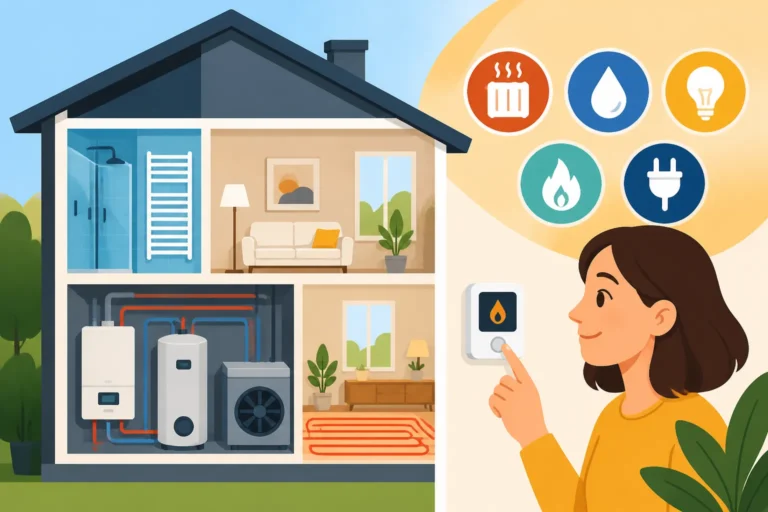
However, many older apartments have Etagenheizung (gas floor heating). This means you have your own boiler inside your flat—usually in the kitchen or bathroom—that provides both heating and hot water. In this scenario, you must register your own gas meter just like you did with electricity. The same comparison portals apply here. I actually prefer this because I have total control over my usage, but it does mean another bill to manage.
If you have your own boiler, it must be serviced once a year by a technician. This is usually the landlord’s responsibility to organize, but you might have to pay for it as part of your ancillary costs. If you’re unsure which system your potential flat has, ask during the viewing.
How to Register a Gas Meter
The process for registering a gas meter is nearly identical to electricity. You find your local Grundversorger for gas, but then immediately look for a cheaper alternative on a comparison site. You will need the Zählernummer (meter number), which is separate from your electricity meter. Gas meters are often quite large and bulky, frequently tucked away in a kitchen cupboard or high up on a wall in the hallway.
Once registered, you’ll pay a monthly installment based on the square footage of your apartment. Be aware that gas prices can be volatile. If you are moving in during the summer, don’t be fooled by low initial bills; the real cost hits in November when the radiators start humming. If you find the air gets too dry from the gas heating, you can pick up a good humidifier or radiator-mounted water trays on Amazon Germany to keep the climate comfortable.
If you are using a furnished apartment from Wunderflats, the gas and heating are typically included, which is a massive relief during the winter months when gas bills can triple. They handle the registration and the annual reconciliation, so you don’t have to worry about the “bill shock” after you’ve already moved out.
Avoiding Common Gas Pitfalls
The biggest mistake people make with gas heating is leaving the windows tilted (auf Kipp) while the heaters are on. This is a massive waste of energy and will drain your bank account faster than almost anything else. Germans practice Stoßlüften—opening the windows wide for five minutes to change the air and then closing them tight. This keeps the walls warm while refreshing the oxygen.
Another pitfall is not understanding the “Star” or “Moon” icons on the radiator dial. The “Star” (*) is the frost protection setting; it won’t let the pipes freeze but won’t heat the room. For a comfortable living room, you usually want it on “3” (around 20°C). If you find your radiators are making a gurgling sound or aren’t getting hot at the top, you probably need to “bleed” the air out of them. You can buy a radiator key for a few euros on Amazon Germany and fix it yourself in two minutes.
Managing your heating effectively is part of the German Culture & Etiquette: A Guide to Social Life and Customs. Neighbors will actually look at your windows and judge you if you leave them open in December while your heater is blasting. It’s an unwritten rule of German apartment life that everyone contributes to the building’s energy efficiency.
Water and Waste Management: The Automatic Setup
Understanding Water Registration
The good news: you almost never have to register for water yourself. In 99% of German rental situations, the water supply is managed by the landlord or the building management (Hausverwaltung). The costs are bundled into your Nebenkosten and paid as part of your warm rent. There isn’t a “market” for water like there is for electricity, so there’s no need to compare providers.
However, you should still know where your water meter is. It’s usually under the sink or in the bathroom behind a small plastic panel. Recording the reading when you move in is crucial because the landlord will use this to calculate your share of the building’s water bill. If you have a leak, you need to report it to the Hausmeister immediately.
If you find the tap water in your city is particularly “hard” (high mineral content), which is common in Berlin and Munich, it will leave white limescale on everything. To protect your kettle and coffee machine, most expats buy a water filter pitcher or descaling tablets from Amazon Germany. It saves you from having to replace your appliances every year.
Trash Collection and Recycling Fees
Trash collection is another utility that is handled automatically. The building pays a fee to the city for the various bins (Mülltonnen) in the courtyard, and you pay your share via the ancillary costs. Germany is famous for its strict recycling rules: Blue for paper, Yellow for plastic/metal, Brown for organic, and Black for residual waste.
If you don’t separate your trash correctly, the city can fine the building, and the landlord can pass those fines on to the tenants. I’ve lived in buildings where the Hausmeister would actually leave notes on the bins if people were being sloppy. To stay organized, I recommend getting a multi-compartment bin for your kitchen from Amazon Germany. It makes the trip down to the courtyard much easier.
It’s not just about the environment; it’s about communal responsibility. If you have large items like old furniture to get rid of, you cannot just leave them by the bins; you must schedule a Sperrmüll (bulky waste) pickup with the city.
The Nebenkostenabrechnung Explained
Once a year, usually in the summer or autumn, you will receive a thick envelope containing the Nebenkostenabrechnung. This is the detailed breakdown of every cent spent on the building’s utilities and maintenance over the previous year. It covers water, trash, hallway cleaning, gardening, and sometimes heating. If the landlord’s estimate (your monthly Vorauszahlung) was too low, you’ll be asked to pay the difference.
This document is notoriously difficult to read, even for Germans. If the numbers look wildly off, you have the right to ask the landlord for the original invoices. This is a situation where being a member of a Mieterverein (Tenants’ Association) is invaluable. They can review the bill for you and ensure the landlord isn’t charging you for things they shouldn’t.
If you move out mid-year, the landlord can keep a portion of your security deposit until the final utility bill is settled, which can take up to a year. This is a frequent point of frustration for expats.
Comparing Utility Provider Types
| Provider Type | Cost Level | Flexibility | Best For |
| Grundversorger (Default) | High | Very High (2-week notice) | First 2 weeks, short-term stays |
| Competitive National Provider | Moderate | Low (12-24 month contracts) | Long-term residents, budget-conscious |
| Green Energy (Ökostrom) | Moderate/Low | Varies | Environmentally conscious tenants |
| All-Inclusive (Wunderflats) | High (Bundled) | High | New arrivals, business travelers |
Practical Tips for Managing Your Utilities
Finding Your Meters (Zählernummer)
Finding your meters can feel like a scavenger hunt. In many Altbaus, the electricity meters are all clustered together in a dark room in the basement. You’ll need to look for the one that has your name or your apartment number (Wohnungsnummer) on it. Sometimes the landlord uses a specific internal code that matches your contract. If the meters aren’t labeled, you might need to turn off all your lights and see which wheel stops spinning—I’ve actually had to do this!
Gas meters are usually in the flat itself, but water meters can be hidden behind small hatches in the wall. Once you find them, write down the Zählernummer. This is a permanent number on the meter that identifies the hardware itself. You need this number when you sign up with a new provider. To keep all this info organized, I use a dedicated “moving binder” I bought on Amazon Germany to store my contract, handover protocol, and meter photos.
If you are staying in a temporary apartment from Wunderflats, the provider will usually have these numbers on file and can provide them if you ever need to check your usage.
IBAN and SEPA: The Payment Standard
In Germany, almost all utility bills are paid via Lastschrift (SEPA direct debit). This means the company automatically takes the money from your bank account every month. To set this up, you need a German (or Eurozone) bank account with an IBAN. If you haven’t opened a bank account yet, you might struggle to sign a contract with a competitive provider.
If you prefer to pay manually, be aware that companies often charge a “convenience fee” for not using direct debit. Plus, missing a payment in Germany can lead to “Mahnschreiben” (reminder letters) with hefty late fees. Set up the direct debit and just check your statements once a month.
Dealing with Price Increases
If your utility company decides to raise their prices, they must notify you in writing at least six weeks in advance. When this happens, you have a “Sonderkündigungsrecht” (special right of termination). This allows you to cancel your contract and switch to a cheaper provider even if you are still within your initial contract term.
I always keep an eye on my mail for these letters. They often look like boring marketing mail, but they are legally significant. If you’re worried about rising energy costs, investing in smart thermostats or heavy curtains from Amazon Germany can help you reduce the amount of energy you need to buy in the first place.
References
Primary sources (official)
- Bundesnetzagentur (Federal Network Agency) – Consumer Guide: https://www.bundesnetzagentur.de/EN/Areas/Energy/Consumer/EnergyContracts/energycontracts_node.html
- Verbraucherzentrale (Consumer Advice Center) – Utility Costs: https://www.verbraucherzentrale.de/wissen/energie/preise-tarife-anbieterwechsel/strom-oder-gas-anmelden-beim-einzug-darauf-sollten-sie-achten-10515
Other helpful sources
- Check24 – Energy Comparison Tool: https://www.check24.de/strom/
Disclaimer
The information provided in this guide is for informational purposes only and is based on personal expat experiences and general market conditions in Germany. Utility regulations, pricing models, and specific contract terms can vary significantly by region and individual provider. This guide does not constitute legal or financial advice. Always read your specific rental contract and utility terms carefully. For complex disputes, we recommend consulting a local Tenants’ Association (Mieterverein) or a certified legal advisor.