Heating and Utilities in a German Home
Staring at my first German utility statement felt like trying to decode an ancient manuscript while my bank account balance hung in the balance. I remember the sheer panic of receiving a €500 "Nachzahlung" (extra payment) after my first winter because I didn't understand how the heating cycles worked. This guide breaks down the complex German utility system, from the mystery of the "second rent" to the cultural obsession with ventilation, ensuring you stay warm without going broke.
Disclosure: This post may contain affiliate links. We may earn a commission at no extra cost to you if you make a purchase through these links. Read full disclosure.
Understanding the German Utility Structure and the Second Rent
In Germany, your monthly housing cost is almost never just the number you see on the listing. We often refer to utilities as the "second rent" (zweite Miete) because they can easily add 25% to 35% to your base living costs. When you are browsing for apartments, you will encounter two primary terms: Kaltmiete (cold rent) and Warmmiete (warm rent). The Kaltmiete is simply the price for the space itself, while the Warmmiete includes the "Nebenkosten" or service charges.
Understanding German Rental Costs: Kaltmiete, Warmmiete, Nebenkosten is the first hurdle every expat must clear. The Nebenkosten typically cover things like building insurance, property taxes, chimney sweeping, stairwell cleaning, and often water and heating. However, "Warmmiete" is frequently a bit of a misnomer; it usually does not include your personal electricity or internet. This means even after paying your warm rent, you still have separate contracts to sign.
One thing I wish someone had told me early on is that your monthly utility payment is actually a "Vorauszahlung" (prepayment). The landlord estimates how much you will use based on the previous tenant’s habits. At the end of the year, you receive a "Nebenkostenabrechnung," a detailed reconciliation. If you used less than the estimate, you get a refund (Guthaben). If you used more—usually because of a particularly brutal winter or a love for long, hot showers—you will receive a bill for the difference. This annual settlement is a source of great anxiety for many, as it can arrive up to twelve months after the billing period ends.
If you are looking for a more predictable experience, especially during your first few months, platforms like Wunderflats can be a lifesaver. They specialize in furnished apartments where the utilities are often bundled into a single, flat monthly fee. This removes the guesswork and the risk of a massive end-of-year bill, which is incredibly helpful when you are still trying to figure out how many layers of wool you need to survive a Berlin January.
Heating Your German Home and the Art of Ventilation
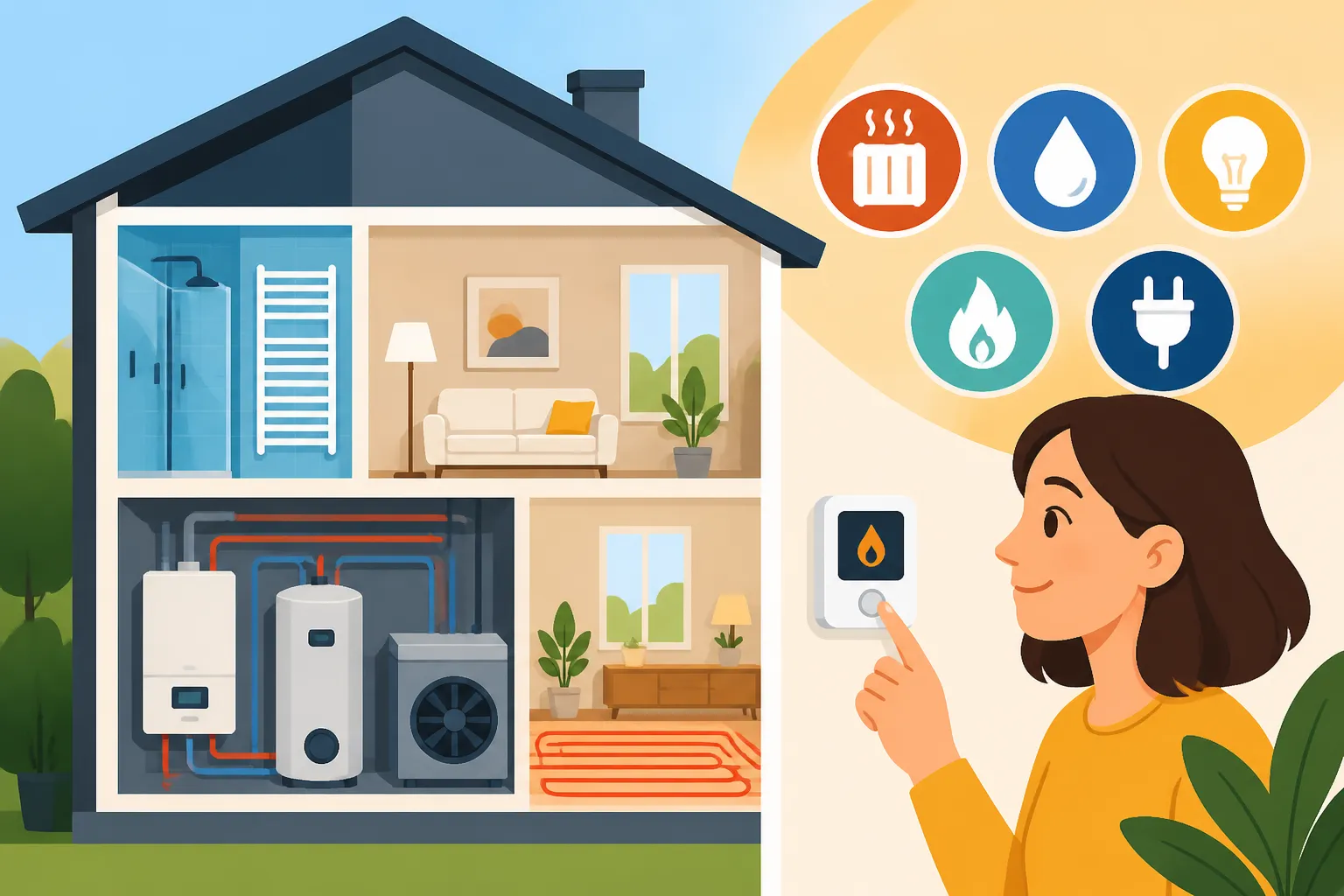
Heating is the single largest component of your utility bill and the most common source of conflict between tenants and landlords. Most German homes use one of three systems: central gas heating, district heating (Fernwärme), or oil heating. District heating is particularly common in larger cities and former East German states; it involves hot water being piped directly from a local power plant into your radiators. It is generally efficient, but you are locked into whatever the local utility provider charges.
The radiators themselves are usually equipped with a thermostatic valve labeled with numbers 1 through 5, rather than specific temperatures. This is a common point of confusion. Setting the dial to 3 typically maintains a room temperature of about 20°C. If you turn it to 5, the radiator won't get "hotter" faster; it will simply keep heating until the room reaches roughly 28°C, which is a fantastic way to burn through your budget. For those who want more control, you can find smart thermostatic valves on Amazon Germany that allow you to program heating schedules from your phone, ensuring you aren't heating an empty apartment while you are at work.
Then, there is the cultural phenomenon of "Lüften." German landlords are terrified of mold (Schimmel), and the way the buildings are insulated makes them very airtight. To prevent moisture buildup, you are expected to practice "Stoßlüften" (shock ventilation). This involves opening your windows completely for 5 to 10 minutes, twice a day, even in the dead of winter. It sounds counterintuitive to let all the cold air in, but it replaces the humid air with dry air, which actually heats up faster and prevents expensive mold damage that you might otherwise be liable for.
| Heating Scale | Approx. Temperature | Recommended Usage |
|---|---|---|
| * (Snowflake) | 6°C | Frost protection (prevents pipes from freezing) |
| 1 | 12°C | Rarely used, perhaps for storage rooms |
| 2 | 16°C | Bedroom at night or when you are away |
| 3 | 20°C | Standard living area temperature |
| 4 | 24°C | Bathroom or for those who get cold easily |
| 5 | 28°C | Maximum setting (rarely necessary and expensive) |
Electricity and Choosing Your Energy Provider
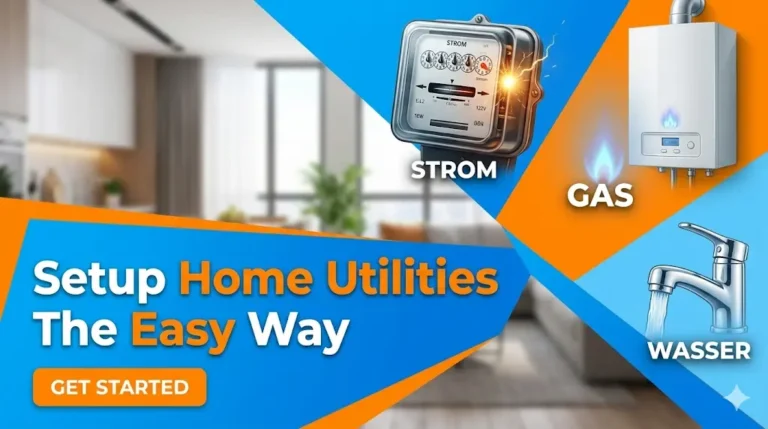
Unlike heating, which is usually tied to the building, electricity (Strom) is almost always a personal contract that you must set up yourself. When you move in, you are automatically placed on the "Grundversorgung" (basic supply) plan with the local provider (like Vattenfall in Berlin or SWM in Munich). While this ensures the lights stay on the moment you get your keys, it is almost always the most expensive tariff available.
To save money, you should switch to an alternative provider as soon as possible. Germany has a highly competitive energy market with hundreds of providers, many of which offer "Ökostrom" (green energy from renewable sources). When comparing plans, look closely at the "Arbeitspreis" (the price per kilowatt-hour) and the "Grundpreis" (the fixed monthly base fee). Some providers offer seductive sign-up bonuses, but be careful—these often come with a 24-month commitment, and the price might jump significantly in the second year.
How to Set Up Electricity in a German Apartment is a critical step in your relocation checklist. You will need your meter number (Zählernummer) and the current reading (Zählerstand) from the day you moved in. This information should be on your apartment handover protocol (Übergabeprotokoll). Make sure you take a photo of the meter yourself; I’ve seen enough "clerical errors" over the years to know that having your own evidence is vital. You will pay a monthly "Abschlag" (installment) based on your estimated usage, with an annual reconciliation similar to the heating system.
Water, Waste Management, and the Broadcast Fee
Water usage in Germany is typically calculated by the building and divided among the tenants based on either the square footage of the apartment or the number of people living there. However, newer or renovated apartments often have individual water meters under the sink or in the bathroom. Germans are very water-conscious; you’ll notice that most toilets have dual-flush buttons and many people avoid running the tap while brushing their teeth. It’s not just for the environment—water and sewage fees are quite high here.
Waste management is another utility cost included in your Nebenkosten, and it is intrinsically linked to the famous German recycling system. Waste Sorting in Germany (Mülltrennung) and Pfand is something you need to master quickly. If a building’s residents don’t sort their trash correctly, the waste disposal company can charge "fines" or extra fees for contaminated bins, which the landlord will then pass on to the tenants. You’ll usually find bins for Bio (organic), Papier (paper), Wertstoffe (packaging/plastic), and Restmüll (everything else) in the courtyard.
Then there is the "Rundfunkbeitrag," often called the TV tax. This is a mandatory fee of €18.36 per month that every household must pay, regardless of whether you own a television or even speak German. It funds public broadcasting (ARD, ZDF, and Deutschlandradio). Shortly after you complete your The Anmeldung: Registering Your Address in Germany, you will receive a letter in the mail asking for payment. You cannot opt out, and ignoring the letters will only lead to late fees and eventually a visit from a bailiff. It is one of those unavoidable quirks of German life that you just have to factor into your monthly budget.
Staying Connected: Internet and Mobile Data
Setting up home internet in Germany can be a test of patience that rivals any visa application. The market is dominated by a few giants like Telekom, Vodafone, and O2, but there are many regional players as well. One thing to be aware of is the "Mindestlaufzeit" (minimum contract duration). Most standard contracts last for 24 months. If you are only in Germany for a short time, you should specifically look for "monatlich kündbar" (monthly cancelable) options, though these often come with higher upfront connection fees.
How to Choose an Internet Provider in Germany requires checking which technology is available at your specific address. While fiber optic (Glasfaser) is slowly rolling out, many buildings still rely on DSL or Cable. I always recommend checking the availability on the provider's website before signing anything. Also, be prepared for the "Techniker-Termin." You might have to wait two to four weeks for a technician to come and activate your line, and they usually give you a four-hour window during which you must be home.
While you are waiting for your home internet to be installed, or if you’ve just landed and need immediate data to navigate the S-Bahn, Airalo is an excellent temporary solution. You can download an eSIM and get local data instantly without having to find a physical store or deal with the German ID verification process for local SIM cards. Once you are settled, you can transition to a long-term mobile plan, which are generally quite affordable and often include unlimited calling within the EU.
Managing Your Bills and Financial Planning
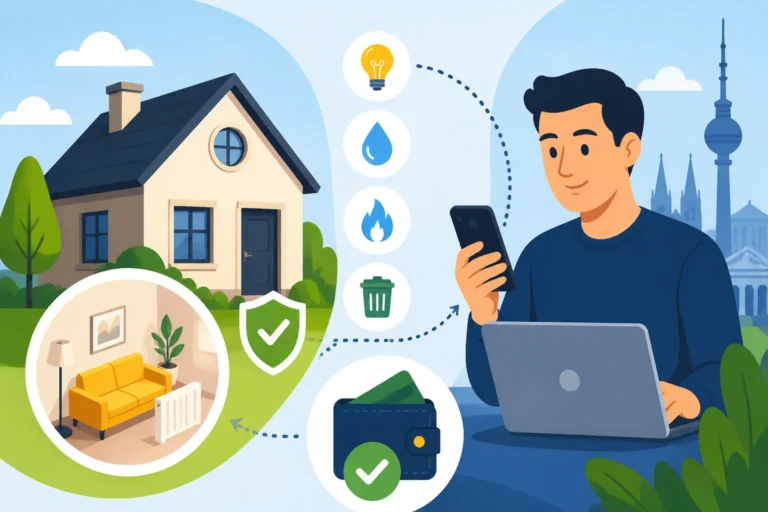
Managing utilities in Germany is almost impossible without a local bank account. Most providers—for electricity, internet, and even the gym—prefer to use a SEPA Lastschrift (direct debit). This means they automatically pull the monthly amount from your account. It saves you from forgetting a bill, but it also means you need to ensure your account is always sufficiently funded to avoid "Rücklastschrift" (returned check) fees, which are usually around €5 to €10 per failed attempt.
Opening a Bank Account in Germany: Step-by-Step for Newcomers should be one of your first priorities. Once you have your IBAN, you can set up "Daueraufträge" (standing orders) for your rent and your utilities. It is also wise to keep a "utility buffer" in your savings. Because of the annual reconciliation (Abrechnung), you might go all year thinking your expenses are under control, only to be hit with a €300 bill in April because the price of heating oil went up.
If you ever feel that your Nebenkostenabrechnung is incorrect—and statistics show that a significant percentage of them are—you have the right to inspect the original invoices. Many expats join a "Mieterverein" (tenants' association). For a small annual fee, they provide legal advice and can review your utility bills to ensure your landlord isn't overcharging you for things like "admin fees" that should legally be covered by the base rent. It's a bit of extra bureaucracy, but in Germany, being "right" and having the paperwork to prove it is the ultimate form of security.
Estimated Monthly Utility Costs for an Expat in Germany
The following table provides a rough estimate of monthly utility costs. Please note that these vary wildly based on the age of the building (Altbau vs. Neubau), your personal habits, and the current energy market prices.
| Utility Type | Single Person (Apt ~50sqm) | Family of 4 (Apt ~100sqm) | Frequency |
|---|---|---|---|
| Heating & Water (Nebenkosten) | €100 – €180 | €250 – €400 | Monthly (Prepayment) |
| Electricity (Strom) | €45 – €70 | €120 – €180 | Monthly (Contract) |
| Internet (Home) | €30 – €50 | €40 – €60 | Monthly (Contract) |
| Mobile Phone | €10 – €30 | €40 – €100 | Monthly (Per Person) |
| Broadcast Fee (TV Tax) | €18.36 | €18.36 | Monthly (Per Household) |
| Total Est. Utilities | €203 – €348 | €468 – €758 | "The Second Rent" |
Disclaimer Regarding Financial and Legal Advice
This guide is intended for informational purposes only and is based on personal experiences and general knowledge of the German housing market. Utility prices, laws, and regulations in Germany are subject to frequent changes. We are not legal professionals or tax advisors. You should always verify the terms of your specific rental contract and utility agreements. For disputes regarding your utility bills or rental rights, we strongly recommend contacting a local Mieterverein (tenants' association) or a qualified legal professional specializing in German tenancy law.