Hamburg, Bremerhaven, or Rotterdam? Choosing a Port of Entry for Germany
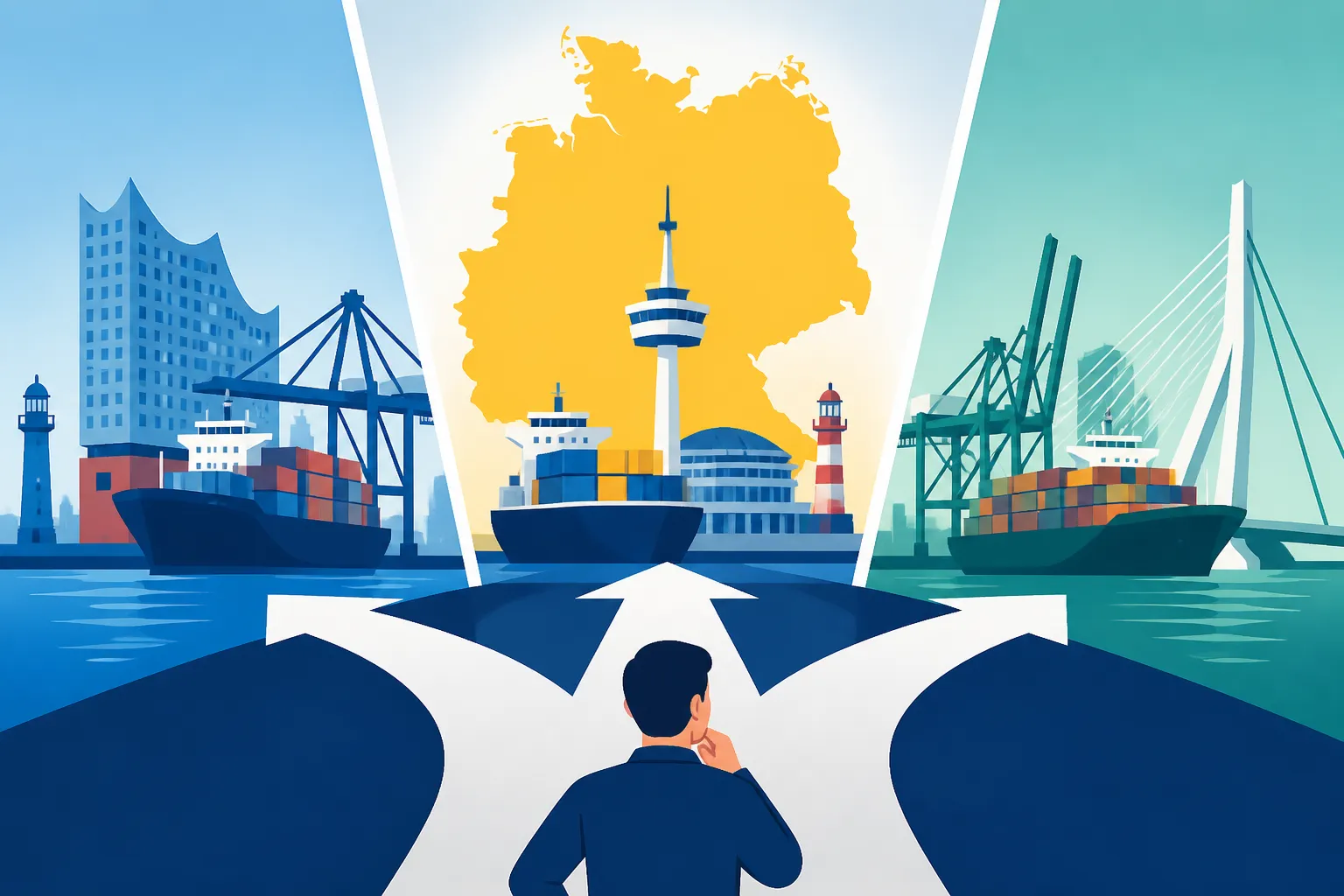
Ah, the joys of moving internationally! You’ve probably spent countless hours envisioning your new life in Germany, maybe even picturing your first German beer or stroll through a charming Christmas market. But then reality hits: how do you even get all your stuff here? And, perhaps more importantly, which port should it arrive at? This decision, often overlooked until the last minute, can make a huge difference in cost, time, and stress. It’s not just about picking a name on a map; it’s about understanding the logistics, customs, and potential headaches associated with each entry point. This guide is here to help you unpack the complexities of choosing between Hamburg, Bremerhaven, and even Rotterdam for your German adventure.
Disclosure: This post may contain affiliate links. We may earn a commission at no extra cost to you if you make a purchase through these links. Read full disclosure.
Understanding the Big Picture: Why Your Port of Entry Matters
When you’re shipping your entire life across oceans, the port your belongings land in isn’t just a random stop. It’s the very first point of contact with a new country’s logistical and customs systems. Think of it as the gatekeeper to your new German home. The choice you make here can significantly impact your moving experience, influencing everything from the final bill to the timeline for receiving your precious cargo. Many expats, myself included, have learned this the hard way – assuming all ports are created equal is a rookie mistake.
More Than Just a Map Dot: Costs and Logistics
The location and operational specifics of a port directly translate into costs. For instance, a port further away from your final destination in Germany will incur higher inland transportation costs, whether by truck or train. This is often an "invisible" cost that movers factor into their quotes, sometimes without breaking it down. You might get a seemingly good shipping rate to Rotterdam, but then the final mile to, say, Dresden, eats up all your savings. It’s not just about the sea journey; it’s about the entire journey from your old home to your new doorstep. This is where a service like Sirelo can be incredibly helpful, as they often connect you with movers who can provide comprehensive quotes that cover the entire journey, not just the port-to-port leg.
Furthermore, different ports specialize in different types of cargo. Some are better equipped for large containers, others for vehicles, and some have more efficient processes for consolidated shipments (where your belongings share a container with others). Choosing a port that isn't optimized for your specific shipment type can lead to delays, additional handling fees, or even the need for transshipment to another facility, which again, means more money out of your pocket and more time waiting.
Customs, Delays, and German Bureaucracy
Ah, German bureaucracy. It's legendary, isn't it? Even at the border. While German customs regulations are generally consistent across all German ports, the efficiency and volume of operations at each port can influence how quickly your shipment clears. A busier port might mean longer queues for inspections, especially during peak moving seasons. Additionally, if your chosen port doesn't have direct customs facilities or specialized staff for certain imports, your goods might need to be moved to an internal customs warehouse for clearance, adding another layer of complexity and potential delay.
Moreover, if you choose a non-German port like Rotterdam, your goods technically clear customs within the EU, but still need to formally "enter" Germany. While this isn't usually a major hurdle within the Schengen Area, it can sometimes add an extra administrative step or two, particularly if there are specific German import declarations or tax considerations that need to be addressed. Navigating these details can feel overwhelming, especially when you're already juggling so much with your new life in Germany. Getting help from a seasoned moving professional, often found through platforms like Sirelo, can save you from a lot of head-scratching over customs forms and regulations. Don't forget, understanding things like your residency status and the specifics of tax-free imports for new residents, covered in guides like Moving Your Belongings to Germany: Customs Duties and Tax-Free Imports for New Residents, is absolutely crucial here.
Deep Dive: Hamburg – Germany's Northern Powerhouse
Hamburg, often referred to as Germany’s "Gateway to the World," is by far the largest port in Germany and the second busiest in Europe. It's a massive, bustling hub with incredible capacity and connectivity. For many moving to Germany, especially those settling in the northern or eastern regions, Hamburg is often the first port that comes to mind, and for good reason.
Pros of Choosing Hamburg
One of Hamburg’s biggest advantages is its sheer size and infrastructure. It handles an enormous volume of container traffic, meaning there are frequent shipping lines from virtually every corner of the globe. This high frequency can often translate into more flexible shipping schedules and potentially better rates for the sea leg of your journey. Many major international shipping companies have a strong presence here, which can simplify coordination if you're working with a large, established moving company.
Furthermore, Hamburg boasts excellent onward connectivity into the German interior. It has extensive rail links, a vast network of highways, and even inland waterways that can transport goods efficiently across the country. If your final destination is Berlin, Hanover, Leipzig, or even further south, Hamburg’s integrated transportation network makes it a very practical choice. Most reputable German moving companies will have established relationships and logistical pipelines directly from Hamburg, streamlining the process of getting your household goods from the port to your new home. This robust infrastructure can reduce inland transit times and often, overall costs, compared to smaller or less connected ports.
Cons and Considerations for Hamburg
Despite its many advantages, Hamburg isn't without its potential drawbacks. Being such a large and busy port, it can sometimes experience congestion. This means that while ships might arrive frequently, there can be delays in offloading and customs clearance, especially during peak seasons. Imagine your container waiting in a queue of hundreds of others – it happens. This can add a few unexpected days to your timeline, which feels like an eternity when you're sleeping on an air mattress and waiting for your furniture.
Another point to consider is the sheer scale of the port operations. While efficient, the vastness can sometimes make communication feel impersonal or slow if you're dealing directly with port authorities rather than through a dedicated moving agent. For those living in the far south or west of Germany, the inland transport from Hamburg might be longer and more expensive than from a closer alternative, making it essential to compare the total logistical chain. Remember, it's not just about the port, but the entire journey to your new home.
The Specialist: Bremerhaven – Germany's Dedicated Car & Container Hub
Just north of Bremen, Bremerhaven is another significant German port, often overshadowed by its massive neighbor Hamburg. However, for specific types of cargo, particularly vehicles, Bremerhaven truly shines as a highly specialized and efficient option. It plays a crucial role in Germany's logistics landscape.
Why Bremerhaven Shines for Certain Shipments
Bremerhaven has earned a stellar reputation, especially for importing and exporting vehicles. If you're planning to bring your car with you to Germany, this port is often the go-to choice. It has state-of-the-art facilities for RoRo (Roll-on/Roll-off) shipping, meaning vehicles can be driven directly onto and off the ships, minimizing handling and potential damage. Their processes for vehicle customs clearance and processing are highly streamlined, reflecting their long-standing expertise in this niche.
Beyond cars, Bremerhaven also handles a substantial amount of container traffic, acting as a vital complement to Hamburg. For those moving to the northwest regions of Germany, like Bremen, Oldenburg, or even parts of the Ruhr area, Bremerhaven can be geographically advantageous, potentially offering shorter inland transport routes and lower costs compared to Hamburg. Many moving companies that specialize in household goods will also utilize Bremerhaven, especially if they have established depots or logistics partners in the immediate vicinity.
Potential Drawbacks of Bremerhaven
While excellent for vehicles and regional connections, Bremerhaven might not always offer the same frequency of direct container services from every origin country as Hamburg. This could mean that your container might need to be transshipped at another major hub first, potentially adding a bit of time or an extra step to the journey. For very unique or oversized cargo that isn't a vehicle, Hamburg often has a broader range of specialized equipment and services.
Another consideration is that while efficient for its core business, the smaller scale compared to Hamburg means it might have less capacity during peak times for general container cargo, potentially leading to slight delays if your shipment arrives amidst a flurry of other imports. As always, it's about matching your specific needs with the port's strengths. This is where getting professional advice, perhaps from a service like Sirelo, can provide invaluable clarity by connecting you with movers who have direct experience with both ports and can advise based on your origin and final destination.
The European Gateway: Rotterdam – A Dutch Contender
Now, let's talk about Rotterdam. While not in Germany, this Dutch port is actually the largest port in Europe and one of the busiest in the world. It’s a massive logistical hub that plays a significant role in getting goods into Germany, especially for those destined for the western and southern parts of the country. Many international movers automatically route shipments through Rotterdam due to its immense capacity and global connections.
Advantages of an EU Super-Port like Rotterdam
Rotterdam's primary advantage lies in its unparalleled global connectivity and sheer size. It handles a truly astonishing volume of cargo, which often means an even greater frequency of sailings and a wider array of direct routes from many international origins compared to any single German port. This can sometimes translate into faster transit times across the ocean and potentially more competitive shipping rates for the sea journey, simply due to economies of scale and intense competition among carriers.
Beyond its size, Rotterdam boasts incredibly advanced infrastructure and highly efficient operations. It's a marvel of modern logistics, equipped to handle virtually any type of cargo with speed and precision. For those moving to cities in western Germany like Cologne, Düsseldorf, or Frankfurt, Rotterdam can actually be a more direct and logistically sound choice than Hamburg or Bremerhaven, which would require trucking goods across a greater distance within Germany itself. When your goods arrive in Rotterdam, they technically clear EU customs there, simplifying their subsequent movement across the German border, though specific German import regulations still apply, of course. For those worried about the general cost of living in Germany, optimizing your moving costs by choosing an efficient port like Rotterdam and a good moving company can make a real difference.
The "Extra Mile" – Distances and Customs for Germany
The main "con" of using Rotterdam for a move to Germany is, quite obviously, that it's not in Germany. This means your goods will need to be transported an extra distance by road or rail from the Netherlands into Germany. While this distance might be shorter for western German cities than from a northern German port, it's still an additional leg that adds to the total inland transportation costs and time. You might save on the ocean freight, but you could spend more on the overland journey.
From a customs perspective, while your goods clear EU customs in Rotterdam, there’s still the administrative step of ensuring all German import requirements are met, particularly if you're importing personal effects as a new resident to claim tax exemptions. Your moving company will typically handle this, but it’s an extra layer of coordination compared to clearing everything directly at a German port. So, while Rotterdam offers incredible efficiency, you absolutely need a reputable moving company that is adept at cross-border logistics within the EU to manage the transition smoothly. This is precisely why engaging with a platform like Sirelo is so beneficial; they connect you with experienced international movers who can navigate these multi-country logistical challenges with expertise.
Making Your Choice: Factors to Consider for Your Move
Deciding on the best port isn't a one-size-fits-all situation. It truly depends on your individual circumstances, the nature of your shipment, and your final destination in Germany. Don't let yourself be rushed into a decision without considering these critical factors.
Shipment Type and Size: Does It Fit the Port?
This is perhaps the most crucial factor. Are you shipping a full container load (FCL) of household goods, or just a few boxes that will be part of a consolidated shipment (LCL)? If you're bringing a car, Bremerhaven immediately jumps to the forefront. For general household items, all three ports are viable, but the volume can influence the best fit.
For a massive FCL shipment, Hamburg and Rotterdam, with their high volume and frequent departures, might offer better overall efficiency. If you're sending a smaller LCL shipment, the consolidation process might be more streamlined at a larger hub like Rotterdam or Hamburg, simply because they handle more LCL cargo and can fill containers faster. This reduces the waiting time for your consolidated container to depart. Always discuss the specifics of your cargo with potential movers. Many movers on platforms like Sirelo have deep insights into which ports are best for different types of goods, and they can guide you toward the most cost-effective and efficient solution for your specific needs.
Your Final Destination in Germany: Inland Logistics
Where in Germany are you ultimately going? This makes a huge difference.
- Northern/Eastern Germany (e.g., Berlin, Hanover, Leipzig): Hamburg is often the most logical and cost-effective choice due to its direct rail and road connections into these regions.
- Northwestern Germany (e.g., Bremen, Oldenburg, Ruhrgebiet): Bremerhaven can be an excellent option, especially if it provides a shorter or more direct inland route than Hamburg.
- Western/Southern Germany (e.g., Cologne, Düsseldorf, Frankfurt, Munich, Stuttgart): Rotterdam often becomes a highly competitive choice due to its proximity and excellent road/rail connections into these regions. Sometimes, the added distance from Hamburg to, say, Munich, can negate any sea freight savings.
When getting quotes, ensure the moving company provides a door-to-door estimate that includes inland transportation from the specific port to your new address. Don't just compare port-to-port prices. It's often the hidden costs of inland logistics that catch expats off guard. Using a service like Sirelo helps you get comprehensive quotes, allowing for a true comparison of the total cost and journey time.
Cost vs. Convenience: Getting the Best Value
Ultimately, it often comes down to balancing cost with convenience and peace of mind. The cheapest port-to-port rate might not be the cheapest door-to-door rate. Consider the following:
- Total Cost: Get at least three detailed, door-to-door quotes from reputable international movers. Make sure these quotes specify the port of entry and all associated fees, including customs clearance, port handling, and inland transport. This is where platforms like Sirelo are invaluable, as they streamline this quote-gathering process, connecting you with vetted moving companies.
- Transit Time: How quickly do you need your belongings? Sometimes paying a little more for a faster, more direct route to a slightly less optimal port might be worth it if you can't live without your favorite armchair for another week.
- Specialization: If you have a car, prioritize movers and ports known for vehicle handling (like Bremerhaven).
- Customer Service & Experience: A good moving company will handle all the port and customs complexities for you, regardless of which port you choose. Their expertise can save you immense stress. Choose a mover with strong reviews and transparent communication.
Many international movers are well-versed in shipping to all three ports and will recommend the best option based on your specific origin and destination. Don’t hesitate to ask them why they recommend a particular port. A good mover will be able to clearly articulate the advantages and disadvantages for your move.
Navigating Customs and Beyond: Practical Tips
Even with the perfect port chosen, the journey isn't over. There are still forms, documents, and the final stretch of getting your goods to your new home. Preparation is key to a smooth transition.
Essential Documentation for German Ports
Regardless of the port, getting your belongings into Germany as personal effects typically requires a specific set of documents to ensure a smooth, duty-free entry. This is especially important for new residents, as you generally want to avoid paying import duties on items you already own. You'll need:
- Proof of Residency: Your visa or residence permit (Aufenthaltstitel) for Germany. If you haven't received the physical card yet, a Fiktionsbescheinigung might suffice, but check with your mover.
- Anmeldung (Registration): Your certificate of address registration in Germany (Meldebescheinigung). This proves you've officially moved. You can read more about it in our guide on how to register your address (Anmeldung) in Germany.
- Inventory List: A detailed, itemized list of all goods being shipped, preferably in German and English, with approximate values. This is crucial for customs.
- Copy of Passport/ID: For identification purposes.
- Proof of Moving: Documents showing you are moving from your previous residence to Germany (e.g., old rental contract, new rental contract in Germany).
- Power of Attorney (Vollmacht): Allowing your moving company or customs broker to handle the customs clearance on your behalf.
Your chosen international mover should provide you with a comprehensive checklist and guide you through preparing all necessary documents. Don't leave this to the last minute; missing or incorrect paperwork is a surefire way to cause delays at any port.
Beyond the Port: Inland Transportation to Your New Home
Once your shipment clears customs at Hamburg, Bremerhaven, or Rotterdam, the final leg of its journey begins. Your moving company will arrange for inland transportation, usually by truck, and sometimes by rail, to your new residence.
- Delivery Scheduling: Be prepared to coordinate delivery dates and times. German delivery services are typically quite punctual, but flexibility on your end can help avoid further delays.
- Accessibility: Ensure your new address is accessible for large moving trucks. If you live on a narrow street or in an apartment building with limited parking, communicate this clearly to your moving company in advance. They might need to arrange smaller vehicles or special permits.
- Unpacking Services: Discuss with your mover if unpacking services are included. While the infamous "empty kitchen" problem in German apartments means you’ll likely be buying some appliances, having your boxes unpacked and furniture assembled can be a huge relief. Our guide on How to Buy Appliances When German Kitchens Come Empty might be helpful here!
This entire process, from getting quotes to final delivery, can feel like a labyrinth. That’s why using a platform like Sirelo is so invaluable. They don't just find you movers; they empower you with the resources to choose the right mover who understands the nuances of German imports and can execute a smooth, stress-free relocation, no matter which port turns out to be your best fit. Good luck with your move, and welcome to Germany!
Disclaimer
This article is for general informational purposes only and does not constitute professional advice. Laws, prices and regulations vary by location and change over time. Consult a qualified professional for guidance on your specific situation.