TV & Radio License (Rundfunkbeitrag): What It Is and Why You Must Pay
Coming home to a stern-looking letter from an agency you have never heard of is a classic rite of passage for every expat in Germany. I remember staring at my first ARD ZDF notice, convinced I was being scammed for something I didn’t even use. This guide solves the confusion by explaining the Rundfunkbeitrag and how to handle it correctly.
Disclosure: This post may contain affiliate links. We may earn a commission at no extra cost to you if you make a purchase through these links. Read full disclosure.
What Exactly is the Rundfunkbeitrag?
From GEZ to Rundfunkbeitrag: A Brief History
If you speak to expats who moved to Germany a decade ago, they will likely refer to this fee as the “GEZ.” This stands for the Gebühreneinzugszentrale, the old administrative body responsible for collecting fees. Historically, you only had to pay if you physically owned a radio or a television. This led to a somewhat comical era where government inspectors would occasionally knock on doors or peek through windows to see if a TV was visible. If you claimed you didn’t have one, you didn’t pay.
In 2013, the system underwent a massive overhaul. The GEZ was rebranded as the ARD ZDF Deutschlandradio Beitragsservice, and the logic shifted from device ownership to household residency. The German government decided that public broadcasting is a “public good,” much like street lighting or public parks. Therefore, the fee became mandatory for every single household, regardless of whether you own a television, a radio, or even a smartphone. This change effectively ended the era of “hiding the TV” and created a universal contribution system that every newcomer must navigate as part of Living in Germany: Essential Guide to Daily Life for New Expats.
The Purpose of Public Broadcasting in Germany
The fundamental idea behind the Rundfunkbeitrag is to ensure that Germany has an independent, high-quality media landscape free from both political influence and commercial pressure. By funding broadcasters like ARD, ZDF, and Deutschlandradio through a direct citizen contribution rather than through general taxes, these stations can technically remain neutral. They provide news, documentaries, educational programming, and cultural content that isn’t beholden to advertisers.
For many foreigners coming from countries with strictly commercial or state-controlled media, this concept can feel alien. However, the quality of content is undeniably high. You have access to the ARD Mediathek and ZDF Mediathek, which offer thousands of films and series for free online. If you are trying to improve your language skills, these portals are a goldmine. I spent many of my early evenings watching German crime dramas to get used to the accent. To fully enjoy this content, many expats invest in high-quality speakers or smart TVs from Amazon Germany to turn their living room into a proper home cinema.
Why Your Actual Media Usage Does Not Matter
This is the point where most expats (myself included) feel a bit of frustration. You might not own a TV. You might not speak a word of German yet. You might exclusively watch Netflix or YouTube. It simply does not matter. The law states that the “possibility” of using the service is enough to trigger the payment. Because public broadcasting is available online and via radio waves that reach every corner of the country, the authorities assume every household is a consumer.
The German Federal Constitutional Court has even ruled on this, confirming that the fee is legal and constitutional. It is treated as a “solidarity contribution.” Even if you never watch a single episode of Tatort, your contribution supports the infrastructure that provides independent news to the rest of the country. Resisting the fee is a losing battle that only leads to late penalties and unnecessary stress during your first year.
How Much Does It Cost and How Do You Pay?
The Current Fee and Payment Frequencies
As of now, the standard fee for the Rundfunkbeitrag is €18.36 per month. This amount is consistent across all federal states. While it might feel like a small amount, it adds up to roughly €220 per year, which is a significant line item in your Living in Germany: Essential Guide to Daily Life for New Expats budget. The fee is generally adjusted every few years based on the financial needs of the broadcasters, though any increase requires unanimous approval from all 16 German states.
When you register, you are given a few choices for how often you want to pay. You can pay quarterly (the most common choice), every six months, or once a year. Most people choose the quarterly payment, where €55.08 is deducted or transferred every three months. If you are meticulous with your finances, paying for the whole year at once can be a good way to clear the mental load. I found that setting up a specific “bills” folder for these receipts was essential, and I ordered a high-quality filing system from Amazon Germany to keep everything organized and separate from my visa paperwork.
| Payment Frequency | Amount Due | Pros | Cons |
| Quarterly | €55.08 | Standard, manageable chunks | Harder to track in monthly budgets |
| Semi-Annually | €110.16 | Only two payments a year | Large one-time hit to your account |
| Annually | €220.32 | Set it and forget it | Significant upfront cost |
The One Household, One Contribution Rule
The most important rule for expats to understand is: One household, one contribution. It does not matter if you live alone in a studio or with five roommates in a massive Wohngemeinschaft (WG). The fee is per apartment, not per person. If you are moving into a shared flat, the first thing you should do is ask your roommates, “Who is currently paying the ARD ZDF fee?” If someone is already paying, you do not need to register a new account. You simply share the cost with them internally.
I have seen many newcomers make the mistake of registering their own account when they move into a WG, resulting in the household paying twice. The Beitragsservice will not automatically realize this and will happily take money from both of you. If you are searching for a room in a shared apartment, platforms like Wunderflats often feature listings where these utility details are already managed, making your transition much smoother. If you do end up paying twice, getting a refund is a bureaucratic nightmare that involves proving when you moved in and who the “main” payer is. For a refresher on these types of living arrangements, check our guide on Flatshares (WGs) in Germany: How to Find and Live in a Shared Apartment.
Payment Methods: Direct Debit versus Bank Transfer
You have two main ways to actually get the money to the Beitragsservice: SEPA Direct Debit (Lastschrift) or manual Bank Transfer (Überweisung). If you choose the direct debit, you give them your IBAN, and they will automatically pull the money from your account on the due date. This is the most “German” way to do it—it is efficient, you never miss a deadline, and you avoid late fees.
If you are wary of giving government-adjacent agencies direct access to your bank account, you can choose manual transfer. In this case, they will send you a letter (a Zahlungsaufforderung) every quarter with the bank details and a reference number. You then have to manually log into your banking app and send the money. I tried this for the first year, but I inevitably forgot a payment when I was traveling, leading to a late fee. If you prefer manual payments, setting a recurring reminder on your phone or tablet—which you can find at great prices on Amazon Germany—is a must to avoid the “Mahnung” letters.
The Registration Process: Navigating the Beitragsservice
Receiving The Letter After Your Anmeldung
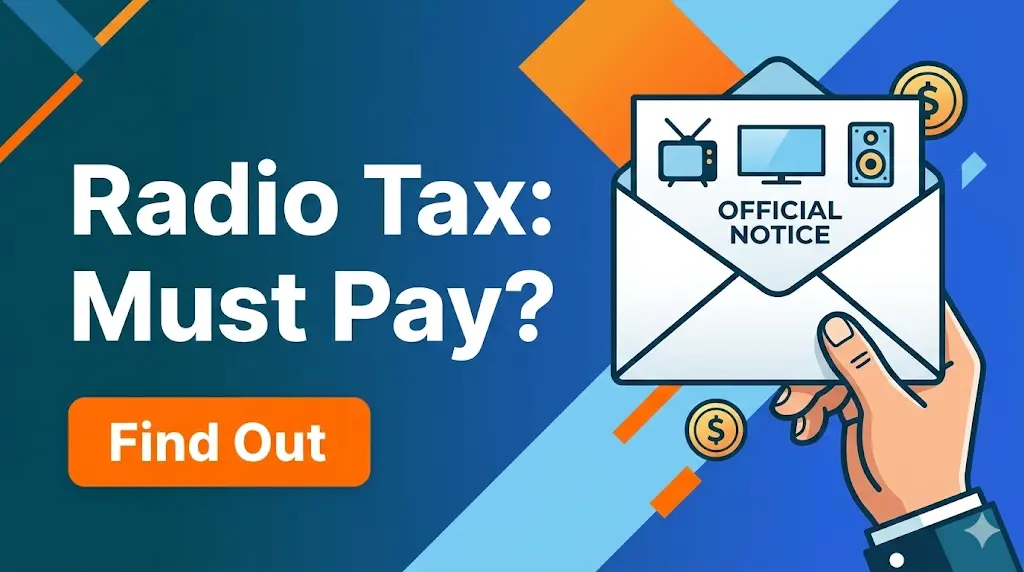
The Beitragsservice is surprisingly efficient. Within a few weeks of completing your Registering Your Address Anmeldung: Step-by-Step Guide, a letter will show up in your mailbox. It is usually addressed to “Der Inhaber der Wohnung” (The Occupant of the Apartment) or to you personally if the data has already been synced from the local residents’ registration office. This letter is not a scam; it is an invitation to register your household.
Many expats make the mistake of ignoring this letter because it looks like junk mail or because they don’t understand the German text. If you ignore it, they will simply send another one, followed by a third, and eventually an “estimation” of what you owe, which often includes back-dated payments. It is much better to engage with the first letter immediately.
Step-by-Step Online Registration Guide
The easiest way to register is online at the official website, rundfunkbeitrag.de. While the site is primarily in German, it is relatively straightforward. You will need your Beitragsnummer (if you have been assigned one in the letter) or you can select “Wohnung anmelden” (Register an apartment) to start a new account. You will enter your personal details, the date you moved in, and your bank information.
One pro tip: the date you moved in should match the date on your Meldebescheinigung. If you try to say you moved in later to save a few euros, they will cross-reference your data with the registration office and send you a bill for the missing months anyway. If you are living in a temporary serviced apartment or a furnished rental from Wunderflats, check if the fee is included in your “warm” rent. If it is, you can respond to the letter by providing the Beitragsnummer of the landlord or the management company to prove the fee is already being covered.
What to Do if You Move within Germany
If you move to a new apartment within Germany, you do not need to create a whole new account. Instead, you perform a Mitteilung einer Änderung (Notification of Change) on the website. You will provide your current account number and the address of your new home. This ensures that your payment history follows you and that you aren’t accidentally billed for two apartments at the same time.
Moving is also the time to check if your new household already has someone paying. If you move from living alone to living in a WG, you should “deregister” your old individual account and instead join the existing account of your new roommates. To make the move easier, many expats order heavy-duty moving boxes and label makers from Amazon Germany to keep their documents and cables organized during the transition. For a broader look at the moving process, see How to Rent an Apartment in Germany: Application Process and Requirements.
Exemptions and Reductions: Can You Avoid Paying?
Exemptions for Students and BAföG Recipients
There is one major group that can legally avoid the Rundfunkbeitrag: students who receive BAföG (German state student financial aid). If you are a recipient of this aid and do not live with your parents, you are entitled to a full exemption. However, this is not automatic. You must apply for the exemption on the Rundfunkbeitrag website and upload your official BAföG notification as proof.
For international students who are not eligible for BAföG, the situation is tougher. Even if you are on a very tight budget and living in a dormitory, you are technically required to pay if your room is considered a “self-contained apartment” with its own entrance and kitchen/bathroom. Using a provider like Wunderflats for student-friendly housing can also help clarify whether your room is considered an individual household or part of a larger, shared contribution.
Reductions for Health and Social Hardship
Individuals with certain disabilities are eligible for either a full exemption or a significant reduction in the fee. For example, people who are blind or deaf and receive specific social benefits can be exempted. Those with a “RF” mark on their disability pass (Schwerbehindertenausweis) may be eligible for a reduced rate of roughly €6.12 per month. Like student exemptions, this requires a formal application and physical or digital proof of your status.
There is also a “hardship” clause (Härtefall) for people whose income is very low but who do not quite qualify for standard social benefits like Bürgergeld. If paying the €18.36 would bring your income below the legal poverty line, you can apply for a waiver. This is quite a complex process and usually requires assistance from a social worker or a specialized advisor.
The Secondary Residence Exemption
If you are a professional who maintains two homes—perhaps one near your workplace and one where your family lives—you only have to pay the Rundfunkbeitrag once. Following a ruling by the Federal Constitutional Court, you can apply for an exemption for your secondary residence (Zweitwohnung). You must prove that you are already paying the fee for your primary residence.
This is a huge relief for “commuter” expats. You will need to provide your primary account number and proof of your second home registration. Many professionals who work in cities like Frankfurt but live elsewhere use Wunderflats to find these secondary apartments, as they often cater to the “business commuter” lifestyle and provide the necessary documents for the registration office. If you need to set up a home office in your second residence, Amazon Germany is the best place to source ergonomic chairs and monitors that make working from a smaller space more comfortable.
Consequences of Ignoring the Fee
Late Fees and Administrative Offenses
The Beitragsservice is not like a gym membership you can just ignore until it goes away. If you don’t pay, they will start by sending a “Zahlungserinnerung” (Payment Reminder). If you still don’t pay, they will send a “Festsetzungsbescheid” (Assessment Notice), which includes a late fee (Säumniszuschlag). This fee is usually 1% of the debt, with a minimum of €5.00. While €5.00 sounds small, these notices arrive every few weeks, and the debt can spiral surprisingly quickly.
Under German law, failing to pay the Rundfunkbeitrag for more than six months is considered an administrative offense (Ordnungswidrigkeit). This moves the debt from a private matter to a public one, and the authorities can eventually involve a bailiff (Gerichtsvollzieher). I have heard horror stories of bailiffs showing up to people’s workplaces over a few hundred euros in unpaid TV taxes. To stay on top of your mail and avoid missing these notices, I always recommend buying a high-quality letter opener and a desktop organizer from Amazon Germany so you never let an official envelope get buried under a pizza box.
Garnishment and the Impact on Your Schufa
If the debt continues to grow, the Beitragsservice can apply for a Pfändung (garnishment). This means they can legally instruct your bank to freeze the amount you owe from your account or instruct your employer to deduct it from your salary. This is not only financially painful but also incredibly embarrassing to explain to your HR department.
Furthermore, unpaid public debts can eventually find their way into your Schufa report. The Schufa is the German credit rating system, and a negative entry can make it impossible to rent a new apartment, sign a mobile phone contract, or get a car loan. I’ve known expats who were rejected for their dream apartment because of an unpaid €80 radio tax bill from three years prior. To keep your credit score healthy, proactive management is key.
Can You Go to Prison for Not Paying?
Technically, yes, though it is extremely rare and usually only happens in cases of “stubborn refusal” where the person refuses to disclose their assets to a bailiff. This is known as Erzwingungshaft (coercive detention). It is not a punishment for the debt itself, but a way to force the debtor to provide information.
There have been a few high-profile cases in Germany of activists going to prison for months because they refused to pay the fee on principle. For the average expat, this is a scenario you want to avoid at all costs. The legal fees and the damage to your residency status would be far more expensive than the €18.36 a month.
Moving Out: Deregistering Before You Leave Germany
The Abmeldung Process for the Beitragsservice
You must complete the Abmeldung (Deregistration) on their website. You will select “Ich ziehe dauerhaft ins Ausland” (I am moving abroad permanently).
Crucially, they will ask for a copy of your Abmeldebescheinigung from the local city hall. They will not stop billing you until they have proof that you have officially left the country. If you forget to do this, the “debt” will continue to accumulate in your name, and if you ever return to Germany in ten years, you might find a massive bill and a blocked bank account waiting for you. If you are packing up your life, you can find high-quality luggage and packing cubes on Amazon Germany to make the departure less chaotic.
Common Pitfalls and Forgotten Payments
The most common mistake people make when leaving is assuming that the Abmeldung at the city hall automatically informs the Beitragsservice. It does not. They are separate entities. You must inform them yourself. Another pitfall is the final quarterly payment. If you leave in the middle of a quarter, you might still owe for the months you were physically in the apartment.
I once knew a colleague who left Germany in a hurry and just closed his bank account without deregistering his TV tax. Two years later, he tried to open a business in Berlin and found his credit score was ruined because of the unpaid debt. It is much better to spend 15 minutes on the website before you leave. If you have been living in a furnished flat through Wunderflats, the management can often provide you with a final confirmation that your residency has ended, which you can upload as additional proof. This careful attention to detail is what separates a successful expat experience from one filled with administrative “hangover.”
References
Primary sources (official)
- Official Rundfunkbeitrag Portal: https://www.rundfunkbeitrag.de/
- Beitragsservice FAQ (English): https://www.rundfunkbeitrag.de/welcome/english/index_ger.html
Other helpful sources
- Verbraucherzentrale (Consumer Advice Center) – Radio Tax Guide: https://www.verbraucherzentrale.de/wissen/digitale-welt/fernsehen/rundfunkbeitrag-der-wichtigste-ueberblick-fuer-verbraucher-5783
Disclaimer
The information provided in this guide is for informational purposes only and is based on personal expat experiences and publicly available administrative guidelines as of 2026. The German broadcasting laws and fee amounts are subject to change. This article does not constitute legal or financial advice. Always consult the official website of the ARD ZDF Deutschlandradio Beitragsservice or a qualified legal professional for your specific situation.