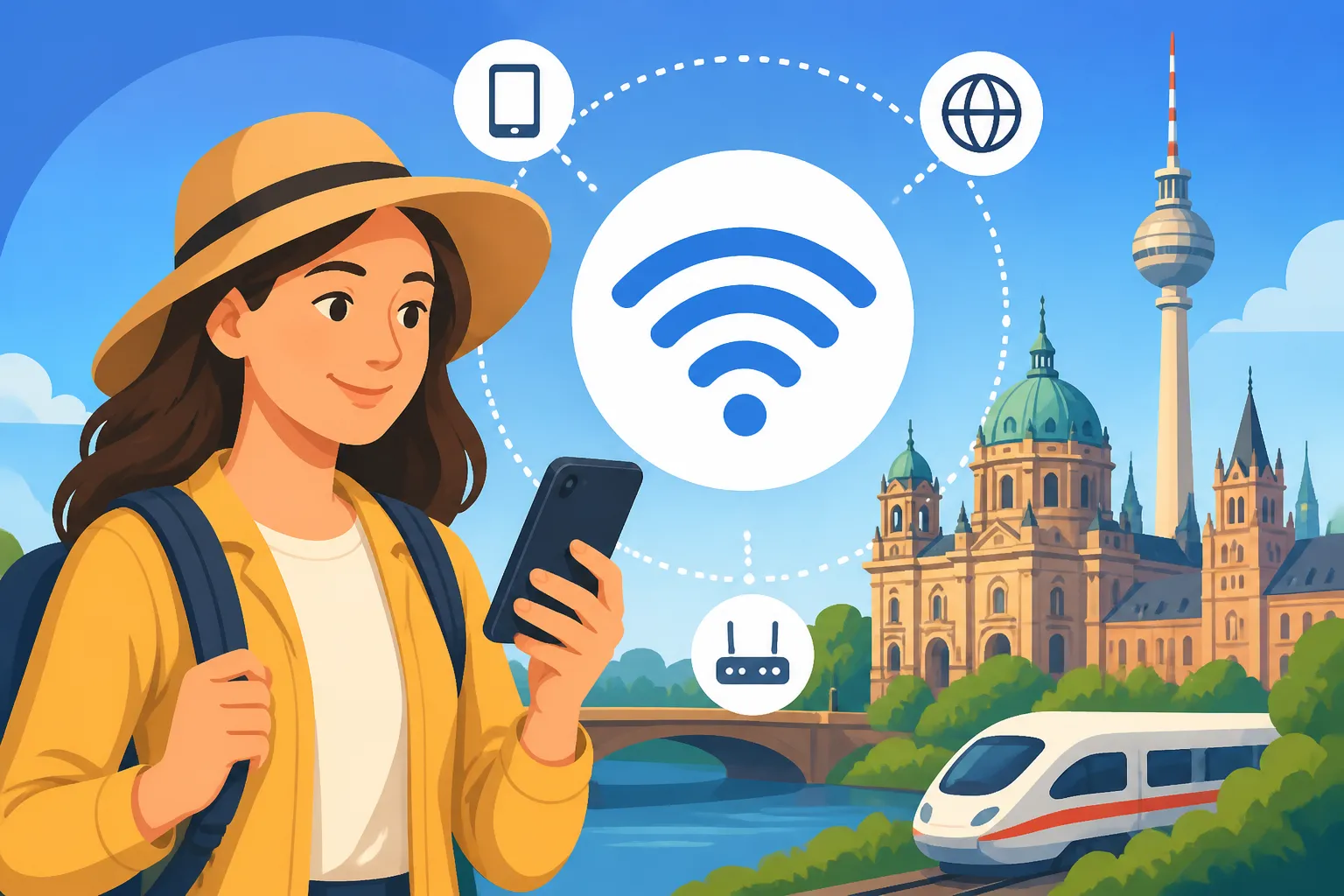
How to Stay Connected to Wi-Fi While Traveling in Germany
Oh, the eternal quest for reliable internet when you're abroad! I can't tell you how many times I've arrived in a new German city, phone stubbornly showing "no service," and just wanted to throw it across the Hauptbahnhof platform. You're trying to figure out which S-Bahn to take, confirm your Booking.com reservation, or just tell your family you landed safely, and boom – disconnected. It's a real frustration, and believe me, it’s not just you. This guide is going to walk you through all the ins and outs of staying connected to Wi-Fi and mobile data while you’re exploring Germany, ensuring you're never truly stranded.
Disclosure: This post may contain affiliate links. We may earn a commission at no extra cost to you if you make a purchase through these links. Read full disclosure.
The German Wi-Fi Landscape: A Quirky Journey
Germany has made strides, but its public Wi-Fi scene can still feel a bit… well, deutsch. For a long time, thanks to strict liability laws (the infamous Störerhaftung), businesses were reluctant to offer public Wi-Fi, fearing they'd be held responsible for any illegal activity carried out on their networks. While those laws have been relaxed, the widespread, seamless free Wi-Fi you might be used to in other countries isn't quite the norm everywhere in Germany yet.
Public Wi-Fi Availability: Hit or Miss?
You'll find that free public Wi-Fi is readily available in some spots, and utterly absent in others. Major train stations, like Berlin Hauptbahnhof or Munich HBF, usually offer free Wi-Fi, often for a limited time (say, 30 minutes to an hour) or with certain data caps. Airports are generally good for this too, providing a lifeline as you land or wait for your flight. Many larger cafés, especially international chains, will offer Wi-Fi if you make a purchase. However, don't expect it in every quaint little bakery or local Kneipe (pub) you wander into. Sometimes, it's only for paying customers, and you might need to ask for a password, which can be a fun linguistic challenge if your German isn't quite there yet!
The quality also varies wildly. I've been in places where the Wi-Fi was faster than my home connection, and others where it felt like dial-up, cutting out every few minutes. It's truly a mixed bag, and it often means relying on it for critical tasks isn't the most stress-free option. Always have a backup plan, especially if you're trying to navigate or find a crucial piece of information on the fly.
Hotel and Accommodation Wi-Fi: A Roll of the Dice
When it comes to your lodging, the Wi-Fi situation is usually a bit more reliable, but again, it’s not a given. Most hotels, from budget chains to luxury establishments, will advertise free Wi-Fi. However, "free" can sometimes mean "free in the lobby, but pay extra for premium speed in your room" or "free for one device, extra for more." It’s always worth checking the fine print or, better yet, looking at recent guest reviews on platforms like Booking.com. There’s nothing worse than arriving after a long journey, expecting to stream a movie or get some work done, only to find the Wi-Fi in your room barely loads an email.
Hostels and guesthouses are generally quite good about providing free Wi-Fi as a standard amenity, often with the password displayed prominently. But, just like public Wi-Fi, the speed can fluctuate dramatically based on how many other guests are simultaneously trying to upload their holiday snaps. If you're staying in an Airbnb or private rental, the owner will almost certainly provide Wi-Fi, and it tends to be quite stable, as it's their home connection. Always confirm details with your host before arrival.
Understanding Wi-Fi Security: Protect Yourself, Always
Here’s a crucial point, my friend: public Wi-Fi, no matter how convenient, is rarely secure. When you're connecting to an open network at a café, airport, or even some hotels, your data could potentially be vulnerable to snooping by malicious actors. It's not a common occurrence, but it's a risk you should be aware of. I always recommend using a Virtual Private Network (VPN) when connecting to any public Wi-Fi network. This encrypts your data, making it much harder for anyone to intercept your information. Think of it as putting your digital communications in a locked, private tunnel. It's a small investment for peace of mind, especially if you're doing anything sensitive like online banking or accessing personal accounts. For more general advice on staying safe, you might find our guide on Staying Safe in Germany: Common-Sense Tips for Travelers helpful.
Reliable Solutions for Constant Connectivity
Now, let's talk about the real game-changers – the options that give you consistent, dependable internet access throughout your German adventure, often surpassing the patchy public Wi-Fi.
German SIM Cards for Tourists: Old Reliable
If you’re planning more than a quick stopover, getting a local German SIM card is often the most cost-effective and reliable way to stay connected. This gives you a German phone number and, more importantly, a generous allowance of mobile data to use across the country.
- Where to Buy: You can pick up prepaid SIM cards (called Prepaid-Karten) at major supermarkets like ALDI TALK (yes, the grocery store has a mobile network!), Lidl Connect, or Rewe. You can also find them at electronics stores like MediaMarkt or Saturn, and dedicated shops for major providers like Telekom, Vodafone, and O2.
- Activation Process: This is where it gets a little bureaucratic, because, well, it's Germany. Due to identity verification laws, you can't just buy a SIM and start using it immediately. You'll need to go through an activation process, often online via video call (PostIdent or VideoIdent), where you show your passport and current address to a representative. This can sometimes be done in person at a Post Office or partner shop if you prefer. My tip? Try to do this during business hours when customer service is readily available, just in case you hit a snag. Having a basic grasp of German Language and Everyday Communication for Visitors can also make this process smoother.
- Data Packages: Most prepaid plans come with various data packages, typically ranging from 5GB to unlimited, for a fixed price over 28 or 30 days. You can top up your credit at supermarkets, gas stations, or online. For travelers, I often recommend checking out options from Congstar (Telekom's budget brand) or Vodafone's CallYa plans, as they offer good coverage and flexible packages.
- Pros: Excellent coverage across Germany, often cheaper per GB than roaming, provides a local number.
- Cons: Activation can be a bit of a hurdle, might need a basic understanding of German for setup, takes up one of your physical SIM slots.
eSIMs: The Modern Traveler's Best Friend
This is truly a game-changer for international travelers, and it’s my personal go-to solution now. An eSIM (embedded SIM) is a digital SIM that allows you to activate a cellular plan without needing a physical SIM card. If your phone supports it (most modern smartphones do), you can buy an eSIM plan online, scan a QR code, and be connected in minutes, even before you land in Germany.
- Advantages:
- Instant Activation: No need to hunt for a store, fill out forms, or go through the PostIdent process. You can set it up from home or the airport lounge.
- Dual SIM Capability: You can keep your home country’s physical SIM active for calls/texts, while using the eSIM for data in Germany. This is incredibly convenient for receiving verification codes or important calls.
- Flexibility: Easily switch between different data plans or providers if you travel to other countries.
- No Physical Card: No fumbling with tiny SIM cards or worrying about losing them.
- Popular Providers: There are many global and regional eSIM providers. Airalo, Holafly, and Nomad are popular choices that offer data plans for Germany and Europe. These generally work seamlessly and offer different data packages tailored to various trip lengths and usage needs. You can learn more in our dedicated guide on Mobile Data and eSIMs for Travel in Germany.
- Pros: Super convenient, flexible, keeps your primary SIM active, quick setup.
- Cons: Requires an eSIM-compatible phone, can sometimes be slightly more expensive per GB than a traditional local prepaid SIM.
Portable Wi-Fi Hotspots (MiFi Devices): Connectivity for the Crew
A portable Wi-Fi hotspot, often called a MiFi device, creates its own personal Wi-Fi network wherever you go, connecting to the cellular network. You can then connect multiple devices (phones, laptops, tablets) to this single hotspot.
- Who it’s for: This is a fantastic option for families or groups traveling together, digital nomads with multiple devices, or anyone who just wants a dedicated, secure internet connection on the go. Instead of each person getting a SIM, everyone shares the hotspot.
- Rental vs. Purchase: You can rent these devices from companies at major airports (though it can be pricey) or through online services that deliver them to your hotel. Alternatively, you can purchase an unlocked MiFi device online and then insert a German data SIM card into it, similar to how you'd use a SIM in a phone.
- Considerations: Battery life is a factor – you'll need to keep it charged. Also, you have another device to carry around.
- Pros: Provides Wi-Fi for multiple devices, secure personal network, often good for groups.
- Cons: Another device to carry and charge, potential rental costs can add up, initial purchase cost if buying.
Leveraging Existing Services and Smart Travel Habits
Beyond getting a dedicated data connection, there are smart ways to maximize your connectivity and prepare for those moments when Wi-Fi is scarce.
Offline Maps and Translation Apps: Your Digital Lifelines
Even with a great data plan or eSIM, sometimes you just lose signal in a remote village or deep within a concrete U-Bahn station. This is where preparing for offline situations becomes invaluable. Always download offline maps for the cities and regions you plan to visit on apps like Google Maps or Maps.me. This way, you can navigate even without an internet connection. Similarly, translation apps like DeepL or Google Translate often allow you to download language packs for offline use, which can be a lifesaver when you're trying to communicate in a shop or restaurant and can't access the internet. Having your train tickets, flight boarding passes, and accommodation details saved offline or as screenshots is also a good habit. Trust me, I’ve been there, desperately trying to load a ticket with two minutes to spare before the train departs! If you're looking for other useful digital tools, check out Top 10 Apps for Living in Germany: Navigating Daily Life with Your Smartphone.
Utilizing Wi-Fi on German Transport: Stay Connected on the Move
Germany's public transportation system is generally fantastic, and many services now offer Wi-Fi.
- Deutsche Bahn (DB) Trains: If you're hopping on an ICE (Intercity-Express) train, you're in luck! Deutsche Bahn usually offers free Wi-Fi in both 1st and 2nd class. The quality can vary, especially in rural areas or tunnels, but it’s often good enough for browsing, email, and social media. First-class passengers often get a faster, more reliable connection. For those exploring Germany by rail, our guide on High-Speed Trains in Germany (ICE): Deutsche Bahn Routes and Savings has more details on train travel itself, and you can always check out How to Use the DB Navigator App in Germany for route planning and ticket booking, which relies on a good connection.
- Long-Distance Buses: Companies like FlixBus, a popular option for budget travel across Germany and Europe, almost always offer free Wi-Fi on board. Again, don't expect to stream 4K movies, but it's perfectly adequate for keeping up with messages or doing some light browsing. Using companies like Omio to book your bus or train tickets also makes it easier to plan your journey digitally.
- Local Public Transport: Within cities, Wi-Fi on buses, trams, or U-Bahn/S-Bahn trains is less common, though some cities are starting to roll it out. It's more likely you'll find Wi-Fi available at major transport hubs, but not necessarily inside the moving vehicles themselves. For navigating the urban jungle, having your own data plan is crucial. You can learn more about getting around in our Getting Around German Cities: U-Bahn, S-Bahn, Trams, and Buses guide.
Finding Specific Hotspots and Planning Activities
While relying solely on public Wi-Fi isn't advisable, knowing where to find it can still be useful. Apps like "WiFi Map" or even Google Maps (by searching "free Wi-Fi near me") can sometimes point you to nearby hotspots. However, their accuracy can be hit or miss in Germany. For planning your adventures, having constant connectivity really pays off. For example, if you're looking for a spontaneous tour or a unique experience, a reliable internet connection allows you to quickly check availability and book on platforms like GetYourGuide without worrying about finding a signal.
Comparing Your Connectivity Options
To help you decide, here’s a quick overview of the most common ways to stay connected in Germany:
| Feature | Public Wi-Fi (Cafes, Stations) | Local Prepaid SIM (Germany) | eSIM (Digital SIM) | Portable Wi-Fi Hotspot (MiFi) |
|---|---|---|---|---|
| Cost | Usually Free (often requires purchase) | Low to Moderate (per package) | Moderate (per package, can be slightly higher) | High (purchase/rental + data plan) |
| Availability/Reliability | Patchy, limited, can be slow | Excellent coverage across Germany | Excellent coverage across Germany | Excellent coverage (depends on inserted SIM) |
| Speed | Varies greatly, often moderate to slow | Generally fast and reliable (4G/5G) | Generally fast and reliable (4G/5G) | Generally fast and reliable (4G/5G) |
| Security | LOW (Use VPN!) | HIGH | HIGH | HIGH (personal network) |
| Ease of Setup | Instant, no setup | Requires purchase + ID verification | Instant, QR code scan | Purchase/rent + SIM insertion (if applicable) |
| Best For | Quick checks, light browsing, short stops | Longer stays, heavy data users, single devices | All travelers with compatible phones, flexible needs | Groups/families, multiple devices, extended usage |
| Physical Item Required? | No | Yes (SIM card) | No | Yes (device) |
Final Thoughts: Don't Get Caught Off Guard
Traveling in Germany is an incredible experience, filled with stunning scenery, rich history, and vibrant culture. But a significant part of enjoying that experience in the 21st century is staying connected, whether it's to navigate, translate, share moments, or just feel safe knowing you can reach someone. While Germany’s public Wi-Fi isn't always the shining star of connectivity, the options for securing your own reliable internet access have never been better.
My biggest piece of advice, as someone who's navigated these waters for years, is to plan ahead. Don’t wait until you're standing in the middle of a bustling train station with no idea where to go to realize you have no data. Consider purchasing an eSIM or a local prepaid SIM before or upon arrival. It takes away so much of the stress and allows you to truly immerse yourself in the German experience without constantly hunting for a signal. Happy travels, and here's to staying seamlessly connected!
Disclaimer
Please note that while this guide strives to provide accurate and up-to-date information, rules and services in Germany can change. Always verify current conditions, pricing, and specific requirements directly with service providers or relevant authorities before making any decisions. This information is for general guidance only and does not constitute legal or financial advice.