Frankfurt City Guide: Skyline, Museums, and Old Town
Ah, Frankfurt am Main. You've heard the whispers, perhaps seen the gleaming glass towers from a plane window, or maybe even rushed through its colossal Hauptbahnhof on your way to somewhere "more German." But let me tell you, as someone who's lived through the initial culture shock and bureaucratic maze of Germany, Frankfurt is so much more than its financial district or a mere travel hub. This guide is for you, whether you're just visiting or contemplating making this dynamic city your new home, to peel back the layers and discover the vibrant heart that beats beneath its modern facade, from its breathtaking skyline to its charming historical corners and unexpected cultural treasures.
Disclosure: This post may contain affiliate links. We may earn a commission at no extra cost to you if you make a purchase through these links. Read full disclosure.
Frankfurt Beyond the Bank Towers: An Introduction for Newcomers
When most people think of Frankfurt, the immediate image that springs to mind is usually a concrete jungle of skyscrapers, suits, and banking. And yes, it’s true, Frankfurt is Germany’s financial powerhouse, home to the European Central Bank and a multitude of corporate headquarters. However, fixating solely on this aspect means missing out on the unique character of a city that blends the ultra-modern with centuries of rich history and surprisingly cozy traditions. It’s a city of fascinating contrasts, and truly understanding it requires looking past the obvious.
The City's Dual Identity: Financial Hub and Historical Gem
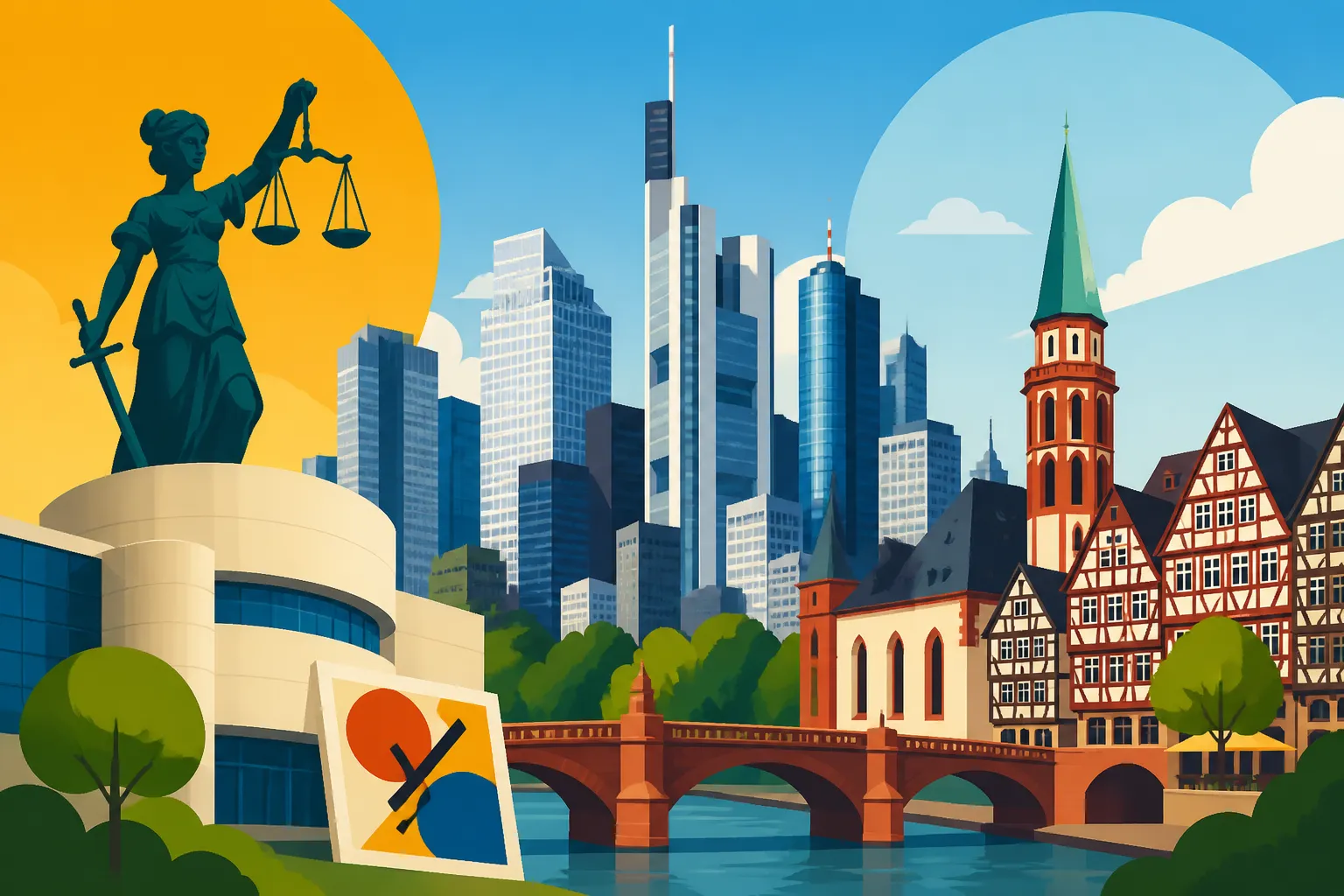
Frankfurt’s dual identity is its most defining feature, and frankly, it can be a bit jarring at first. One moment you're gazing up at a towering glass-and-steel edifice that wouldn't look out of place in New York or Dubai, and the next you're strolling through cobblestone lanes lined with meticulously reconstructed half-timbered houses. This isn't an accident; much of Frankfurt was devastated during World War II, leading to a remarkable effort to rebuild its historical core while simultaneously embracing modern architecture and economic growth. This resilience and commitment to both past and future are palpable in the city's atmosphere. It’s a place where tradition, embodied by its famous apple wine and gemütlich taverns, coexists seamlessly with cutting-edge finance and international cosmopolitanism. You'll find yourself adjusting to a rhythm that celebrates both innovation and heritage, sometimes within a few blocks of each other.
Why Frankfurt is More Than Just a Layover
For many international travelers, Frankfurt is often just a point of entry or a transfer station, thanks to its massive airport, one of Europe's busiest. But writing it off as merely a "layover city" is a huge disservice. If you allow yourself even a day or two, you'll discover a city brimming with museums, beautiful parks, a lively culinary scene, and a surprisingly warm local culture once you get past the initial German directness. Unlike some other German metropolises, Frankfurt offers a compact experience, making it easy to explore its diverse offerings on foot or via its efficient public transport. It’s a city that quietly invites you to explore, to sit down in a traditional Ebbelwoi tavern in Sachsenhausen, or to simply admire the confluence of history and modernity along the Main River. Trust me, it deserves more than just a quick dash through the airport.
Navigating Frankfurt's Iconic Skyline and Modern Marvels
Frankfurt’s skyline, affectionately known as "Mainhattan" (a nod to the Main River and Manhattan), is truly its most striking feature. It’s the only city in Germany with a significant cluster of high-rises, and these architectural giants dominate the cityscape, offering a constant reminder of Frankfurt's economic prowess. But these buildings aren't just for business; they're also a source of pride and offer some incredible experiences for visitors.
Best Spots for Skyline Views and Photography
Capturing the majesty of Frankfurt's skyline is a must, and thankfully, the city offers numerous vantage points. For that quintessential panoramic shot, head to the Eiserner Steg, the pedestrian iron bridge adorned with thousands of "love locks". From here, you get an unobstructed view of the financial district juxtaposed against the river. It's especially magical at dusk when the city lights begin to twinkle. Another fantastic spot is the Museumsufer (Museum Embankment) on the south bank of the Main. As you stroll along, you'll find plenty of green spaces and benches perfect for soaking in the views, often with a cultural institution as a foreground. For a truly elevated experience, the observation deck of the Main Tower offers unparalleled views. You'll be able to see for miles on a clear day, taking in the entire metropolitan area.
Experiencing the Skyscrapers: Observation Decks and River Tours
While looking at the skyline is impressive, truly experiencing it means getting into it. The Main Tower is the only skyscraper in Frankfurt with a publicly accessible observation deck. For a fee, you can zoom up 200 meters and get a 360-degree view that will make your jaw drop. It's a fantastic way to grasp the city's layout, from the winding Main River to the distant Taunus mountains. Inside the tower, there's also a restaurant if you fancy dining with a view.
Another delightful way to appreciate the skyline is from the water itself. Taking a river cruise along the Main River offers a unique perspective. Many operators, which you can easily find and book via platforms like Omio or GetYourGuide, offer various tours, from short one-hour loops that show you the main sights to longer excursions. These tours provide fascinating commentary, often in multiple languages, about the buildings, bridges, and history you're passing by. It’s a relaxing way to see the city, especially on a sunny afternoon, allowing you to photograph the skyscrapers reflecting in the water and appreciate the architectural diversity.
A Journey Through Time: Frankfurt's Old Town and Historical Heart
Stepping away from the glass towers, you’ll find yourself transported back in time in Frankfurt’s Altstadt (Old Town). Despite the heavy wartime damage, the determination to rebuild and restore was strong, leading to a charming district that embodies the city’s historical soul. It's a place where emperors were crowned, and significant German history unfolded.
The Römerberg and its Reconstructed Glory
The heart of Frankfurt’s Old Town is undoubtedly the Römerberg. This picturesque square, with its distinctive gabled houses and the iconic Römer (City Hall) building, feels like a page out of a fairy tale. The Römer itself has served as Frankfurt's city hall for over 600 years and is famous for its three stepped gables. It’s here that imperial elections and coronations took place, and standing in the square, you can almost feel the weight of history. The surrounding timber-framed houses, including the Ostzeile, were meticulously reconstructed after their destruction in 1944, using historical plans to recreate their original charm.
In the center of the square stands the Gerechtigkeitsbrunnen (Fountain of Justice), often adorned with flowers. This square is where the Frankfurter Weihnachtsmarkt (Christmas Market) lights up every winter, transforming it into a magical wonderland. It’s also a perfect spot to simply sit, grab a coffee or an Apfelwein, and soak in the atmosphere. Don't forget to wander into the Kleinmarkthalle nearby for a bustling market experience with local delicacies and international foods – a true feast for the senses.
Exploring Paulskirche and the Goethe House
Just a stone's throw from the Römerberg, you'll find the Paulskirche (St. Paul's Church). While it might look like a regular church, it holds immense historical significance as the seat of the first democratically elected German parliament in 1848. Today, it no longer serves as a church but as a national monument and a venue for important political and cultural events. Its interior is simple yet powerful, with exhibitions that explain its pivotal role in German democracy. It’s a poignant reminder of Germany’s long and sometimes difficult path towards freedom and unity.
A short walk away, you can visit the Goethe-Haus, the birthplace of Germany's most famous writer, Johann Wolfgang von Goethe. This house, also faithfully reconstructed after the war, offers a fascinating glimpse into the life and times of the literary genius. You can explore the rooms where he grew up, see his study, and imagine the environment that shaped his early works. It’s not just a museum for literature buffs; it’s a beautifully preserved piece of 18th-century life that provides context to the city’s intellectual heritage. Visiting these sites helps you connect with Frankfurt's past in a very tangible way, contrasting sharply with its modern image.
Immersing Yourself in Culture: Frankfurt's World-Class Museums
Frankfurt is a treasure trove for culture vultures, boasting an impressive array of museums, many of which are conveniently clustered along the Main River. The city's commitment to arts and education is evident in the sheer volume and quality of its institutions. You could easily spend days here just hopping from one museum to another.
The Museumsufer: A Paradise for Art and History Lovers
The Museumsufer, or Museum Embankment, is exactly what it sounds like: a stretch along the south bank of the Main River absolutely packed with world-class museums. This concentration makes it incredibly easy to explore multiple institutions in one go. You can pick up a MuseumsuferCard for discounted entry if you plan to visit several.
Among the highlights is the Städel Museum, which houses an astounding collection of European art spanning seven centuries, from Old Masters to modern art. Whether you're into Rembrandt, Monet, or Richter, you'll find something to captivate you here. Then there's the Liebieghaus Skulpturensammlung, an exquisite villa dedicated to sculpture from ancient Egypt to classicism, set in a beautiful garden. For those interested in film, the Deutsches Filmmuseum (German Film Museum) offers interactive exhibits on the history and art of cinema. And if architecture and design are more your speed, the Deutsches Architekturmuseum (German Museum of Architecture) is a must-see. The Museumsuferfest, held annually in late August, transforms this entire area into one giant cultural street festival, drawing millions of visitors and showcasing the museums' vibrant spirit. You might even find some unique tours or experiences through platforms like GetYourGuide that focus specifically on the Museum Embankment.
Beyond the Mainstream: Unique Museum Experiences
While the Museumsufer offers the big names, Frankfurt has plenty of unique and quirky museums that delve into more specific interests. The Dialogue Museum offers an incredible sensory experience where you navigate exhibits in complete darkness, guided by blind or visually impaired facilitators. It’s a profound experience that challenges perceptions. Another fascinating spot is the Historisches Museum Frankfurt, located right near the Römer, which provides a comprehensive overview of the city's rich history, from its early days to the present. It’s highly interactive and sheds light on many of the city’s lesser-known stories.
For a completely different vibe, consider the Caricatura Museum Frankfurt, dedicated to satirical art and political cartoons. It’s often amusing and thought-provoking, offering a unique lens through which to view German society and politics. And of course, given Frankfurt's financial heart, you might want to visit the Geldmuseum der Deutschen Bundesbank (German Federal Bank Money Museum) which provides insights into the world of money, currency, and economic policy – it’s surprisingly engaging, especially if you’ve been navigating the complexities of German finances. These less conventional museums prove that Frankfurt's cultural scene offers depth and diversity for every taste.
Frankfurt's Culinary Scene: From Traditional Apple Wine to International Flavors
No guide to Frankfurt would be complete without diving into its culinary delights. This city offers a fantastic range of gastronomic experiences, from rustic, traditional taverns serving local specialties to high-end international dining. As an expat, discovering these local flavors is truly one of the joys of settling in.
Sachsenhausen: Home of Ebbelwoi and Traditional German Fare
If you want to taste the real, traditional Frankfurt, you absolutely must venture into Sachsenhausen. This district, located just across the Main River from the Old Town, is famous for its charming cobblestone streets and, more importantly, its numerous Apfelwein (apple wine) taverns. Ebbelwoi, as it's locally known, is a tart, refreshing cider that's been a Frankfurt staple for centuries. You'll typically find it served in a Bembel, a grey stoneware jug, and drunk from a ribbed glass called a Geripptes.
In these cozy, often wood-paneled taverns, you’ll also discover hearty Frankfurt specialties. Think Handkäse mit Musik (a pungent cheese marinated in onions, oil, and vinegar – the "music" refers to the flatulence it supposedly causes!), Grüne Soße (green sauce, a delicious herb-based cold sauce served with boiled eggs and potatoes or meat), and Frankfurter Würstchen (original Frankfurt sausages). Places like Adolf Wagner or Dauth-Schneider are iconic institutions where you can immerse yourself in this authentic culinary culture. It’s a communal, unpretentious dining experience, often with long shared tables, perfect for making new friends.
International Eats and Modern Gastronomy
Given its status as an international financial hub, Frankfurt naturally boasts a diverse and vibrant international food scene. Beyond the traditional German fare, you’ll find everything from Michelin-starred restaurants to cozy ethnic eateries. The areas around the main station (Hauptbahnhof) and the Westend district offer a plethora of international options, from exquisite Japanese sushi to authentic Italian pasta, and vibrant Vietnamese pho. Fressgass (literally "Grazing Alley"), officially Kalbächer Gasse and Große Bockenheimer Straße, is a pedestrian zone renowned for its gourmet food shops, cafes, and upscale restaurants, making it a perfect spot for a leisurely lunch or a fancy dinner.
For something a bit more casual but equally delicious, explore the various food markets and street food vendors. The aforementioned Kleinmarkthalle is not just for groceries; it has fantastic food stalls selling everything from local Wurst to Turkish delights. Frankfurt also has a burgeoning vegan and vegetarian scene, with many restaurants catering to plant-based diets. And if you're looking for a comfortable place to stay near all these culinary adventures, Booking.com offers a wide range of accommodation options across different neighborhoods, from boutique hotels in the city center to guesthouses in Sachsenhausen. Whatever your palate desires, Frankfurt has something to offer.
Getting Around Frankfurt: Public Transport and Beyond
Navigating a new city, especially in a foreign country, can be daunting. But Frankfurt, with its excellent public transportation network, makes it remarkably easy to get around, even if your German isn't quite fluent yet. Understanding the system will save you a lot of hassle and perhaps even some money.
The Efficient RMV System Explained
Frankfurt is part of the Rhein-Main-Verkehrsverbund (RMV), a comprehensive public transport network that covers the entire Rhine-Main region. This means that a single ticket often covers trains (S-Bahn, U-Bahn, regional trains), trams, and buses, making transfers seamless. The city center is incredibly walkable, but for longer distances or when your feet are tired, the U-Bahn (underground) and S-Bahn (suburban train) are your best friends. These run frequently and efficiently, connecting all major attractions, districts, and the airport.
Tickets can be purchased at vending machines at stations, which usually have English language options. You can choose single tickets, day tickets (Tageskarte), or weekly tickets (Wochenkarte) depending on your stay. If you're planning to explore more of Germany, particularly with Deutsche Bahn (German Rail) trains, you might want to check out the Omio platform for booking tickets, which often integrates regional and long-distance options. Remember to validate your ticket (stamp it in the small machines on platforms or inside buses/trams) if it's not already time-stamped, or you risk a fine! The system is generally very reliable and clean, a testament to German efficiency. You can read more about Getting Around German Cities: U-Bahn, S-Bahn, Trams, and Buses for a deeper dive.
Day Trips from Frankfurt: Exploring the Rhine-Main Region
Frankfurt’s central location makes it an ideal base for exploring the beautiful surrounding region. There’s so much to see just a short train ride away! One of the most popular and picturesque excursions is a trip along the Rhine Valley. You can take a regional train north to Rüdesheim or Eltville, and from there, embark on a scenic river cruise, passing by ancient castles, vineyards, and charming riverside towns. This truly embodies the romantic image of Germany. You can learn more about this in our guide on The Rhine Valley: Castles, Wine, and River Towns.
Another fantastic option is the city of Heidelberg, famous for its stunning castle ruins, romantic Old Town, and the oldest university in Germany. It’s easily accessible by train and makes for a wonderful day out. For history buffs, a visit to the Roman town of Mainz, with its impressive cathedral and Gutenberg Museum, is also highly recommended. For nature lovers, the Taunus Mountains offer excellent hiking trails and panoramic views, a refreshing escape from the urban hustle. You can find many tours for these destinations on GetYourGuide, taking the hassle out of planning. Whether you're looking for historical sites, natural beauty, or quaint towns, Frankfurt's position in the heart of Germany means you're never far from your next adventure. If you're considering Day Trips and Weekend Getaways Across Germany, Frankfurt is an excellent starting point.
Here's a quick comparison of some popular Frankfurt attractions:
| Attraction | Category | Best For | Approximate Visit Time | Cost (Adult) |
|---|---|---|---|---|
| Main Tower | Skyline View | Panoramic views, modern architecture | 1-2 hours | €7.50-€9.00 |
| Römerberg | History, Old Town | Historical ambiance, photography, markets | 1-3 hours | Free |
| Städel Museum | Art & Culture | European art spanning centuries | 2-4 hours | €14-€16 |
| Goethe House | History, Literature | Insight into Goethe's life and 18th-century living | 1-2 hours | €10 |
| Sachsenhausen | Culinary, Nightlife | Traditional Apfelwein, local food, social evenings | 2-4 hours (evening) | Varies |
| Palmengarten | Nature, Relaxation | Botanical gardens, greenhouses, outdoor leisure | 2-3 hours | €7 |
Disclaimer
Please remember that while this guide aims to provide accurate and up-to-date information, circumstances in a dynamic city like Frankfurt can change. Opening hours, prices, and regulations are subject to change, so it's always a good idea to check official websites or local listings for the most current details before your visit. Enjoy exploring Frankfurt!