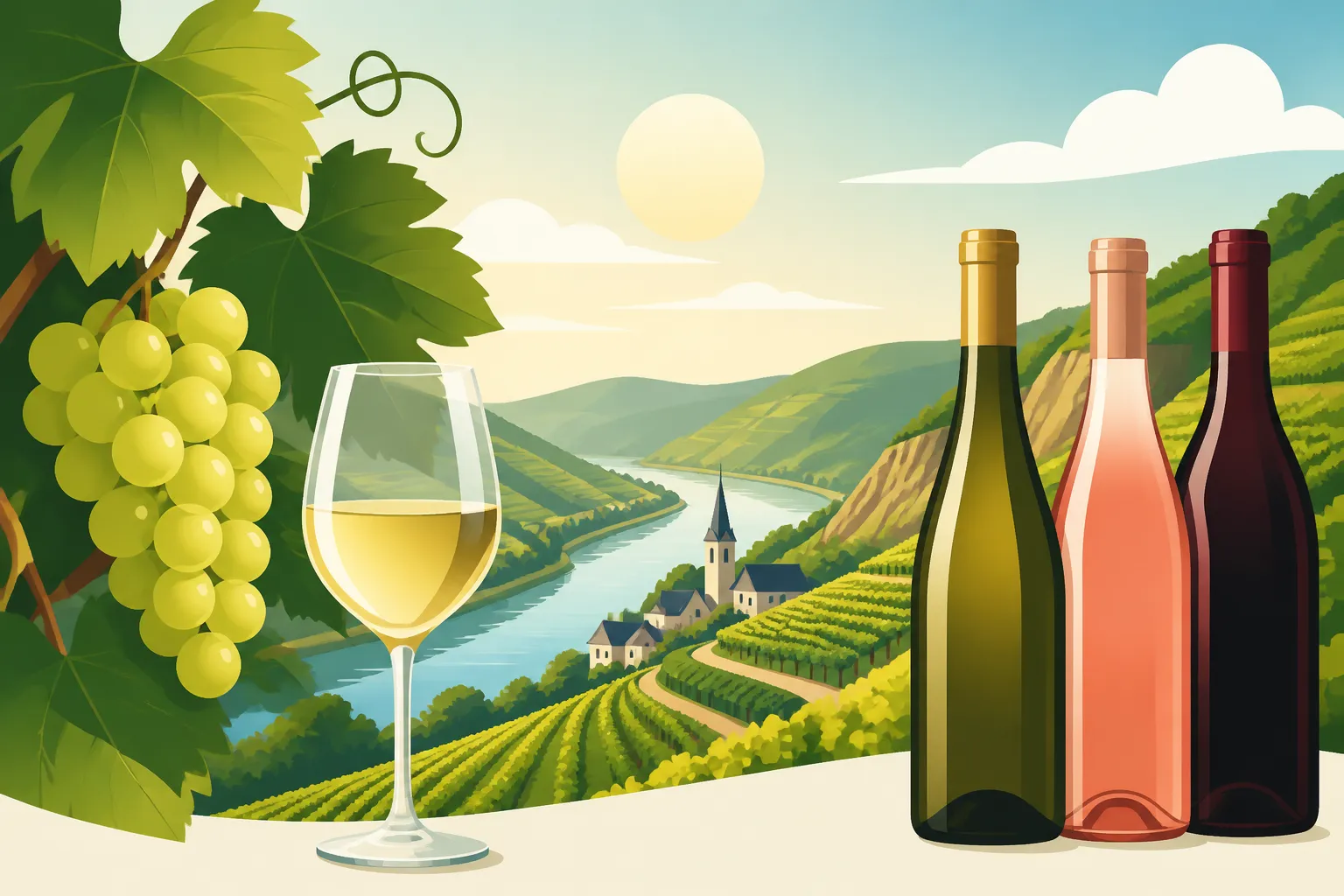
German Wine Regions: Riesling and Beyond
It's quite common, as an expat or even a visitor to Germany, to assume the national drink begins and ends with beer. Believe me, I was there once, too, thinking "wine country" meant France or Italy, not the land of steins and Oktoberfests. But let me tell you, overlooking Germany's rich viticultural landscape is a huge missed opportunity! This guide is here to unravel the often-misunderstood world of German wine, taking you far beyond the stereotype and into the nuanced, delightful regions that produce some of the world's most exceptional vintages, especially that glorious grape, Riesling.
Disclosure: This post may contain affiliate links. We may earn a commission at no extra cost to you if you make a purchase through these links. Read full disclosure.
Germany's Wine Heritage: More Than Just Beer
When you first arrive in Germany, you're immediately immersed in a beer culture that's rich, diverse, and undeniably delicious. From the hearty lagers of Bavaria to the crisp Kölsch of Cologne, beer is everywhere, and for good reason. However, to truly appreciate Germany's gastronomic landscape, you simply must delve into its equally ancient and celebrated wine culture. It's a journey that reveals a different, often more elegant, side of German tradition.
A Brief History of German Viticulture
The story of winemaking in Germany stretches back further than you might imagine, long before the first recorded brewing recipes. It was the Romans, those savvy engineers and cultivators, who brought viticulture to what is now Germany over 2,000 years ago. They recognized the potential of the Rhine and Mosel river valleys, with their sun-drenched, south-facing slopes, ideal for growing grapes. Monasteries played a crucial role in preserving and developing winemaking techniques through the Middle Ages, meticulously cultivating vineyards and refining the craft. The Cistercian monks, in particular, were instrumental in establishing some of Germany's most famous vineyards, including those in the Rheingau. Fast forward to the 18th and 19th centuries, and German wines, especially Rieslings, were among the most expensive and sought-after in the world, often fetching higher prices than even Bordeaux or Burgundy. This rich history means that behind every German wine bottle is centuries of dedication, innovation, and a profound connection to the land.
Understanding German Wine Classification
Navigating German wine labels can feel a bit like deciphering an ancient script at first, but once you get the hang of it, it's incredibly informative. The classification system is largely based on the ripeness of the grapes at harvest, which directly impacts the sweetness and quality of the final wine. It's not just about region or grape variety, but about that crucial moment when the grapes are picked.
The fundamental categories you'll encounter are:
- Qualitätswein (QbA): This translates to "quality wine from a specific region." These wines must come from one of Germany's 13 designated wine regions and meet certain quality standards, including minimum alcohol content and grape ripeness. They are often dry or off-dry and represent a good everyday drinking wine.
- Prädikatswein: This is the highest tier of German wine, historically known as "QmP" (Qualitätswein mit Prädikat). These wines are not chaptalized (meaning no sugar is added to the must before fermentation to increase alcohol content) and are classified solely based on the natural ripeness of the grapes at harvest. Within Prädikatswein, there are six sub-categories, progressing in ripeness (and often sweetness):
- Kabinett: Made from ripe grapes, typically light and delicate, often off-dry or dry.
- Spätlese: "Late harvest." Grapes are picked even riper, resulting in more intense flavors and sometimes a touch more sweetness. Can be dry (trocken) or sweet.
- Auslese: "Selected harvest." Made from very ripe grapes, often hand-selected. These are typically sweet, rich wines, though dry versions exist.
- Beerenauslese (BA): "Selected berries." Made from individually hand-picked, overripe grapes affected by noble rot (Botrytis cinerea). These are intensely sweet dessert wines, very concentrated and rare.
- Trockenbeerenauslese (TBA): "Dry selected berries." The pinnacle of sweetness. Grapes are shriveled by noble rot to an almost raisin-like state, yielding incredibly rich, honeyed, and extremely rare dessert wines.
- Eiswein: "Ice wine." Grapes are left on the vine until they freeze solid, then pressed while frozen. This concentrates the sugars and acids, creating a uniquely sweet and crisp dessert wine.
Beyond these, you'll also see terms like "Trocken" (dry), "Halbtrocken" (off-dry), and "Feinherb" (a slightly sweeter off-dry). Then there's the VDP (Verband Deutscher Prädikatsweingüter), an association of Germany's top producers who use their own classification based on vineyard sites, similar to Burgundy. Their "Grosse Lage" (Grand Cru) wines, especially when designated "Grosses Gewächs" (GG), represent the finest dry wines from Germany's best vineyards. Understanding these terms will really open up the world of German wine for you, allowing you to choose exactly what you're looking for.
Riesling: The Unsung King of German Grapes
If there's one grape that truly embodies the spirit and diversity of German wine, it's Riesling. For too long, it's been unfairly stereotyped as only producing sweet, sticky wines. But that couldn't be further from the truth. German Riesling is a chameleon, capable of producing bone-dry, crisp, and mineral-driven wines, vibrant and fruity off-dry styles, and indeed, some of the most complex and long-lived sweet wines in the world. It's a grape that beautifully expresses its terroir, revealing the unique characteristics of the soil and climate in every sip.
Why Riesling Thrives in Germany
Germany's unique geographical and climatic conditions are practically custom-made for Riesling. This grape variety is a late bloomer, meaning it ripens slowly, which is precisely what it loves. The cool climate of Germany, especially in its western and southwestern regions, allows the grapes an extended ripening period on the vine. This slow maturation ensures that Riesling develops its complex aromatic profile and retains its naturally high acidity, which is the backbone of its freshness and longevity.
Furthermore, the steep, south-facing slopes along rivers like the Mosel and Rhine are crucial. These slopes maximize sun exposure, helping the grapes ripen even in cooler vintages. The rivers themselves act as natural reflectors, bouncing sunlight onto the vines and creating a warmer microclimate. Below the surface, the diverse slate and volcanic soils found in many German wine regions impart distinct mineral characteristics to the wine, adding layers of complexity that are unique to German Riesling. This combination of cool climate, ideal sun exposure, and varied soils creates a perfect storm for Riesling to thrive, producing wines with unparalleled balance, purity, and expressive character.
Decoding Riesling Styles: From Dry to Sweet
The incredible versatility of Riesling means there's a style for almost every palate, and knowing the key terms will help you find your perfect match.
- Trocken (Dry): Don't let the "sweet Riesling" myth deter you. Many of Germany's finest Rieslings are made in a bone-dry style. These wines are crisp, refreshing, and often intensely mineral-driven, with notes of green apple, citrus, and sometimes a hint of wet slate or petrol as they age. They are fantastic food wines, pairing beautifully with everything from seafood to roast pork. Look for "Grosses Gewächs" (GG) on the label for some of the most powerful and structured dry Rieslings.
- Feinherb/Halbtrocken (Off-Dry): These styles offer a touch of residual sugar, balancing Riesling's natural acidity with a hint of sweetness. "Feinherb" is a more modern, unregulated term that typically signifies a wine slightly sweeter than "Halbtrocken." These wines are incredibly approachable and versatile, with vibrant fruit flavors like peach and apricot, making them excellent on their own or with lighter dishes, and even some spicy cuisines.
- Lieblich/Süss (Sweet): This is where many people's preconceptions about Riesling come from, but these sweet wines are far from simple or cloying. The Prädikat levels—Kabinett, Spätlese, Auslese, Beerenauslese, Trockenbeerenauslese, and Eiswein—showcase a spectrum of sweetness and concentration.
- Kabinett can be dry or off-dry, but sweet Kabinetts are light, delicate, and often have a spritzy freshness.
- Spätlese and Auslese are progressively richer and sweeter, with more concentrated fruit flavors. They can be exquisite dessert wines or enjoyed with cheese.
- Beerenauslese (BA) and Trockenbeerenauslese (TBA) are intensely sweet, complex wines, often showing honey, dried apricot, and botrytis notes. They are rare and often expensive, true liquid gold perfect for special occasions.
- Eiswein, with its concentrated sweetness and piercing acidity, offers a unique, refreshing sweetness with flavors of tropical fruit and honey.
Each style of Riesling offers a distinct experience, showcasing the grape's incredible range and the meticulous craftsmanship of German winemakers.
Exploring Germany's Premier Wine Regions
Germany is home to 13 official wine regions, each with its own distinct character, terroir, and specialties. While Riesling reigns supreme in many, you'll discover a fascinating array of other grape varieties and regional expressions as you explore. Getting around these regions is part of the adventure! You might consider booking train tickets through services like Omio to hop between wine towns, or finding guided tours on GetYourGuide that take care of the driving.
Mosel: Steep Slopes and Slate Terroir
When you think of iconic German wine landscapes, the Mosel probably springs to mind first. Its incredibly steep, terraced vineyards, often rising at dizzying angles from the winding river, create a breathtaking panorama. This is Germany's oldest wine region, and the Romans knew what they were doing here. The predominant soil type is slate, which absorbs heat during the day and radiates it back to the vines at night, aiding ripening in this cool climate. This unique slate terroir also imparts a distinctive mineral character to the wines.
Mosel Rieslings are renowned for their elegance, lightness, and vibrant acidity, often with lower alcohol content. They are typically aromatic, with notes of green apple, peach, and a hallmark slate minerality. Many Mosel wines are off-dry or sweet, perfectly balancing their acidity with a delicate sweetness. However, a new generation of winemakers is also producing exceptional dry Rieslings from their prime sites, known as Grosses Gewächs. A trip to the Mosel is not just about the wine; it’s an experience. You can take scenic boat trips along the river, visit charming wine villages like Cochem, Bernkastel-Kues, and Ürzig, and hike through the vineyards.
Rheingau: A Royal Pedigree
Just west of Frankfurt, nestled along a bend in the Rhine River, lies the Rheingau. This region might be smaller than the Mosel, but it boasts a regal reputation and a history of producing some of Germany's most prestigious wines. The majority of vineyards face south, benefiting from optimal sun exposure, and are protected by the Taunus mountains to the north. The soils here are a diverse mix of slate, quartzite, sand, and loess.
The Rheingau is virtually synonymous with Riesling, which accounts for over 80% of its vineyards. Rheingau Rieslings are generally fuller-bodied and more powerful than their Mosel counterparts, with a rich texture and pronounced fruit flavors, often hinting at citrus, stone fruit, and sometimes a spicy complexity. It's also the birthplace of the Spätlese Prädikat, first discovered at Schloss Johannisberg, a tradition that continues to produce exquisite late-harvest wines. Beyond Riesling, the Rheingau also produces excellent Spätburgunder (Pinot Noir), especially around Assmannshausen, which are increasingly gaining international recognition for their elegance and finesse. The region is also home to countless historic monasteries and castles, offering a picturesque backdrop for wine tasting.
Rheinhessen: Germany's Largest Wine Region
Spread across rolling hills between Mainz, Worms, and Bingen, Rheinhessen is Germany's largest wine-growing region. Historically, it was known for producing large quantities of simpler, often sweeter wines. However, in recent decades, Rheinhessen has undergone a remarkable transformation. A new generation of dynamic winemakers has embraced quality over quantity, focusing on sustainable practices and showcasing the region's diverse terroir.
While Riesling is still prominent, Rheinhessen is celebrated for its wide array of grape varieties. You'll find excellent Müller-Thurgau, Silvaner, Grauburgunder (Pinot Gris), and Weissburgunder (Pinot Blanc). The soils are incredibly varied, from red sandstone ("Roter Hang") near Nierstein, which produces some of the most intense and mineral-driven Rieslings, to loess and clay in other areas. Today, Rheinhessen is producing vibrant, often dry, and expressive wines across the board, from crisp whites to elegant reds. The "Hipper und Möppel" movement, a term for the modern, innovative winemakers, is driving this quality revolution, making Rheinhessen an exciting region to explore for adventurous wine lovers.
Pfalz: Sunshine and Mediterranean Flair
Tucked against the Haardt Mountains, which are an extension of the Vosges, the Pfalz (Palatinate) is Germany's second-largest wine region. It boasts more sunshine hours than almost any other German region, giving it a somewhat Mediterranean feel. This warmer climate results in a greater diversity of grapes and generally riper, fuller-bodied wines.
Riesling is still king, especially in the Mittelhaardt, where it produces powerful, concentrated, and dry wines that often rival those of the Rheingau. However, the Pfalz is also a major producer of Spätburgunder (Pinot Noir), Grauburgunder (Pinot Gris), and Weissburgunder (Pinot Blanc), often in rich, food-friendly styles. You'll also find some fascinating Scheurebe, a local aromatic cross. The region's gentle rolling hills are perfect for cycling through vineyards, and its charming wine villages, with their half-timbered houses and cozy Weinstuben, invite leisurely exploration. The Pfalz is known for its hospitality and robust wine festivals, which are among the liveliest in Germany.
Baden: Warm Climate and Burgundy Influence
Stretching over 400 kilometers along the Rhine River in southwestern Germany, Baden is the country's third-largest wine region and its warmest. It's the only German wine region classified under EU law as "Zone B," similar to Alsace or Burgundy, rather than the cooler "Zone A" that covers the rest of Germany. This warmer climate is evident in its wine styles and grape varieties.
While Riesling (here often called "Klingelberger") is still grown, Baden is primarily known for its Burgundy varieties: Spätburgunder (Pinot Noir), Grauburgunder (Pinot Gris), and Weissburgunder (Pinot Blanc). Baden's Spätburgunders are particularly celebrated, often showing a richer, more robust character than those from other German regions, with notes of cherry, berry, and sometimes a hint of oak. The volcanic soils around Kaiserstuhl, an extinct volcano, produce particularly intense and mineral-driven wines. With its stunning Black Forest backdrop and proximity to France and Switzerland, Baden offers a unique blend of German Gemütlichkeit and Burgundian elegance.
Ahr: Red Wine on the Northern Frontier
Tucked away in a narrow, winding valley just south of Bonn, the Ahr is Germany's northernmost red wine region and one of its smallest. Despite its cool northern latitude, the Ahr benefits from steep, south-facing slopes, many of them terraced, which absorb and retain solar heat. The dominant soil type is slate, similar to the Mosel, but here it's often infused with volcanic rock.
The Ahr is remarkable because Spätburgunder (Pinot Noir) accounts for over 60% of its vineyard area. These Ahr Spätburgunders are typically lighter-bodied, elegant, and aromatic, with bright red fruit flavors and often a distinct minerality from the slate. They are incredibly food-friendly wines. You'll also find some early-ripening white varieties like Müller-Thurgau and Riesling. The Ahr Valley is a beautiful destination for hiking and cycling, with numerous scenic routes through the vineyards and along the river, offering a glimpse into a truly unique corner of German viticulture.
Beyond Riesling: Discovering Other German Grape Varieties
While Riesling rightly holds its crown in Germany, the country's wine landscape is far more diverse than many realize. Exploring beyond this noble grape will reveal a treasure trove of other varieties, both white and red, that contribute significantly to Germany's rich viticultural tapestry. Many of these wines are gaining international recognition and are well worth seeking out.
Spätburgunder (Pinot Noir): Germany's Elegant Red
If you love Pinot Noir from Burgundy, you absolutely must try German Spätburgunder. This elegant red grape is Germany's most important red varietal, and its cultivation has been growing significantly. Many refer to Germany as "the third great Pinot Noir country," after France and the USA, and for good reason. The cooler German climate allows Spätburgunder to ripen slowly, developing delicate aromas and retaining vibrant acidity, much like its French cousin.
German Spätburgunder typically exhibits enticing aromas of red berries (cherry, raspberry, strawberry), sometimes with hints of mushroom, forest floor, and a subtle spice. Depending on the region and winemaker's style, it can range from light-bodied and fruity to more robust and complex, especially with oak aging. Key regions for Spätburgunder include Baden, Ahr, Pfalz, and Rheingau, each imparting its own unique regional character. Wines from the Ahr are often delicate and mineral, while Baden's Spätburgunders tend to be richer and fuller. They are incredibly versatile with food, pairing beautifully with poultry, game, mushrooms, and even heartier fish dishes.
Grauburgunder (Pinot Gris) and Weissburgunder (Pinot Blanc)
These two "Burgunder" (Burgundy) varieties are increasingly important in Germany and are often overlooked by those solely focused on Riesling. They offer fantastic alternatives for white wine lovers, especially if you prefer a drier, fuller-bodied style.
- Grauburgunder (Pinot Gris): Known as Pinot Grigio in Italy and Pinot Gris in France, Germany's Grauburgunder tends to be richer and more textural than its Italian counterpart. It's often characterized by flavors of ripe pear, apple, sometimes a hint of almond or nuttiness, and a creamy mouthfeel. These wines are typically dry, medium to full-bodied, and have moderate acidity, making them excellent companions for a wide range of dishes, from rich fish and poultry to pasta and even creamy sauces. Baden and Pfalz are particularly strong regions for Grauburgunder.
- Weissburgunder (Pinot Blanc): The even more subtle and elegant sibling, Weissburgunder produces dry white wines that are crisp, refined, and often reminiscent of unoaked Chardonnay. You'll find delicate aromas of green apple, white peach, and sometimes a mineral or nutty undertone. These wines typically have a lovely freshness and a more delicate structure than Grauburgunder, making them perfect as an aperitif, or paired with lighter seafood, salads, and vegetable dishes. Baden, Pfalz, and Rheinhessen are major players in Weissburgunder production.
Both Grauburgunder and Weissburgunder represent fantastic value and quality, and are a testament to Germany's growing prowess beyond just Riesling.
Silvaner and Müller-Thurgau: Traditional White Staples
While perhaps not as glamorous as Riesling or the Burgunders, Silvaner and Müller-Thurgau hold important places in Germany's wine heritage and offer distinct tasting experiences.
- Silvaner: This ancient grape variety has found its spiritual home in Franken (Franconia), where it often comes in a distinctive Bocksbeutel bottle – a flattened, ellipsoid flask. Silvaner produces dry, earthy, and often savory white wines with moderate acidity. Expect subtle herbal notes, hints of pear and melon, and a pronounced minerality, especially from Franken's gypsum-rich soils. It's a wonderful food wine, particularly with traditional German cuisine like Wiener Schnitzel, asparagus, or hearty white fish. While Franken is its stronghold, you'll also find good Silvaner in Rheinhessen and Baden.
- Müller-Thurgau: Once Germany's most widely planted grape, Müller-Thurgau (also known as Rivaner) is an early-ripening crossing of Riesling and Madeleine Royale. While it sometimes gets a bad rap for producing simple, mass-produced wines, when grown in the right sites and handled carefully by quality-focused winemakers, it can yield surprisingly pleasant, aromatic, and easy-drinking white wines. These are typically light-bodied, with floral notes, a hint of nutmeg (Muskateller), and gentle fruit flavors like peach or apricot. Often dry or off-dry, they are perfect for casual sipping or light appetizers. Rheinhessen and Baden still grow significant amounts of Müller-Thurgau, and it's experiencing a bit of a revival among those seeking approachable, unpretentious wines.
Experiencing German Wine: Tours, Tastings, and Festivals
Exploring German wine regions isn't just about the wine itself; it's about soaking in the culture, the breathtaking landscapes, and the incredible hospitality of the winemakers. From planned tours to spontaneous visits, there's a myriad of ways to experience Germany's liquid treasures. To secure your stay, consider checking Booking.com for accommodations ranging from charming guesthouses to hotels right in the heart of wine country.
Planning Your Wine Journey: Transport and Accommodation
Navigating Germany's wine regions is relatively straightforward, thanks to the country's excellent infrastructure.
- Public Transport: For many regions, particularly the Mosel and Rhine, train travel is a fantastic option. The regional trains connect many wine villages, allowing you to sample wines without worrying about driving. The Deutschland-Ticket is a game-changer for this, offering unlimited regional travel. For longer distances, the high-speed ICE trains can get you close to a region quickly. You can check schedules and book tickets via the Deutsche Bahn website or apps like Omio.
- Driving: Renting a car gives you the ultimate flexibility to explore off-the-beaten-path vineyards and charming villages. However, remember that Germany has strict drunk driving laws, so designate a driver or plan your tastings carefully. Driving on the Autobahn can be an experience in itself!
- Guided Tours: If you prefer a hands-off approach, many companies offer guided wine tours. These often include transport, winery visits, and tastings, providing a comprehensive experience without the planning hassle. Websites like GetYourGuide offer a wide selection of tours, from half-day excursions to multi-day regional explorations.
- Accommodation: Look for "Weingut" (winery) or "Ferienwohnung" (holiday apartment) options directly in the wine villages for an authentic experience. Many winemakers offer rooms or apartments right on their estates. Booking.com is an excellent resource for finding a wide range of accommodation options, from luxury hotels to quaint guesthouses, ensuring you have a comfortable base for your wine adventures.
Wine Festivals (Weinfeste) and Events
No visit to a German wine region is complete without experiencing a Weinfest! These vibrant festivals are a cornerstone of local culture, celebrating the harvest and the joy of winemaking. They typically take place from late spring through autumn, with the peak season being August and September.
At a Weinfest, you'll find rows of stalls hosted by local winemakers, offering tastings of their various wines, often by the glass. It's a fantastic opportunity to try a wide range of wines, chat directly with the producers, and soak up the lively atmosphere. There's usually delicious local food on offer too, from Zwiebelkuchen (onion tart) to Flammkuchen (a thin-crust pizza-like dish). Many festivals feature live music, parades, and even the crowning of a "Weinprinzessin" (Wine Princess) or "Weinkönigin" (Wine Queen).
Some of the most famous Weinfeste include:
- Dürkheimer Wurstmarkt (Pfalz): Not just about sausage, this is the world's largest wine festival, attracting hundreds of thousands of visitors.
- Mainzer Weinmarkt (Rheinhessen): Held in the beautiful city park of Mainz.
- Rheingauer Weinwoche (Rheingau): A major wine festival in Wiesbaden.
- Bernkastel-Kues Weinfest der Mittelmosel (Mosel): A picturesque festival in one of the Mosel's most charming towns.
Checking local tourism websites for specific regions is the best way to find out about upcoming festivals during your visit. These festivals are a truly authentic way to immerse yourself in German wine culture. If you're wondering about other types of Local Folk Festivals (Volksfeste) in Germany, there are plenty of options throughout the year.
Practical Tips for Wine Tasting in Germany
Stepping into a German winery for a tasting, or even navigating a Weinfest, can be a little different from what you might be used to.
- "Strausswirtschaften" and "Besenwirtschaften": These are seasonal taverns run directly by winemakers, often in their own homes or barns, offering their current wines and simple, hearty food. Look for a broom or wreath (Besen/Strauss) outside to indicate they are open. They offer an incredibly authentic and cozy experience.
- Cellar Tours (Kellerführung) and Tastings (Weinprobe): Many wineries offer tours and formal tastings. It's often a good idea to call ahead or book online, especially for smaller, family-run estates, or if you're visiting on a weekend. Don't be afraid to ask for a tasting in English if your German isn't up to par; many winemakers, especially in tourist-heavy regions, will accommodate.
- Asking Questions: German winemakers are passionate and knowledgeable. Ask about their vineyards, winemaking philosophy, and specific wines. It's a great way to deepen your appreciation.
- Spittoons are your friend: If you're serious about tasting many wines, it's perfectly acceptable, and even encouraged, to use the spittoons provided. You want to keep your palate fresh!
- Buy Direct: If you find a wine you love, buying directly from the Weingut is a fantastic way to support local producers and often get better prices than in stores. Many offer shipping services if you can't carry bottles home.
- Food Pairings: Don't forget that German wines are incredibly food-friendly. Ask for recommendations for pairing with German Regional Dishes Every Visitor Should Try.
- Payment: While card payments are increasingly common, especially in larger establishments, it's always wise to have some cash on hand, particularly for smaller Strausswirtschaften or individual stalls at festivals. This also applies to general practices, as you'll notice when understanding Cash vs Card in Germany: What Visitors Should Know.
Embrace the journey, be open to new tastes, and you'll find that Germany's wine regions offer a truly enriching and delicious experience.
Disclaimer
Please note that while I strive to provide accurate and up-to-date information, circumstances such as regulations, opening hours, and specific offerings can change. Always verify details with official sources or specific vendors before making travel plans or decisions. This guide is for informational purposes only and does not constitute professional advice.