Using Translation Apps in Germany: What Works Best
Standing in front of a train platform in Frankfurt while a crackling loudspeaker announcement plays in rapid-fire German, or staring down a cryptic official letter from a local authority, is a rite of passage for every newcomer to Germany. While many Germans speak excellent English in major hubs, daily life, official bureaucracy, regional transport, and local dining regularly demand immediate, accurate translation. This comprehensive guide breaks down the best translation apps for living in or visiting Germany, practical strategies for real-world scenarios, and how to use technology gracefully without offending local social etiquette.
Disclosure: This post may contain affiliate links. We may earn a commission at no extra cost to you if you make a purchase through these links. Read full disclosure.
Navigating the German Language Barrier as an Expat or Traveler
Real World Language Challenges in Daily German Life
Moving to or traveling through Germany often comes with a surprising realization: despite the country’s high English proficiency rankings, crucial day-to-day infrastructure operates almost exclusively in German. The moment you step off the main tourist track or step into a government office, English signage vanishes. You will quickly encounter compound nouns that stretch across half a page, such as Wohnungsgeberbestätigung (landlord confirmation certificate) or Krankenversicherungsnachweis (proof of health insurance). These linguistic behemoths can intimidate even seasoned travelers, leaving you feeling helpless when trying to complete basic errands.
Beyond paperwork, routine tasks like buying groceries present unexpected hurdles. German supermarkets do not always display English translations on product packaging. If you have dietary restrictions, allergies, or are looking for specific ingredients, you will find yourself staring intently at ingredient lists attempting to decipher whether something contains gluten, dairy, or hazelnut traces. Similarly, public services—from local trash collection schedules to building maintenance notices posted in apartment hallways—rely on dense, formal German. Without a reliable translation strategy, small daily tasks can rapidly transform into overwhelming stress points.
When Simple English Is Not Enough
It is a common misconception that everyone in Germany is eager to speak English. While younger generations and professionals in major metropolitan areas like Berlin, Frankfurt, or Munich are often fluent, staff at local government agencies, postal offices, train stations, and neighborhood bakeries frequently prefer—or exclusively speak—German. In many municipal offices, civil servants are legally required to conduct official business in German to ensure legal clarity. Expecting an administrative clerk to switch to English can lead to polite rejection or added friction.
Furthermore, language nuances change dramatically when you move from major cities to rural regions like the Black Forest, the Bavarian countryside, or coastal villages along the Baltic Sea. In these areas, regional dialects and localized vocabulary take center stage. When booking regional tours on platforms like GetYourGuide or exploring historic, small-town sites, relying solely on basic English phrases will severely limit your understanding of local culture and history. Having a mobile device loaded with responsive translation tools acts as an essential bridge, allowing you to engage deeply with your surroundings rather than remaining on the outer periphery of local life.
The Psychology of Using Translation Tools in Public
For many expats and tourists, whipping out a smartphone to translate a conversation feels awkward or rude. You might worry about appearing unprepared, demanding, or technologically dependent. However, in contemporary Germany, using technology to bridge a communication gap is widely viewed as a practical, proactive effort to avoid wasting time. Germans value efficiency and directness; showing up with a pre-translated query on your screen is far preferred over standing blankly at a counter struggling to formulate sentences on the spot.
The key to a successful interaction lies in your approach. Commencing a conversation with a quick, polite attempt in German, followed by presenting a digital translation, demonstrates respect for the local culture. It shows that you respect the language enough to attempt communication on local terms rather than assuming everyone should adapt to yours. Understanding how to integrate digital translation tools seamlessly into your interactions reduces personal anxiety, speeds up transactions, and fosters goodwill with shopkeepers, train conductors, and municipal clerks alike.
Top Translation Apps Tested in Germany
DeepL versus Google Translate for Complex German Syntax
When evaluating translation engines specifically for the German language, DeepL and Google Translate stand out as the undisputed market leaders, yet they serve distinctly different roles. DeepL, developed by a Cologne-based company, is widely considered the gold standard for German language precision. German grammar is famously intricate, relying on nuanced clause structures, separable verbs, and strict word order rules. DeepL utilizes advanced neural networks trained on vast databases of human translation, allowing it to capture subtle contextual nuances, idiomatic expressions, and formal tone far better than traditional statistical translators.
Google Translate, on the other hand, excels in raw versatility and broad feature sets. While its raw German translation output can occasionally sound slightly mechanical or overly literal—sometimes missing subtle colloquial context—it makes up for it with unmatched ecosystem integration. Google Translate processes real-time camera input, handwriting recognition, and live continuous voice translation faster across a wider range of edge conditions. For reading dense legal texts or drafting sensitive emails to your landlord, DeepL is almost always superior. For quick, multi-modal translations while navigating a busy street market, Google Translate remains a powerhouse.
Specialized Features for Camera and Voice Translation
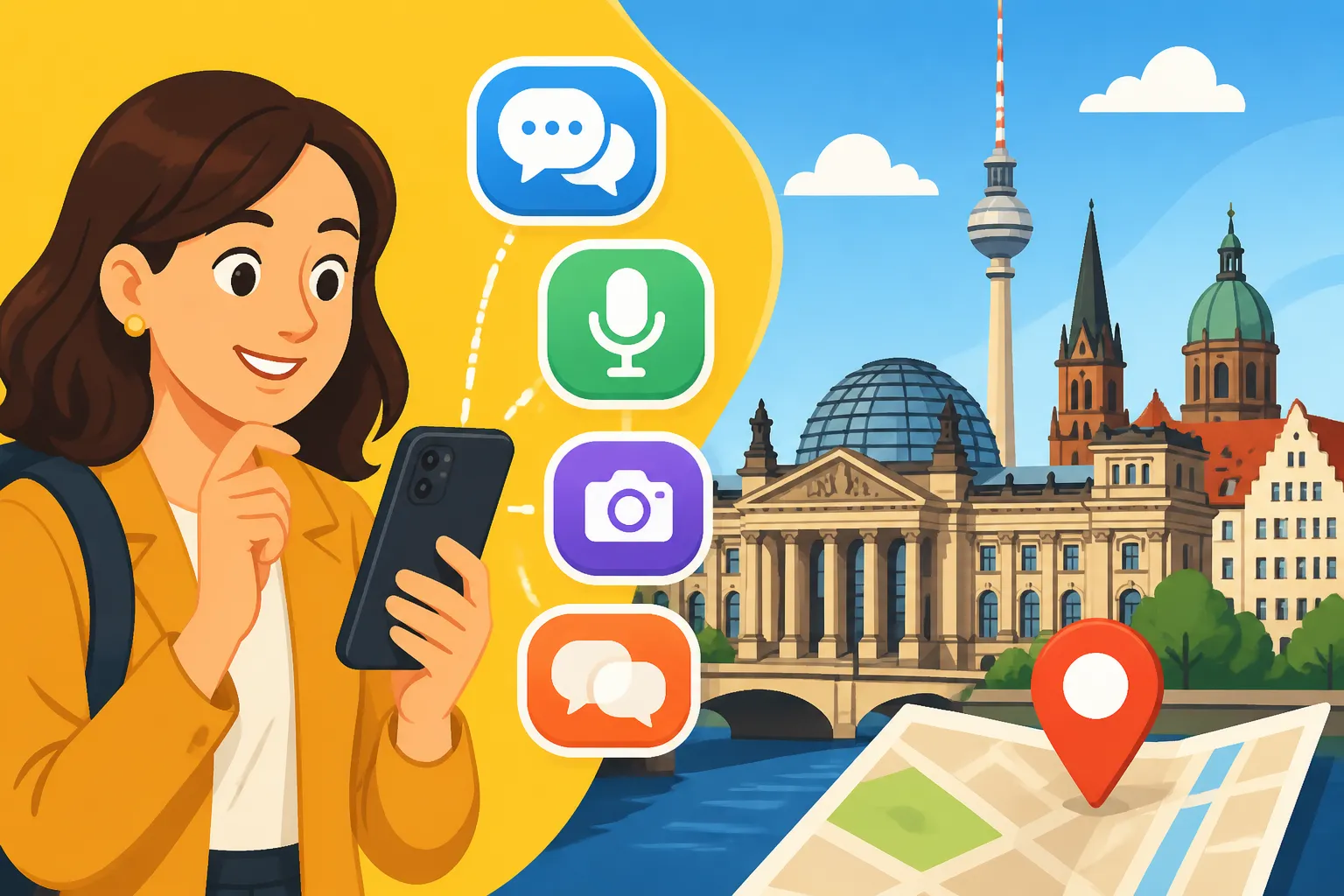
The ability to point your phone camera at a physical object and instantly read translated text in your native language is revolutionary for foreigners in Germany. Camera translation relies on Optical Character Recognition (OCR) combined with live rendering. This tool is indispensable when reading complex restaurant menus printed in stylized German scripts, deciphering street parking restriction signs, or parsing instructions on washing machines in rented apartments. Both Google Translate and DeepL offer visual translation features, though Google’s live overlay tends to be smoother when scanning moving text or unusual fonts.
Voice translation features have matured significantly, enabling conversational handoffs between speakers of different languages. When visiting a local pharmacy (Apotheke) or seeking directions in a quiet neighborhood, speaking directly into your phone and having the app vocalize a natural German translation breaks down immediate barriers. These voice modes often include automatic language detection, meaning you do not need to manually toggle back and forth between input languages during a back-and-forth exchange. Practicing with these features before high-pressure situations ensures you know where to tap and how clearly you need to articulate your words.
Microsoft Translator and Offline Capabilities
Microsoft Translator is often overlooked, yet it holds a vital strategic advantage for travelers and long-term residents in Germany: robust offline voice and text translation, coupled with excellent multi-device synchronization. Germany is notorious among European nations for unexpected cellular dead zones, affectionately referred to locally as Funklöcher. Whether you are taking a regional train through deep valleys, hiking in national parks, or standing in thick-walled medieval basements, mobile data signals can drop out completely without warning.
Relying entirely on cloud-based translation services leaves you vulnerable during these signal blackouts. Downloading offline language packs inside Microsoft Translator, Google Translate, or DeepL is a critical setup step that every visitor must complete upon arrival. Microsoft’s offline engine is remarkably compact yet accurate, ensuring that even if you find yourself without internet connection on a remote platform, you can still decode timetable changes, read safety alerts, and communicate basic needs to locals.
Practical Applications for Daily Scenarios in Germany
Deciphering Official Letters, Forms, and Bureaucracy
No aspect of expat life in Germany induces more sudden panic than opening your mailbox to find a heavy white envelope from a government agency, court, or utility provider. German administrative language, known as Behördendeutsch, is notoriously convoluted even for native speakers. It features multi-layered passive voice, archaic phrasing, and dense legal terminology. Attempting to paste these long texts word-for-word into a basic dictionary will result in a confusing word salad that fails to convey actionable meaning.
To handle official mail, open your chosen translation app’s camera mode and take a high-resolution snapshot of the document rather than using real-time scan modes. Snapshot modes allow the OCR engine to capture structural layouts, processing whole paragraphs together to maintain critical context. Pay special attention to highlighted deadlines (Fristen), bank details for required payments, and specific request demands. Before taking drastic action based on an automated translation, review our guide on Understanding German Bills and Letters: Decoding Official Mail to double-check key administrative terms. If the letter involves legal obligations or residency status, consider consulting a professional or reaching out to The Foreigners’ Office (Ausländerbehörde): How to Deal With It resources for human verification.
Ordering Food and Navigating German Dining Etiquette
Dining out in Germany is a delight, ranging from cozy rustic Gasthäuser to cutting-edge urban dining. However, navigating a German menu (Speisekarte) can present unexpected traps. Menus frequently use regional names for cuts of meat, local sausage varieties, and seasonal vegetables that do not translate directly in standard dictionaries. Furthermore, dietary codes are not always clearly marked. Using visual translation apps allows you to hover your camera over menu sections to spot ingredient details, helping you respect your dietary needs without embarrassing delays.
Beyond reading the menu, translation apps help bridge the gap during service interactions. Requesting tap water, asking for separate bills (Getrennt bezahlen), or inquiring about allergen cross-contamination requires clear communication. Before heading out to dine, taking a moment to study Ordering Food and Drinks in German: A Practical Phrasebook will build your baseline confidence. Combine those core phrases with quick voice app lookups for specialized requests, and keep in mind local customs outlined in German Dining Etiquette: Eating Out, Tipping, and Table Manners to ensure your overall restaurant experience is smooth, relaxed, and enjoyable.
Public Transit Notices, Train Delays, and Travel Logistics
Germany’s public transportation network is extensive, but delays, platform changes (Gleiswechsel), and construction re-routings are common reality. While main hubs display electronic signboards in both German and English, smaller regional stations and unexpected loudspeaker announcements operate entirely in German. When an automated voice echoes over a quiet platform announcing a cancellation, tourists without translation tools are often left standing confused while local passengers quickly hurry off toward an alternative bus or platform.
| Scenario | Primary Translation Challenge | Recommended App & Feature |
|---|---|---|
| Official Mail | Complex administrative terminology (Behördendeutsch) | DeepL (Document Upload / Text Copy-Paste) |
| Restaurant Menus | Regional culinary terms, stylized fonts, handwriting | Google Translate (Camera Live Overlay / Photo) |
| Train Delays & Notices | Rapid loudspeaker announcements, emergency signs | Google Translate / Microsoft (Voice & Offline) |
| In-Person Appointments | Formal back-and-forth dialogue under time pressure | DeepL (Text) / Google Translate (Voice Mode) |
| Remote Travel & Hiking | Lack of mobile coverage (Funklöcher) | Microsoft Translator (Downloaded Offline Pack) |
When managing long-distance transit across Germany, combining specialized travel apps with translation tools provides complete coverage. Booking platforms like Omio allow you to view schedules and ticket details in English, but real-time trackside updates or bus replacement notices (Schienenersatzverkehr) posted on paper signs require fast camera translation. Reading our detailed Deutsche Bahn Guide: Using Trains for City and Long-Distance Travel gives you structural knowledge of how transit works, while your translation app acts as your real-time troubleshooter when schedules abruptly shift.
Cultural Etiquette and Best Practices When Using Translation Apps
How to Politely Approach Locals with a Phone Screen
Technology should enhance human interaction in Germany, not replace basic manners. Thrusting a phone screen directly into someone’s face without warning is considered rude and disruptive. German social culture places a strong emphasis on personal boundaries, direct eye contact, and formal courtesy. When approaching a shopkeeper, train conductor, or passerby for assistance, always open with a friendly, spoken German greeting before introducing your smartphone.
A simple greeting like “Entschuldigung” (Excuse me) or “Guten Tag” (Good day) immediately signals politeness. You can then state a brief phrase indicating your reliance on technology, such as “Mein Deutsch ist nicht so gut, ich benutze eine App” (My German is not very good, I am using an app). Taking this respectful pause changes the dynamic completely. The person is much more likely to slow down their speech, wait patiently while you type or record, and respond clearly. Reviewing basic greeting norms in German Social Etiquette for Visitors: Greetings and Punctuality will ensure your initial impression is always warm and well-received.
Avoiding Common Machine Translation Traps and False Friends
Machine translation engines have reached astounding levels of accuracy, but German grammar contains structural traps that can cause humorous or awkward misunderstandings. One major area of confusion involves formal versus informal address. German strictly distinguishes between the formal “Sie” and the informal “du”. Translation apps occasionally default to informal address depending on the phrasing of your input. Using informal phrasing with an elder, a police officer, or a bureaucratic official can sound overly familiar or slightly disrespectful. It is wise to familiarize yourself with Polite German: Du vs Sie for Visitors so you can spot whether your app is outputting formal or informal pronouns.
Another classic trap involves “false friends” (Falsche Freunde)—words that look and sound nearly identical to English words but mean entirely different things. For instance:
* Gift in German means poison, not a present (a present is Geschenk).
* Preservativ refers to a condom, not a food preservative (Konservierungsmittel).
* Bekommen means to receive, not to become (werden). If you tell a waiter “I become a steak,” you are inadvertently making a comical grammatical error.
Checking key vocabulary in context rather than relying on single-word translations helps you avoid these hilarious yet confusing missteps.
Data Privacy and Offline Map Strategies for Travelers
Germany enforces exceptionally high data protection standards, grounded in deep cultural values around personal privacy (Datenschutz). When using voice recording features or live camera translation in public spaces, be mindful of people around you. Avoid pointing your camera directly at bystanders, official personnel, or private residential property. Filming individuals without explicit permission is legally regulated in Germany, and pulling out a camera in sensitive settings like banks, security checkpoints, or official buildings will draw swift reprimands.
Additionally, prepare your smartphone hardware before embarking on daily adventures. When organizing trips or finding hotel accommodations through services like Booking.com, save all reservation details, address cards, and check-in instructions as offline screenshots or PDFs. Pair these with offline map downloads (such as Google Maps or Maps.me) alongside your offline translation language packs. This multi-layered offline strategy guarantees that even if you wander into a historic cellar restaurant, enter a concrete underground station, or travel through rural valleys, your ability to navigate, translate, and communicate remains fully intact.
Comparing the Best Translation Apps for Germany
Comprehensive Feature Breakdown and Recommendations
Selecting the right app depends heavily on the specific situation you encounter during your time in Germany. No single app handles every scenario perfectly, which is why most long-term expats keep a balanced toolkit of two or three complementary translation applications on their smartphones.
DeepL is unequaled for written accuracy. If you are typing out an important message to your landlord about apartment quiet hours—a concept deeply rooted in local rules detailed in Quiet Hours and Sundays in Germany (Ruhezeit)—DeepL ensures your tone is balanced, precise, and grammatically flawless. It captures nuances that prevent accidental offense and presents clear alternatives for tricky phrases.
Google Translate remains the most practical all-rounder for immediate street-level use. Its camera translation handles signs, packaging, and notices in fractions of a second, while its conversational voice mode enables quick verbal exchanges at ticket counters or market stalls. Microsoft Translator serves as the ultimate safety net, offering stable, highly dependable offline capabilities that keep working when network infrastructure fails you.
Setting Up Your Smartphone for Seamless Translation
To maximize the efficiency of your translation apps, take time to configure your smartphone settings before you hit the streets. Enable system-level shortcuts, such as quick-tap widgets or lock-screen camera shortcuts, so you can launch translation tools instantly without tapping through multiple menus while holding up a line at a store.
First, navigate into the settings menu of your chosen translation apps and download the offline German language package immediately. Ensure that camera access, microphone permissions, and storage rights are permanently granted so you are not prompted for security permissions during urgent situations. Furthermore, consider adding a German language keyboard layout to your phone’s native settings. This allows you to type German special characters—such as the umlauts (ä, ö, ü) and the sharp S (ß)—with ease. Having access to these characters improves search accuracy when looking up specific street names, train stations, or municipal services.
Finally, balance your reliance on digital tools with a genuine effort to build basic language skills over time. Apps are fantastic safety nets, but learning fundamental phrases enhances your overall travel experience immensely. Start by reviewing Survival German for Travelers: Key Phrases to Learn First to master daily essentials. Combining practical digital tools with basic spoken efforts will unlock the very best of German hospitality, turning potential language barriers into memorable cultural connections.
Disclaimer
This article is for general informational purposes only and does not constitute professional advice. Laws, prices and regulations vary by location and change over time. Consult a qualified professional for guidance on your specific situation.