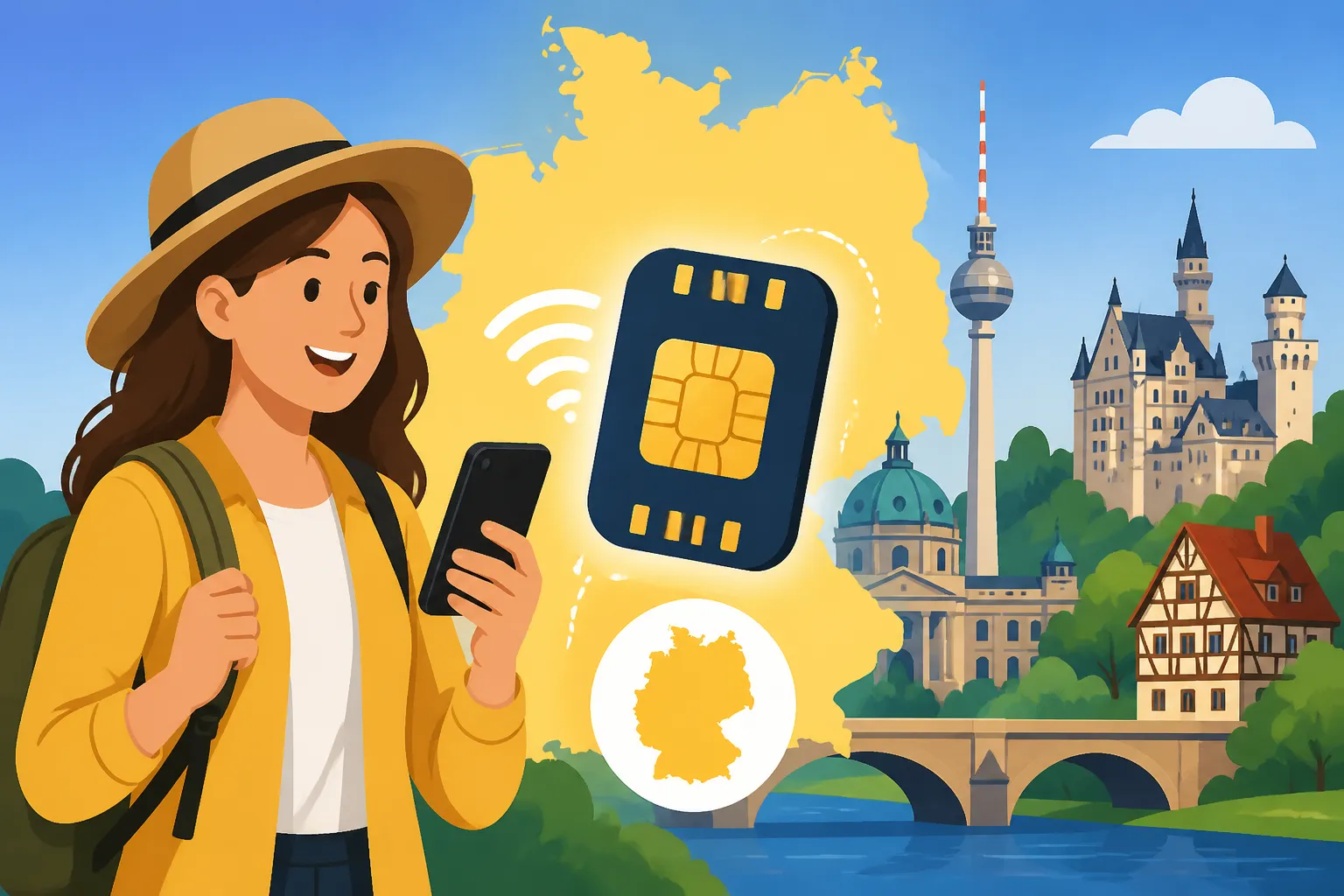
How to Get a Local eSIM for Travel in Germany
Landing in a new country, feeling that familiar pang of panic as your phone stubbornly refuses to connect, is a truly frustrating experience. You just want to tell your loved ones you've arrived safely, look up directions to your hotel, or find the nearest Bäcker for a much-needed pretzel. This guide cuts through the confusion, showing you how a local eSIM for Germany can be your digital lifeline, ensuring seamless connectivity from the moment you touch down.
Disclosure: This post may contain affiliate links. We may earn a commission at no extra cost to you if you make a purchase through these links. Read full disclosure.
Why an eSIM is a Game-Changer for Travelers in Germany
Let's be honest, the old way of getting connected when you travel – either with exorbitant roaming charges or hunting down a physical SIM card – is a hassle nobody needs. It adds a layer of stress to what should be an exciting arrival. Thankfully, the world of eSIMs has revolutionized this, especially for us folks exploring the beautiful, efficient, but sometimes bureaucratically complex landscape of Germany.
The Frustration with Traditional SIM Cards (and Roaming)
Picture this: you've just landed at Frankfurt Airport, tired from a long flight. All you want is to check your train connection to the city center. But your home SIM card has decided to embrace the spirit of German Gründlichkeit (thoroughness) by racking up charges faster than you can say "Guten Tag!" if you dare to use data. So, you look for a local SIM. This usually means finding a mobile phone store, grappling with potential language barriers as you try to explain what you need, and then waiting for them to activate a tiny piece of plastic that you have to swap into your phone. What if your phone uses a different size SIM? What if you need to keep your home SIM in for important calls or two-factor authentication from your bank? It's a logistical headache.
Many of us have tried to survive on airport Wi-Fi, only to find it's either slow, requires endless registration, or simply non-existent when you need it most. And those expensive international roaming packages from your home provider? They often feel like throwing money into a digital abyss. The frustration is real, and it’s a feeling many expats and tourists encounter upon arrival.
Instant Connectivity and Convenience: The eSIM Advantage
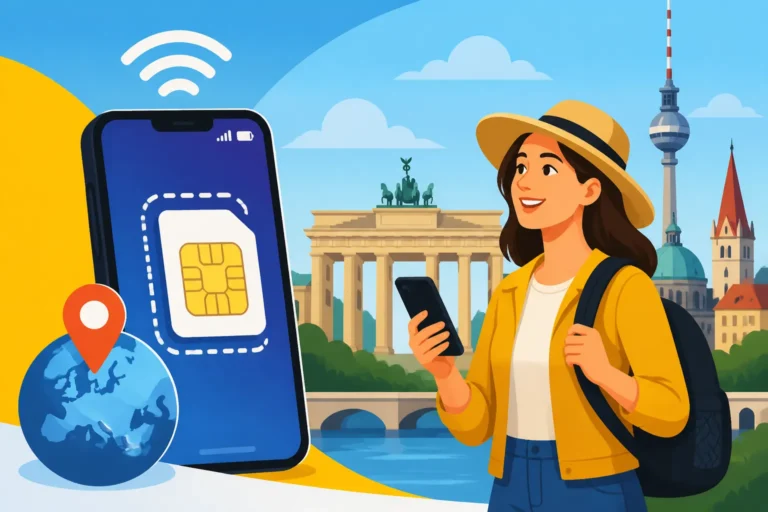
This is where the eSIM truly shines as a modern marvel for travelers. An eSIM, or embedded SIM, is essentially a digital SIM card that's built directly into your phone. No physical swapping needed. What does this mean for your trip to Germany?
First and foremost, it means instant connectivity. You can purchase and install your eSIM plan before you leave home, then activate it when you land. The moment you land and your phone registers a local network, boom – you're online. No more frantic searching for a store or dealing with paper forms. You simply scan a QR code or enter a few details, and you're good to go. This is a game-changer for navigating German cities from Berlin to Munich.
Secondly, convenience is unparalleled. You can keep your existing physical SIM card in your phone, meaning you can still receive calls and texts on your home number. This is incredibly useful for family communication or if you need to access online banking with SMS authentication. You can choose which SIM to use for data, allowing you to seamlessly switch between your home plan (if you need it for specific services) and your local German eSIM. It’s flexible, efficient, and perfectly suited for the dynamic needs of a traveler exploring Germany.
Choosing the Right Local eSIM Provider for Germany
The market for eSIMs has exploded in recent years, which is great for competition but can also feel a bit overwhelming when you're trying to pick one. Finding the right eSIM for your trip to Germany depends on a few key factors: how much data you need, how long you're staying, and what kind of network coverage you expect.
Key Factors to Consider When Selecting an eSIM Plan
When you're staring at a list of eSIM providers, it's easy to get lost in the jargon. Let's break down what truly matters for your German adventure:
- Data Allowance: This is probably the most crucial factor. Are you just planning to use maps and messaging, or will you be streaming videos, making video calls, and uploading photos constantly? Most providers offer various packages, from a few gigabytes for short trips and light usage to unlimited data for longer stays or heavy users. For most tourists on a week-long trip, 5-10GB is usually sufficient if you're mindful about using Wi-Fi when available at your accommodation or cafes.
- Validity Period: eSIM plans come with specific durations – 7 days, 15 days, 30 days, or even longer. Make sure the plan you choose covers your entire stay in Germany. You don't want to run out of data a day before your flight home! Some providers allow you to top up, while others require you to purchase a new plan.
- Network Coverage: Germany has excellent mobile networks, primarily run by Telekom (often regarded as the best), Vodafone, and O2 (Telefónica). Most global eSIM providers partner with one or more of these major German networks. If you're planning to stick to major cities like Berlin, Hamburg, or Munich, coverage will be excellent across all providers. However, if you're venturing into more rural areas, hiking in the Black Forest, or exploring the Bavarian Alps, checking which network your chosen eSIM provider uses can be beneficial. Telekom typically offers the broadest and most reliable coverage, especially outside urban centers.
- Cost per GB: Do a quick comparison. Some providers offer more competitive rates for larger data packages, while others might have cheaper entry-level options. Don't just look at the total price; calculate the cost per gigabyte to get a true sense of value.
- Ease of Activation and Top-Up: Read reviews. How straightforward is the activation process? Is it just a simple QR code scan, or does it involve fiddly manual settings? Can you easily top up data if you run out, or do you have to buy a whole new plan? A smooth user experience makes a big difference, especially when you're on the go.
Popular eSIM Options for Germany-Bound Travelers
For visitors to Germany, global eSIM marketplaces and providers generally offer the most convenient and flexible options. Local German network providers like Telekom, Vodafone, and O2 primarily cater to residents with long-term contracts, and while they might offer prepaid physical SIMs or even eSIMs, the activation process can be more complex for short-term visitors who don't have a registered German address.
Here are some popular global eSIM providers that work well in Germany:
- Airalo: This is a widely popular eSIM marketplace known for its user-friendly app and extensive country-specific and regional plans. For Germany, they offer various data packages on networks like Telefónica (O2) and sometimes Telekom, with validity periods ranging from 7 to 30 days. It's often one of the first choices for travelers due to its reliability and global reach.
- Holafly: Holafly is another strong contender, especially if you're a heavy data user. They often provide unlimited data plans for specific countries, including Germany. While "unlimited" usually comes with fair usage policies (meaning speeds might throttle after a certain threshold), it's a fantastic option for peace of mind. They typically partner with major German networks for robust coverage.
- Nomad: Similar to Airalo, Nomad offers a range of data plans for Germany, allowing you to choose based on your data needs and trip duration. They often feature plans with different network partners, giving you some flexibility if you have a preference for, say, Vodafone's coverage over O2's.
- GigSky: GigSky focuses on premium connectivity, offering plans that often leverage top-tier networks. They might be a bit pricier but promise reliable service, which can be crucial for business travelers or those who absolutely need consistent, high-speed internet.
When considering these, always check their latest offerings directly on their websites or apps, as plans and partnerships can change. The key is to find one that aligns with your data needs, budget, and desired level of convenience.
| eSIM Provider | Data Options (for Germany) | Validity Period | Network Partners (typically) | Key Feature |
|---|---|---|---|---|
| Airalo | 1 GB – 20 GB | 7 – 30 days | O2 (Telefónica), sometimes Telekom | User-friendly app, global coverage |
| Holafly | Unlimited Data | 5 – 90 days | Major German networks | Peace of mind with "unlimited" data |
| Nomad | 1 GB – 50 GB | 7 – 60 days | Various German networks | Flexible data packages, good value |
| GigSky | 1 GB – 50 GB | 7 – 30 days | Premium German networks | High-speed, reliable connectivity |
Note: Data options and pricing are subject to change. Always check the provider's official website for the most current information.
Step-by-Step Guide to Getting and Activating Your German eSIM
Getting an eSIM for Germany is surprisingly straightforward, especially compared to wrestling with local SIM card procedures. A little preparation goes a long way to ensure you're connected the moment your plane lands.
Before You Arrive: Preparation is Key
The beauty of an eSIM is that you can often sort it all out before you even step foot on German soil. This pre-trip prep will save you a world of stress.
- Check Device Compatibility: This is step number one, and it's non-negotiable. Not all phones support eSIMs. Generally, newer smartphones (iPhone XS/XR and later, Samsung Galaxy S20 and later, Google Pixel 3 and later) are compatible. Double-check your specific phone model to ensure it has eSIM capability. A quick search online for "[Your Phone Model] eSIM compatibility" will give you the answer.
- Choose Your Provider and Plan: Based on your data needs, trip duration, and budget, select an eSIM provider and a specific plan for Germany. Refer back to our table above or do some quick research. Popular options like Airalo or Holafly have dedicated apps that make the process very smooth.
- Download the Provider's App (if applicable): Many eSIM providers, such as Airalo or Nomad, have intuitive apps where you can browse plans, purchase, and manage your eSIMs. Downloading this app and setting up an account beforehand will streamline the process.
- Purchase Your eSIM Plan: Once you've picked your plan, purchase it through the provider's app or website. You'll typically pay with a credit card or PayPal.
- Understand the Activation Steps: After purchase, you'll receive instructions, usually involving a QR code. Some providers might also offer manual installation details. Do not activate your eSIM until you are ready to use it. For instance, if you buy a 7-day plan, and activate it a day before you leave, you've already lost a day of validity. Most plans begin their validity countdown from the moment they connect to a network at your destination. So, generally, it's best to install it before departure, but activate it upon arrival.
Arriving in Germany: Activating and Troubleshooting
The moment has arrived! You're in Germany, and it's time to get connected.
- Arrive and Connect: Once you've landed in Germany, turn off airplane mode. Your phone will usually connect to a local network automatically.
- Activate Your eSIM:
- Using a QR Code: This is the most common method. Go to your phone's settings:
- iPhone: Settings > Cellular (or Mobile Data) > Add eSIM > Use QR Code. Scan the QR code provided by your eSIM provider.
- Android (varies by manufacturer): Settings > Network & Internet > SIMs > Add more (or similar) > Download a SIM instead. Scan the QR code.
- Manual Activation: If a QR code isn't an option or doesn't work, your provider will give you manual details (SM-DP+ Address, Activation Code). You'll typically input these in the same "Add eSIM" section of your phone settings.
- Using a QR Code: This is the most common method. Go to your phone's settings:
- Label Your eSIM: Your phone will prompt you to label your new eSIM (e.g., "Germany Travel" or "Work"). This helps you differentiate it from your primary SIM.
- Set as Primary Data Line: In your phone's cellular settings, make sure your new German eSIM is selected as the primary line for "Mobile Data" or "Cellular Data." Crucially, ensure "Allow Cellular Data Switching" is off if you want to avoid accidentally using expensive roaming data from your home SIM.
- Check APN Settings (if needed): In rare cases, your data might not work immediately. You might need to manually configure the Access Point Name (APN). This information will be provided by your eSIM provider. You'll typically find APN settings under your eSIM's options in your phone's cellular settings. For instance, common APNs in Germany might be "internet.telekom" or "internet.vodafone.de," but always use what your eSIM provider gives you.
- Common Issues and Solutions:
- No Signal/No Data: First, ensure your eSIM is selected for data. Try toggling airplane mode on and off. Restart your phone. Confirm APN settings are correct.
- Wrong Network: Some eSIMs are multi-network. If you're in a rural area, your phone might latch onto a weaker signal. You can often manually select a network in your phone's cellular settings (e.g., choose "Telekom.de" or "Vodafone.de" instead of automatic).
- Expired Plan: Double-check your plan's validity. If it's expired, you'll need to top up or buy a new plan.
- Customer Support: If you're truly stuck, most eSIM providers have 24/7 online chat support. Have your account details ready, and they can often troubleshoot remotely.
Maximizing Your eSIM Experience in Germany
Having reliable data in Germany isn't just a luxury; it's a tool that can profoundly enhance your travel experience. From navigating intricate train systems to finding hidden gems, your eSIM is your trusty sidekick.
Data Usage Tips and Tricks for Travelers
Even with a generous data plan, being smart about your usage can extend its life and ensure you're never caught off guard.
- Embrace Wi-Fi: Wherever possible – at your hotel, a café, a museum – connect to free Wi-Fi. Many German establishments offer it, especially in tourist areas. This conserves your eSIM data for when you're truly on the go.
- Download Offline Content: Before you head out for the day, or even before your trip, download offline maps (Google Maps allows this easily for entire regions or cities), transit schedules, or even entertainment for long train rides. This reduces your reliance on real-time data.
- Monitor Data Usage: Most eSIM apps allow you to track your data consumption. Set reminders to check it regularly, or even enable data usage warnings on your phone to avoid nasty surprises.
- Top-Up Options: Understand your provider's top-up policy. Can you easily add more data if you run low? Some providers make it a seamless in-app purchase, while others might require you to buy a whole new plan. This flexibility is key for extended or unpredictable trips.
Integrating eSIM with Your Travel Plans
With your eSIM providing stable internet, you unlock a host of possibilities that make navigating Germany a breeze.
- Seamless Navigation: Forget fumbling with paper maps. Your eSIM data means real-time GPS navigation with apps like Google Maps or Apple Maps. This is invaluable for walking around unfamiliar cities or driving on the Autobahn. If you're using public transport, this connectivity is even more vital. Apps like DB Navigator for national train travel or local city apps (like BVG Fahrinfo for Berlin, MVV for Munich, or RMV for Frankfurt) become indispensable. Knowing when your next tram or U-Bahn is coming, and if there are any delays, can save you precious sightseeing time. This links perfectly with our article on Getting Around German Cities: U-Bahn, S-Bahn, Trams, and Buses.
- Booking and Information on the Go: Spontaneous travel is a joy, and your eSIM facilitates it. Want to book a last-minute train ticket? Use the DB Navigator app. Looking for a tour of a famous castle or a walking tour in a city like Berlin? Platforms like GetYourGuide become your best friend, allowing you to browse, book, and receive instant confirmation right from your phone. Need to extend your stay or find a new hotel? Booking.com and similar apps are at your fingertips, showing real-time availability. Even for inter-city travel, your eSIM lets you compare and book buses or trains easily on platforms like Omio.
- Language Barrier Breaker: Germany is welcoming, but not everyone speaks fluent English. Your eSIM allows you to use real-time translation apps like Google Translate or DeepL Translator. Whether you're ordering food at a local Gasthaus or asking for directions, these apps are lifesavers. They can even translate menus or signs by using your phone's camera. This ties into our advice on Using Translation Apps in Germany: What Works Best.
- Staying Connected & Safe: Beyond practicalities, your eSIM keeps you connected to loved ones back home via WhatsApp, FaceTime, or other messaging apps without worrying about unexpected charges. In an emergency, having reliable data to call for help, look up Emergency Numbers in Germany: Calling 112, Poison Control, and More, or share your location is absolutely paramount for your safety and peace of mind. Check out our guide on Staying Safe in Germany: Common-Sense Tips for Travelers for more.
- Digital Wallets and Payments: While Germany is still quite cash-heavy, having your mobile banking apps or digital wallets connected via your eSIM allows for easy payment monitoring and management. For more on navigating finances, see Money for Travel in Germany: Cash, Cards, and ATMs.
By carefully selecting and utilizing your eSIM, you transform your smartphone into an even more powerful travel companion, truly unlocking the best of Germany without the stress of connectivity issues. It's a small change with a massive impact on your travel experience.
Navigating Specific Scenarios with Your eSIM
While the general activation process is straightforward, some unique German quirks or specific travel styles might require a bit more thought.
Extended Stays and Multi-Country Trips
If your German adventure is stretching beyond a few weeks, or if you're planning to hop across borders into neighboring EU countries, your eSIM strategy might shift.
For longer stays within Germany, while global eSIM providers are convenient, you might eventually consider a local prepaid physical SIM from a major German provider (like Telekom's MagentaMobil Prepaid or Vodafone's CallYa) if you need a German phone number for local registrations or longer-term use. However, for most tourist purposes, topping up your global eSIM remains the easiest path. You won't generally need a local German phone number unless you're starting the process of becoming a resident and need to register with the Anmeldung.
For multi-country trips across Europe, many eSIM providers offer regional plans (e.g., "Europe eSIM") that cover multiple countries, including Germany, under a single package. This saves you the hassle of buying a new eSIM for each country. Always check the list of included countries to ensure your itinerary is fully covered. This simplifies travel planning immensely, allowing you to seamlessly cross borders without a thought about your data. For travel planning across countries, using apps and services like Omio to book trains and buses will be effortless with constant connectivity. Before embarking on multi-country travel, it's also wise to consider Travel Insurance for Trips to and Within Germany to cover any unexpected medical or travel issues.
Public Transport and City Navigation
Germany's public transport system is renowned for its efficiency, but it can be overwhelming at first glance. Your eSIM is crucial here.
As mentioned earlier, city-specific apps (e.g., BVG for Berlin, HVV for Hamburg, VVS for Stuttgart) are indispensable. They provide real-time updates, allow you to purchase digital tickets, and plan routes. Without data, these apps lose much of their utility. Imagine trying to figure out a tram detour or a delayed S-Bahn connection without real-time information – it's a recipe for confusion and missed appointments. Having your eSIM connection lets you access these critical resources on the fly, making your transit experience smooth and stress-free. For more on Germany's robust rail network, read our Deutsche Bahn Guide: Using Trains for City and Long-Distance Travel.
Essential Apps and Digital Tools
Your eSIM isn't just about basic internet; it empowers your smartphone to become a true travel assistant. Beyond maps and translation, consider downloading these apps before your trip:
- Weather Apps: German weather can be fickle. A reliable weather app can help you pack for the day.
- Banking Apps: To monitor spending and make sure everything is in order.
- Communication Apps: WhatsApp is king in Germany. Ensure you have it set up to communicate with tour guides, new friends, or even some local businesses.
- Review Sites (TripAdvisor, Yelp): Find the best local restaurants, shops, and attractions based on real-time reviews.
- Ride-Sharing Apps (like Free Now or Bolt): While taxis are prevalent, ride-sharing can be convenient in some cities.
For a broader view on useful digital tools, check out our article on Top 10 Apps for Living in Germany: Navigating Daily Life with Your Smartphone. Having constant data ensures these apps function perfectly, turning your phone into an invaluable hub for all your travel needs.
Disclaimer
Please note that the information provided in this guide is for general informational purposes only and is subject to change. eSIM provider offerings, network coverage, and specific activation processes can vary and evolve. While we strive to provide accurate and up-to-date advice, it's always recommended to check the latest terms and conditions directly with your chosen eSIM provider and verify device compatibility before making any purchases. We are not liable for any issues arising from the use of eSIM services.