Bread, Bakeries, and the German Breakfast
Many expats arriving in Germany find themselves in a delightful, if sometimes perplexing, culinary landscape, especially when it comes to the morning meal. Gone are the days of sugary cereals or thinly sliced white bread for many; here, you're thrust into a universe of dense, dark, glorious loaves and an array of rolls that can leave you staring blankly at the bakery counter. I remember my first morning here, bright-eyed and bushy-tailed, expecting some familiar fluffy toast, only to be confronted with what seemed like a brick-sized loaf of dark rye and a myriad of rolls I couldn't even name. It’s a wonderful culture shock, and this guide is here to help you navigate the incredibly rich world of German bread, bakeries, and the cherished breakfast tradition.
Disclosure: This post may contain affiliate links. We may earn a commission at no extra cost to you if you make a purchase through these links. Read full disclosure.
The Heart of German Culture: A Deep Dive into German Bread (Brot)
German bread isn't just a food item; it's a fundamental pillar of the country's identity, history, and daily life. You'll quickly discover that the German relationship with bread is deeply rooted, almost sacred, and vastly different from many other cultures. It’s a source of immense pride, and for good reason – the quality and variety are simply astounding.
More Than Just Food: Bread's Place in German Identity
For centuries, bread has been the bedrock of the German diet, particularly in regions where grain cultivation flourished. Its significance goes beyond mere sustenance; it’s woven into social customs, proverbs, and even religious practices. In Germany, bread represents home, comfort, and stability. You'll often hear Germans express how much they miss "proper" German bread when they travel abroad, a sentiment I quickly came to understand myself. It’s not just about a preference; it’s a cultural connection. This deep appreciation has fostered a baking tradition that values quality, diversity, and craftsmanship above all else, ensuring that bread remains at the heart of German tables for generations to come.
The sheer variety of bread available reflects Germany's rich regional history. Each region, sometimes even each town, boasts its own signature breads, often tied to local agricultural products or historical trade routes. From the dark, earthy Pumpernickel of Westphalia to the lighter, rye-heavy breads of Bavaria, regional identity is literally baked into the loaves. This historical evolution means that exploring German bread is a journey through the country's culinary geography, offering endless opportunities to discover new favorites. It's truly a testament to a culture that deeply values its heritage and the meticulous art of creation.
Decoding the German Bread Aisle: Varieties and Ingredients
Stepping into a German bakery can feel like entering a foreign library – so many titles, so little understanding! But fear not, once you grasp a few key terms, you’ll be ordering like a seasoned local. The main distinction often lies in the type of flour used, with rye (Roggen) and wheat (Weizen) being the most common, often mixed in various proportions.
- Roggenbrot (Rye Bread): This is the epitome of German bread for many. It's often dark, dense, and has a strong, tangy flavor thanks to the sourdough starter (Sauerteig) that is almost always used. Examples include Pumpernickel, a very dark, dense, whole-grain rye bread, and Kommissbrot. Rye breads are incredibly filling and keep fresh for a long time. They are particularly popular in the northern and eastern parts of the country.
- Weizenbrot (Wheat Bread): While not as predominant as rye, wheat bread is also popular. Think of it as the German answer to white bread, though still far more substantial than what you might find elsewhere. It’s lighter in color and texture than rye bread, often used for sandwiches or toast. Bauernbrot, or farmer's bread, is a common mixed bread.
- Mischbrot (Mixed Bread): This is perhaps the most common category, where rye and wheat flours are blended. The ratio can vary greatly, with some being more rye-heavy (Roggenmischbrot) and others more wheat-heavy (Weizenmischbrot). This creates a vast spectrum of flavors and textures, offering a perfect middle ground for those who find pure rye bread too intense or pure wheat bread too light. These versatile loaves are perfect for any meal and represent the everyday bread for many German households.
- Vollkornbrot (Whole-Grain Bread): Germany takes its whole-grain seriously. If a bread is labeled Vollkornbrot, it must contain at least 90% whole-grain flour. These breads are incredibly healthy, packed with fiber, and have a rich, nutty flavor. They are often even denser than traditional rye breads and are a staple for health-conscious Germans.
- Sauerteigbrot (Sourdough Bread): The cornerstone of many German breads, sourdough starter adds a distinctive tang and helps with preservation. Many traditional bakeries pride themselves on their decades-old sourdough starters, which contribute unique flavor profiles to their breads. You'll find sourdough used in everything from pure rye breads to many mixed breads, giving German bread its characteristic depth and chewiness.
The range of ingredients extends beyond flour, too. Many breads incorporate seeds like sunflower (Sonnenblumenbrot), pumpkin (Kürbiskernbrot), or flaxseed (Leinsamenbrot), as well as nuts, dried fruits, or spices. This diversity ensures that there’s a bread for every taste and occasion, making the "bread aisle" a true adventure.
The Art of German Baking: Handwerk and Quality Standards
The title "Bäcker" (baker) in Germany isn't just a job; it's a highly respected skilled trade, a "Handwerk" that requires years of apprenticeship and dedication. This commitment to craft is a fundamental reason why German bread is so exceptional. Bakers learn not just recipes, but the science of dough, the nuances of yeast and sourdough, and the art of fermentation.
Traditional German baking adheres to rigorous standards, though not as strictly codified as the Reinheitsgebot for beer, which dictates purity laws. Nonetheless, there's a strong cultural expectation and often voluntary adherence to principles of natural ingredients, long fermentation times, and avoiding unnecessary additives. Many small, independent bakeries continue to use time-honored methods, baking daily, often starting their work in the pre-dawn hours to ensure fresh bread for the morning rush. They often mill their own flour or source it from local, trusted mills, further emphasizing their dedication to quality and regionality. This focus on natural, wholesome ingredients and meticulous preparation is what gives German bread its incomparable flavor, texture, and longevity.
Even today, many bakeries are family-run businesses, passing down recipes and techniques through generations. This deep connection to tradition ensures that the rich heritage of German baking continues to thrive. It’s this dedication to quality and craftsmanship that truly elevates German bread from a simple food to a cultural icon.
Your Daily Bread: Navigating German Bakeries (Bäckereien)
For most Germans, the local bakery, or Bäckerei, is an indispensable part of daily life. It’s not just where you buy bread; it’s a community hub, a source of comfort, and an integral part of the morning ritual. Understanding how to navigate this institution is key to feeling like a true local.
The Ubiquitous German Bakery Experience
The moment you step into a German bakery, your senses are immediately enveloped. The warm, yeasty aroma of freshly baked goods fills the air, mingling with the sweet scent of pastries and coffee. Counters are laden with an astonishing array of loaves, from the darkest Pumpernickel to golden-crusted Mischbrot, alongside glistening Brezeln (pretzels) and a dizzying variety of Brötchen (rolls). Often, there’s a small café section where you can enjoy your breakfast with a hot cup of coffee, observing the bustle of daily life.
The bakery is particularly vibrant in the mornings, as people pop in before work or school to grab their daily bread and rolls. It’s a place of quick, efficient transactions, but also of familiar greetings and small talk. For many, it's a daily pilgrimage, a routine that provides a sense of continuity and simple pleasure. The sheer volume and variety can be overwhelming at first, but it quickly becomes a cherished part of your daily routine. Don't be surprised if your local baker remembers your usual order after a few visits!
Ordering Like a Local: Tips for Your First Bakery Visit
Your first few visits to a German bakery might feel like a mini-challenge, especially if your German isn't quite up to speed. But don't let that deter you! Here are a few tips to make your experience smooth:
- Know Your Names: Try to learn the names of a few common breads and rolls. "Ein Brötchen, bitte" (one roll, please) or "Eine Brezel, bitte" (one pretzel, please) are great starting points. If you see something you like but don't know the name, simply point and say "Das hier, bitte" (This one here, please). The bakers are usually very patient with foreigners.
- Quantity is Key: Germans are direct, so state the quantity clearly: "Zwei Brötchen" (two rolls), "Ein halbes Kilo Schwarzbrot" (half a kilo of black bread), or "Ein Stück Kuchen" (one piece of cake).
- Cash is Still King: While card payments are becoming more common, especially in larger chains, many smaller, traditional bakeries still prefer or only accept cash for smaller purchases. Always have a few euros coins and small bills handy.
- The "Tüte" (Bag): You might be asked "Tüte dazu?" (Bag with it?). A simple "Ja, bitte" (Yes, please) or "Nein, danke" (No, thank you, if you brought your own bag) will suffice.
- Beyond Bread: Don't forget to explore the other delights. From "Kuchen" (cakes) and "Torten" (tarts) to "Gebäck" (pastries) and "Plunder" (Danish-like pastries), there's a sweet treat for every craving. It's perfectly acceptable to order a coffee and a pastry and enjoy it right there.
Don't rush, especially during peak morning hours. Take your turn in line, and when it’s your chance, make eye contact and greet the baker with a friendly "Guten Morgen!" This small gesture goes a long way in navigating any interaction in Germany.
Beyond the Traditional: Modern Bakery Trends and Chains
While the image of a quaint, traditional family bakery is strong, Germany also has a dynamic baking scene that includes larger chains and modern concepts. You'll find bakeries like Kamps or Thürmann in nearly every city, offering convenience and a consistent range of products. These larger establishments often have extensive seating areas and a wider selection of coffee and breakfast items, making them popular spots for a quick morning bite or a casual coffee break.
In recent years, there's also been a growing trend towards organic (Bio-Bäckereien) and specialty bakeries that cater to specific dietary needs, offering gluten-free or vegan options. Some modern bakeries might focus on artisanal sourdoughs with unique flavor combinations or introduce international baking influences. So, while the classic Bäcker remains a beloved institution, the German bakery landscape is constantly evolving, offering something for everyone, whether you're seeking time-honored tradition or contemporary culinary innovation. When exploring new cities, it’s always worth checking out local recommendations to find hidden bakery gems. You can even use resources like Omio to plan a weekend trip to a new region, specifically to try their famous local bread specialties.
The Quintessential German Breakfast (Frühstück)
The German breakfast is more than just a meal; it's a cherished ritual, a wholesome start to the day that emphasizes fresh, high-quality ingredients. Unlike the quick, often sweet breakfasts prevalent in some other cultures, the German Frühstück is typically savory, substantial, and incredibly satisfying.
A Hearty Start: Components of a Traditional German Frühstück
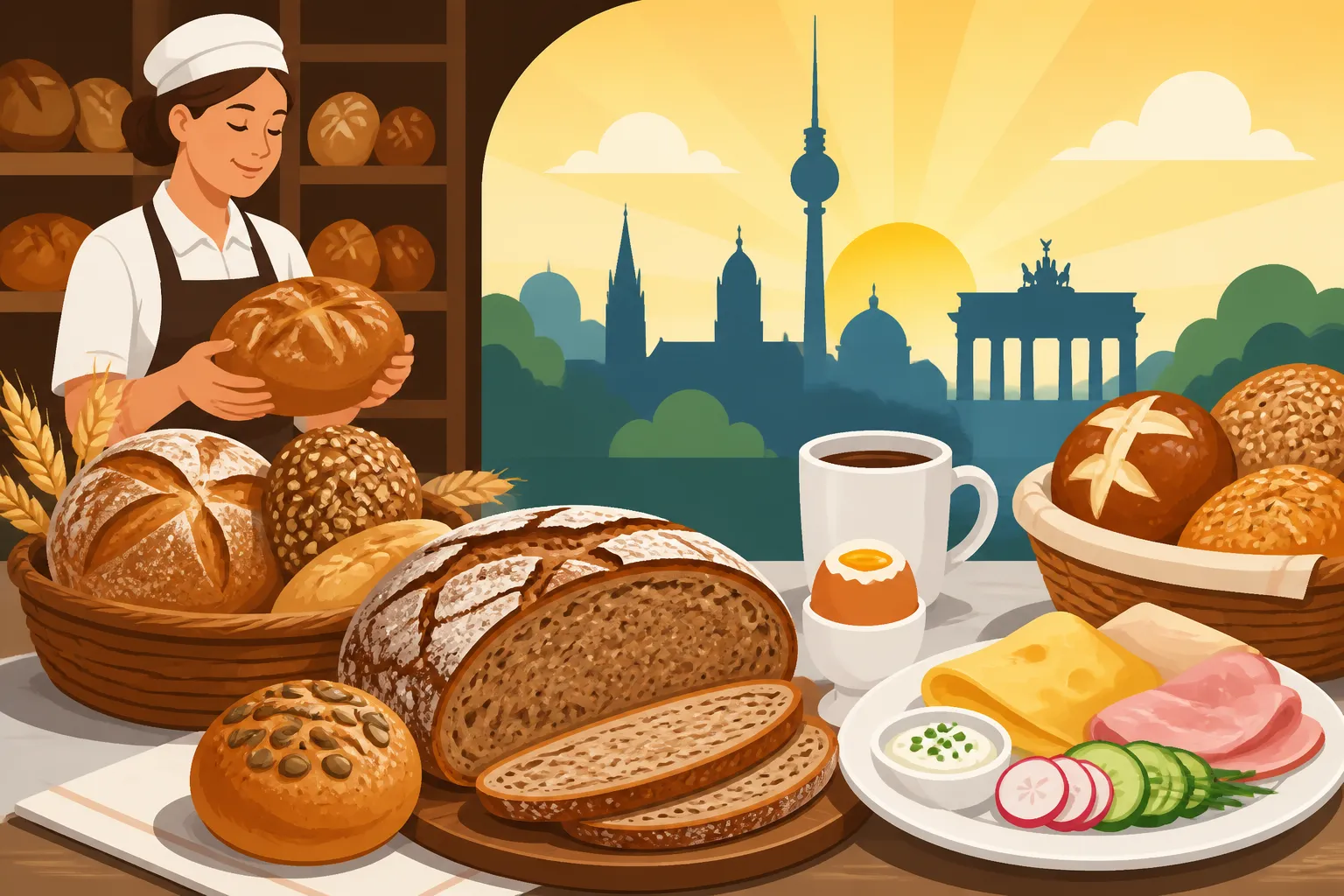
A traditional German breakfast is a feast for the senses, built around an impressive spread that caters to all tastes. At its heart are, of course, the various breads and rolls you've just learned about. You'll find a basket filled with fresh Brötchen, slices of Roggenbrot, Mischbrot, and maybe even a few pretzels.
Accompanying the bread are an array of delectable toppings:
- Wurst (Cold Cuts): A wide selection of sliced meats, ranging from various types of ham (Schinken) to liver sausage (Leberwurst), salami, and regional specialties like Teewurst (a spreadable sausage).
- Käse (Cheese): An equally diverse offering of cheeses, including mild Gouda, creamy Camembert, tangy Emmentaler, and many local varieties.
- Marmelade/Konfitüre (Jam/Preserves): Sweet fruit spreads, often homemade or from local producers, provide a nice contrast to the savory items. Honey (Honig) is also a popular choice.
- Ei (Eggs): Often boiled (hartgekocht or weichgekocht for hard-boiled or soft-boiled), eggs are a common component, sometimes served with a sprinkle of chives.
- Kaffee oder Tee (Coffee or Tea): A steaming cup of coffee is almost mandatory, though a variety of teas are also readily available. Milk (Milch) and sugar (Zucker) are usually offered.
- Quark or Joghurt: Plain quark or yogurt, sometimes with fresh fruit, can also be part of a healthy breakfast.
This combination of fresh baked goods, savory proteins, and sweet spreads ensures a balanced and energizing start to your day. It’s a social meal, often enjoyed with family, providing a moment of calm before the day's activities begin. The focus on fresh ingredients and diverse flavors is what makes the German breakfast such a distinctive and enjoyable culinary experience.
Breakfast Out: Cafés and Hotel Breakfast Buffets
Eating breakfast out in Germany is a popular pastime, especially on weekends. Cafés, bakeries with seating, and hotels all offer excellent breakfast options, ranging from simple roll-and-coffee deals to lavish buffets.
- Cafés: Many cafés offer dedicated breakfast menus (Frühstückskarte) that allow you to customize your meal. You can often choose from different "breakfast plates" that include a selection of bread, cold cuts, cheese, and an egg, often accompanied by fresh juice and coffee. Prices can vary widely depending on the city and the establishment, but generally offer good value for the quality and quantity of food.
- Hotel Breakfast Buffets: If you're staying in a hotel, especially one booked through a platform like Booking.com, you'll likely encounter an impressive breakfast buffet. These buffets are an excellent way to sample a vast range of German breakfast items, often including warm dishes like scrambled eggs, bacon, and sausages, alongside the extensive cold spread. They're particularly convenient for tourists or new expats looking to familiarize themselves with the local culinary scene without the pressure of ordering a la carte. Many hotels pride themselves on their breakfast offerings, seeing it as a key part of the guest experience.
- Bakery Cafés: As mentioned, many larger bakeries now feature café areas. These are perfect for a quick and affordable breakfast, often offering a "Frühstücks-Special" that includes a roll, a topping, and a coffee. They provide a more casual and bustling atmosphere, ideal for people-watching.
Whether you opt for a cozy café or a comprehensive hotel buffet, going out for breakfast is a delightful way to experience German food culture and fuel up for a day of exploring, perhaps even taking a train with Omio to a new city!
Sunday Brunch Culture: A Leisurely German Tradition
Sunday brunch in Germany is a celebrated institution, a relaxed and expansive meal that often stretches for hours, perfect for reconnecting with family and friends. Unlike a typical weekday breakfast, Sunday brunch is an event, a leisurely indulgence that perfectly embodies the German appreciation for quality time and good food.
Many restaurants, cafés, and hotels offer dedicated Sunday brunch buffets, which are often incredibly elaborate. You'll find everything from the traditional breakfast items – an even wider selection of breads, rolls, cold cuts, cheeses, jams, and eggs prepared in various ways – to lunch-style dishes like soups, salads, roast meats, and a dazzling array of desserts. Fresh fruit, muesli, and yogurt bars are also common. Sometimes, sparkling wine (Sekt) is included, adding a festive touch to the occasion.
Given their popularity, especially in larger cities, it’s highly advisable to book a table in advance for Sunday brunch. This is particularly true for popular spots or during special occasions like Mother's Day. It’s a wonderful way to immerse yourself in local culture, enjoy excellent food, and unwind. It’s also an ideal setting for making friends in Germany, as the relaxed atmosphere encourages conversation and lingers long after the last coffee cup is empty.
Beyond the Basics: German Pastries, Cakes, and Sweet Treats (Kuchen und Gebäck)
While bread is king, Germany's sweet side is equally captivating. Bakeries aren't just for savory loaves; they are treasure troves of pastries, cakes, and other confectionery delights that are deeply ingrained in German social customs. The tradition of "Kaffee und Kuchen" (coffee and cake) in the afternoon is a cherished ritual, a delightful pause in the day.
A Sweet Indulgence: Popular Cakes and Tarts
German cakes and tarts are known for their rich flavors, often incorporating fresh fruits, nuts, and a good amount of cream or quark (a fresh dairy product similar to cream cheese or yogurt). They are comforting, substantial, and utterly delicious.
- Schwarzwälder Kirschtorte (Black Forest Cherry Cake): Perhaps the most internationally famous German cake, this decadent creation features layers of chocolate sponge cake, whipped cream, cherries, and a hint of Kirschwasser (cherry brandy). It's a true classic and a must-try.
- Käsekuchen (Cheesecake): German cheesecake is distinctly different from its American counterpart. It's typically made with Quark, giving it a lighter, tangier, and less dense texture. Often, it has a shortcrust pastry base and might feature raisins or a hint of lemon.
- Apfelkuchen (Apple Cake): There are countless variations of apple cake in Germany, from simple sheet cakes to elaborate tarts. Often spiced with cinnamon, they showcase the comforting flavors of baked apples and are a staple in almost every bakery.
- Obstkuchen (Fruit Tarts): Seasonal fruit tarts are a highlight, especially in summer. Think Erdbeerkuchen (strawberry tart), Heidelbeerkuchen (blueberry tart), or Zwetschgenkuchen (plum tart). These often feature a thin pastry base topped with fresh fruit and sometimes a light glaze or crumble.
These cakes are not just for special occasions; they are an everyday luxury, enjoyed with a cup of coffee in the afternoon, either at home or in a bustling café.
Small Bites and Festive Delights: From Plunder to Stollen
Beyond the grand cakes, German bakeries offer a vast selection of smaller pastries and seasonal treats that are equally enchanting.
- Plundergebäck: These are flaky, buttery pastries, often filled with fruit, Quark, or poppy seeds (Mohn). They're akin to Danish pastries and are perfect for a lighter sweet treat with your morning coffee.
- Berliner/Krapfen: These are essentially jam-filled doughnuts, heavily dusted with powdered sugar. While called "Berliner" in most of Germany, in Berlin itself and parts of the south, they are often referred to as "Pfannkuchen" or "Krapfen." They are particularly popular during carnival season (Fasching/Karneval).
- Weihnachtsgebäck (Christmas Pastries): The advent season transforms bakeries into magical places filled with festive aromas. Christstollen (or simply Stollen) is a rich, fruit-studded yeast bread, often filled with marzipan and dusted with powdered sugar, symbolizing the swaddled Christ child. Lebkuchen (gingerbread), Spekulatius (spiced biscuits), and Zimtschnecken (cinnamon rolls) are other beloved treats that appear only during this special time of year.
- Franzbrötchen: A specialty of Hamburg, this is a small, sweet pastry flattened during baking, made with butter and cinnamon, sometimes with raisins or chocolate. It’s a delightful regional treat to seek out if you’re ever in northern Germany.
Exploring these sweet offerings is just as much a part of the German culinary experience as discovering the breads. Each bite tells a story of tradition, regional pride, and a culture that truly knows how to enjoy life's sweet moments.
Practical Tips for the Expat Foodie
Navigating the German culinary world, especially when it comes to bread and breakfast, can be an exciting adventure. But like any new cultural experience, a few practical tips can make the journey much smoother.
Finding Your Favorites: Navigating the Bread Labyrinth
With over 3,200 types of bread, finding your personal favorites in Germany is a delightful, albeit sometimes daunting, task. Don't be afraid to experiment!
- Ask for Recommendations: If you're unsure what to try, ask the baker or a friendly German customer. You might start with "Was empfehlen Sie?" (What do you recommend?) or "Welches Brot ist typisch hier?" (Which bread is typical here?). This can lead to wonderful discoveries and perhaps even a new local acquaintance.
- Try Regional Specialties: As you travel, make an effort to sample the local breads. Each region takes pride in its unique offerings, and tasting them is a fantastic way to immerse yourself in the local culture. A weekend trip planned through Omio could be a perfect opportunity to explore the bakeries of another German city.
- Small Portions: Many bakeries will sell you a half-loaf (halbes Brot) or even a quarter-loaf (Viertel Brot), especially of the larger, denser breads. This is a great way to try different types without committing to a whole loaf. You can also ask for slices ("geschnitten, bitte") if you prefer your bread pre-cut, which is a common request.
- Don't Judge by Appearance Alone: Some of the darkest, densest breads might look intimidating, but they often harbor the most complex and delicious flavors. Give everything a chance!
Embrace the variety, treat it as an ongoing exploration, and you'll soon build a repertoire of beloved German breads and rolls that feel like home.
Shopping Beyond the Bakery: Supermarket Bread and Alternatives
While dedicated bakeries are the gold standard, sometimes convenience dictates other choices. Supermarkets in Germany also offer a wide array of bread and bakery items, though the quality can vary.
- Supermarket Bakeries: Most larger supermarkets like Edeka, Rewe, or Kaufland have their own in-store bakeries (Backshops) that bake fresh bread and rolls throughout the day. These are a convenient and often more affordable option for daily essentials. You'll find a good selection of Brötchen, darker loaves, and sometimes even fresh pretzels. Quality here is generally good, especially for everyday needs.
- Packaged Bread: For longer-lasting options, supermarkets also stock a vast range of packaged sliced breads (Toastbrot, Vollkornbrot in plastic bags). While these won't offer the fresh-baked aroma or crusty exterior of a traditional bakery loaf, they are perfectly fine for toast or sandwiches, especially if you want to avoid frequent bakery trips. Look for brands like Mestemacher for high-quality, long-lasting rye breads.
- Weekly Markets (Wochenmärkte): Many towns and cities host weekly farmers' markets where local bakers often set up stalls. These markets are fantastic places to find artisanal breads, often made with locally sourced ingredients, and to chat directly with the producers. It’s a great way to support small businesses and discover unique, high-quality products. Markets are also fantastic for fresh produce and other local delicacies, making them a great way to engage with the community. You can read more about Navigating German Supermarkets: Grocery Shopping Tips and Tricks for more extensive advice on grocery shopping in Germany.
Overcoming Language Barriers in Your Culinary Quest
Initially, navigating the nuances of a German bakery or café menu can be a bit intimidating if your German isn't fluent. But don't let a bit of a language barrier stop you from enjoying Germany's rich food culture!
- Essential Phrases: Start with simple phrases like "Guten Tag," "Danke schön," and "Bitte." Knowing "Ich hätte gerne…" (I would like…) or "Kann ich bitte… haben?" (Can I please have…?) will go a long way.
- Pointing and Smiling: When words fail, pointing clearly at the item you want and smiling is perfectly acceptable. Most Germans appreciate the effort, even if your pronunciation isn't perfect.
- Visual Cues: Many bakeries have small labels with product names. Use your phone's translation app if you need to. Or, simply observe what others are ordering and ask for "Das gleiche wie sie, bitte" (The same as them, please).
- Patience is Key: The German approach can sometimes feel direct, but it's rarely rude. Be patient with yourself and the staff. Most people are happy to help, especially if you show enthusiasm for their delicious baked goods. Improving your German skills, perhaps by taking courses at a Volkshochschule: Adult Education and Integration Courses for Expats, will naturally make these interactions much easier and more enjoyable over time.
Learning a few key German phrases for food will not only make your culinary adventures smoother but also enrich your overall experience of living in Germany, bridging cultural gaps one delicious bite at a time.
Here's a handy table of common German bread types to get you started:
| German Bread Name | Typical Ingredients | Characteristics | Common Uses |
|---|---|---|---|
| Roggenbrot | Rye flour, sourdough | Dark, dense, chewy, strong tangy flavor, long-lasting | With savory toppings, soup, open-faced sandwiches |
| Mischbrot | Rye and wheat flour | Medium-dark, firm but less dense than pure rye, mild tang | Everyday bread, versatile for all toppings |
| Vollkornbrot | Min. 90% whole-grain flour | Very dense, earthy, nutty, high fiber, heavy | Healthy breakfast, with cheese or spreads |
| Schwarzbrot | Coarse rye flour | Very dark, moist, dense, sometimes slightly sweet | Hearty meals, with strong cheeses or cold cuts |
| Weißbrot / Toastbrot | Wheat flour | Light, soft, often rectangular | Toast, sandwiches (less common than other breads) |
| Brötchen | Wheat or mixed flour | Small, crusty rolls, soft inside | Breakfast, lunch (with fillings like Wurst/Käse) |
| Brezel | Wheat flour, lye | Chewy, salty, iconic twisted shape | Snack, with butter (Butterbrezel), beer garden |
| Dinkelbrot | Spelt flour | Lighter texture, nutty flavor, easier to digest | Alternative for wheat sensitivities, everyday |
| Pumpernickel | Coarsely ground rye | Extremely dark, very dense, slightly sweet, long-baked | Fine cold cuts |
Disclaimer
This article is for general informational purposes only and does not constitute professional advice. Laws, prices and regulations vary by location and change over time. Consult a qualified professional for guidance on your specific situation.