Volkshochschule: Adult Education and Integration Courses for Expats
Realizing you must learn German to survive the local bureaucracy, only to be hit with the massive sticker shock of private language academies, is a gut-wrenching moment. I remember staring at a massive quote for intensive classes and wondering if I could ever afford to integrate. This guide demystifies the Volkshochschule, offering a realistic, budget-friendly path to mastering the language and culture.
Disclosure: This post may contain affiliate links. We may earn a commission at no extra cost to you if you make a purchase through these links. Read full disclosure.
Demystifying the Volkshochschule System
What Exactly is a VHS
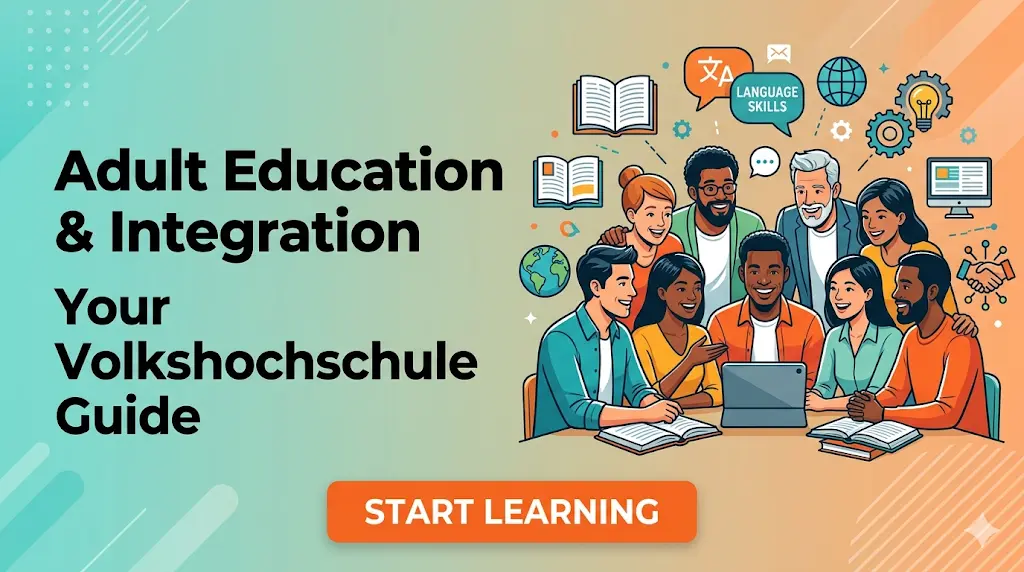
The term Volkshochschule literally translates to “folk high school,” but do not let the name fool you into thinking it is a place for teenagers. It is not a traditional high school at all. It is a publicly funded adult education center, existing in almost every single city, town, and regional district across Germany. They are municipal institutions designed to provide affordable, accessible, lifelong learning to the general public.
Unlike traditional universities, there are no strict entrance exams, degree prerequisites, or age limits to enroll in most Volkshochschule classes. They operate on a standard semester basis, offering everything from heavy academic language immersion to weekend pottery workshops and financial literacy seminars. Because they receive massive financial subsidies from the state and local city governments, the tuition fees are a mere fraction of what you would pay at a commercial, for-profit institution.
For newly arrived foreigners, the local VHS is often the very first German institution they interact with voluntarily. It serves as the primary municipal hub for civic integration. Walking into the austere, highly bureaucratic VHS building for the first time to take a placement test can feel intimidating, but understanding this massive public system is your absolute best tool for conquering the local language without draining your savings account.
Why Expats Turn to Adult Education Centers
When expats first arrive, the sheer cost of private language academies is a massive deterrent to integration. Private boutique schools can easily charge hundreds or even thousands of euros per month for intensive daily German classes. The Volkshochschule offers an incredibly egalitarian alternative. Expats flock here because the pricing structure is entirely transparent, heavily subsidized, and occasionally completely free if you hold specific funding vouchers from the immigration office.
Beyond the sheer financial relief, the VHS is deeply embedded in the local administrative and legal framework. If you are required by the German government to pass an official language exam to renew your visa or upgrade your residency status, the VHS is the standard, government-approved venue. Their courses are meticulously aligned with the Common European Framework of Reference for Languages (CEFR), ensuring your A1 or B1 certificate holds absolute, unquestionable legal weight when presented to an immigration officer.
Furthermore, the VHS offers a unique, unfiltered social cross-section of Germany. In a private boutique language school, you might only interact with highly paid tech workers or corporate transferees. At the Volkshochschule, you share a desk with refugees rebuilding their lives, international students, spouses joining their families, and older immigrants finally mastering the grammar. This diversity provides a profound, grounding perspective on the expat experience that you simply will not find in a corporate bubble.
How the VHS Compares to Private Language Schools
The decision between enrolling in a local VHS or paying for a private language academy is one of the most fiercely debated topics on expat forums. A deep comparative analysis reveals that both avenues have distinct pros and cons. Private schools typically offer significantly smaller class sizes, highly modern facilities, flexible rolling starting dates, and aggressive pacing designed to push you through a language level in record time.
The Volkshochschule, on the other hand, operates on a rigid, unyielding academic semester schedule, usually starting only in September and February. The classes are often larger, sometimes capping at twenty students, which means less individualized speaking time with the instructor. The administration can feel painfully old-school, frequently requiring in-person registration and paper forms, a reality deeply echoed in our guide on Bureaucracy Basics: Understanding Bescheinigung, Anträge, and Other Paperwork.
However, the cost difference is staggering, making the slower administration entirely worth it for most. A language level that costs six hundred euros privately might cost less than two hundred at the VHS. Moreover, the instructors at the VHS are highly qualified, state-certified adult educators. The slower, more methodical pace of the public system often results in much better long-term retention of the notoriously difficult German grammar rules.
| Feature | Volkshochschule VHS | Private Language Academies |
| Average Cost | Very low (Heavily state-subsidized) | High to Very High |
| Class Size | Larger (15 to 25 students) | Smaller (5 to 12 students) |
| Schedule Flexibility | Rigid semester starts (Sept & Feb) | Highly flexible, rolling starts |
| BAMF Voucher Accepted | Yes, almost universally | Varies, only at certified partners |
| Facilities and Tech | Traditional, often austere classrooms | Modern, digital-first environments |
Navigating German Integration Courses
Understanding the Integration Course Mandate
For many foreigners, attending an integration course (Integrationskurs) is not merely a personal desire to learn; it is a strict legal mandate. Depending on your visa type, your home country, and your current level of German, the immigration office (Ausländerbehörde) may issue you an official, binding document obligating you to complete this course. Ignoring this mandate can actively jeopardize your visa renewal and result in severe fines.
The program was established by the German government to ensure that new long-term residents acquire a strong baseline understanding of the language, culture, and legal system. It is specifically designed to prevent isolation and ensure economic participation. Even if you are not legally obligated to attend, you can apply directly to the Federal Office for Migration and Refugees (BAMF) for an entitlement certificate, which allows you to take the course voluntarily at the exact same heavily reduced rate.
Navigating the application for this BAMF voucher is a notoriously tedious, slow process. You must submit physical paperwork, prove your exact residency status, and wait weeks for a mailed approval before you can officially register at the VHS. This administrative waiting game is a classic source of expat frustration. To understand how these state-sponsored initiatives fit into your broader relocation timeline, you should review German Integration Courses: Language & Orientation for New Residents.
The Structure of the Language and Orientation Modules
The standard integration course is an endurance marathon. It is typically broken down into two distinct segments totaling 700 hours of intensive classroom instruction. The vast majority of this time, specifically 600 hours, is dedicated purely to the language module. This module takes you from absolute beginner (A1) up to intermediate fluency (B1), requiring daily dedication and massive amounts of vocabulary memorization.
The language module is incredibly practical. The curriculum completely skips analyzing classical German literature and focuses instead on everyday survival skills. You will learn how to write formal emails to your landlord, understand complex utility bills, schedule doctor appointments over the phone, and navigate consumer rights. It equips you with the exact vocabulary needed to function independently, radically reducing the daily anxiety of the language barrier.
Following the grueling language segment is the 100-hour orientation course (Orientierungskurs). This module is arguably just as vital as the grammar lessons. It dives deep into the German legal system, modern political history, democratic values, and civic duties. You will discuss the German constitution, the legacy of the twentieth century, and the nuances of religious freedom. It provides the essential cultural context required to truly understand the society you are now navigating daily.
Costs Funding and the BAMF Certificate
The financial structure of the integration course is heavily regulated by the state to ensure broad accessibility. If you enroll without any state funding, the out-of-pocket cost is significant, though still vastly cheaper than private alternatives. However, with a BAMF entitlement certificate, the German government subsidizes more than half of the hourly rate. As of recent years, participants with a voucher pay a standard, very low contribution per lesson hour.
For expats surviving on unemployment benefits, citizens’ allowance, or those experiencing severe financial hardship, the course can be completely free. You must submit proof of your financial situation to BAMF to have the remaining fees waived entirely. Additionally, if you complete the entire course and pass the final exams within two years of receiving your voucher, BAMF will actually refund 50 percent of the tuition you paid, an incredible financial incentive to finish your studies quickly.
The ultimate goal of this arduous journey is obtaining the official BAMF certificate, “Zertifikat Integrationskurs.” This piece of paper is an absolute golden ticket in the German bureaucratic system. It proves you have achieved B1 German and passed the “Life in Germany” test. Holding this certificate actively reduces the legal waiting time required to apply for permanent residency or citizenship. To understand the long-term impact of this paperwork on your future, review German Citizenship by Naturalization: Eligibility and Application Steps.
Going Beyond Language Learning
Career Training and Professional Certifications
While the Volkshochschule is famous among expats purely for foundational language acquisition, treating it merely as a language school ignores a massive part of its utility. The VHS is a comprehensive adult education center offering robust career development and professional training. Once you cross the B1 language threshold, you can enroll in specialized courses designed explicitly to upgrade your resume for the local, competitive job market.
You can find highly affordable evening courses on bookkeeping, commercial law, IT networking, graphic design, and advanced Excel modeling. Many of these professional courses culminate in recognized, standardized certificates, such as the Xpert Business system or specific IHK (Chamber of Commerce) preparation modules. For expats struggling to get their foreign qualifications recognized, earning a local, verifiable certificate from a German institution adds crucial credibility to your CV.
Additionally, the VHS offers specific “German for Professional Purposes” (DeuFöV) courses. These advanced modules push you beyond basic B1, focusing heavily on industry-specific vocabulary, writing highly professional business correspondence, and mastering the formal German interview process. If you are desperately trying to escape the English-speaking startup bubble and transition into a traditional German corporate role, these advanced career classes are absolutely vital.
Hobbies Arts and Finding Your Expat Community
Surviving Germany is not just about paying taxes and memorizing complex grammar rules; you must actively build a fulfilling, joyful social life. The Volkshochschule course catalog is a treasure trove of hobbies and recreational activities. Every semester, they publish a massive booklet filled with incredibly affordable classes on digital photography, oil painting, classical cooking, yoga, and guided local history tours.
Joining a recreational class at the VHS is an incredible, low-pressure strategy for breaking through the infamous German social barrier. Because Germans heavily prefer socializing through structured, shared activities rather than spontaneous small talk at a bar, a weekly pottery or cooking class provides the perfect context to strike up a natural conversation with locals. It immediately shifts your identity from a struggling foreigner to a fellow hobbyist.
Furthermore, these recreational classes are fantastic places to meet other long-term expats who have successfully integrated. You connect over shared interests rather than just a shared lack of language skills. Building this diverse, multifaceted network is essential for your long-term mental health and sense of belonging. For more strategies on navigating this complex social landscape, check out Finding Your Community: Expat Groups, Clubs, and Meetups in Germany.
Preparing for Exams and Citizenship Tests
The administrative journey of any expat in Germany is marked by a series of high-stakes, stressful exams. Whether you need an A1 certificate to secure a spousal family reunion visa, a B1 certificate for permanent residency, or you must pass the dreaded naturalization test (Einbürgerungstest), the Volkshochschule is the premier, trusted venue for preparation and official testing. They are licensed testing centers for major providers like telc, Goethe, and BAMF.
The VHS offers specific, short-term preparation modules that focus entirely on exam strategy rather than general language acquisition. You will run through grueling mock exams, learn exactly how the oral presentation is graded by the examiners, and dissect the tricky multiple-choice formatting of the civic citizenship test. Taking your exam at the exact same facility where you took your prep course provides a massive psychological advantage on a highly stressful test day.
Registration for these exams fills up months in advance. You cannot simply walk in on a Saturday morning and demand to take a B1 test. You must plan your administrative timeline meticulously. The frustration of missing an exam deadline and having your visa delayed as a result is a nightmare you must actively avoid. To grasp the broader timeline of these legal requirements and how they dictate your life, deeply study the Moving to Germany: Comprehensive Visa & Immigration Guide.
Practical Tips for Registration and Survival
Decoding the Semester Schedule and Enrollment
The enrollment process at a typical Volkshochschule is a fascinating, sometimes maddening glimpse into traditional German bureaucracy. While digital online booking systems are finally becoming more common in major tech hubs, many district centers still require you to show up in person during highly specific, limited office hours to register, especially if you are using a BAMF funding voucher or need to take a mandatory language placement test.
The VHS operates on a strict academic semester schedule, usually releasing their course catalogs in late summer for the autumn and winter semester, and in early spring for the spring and summer semester. The moment the catalog drops, the most popular evening language classes and highly requested hobby workshops sell out within days. You must be proactive, mark the catalog release date on your calendar, and secure your spot immediately.
If you wait until mid-September to look for an intensive German course, you will almost certainly be placed on a frustratingly long waitlist. This rigidity is incredibly annoying for expats who arrive off-cycle in November or May. If you find yourself stranded without a structured class, you will have to rely heavily on self-study and survival tactics until the next semester opens, a scenario we actively address in Living in Germany Without Speaking German (Yet): Tips to Get By.
Securing the Right Gear and Study Materials
Once you are officially enrolled, you must secure your required textbooks instantly. The VHS rarely provides physical materials or book rentals; the instructor will simply email you the specific ISBN number of the required textbook and workbook and expect you to have them physically on your desk by the second lesson. Trying to track down specific, multi-level German workbooks at local retail bookstores can be a frustrating, time-consuming goose chase.
This is exactly why utilizing Amazon Germany is a massive lifesaver for adult learners balancing work and classes. You can plug the exact ISBN into Amazon Germany and have the heavy textbooks delivered directly to your door the next day, completely avoiding the stress of navigating local retail shops in broken German. Beyond just the textbooks, intensive language courses require massive amounts of color-coded highlighters, index cards for vocabulary drills, and a durable backpack for the daily commute.
Ordering your stationary supplies, flashcards, and a comfortable commuter bag directly from Amazon Germany allows you to fully prepare your study arsenal quickly and affordably. Setting up a dedicated study routine requires immense organization, and having reliable access to Amazon Germany ensures you never fall behind in a fast-paced classroom simply because you couldn’t locate the right workbook edition in town.
Managing Your Living Situation During Intensive Study
Enrolling in an intensive, daily integration course feels exactly like taking on a second full-time job. You will be sitting in a classroom for four to five hours every single morning, followed by hours of exhausting grammar homework in the afternoon. If your living situation is unstable, noisy, or if you are currently undergoing the nightmare of the traditional German apartment hunt, your academic progress will completely stall due to stress.
You absolutely need a quiet, secure home base with a proper desk setup to survive this level of cognitive overload. This is where booking a fully furnished apartment through Wunderflats is a strategic masterstroke during your first year. A Wunderflats apartment provides a dedicated, peaceful workspace from day one. You do not have to waste your precious weekend study time building furniture or fighting with local internet providers to get a router installed.
Furthermore, using Wunderflats allows you to live centrally in a neighborhood of your choosing, heavily reducing your daily transit time to the local Volkshochschule building. Having a reliable, warm apartment with high-speed internet included means you can focus 100 percent of your energy on mastering the dative case and passing your B1 exam. Establishing this stable foundation with Wunderflats is absolutely critical for managing your peace of mind and your overall Cost of Living in Germany: A Realistic Budget for Expats.
References
Primary sources official
- Federal Office for Migration and Refugees (BAMF) – Integration Courses: https://www.bamf.de/EN/Themen/Integration/ZugewanderteTeilnehmende/Integrationskurse/integrationskurse-node.html
- Deutscher Volkshochschul-Verband (DVV): https://www.volkshochschule.de/
Other helpful sources
- Make it in Germany – Integration Courses: https://www.make-it-in-germany.com/en/living-in-germany/learn-german/integration-courses
Disclaimer
The information provided in this article is for general informational purposes only and is based on the real-world experiences of expats navigating the adult education system in Germany. Administrative procedures, integration course requirements, and state funding rules are strictly governed by the Federal Office for Migration and Refugees (BAMF) and local municipal authorities, and these regulations are subject to frequent changes. This article does not constitute legal or immigration advice. Always consult your local Ausländerbehörde (immigration office) or an official BAMF-certified consulting center to confirm your exact legal obligations and eligibility for course funding.