Christmas Markets and Festive Germany
When you first move to Germany, the winter can feel like an endless, grey gauntlet of freezing rain and early sunsets that test your sanity. I remember my first December in Munich, standing in a slushy puddle and wondering why everyone seemed so incredibly cheerful despite the sub-zero temperatures. Then I followed the scent of roasted almonds and cinnamon to my first Christmas market, and suddenly, the "dark season" made perfect sense. This guide is your roadmap to navigating the sprawling, magical, and occasionally overwhelming world of festive Germany without losing your mind or your wallet.
Disclosure: This post may contain affiliate links. We may earn a commission at no extra cost to you if you make a purchase through these links. Read full disclosure.
Choosing Your Festive Base: Which Cities Truly Deliver
Selecting where to spend your time during the Advent season is the most critical decision you will make. Germany has over 2,500 Christmas markets, and while the "standard" market experience is usually good, the regional differences are what make the season special. If you try to see everything, you will end up exhausted and suffering from "gingerbread fatigue." Instead, you need to pick a base that aligns with the specific atmosphere you are craving.
The Historic Heavyweights: Nuremberg and Dresden
Nuremberg is the undisputed heavyweight champion of German Christmas markets. The Christkindlesmarkt is world-famous for a reason, but as a veteran, I have to warn you: it is crowded. You aren't just walking; you are drifting in a sea of humanity. However, the tradition here is palpable. You have to try the Nürnberger Rostbratwurst—tiny sausages that must be eaten "Drei im Weggla" (three in a roll). If you are planning a visit, check out this guide on How to Visit the Nuremberg Christmas Market to understand the timing and the best spots to escape the main plaza.
Dresden offers a different kind of history with its Striezelmarkt, which dates back to 1434. This is the home of the Stollen, that heavy, fruit-filled bread that Germans take very seriously. In Dresden, the market feels more like a fairy tale because of the stunning Baroque backdrop. The city also hosts several smaller, themed markets, like the medieval market within the Stallhof. These smaller pockets are where you find the true local flavor, away from the tour bus crowds that dominate the main squares.
The Cathedral Magic: Cologne and the Rhineland
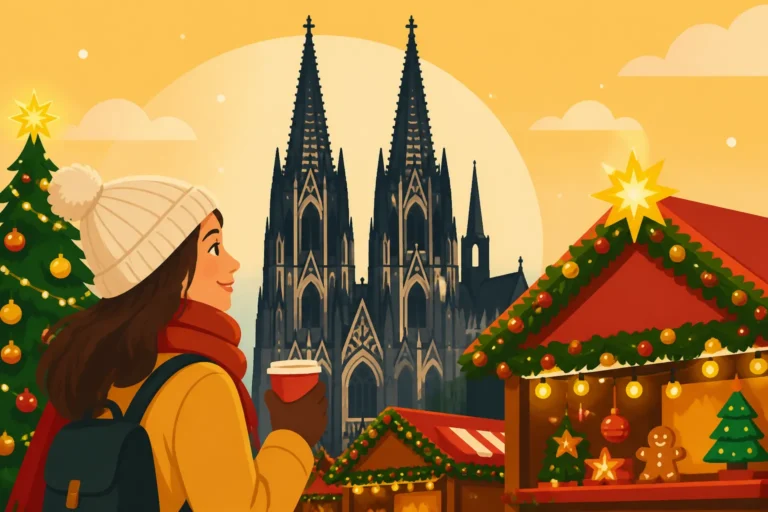
Cologne is perhaps the most visually spectacular choice. There is nothing quite like standing under the massive spires of the Kölner Dom while the "Market of Hearts" glows below. The city actually hosts seven different markets, each with a distinct personality. The "Heimat der Heinzel" in the old town is my personal favorite, featuring a massive ice skating rink and a focus on traditional craftsmanship.
Moving slightly south along the Rhine, you hit markets like those in Bonn or the "Nation of Christmas" in Rüdesheim. The Rhinelanders are known for being the friendliest people in Germany, and that warmth translates into the market culture. You will find more singing, more spontaneous conversation with strangers, and a slightly more relaxed pace than in the efficiency-driven markets of the north. For those looking for a diverse experience, looking into Christmas Market Day Trips and Itineraries in Germany can help you string these Rhine cities together effectively.
The Alpine Dream: Munich and Upper Bavaria
Munich is where the "postcard Germany" comes to life. The Marienplatz market is the centerpiece, but for a more authentic experience, you should head to the Middle Ages Market at Wittelsbacherplatz. Here, the Glühwein is served in clay jugs, and the food is cooked over open fires. It feels less like a commercial event and more like a step back in time.
The beauty of being in Munich is the proximity to the Alps. You can easily take a train to markets in places like Garmisch-Partenkirchen or the lakeside market at Tegernsee. There is something profoundly different about drinking hot spiced wine while looking at snow-capped peaks compared to a city square. The Bavarian markets also lean heavily into the "Krampus" tradition, which is a bit more intense and wild than the gentle Saint Nicholas traditions found elsewhere in the country.
Navigating Transport and Accommodations
Logistics are the silent killer of holiday joy in Germany. Because the markets attract millions of visitors, everything from train seats to hotel rooms fills up months in advance. If you are a newcomer, you might be tempted to just "wing it," but I have seen many expats end up in overpriced, windowless rooms or standing for four hours on a high-speed train because they didn't reserve a seat.
Booking Your Stay Early and Smartly
When it comes to where you sleep, location is everything. You want to be within walking distance of at least one major market so you can retreat and warm up periodically. Use Booking.com to filter for properties in the "Altstadt" (Old Town) areas. Be aware that hotels right on the market square will be noisy until late at night, as the cleanup crews and late-night revelers linger long after the stalls close.
If you find that the central hotels are fully booked or priced for royalty, look for neighborhoods that are well-connected by the U-Bahn or S-Bahn. In Berlin, for example, staying in Prenzlauer Berg gives you easy access to several markets while keeping you in a quieter, residential atmosphere. The trick is to verify the transit lines before you commit. A "great deal" that requires three bus transfers in the snow is no deal at all.
Mastering the Deutsche Bahn and Regional Travel
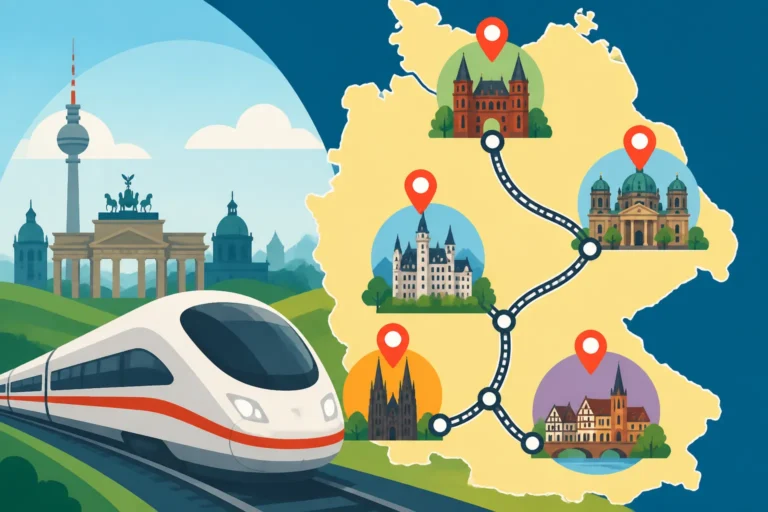
Traveling between cities is best done by rail, but the German rail system during December is a test of patience. The weather often causes delays, and the trains are packed with people carrying awkward gifts. To save money and ensure you actually have a place to sit, use Omio to compare train prices and book your seat reservations early. A seat reservation is only a few euros, and it is the best investment you will make for your sanity.
For those who want to see multiple smaller towns without the hassle of navigating local bus schedules, booking a guided day trip via GetYourGuide can be a lifesaver. These often include transport from a major hub like Frankfurt or Munich and take you to those "hidden gem" villages that are difficult to reach with public transport alone. This is particularly useful if you want to visit the Romantic Road markets like Rothenburg ob der Tauber.
Comparing Festive Hubs for Travelers
| City | Primary Market Style | Must-Try Local Specialty | Best For |
|---|---|---|---|
| Nuremberg | Traditional / Historical | Nürnberger Lebkuchen | History buffs and families |
| Cologne | Visual / Grandiose | Reibekuchen (Potato pancakes) | Photography and variety |
| Munich | Alpine / Rustic | Weisswurst (Before noon!) | Winter scenery and tradition |
| Dresden | Craft-focused / Classic | Dresdner Christstollen | Authentic crafts and baking |
| Berlin | Modern / Diverse | Currywurst (Festive style) | Nightlife and urban vibes |
The Culinary Heart of the Market: What to Eat and Drink
Food is the soul of the German Christmas market. It is not just about sustenance; it is a social ritual. You will see groups of friends standing around high tables for hours, clutching mugs and laughing. To join in, you need to understand the menu and, more importantly, the "Pfand" system.
The Glühwein Ritual and the Pfand System
Glühwein is hot, spiced red wine, and it is the fuel of the season. When you buy your first drink, you will notice the price is higher than expected. This is because of the "Pfand" (deposit), usually between 3 to 5 euros. You are essentially "renting" the ceramic mug. You can return the mug to get your cash back, or you can keep it as a souvenir. Each market usually has its own uniquely designed mug each year, and many people (myself included) have a cabinet full of them.
If you aren't a fan of red wine, look for "Kinderpunsch" (non-alcoholic), "Heißer Kakao" (hot chocolate, often with a shot of rum or amaretto), or "Feuerzangenbowle." The latter is a spectacle: a rum-soaked sugar loaf is set on fire and drips into a pot of mulled wine. It is much stronger than standard Glühwein and will definitely keep the chill at bay. To understand the full range of options, see our guide on What to Eat and Drink at a German Christmas Market.
Savory Staples: From Sausages to Mushrooms
You cannot survive on sugar and wine alone. The savory food at the markets is heavy, greasy, and perfect for the cold. Beyond the ubiquitous Bratwurst, look for "Champignons mit Knoblauchsauce"—whole mushrooms sautéed in massive pans and smothered in garlic sauce. Another staple is "Flammkuchen," a thin-crust Alsatian pizza topped with crème fraîche, onions, and bacon bits.
In the north, you might find more fish options, like "Backfisch" (fried fish) or "Matjes" (herring). In the south, "Schupfnudeln" (potato noodles with sauerkraut and bacon) are the go-to comfort food. Every region takes pride in its specific version of these dishes, so don't assume that a market in Hamburg will taste the same as one in Stuttgart.
Sweets and Treats: The Sugary Side of Advent
The smell that dominates every market comes from "Gebrannte Mandeln" (roasted candied almonds). You will see them being stirred in large copper kettles. Buy them warm; there is nothing better. Then there is "Lebkuchen," the German version of gingerbread. The best ones are "Elisenlebkuchen," which contain very little flour and a high percentage of nuts.
For something more substantial, look for "Dampfnudeln"—large, fluffy steamed dumplings served with vanilla sauce and poppy seeds. It is a warm, sweet hug in a bowl. If you are curious about the specific history behind these bakes, you might find German Food Culture: Eating and Drinking as a Visitor a fascinating read to prepare your palate for the regional variations you'll encounter.
Traditions, Legends, and the "Nikolaus" Factor
Understanding the "why" behind the markets will make your visit much more meaningful. These aren't just pop-up malls; they are the culmination of centuries of religious and folk traditions that are deeply ingrained in the German psyche. From the lighting of the Advent wreath to the specific dates of celebration, the timing matters.
The Advent Season and the Wreath
The festive season officially begins on the first Sunday of Advent (four Sundays before Christmas). This is when the markets usually open their gates. In German homes, you will see the "Adventskranz," a wreath with four candles. One candle is lit each Sunday leading up to Christmas Eve. This slow buildup creates a sense of anticipation that is much more measured than the commercial rush seen in other countries.
This period is also when you will notice the "Adventskalender." While these are now global, the German tradition often involves handmade bags or boxes filled with thoughtful gifts, rather than just cheap chocolate. If you are living here as an expat, participating in these small rituals is one of the fastest ways to feel integrated into the community. For a deeper dive into these home-based customs, look at Advent and Christmas Traditions in Germany.
Nikolaustag: December 6th
If you have children, or if you just want to avoid a cultural faux pas, remember December 6th: Nikolaustag. This is not Christmas. On the night of December 5th, children clean their boots and leave them outside the door. Saint Nicholas (not to be confused with Santa Claus/Weihnachtsmann) comes and fills them with nuts, oranges, and chocolate—or a switch (Rute) if they've been naughty.
In Bavaria and Austria, Saint Nicholas is often accompanied by the "Krampus," a terrifying, goat-like demon who punishes the wicked. You might see "Krampus runs" (Krampuslauf) in cities like Munich, where hundreds of people in horrific wooden masks parade through the streets with cowbells and whips. It is a startling contrast to the "silent night" image of Christmas, but it is a vital part of the regional heritage.
The Christkind vs. the Weihnachtsmann
In many parts of Germany, especially the south and west, it isn't Santa who brings the gifts on December 24th, but the "Christkind" (Christ Child). The Christkind is usually depicted as a young woman with golden hair and angelic wings. In Nuremberg, a local girl is chosen every two years to represent the Christkind, and she officially opens the market with a famous prologue.
The "Weihnachtsmann" (Santa Claus) is more common in the north and is a more modern, secular figure. Regardless of who brings the gifts, the main event in Germany is "Bescherung" (gift exchange), which happens on the evening of December 24th. This is why the Christmas markets usually close by noon on the 24th—everyone is heading home for a private, family-centered celebration.
Strategic Shopping: From Woodcarvings to Modern Crafts
If you go to a Christmas market looking for cheap plastic toys, you are in the wrong place. The true value of German markets lies in the "Handwerk" (craftsmanship). However, you have to be discerning. Some stalls sell mass-produced items from abroad, while others sell heirloom-quality pieces that have been made in the same village for generations.
The Erzgebirge Tradition
The gold standard of German Christmas decor comes from the Erzgebirge (Ore Mountains) region in Saxony. This is where the famous Nutcrackers (Nussknacker), Christmas Pyramids (Weihnachtspyramiden), and "Räuchermänner" (Smoking Men) originate. These items are carved from wood and are often quite expensive.
When buying a pyramid—the wooden carousels that spin from the heat of candles—check the mechanism and the quality of the paint. A real Erzgebirge piece will have a specific seal of authenticity. These are the kinds of items you buy once and pass down to your children. For more tips on identifying quality, see Christmas Market Shopping: Crafts and Gifts.
Ceramics, Glass, and Textiles
Beyond the woodwork, look for regional ceramics. In the east, Bunzlauer stoneware is popular for its distinctive blue-and-white patterns. In the west, you might find beautiful salt-glazed pottery. Glass ornaments are another highlight, particularly those from Lauscha, the birthplace of the glass Christmas bauble.
I always recommend looking for the "local" stalls. Many markets reserve a section for artists from that specific city. This is where you will find modern jewelry, hand-bound leather journals, and unique textiles that you won't see anywhere else. It is a great way to support the local economy while finding a gift that actually has a story behind it.
Survival Tactics: Weather, Crowds, and Cash
The "magical" experience can quickly turn miserable if you aren't prepared for the realities of a German winter. I have seen too many tourists crying in the middle of a market because they can't feel their toes or they've run out of cash and the nearest ATM has a 40-minute wait.
The Art of Layering: The Zwiebelprinzip
In Germany, we talk about the "Zwiebelprinzip" (the onion principle). You need layers. The temperature might be 2 degrees Celsius, but standing still on cold stone pavement for three hours will leach the heat out of your body faster than you think.
- The Base: Thermal underwear is non-negotiable.
- The Feet: Wear thick wool socks and waterproof boots. Avoid sneakers at all costs; once they get damp from the slush, your day is over.
- The Extremities: A good hat that covers your ears and gloves that allow you to hold a hot mug are essential.
If you find yourself shivering, look for the "Feuerstellen" (fire pits) that many markets provide, or duck into a nearby church for ten minutes of quiet warmth. For a complete checklist, read How to Stay Warm at German Christmas Markets.
Cash is Still King
While Germany is slowly modernizing, Christmas markets are one of the last bastions of the "cash only" lifestyle. Most stalls will not accept credit cards, especially for small purchases like a single sausage or a glass of wine.
- Carry more cash than you think you need.
- Bring small bills and coins; stall owners will love you for not trying to pay for a 4-euro drink with a 50-euro note.
- Be aware that "Sparkasse" or "Volksbank" ATMs near the markets often run out of cash on busy Saturday nights.
Timing Your Visit
If you want to enjoy the atmosphere without being crushed, avoid Friday nights and all day Saturday. This is when the locals come out in force, and the tour groups are at their peak.
The best time to visit is on a weekday morning or early afternoon. You can actually talk to the stall owners, see the crafts clearly, and get your food without standing in a 20-person queue. If you must go at night—which you should, for the lights—try a Tuesday or Wednesday evening. Also, remember that Shopping on Sundays in Germany: What’s Open and How to Plan is vital; while the markets are open on Sundays, regular shops are closed, so don't plan to do any mall shopping on the same day.
Festive Germany Beyond the Market Stalls
While the markets are the main draw, the entire country transforms in December. If you only stick to the stalls, you are missing half the experience. The "festive spirit" extends into the concert halls, the churches, and even the local swimming pools.
Church Concerts and Organ Recitals
Even if you aren't religious, the holiday concerts in Germany's cathedrals are world-class. From Bach's Christmas Oratorio to local boys' choirs, the acoustics of a stone cathedral filled with candlelight are transformative. Many of these concerts are free or low-cost, though the "big" ones require tickets weeks in advance.
Keep an eye out for "Orgelandacht" (organ devotions) or "Adventssingen." These are usually shorter, 30-minute sessions in the late afternoon that provide a perfect, meditative break from the frantic energy of the market outside.
Thermal Spas and Winter Wellness
When the damp cold gets into your bones, do what the Germans do: go to a thermal bath (Therme). Places like the Friedrichsbad in Baden-Baden or the Erding Therme near Munich offer saunas, hot pools, and steam rooms that are the ultimate winter antidote.
There is something incredibly satisfying about sitting in a steaming outdoor pool while snowflakes fall on your head. It is a core part of the "Wellness" culture here. Just be prepared for the "FKK" (Freikörperkultur) culture—many sauna areas in Germany are strictly "no clothing allowed." To prepare yourself for this cultural experience, read up on Spa and Sauna Culture in Germany: Wellness for Health and Relaxation.
Winter Hiking and Nature
If you need a break from the city, the German countryside is stunning in winter. The Black Forest, the Harz Mountains, and the Bavarian Alps offer groomed winter hiking trails (Winterwanderwege) that are easy to navigate even without professional gear.
Walking through a silent, snow-covered forest and then ending your hike at a rustic "Hütte" (mountain hut) for a hot soup is the peak of "Gemütlichkeit." It provides a sense of peace that the crowded city markets simply cannot offer. If you're looking for where to go, check out Outdoor Adventures and Nature in Germany for some winter-specific recommendations.
Disclaimer
The information provided in this guide is based on personal experience and current travel trends in Germany. Local regulations, market opening dates, and prices can change annually. Always check official city websites or event organizers' pages for the most up-to-date information before planning your trip. Travel insurance and health coverage should be secured independently to ensure a safe and stress-free holiday season.