Long-term Care Insurance (Pflegeversicherung): What It Is and Who Needs It
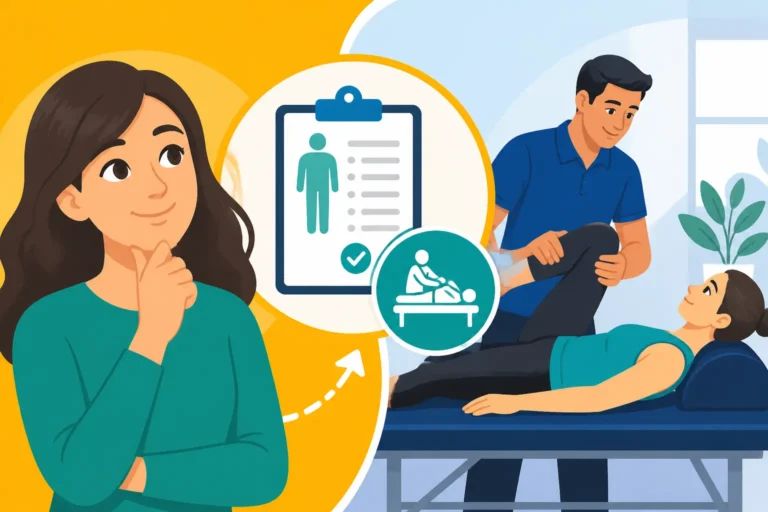
Long-term care insurance, or Pflegeversicherung, is a mandatory pillar of Germany’s social security system designed to support you if you can no longer care for yourself. It covers essential nursing services, home care, and residential assistance for the elderly and disabled.
Disclosure: This post may contain affiliate links. We may earn a commission at no extra cost to you if you make a purchase through these links. Read full disclosure.
The Basics of Long-term Care Insurance in Germany
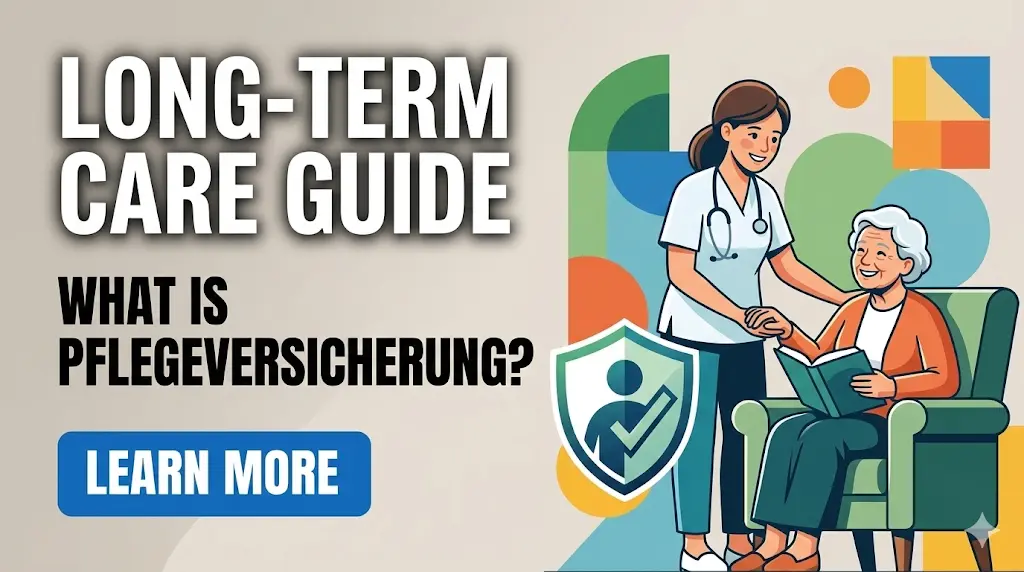
What is Pflegeversicherung?
Pflegeversicherung is often the “quiet” part of your German insurance bundle. When you first move to the country and set up your Healthcare in Germany: A Comprehensive Guide for Expats, you’ll notice a deduction for long-term care insurance right alongside your health insurance. In simple terms, it is a fund designed to cover the costs of nursing care should you become physically or mentally unable to manage daily life independently—whether due to old age, a serious accident, or a chronic illness.
Long-term care insurance, known in Germany as Pflegeversicherung, is a mandatory part of the country’s social security system. It provides financial and practical support for individuals who require assistance with daily activities due to illness, disability, or advanced age. The system is designed to ensure that people who cannot fully care for themselves receive necessary help either at home or in specialized care facilities.
In Germany, long-term care insurance is closely linked to health insurance. Anyone enrolled in statutory health insurance automatically contributes to long-term care insurance through payroll deductions. Those with private health insurance must obtain a corresponding private care insurance plan. Contributions are shared between employees and employers, making coverage broadly accessible across the population.
Eligibility for care benefits depends on an official assessment of a person’s level of dependency. Medical evaluators determine the degree of assistance required for activities such as personal hygiene, mobility, nutrition, and cognitive support. Based on this evaluation, individuals are assigned a care level that determines the amount and type of financial support they receive.
Benefits may include home care assistance, professional nursing services, financial allowances for family caregivers, or coverage for residential care facilities. Many people prefer home based support, which allows them to remain in familiar surroundings while receiving help from trained caregivers or relatives. For more complex medical needs, nursing homes and long-term care facilities provide supervised care and medical oversight.
Administration and regulation of the system are overseen by organizations such as Federal Ministry of Health (Germany), which ensures standards and policy coordination across the country. Long-term care insurance is particularly important in an aging society where the number of elderly individuals continues to increase. By combining financial support, professional services, and family involvement, Germany’s Pflegeversicherung system aims to maintain dignity, independence, and quality of life for people who require ongoing care.
Unlike standard health insurance, which covers doctor visits and hospital stays, Pflegeversicherung kicks in when you need help with basic “activities of daily living.” This includes things like bathing, eating, dressing, and mobility. It is a “partial coverage” system, meaning it provides significant financial support but rarely covers 100% of all nursing costs, especially in high-end private facilities. Understanding this distinction is vital for anyone planning a long-term future in Germany.
The Social Security Pillar
In Germany, social security is built on five pillars: health, pension, unemployment, accident, and long-term care insurance. Pflegeversicherung was the last to be added, introduced in 1995 to address the growing needs of an aging population. It follows the principle of solidarity, meaning everyone contributes based on their income to ensure that those in need receive dignified care regardless of their personal wealth.
Why Germany Mandates Long-term Care
The mandate exists because nursing care is prohibitively expensive. Without this insurance, a few years in a professional nursing home could completely deplete a lifetime of savings, leaving the burden on the state’s welfare system. By making it mandatory, Germany spreads the risk across the entire working population. For expats, this means contributing to a system that provides a safety net not just for yourself, but for the community you’ve joined.
It’s also a response to shifting demographics. With people living longer, the likelihood of needing some form of assistance in later life has increased. By securing this early, the German government ensures that the “care risk” doesn’t become a “poverty risk.” If you are just starting your journey here, mastering How to Get Health Insurance in Germany: Step-by-Step for Newcomers will ensure you are correctly registered in this essential system from day one.
Contributions and Costs in 2026
Contribution Rates for Employees
As we navigate 2026, the contribution rates for long-term care have seen adjustments to keep up with rising medical costs and a higher number of beneficiaries. For most employees, the base contribution rate is split between you and your employer. Your share is deducted directly from your gross salary. In 2026, the total contribution rate stands at approximately 3.6% of your gross income, though this is capped by the Beitragsbemessungsgrenze (contribution assessment ceiling).
If your salary is quite high, you’ll reach the ceiling, meaning your contributions won’t increase even if your pay does. For high earners and those looking for more control over their deductions, Health Insurance for Freelancers and Self-Employed: Navigating the System often provides a window into how these caps work in practice. It’s a bit like a “subscription fee” for a safety net you hope you never have to use, but will be very glad to have if you do.
The Impact of Having Children on Premiums
Germany uses a “child-based” sliding scale for Pflegeversicherung premiums. Since children are the future contributors to the system, the government offers “relief” to parents. If you have no children and are over the age of 23, you pay a “childless supplement” (Beitragszuschlag für Kinderlose). This effectively makes your premium higher than someone with the same salary who has kids.
As of 2026, the relief becomes more significant with each additional child under 25. For example, while the employer’s share remains constant, the employee’s share decreases slightly for the second, third, fourth, and fifth child. This is a crucial detail for expats to discuss with their HR department or when setting up Family Health Insurance: Adding Your Spouse and Kids to Your Plan, as it directly affects your take-home pay. Using a transparent financial tool like Wise to track your net income and transfers can help you manage these small but important fluctuations in your monthly budget.
Private vs. Statutory Long-term Care
While the benefits are legally standardized, the way you pay differs between the public and private systems. In the public system, your premium is a percentage of your income. In the private system, your premium is based on your age and health status when you join. However, the law prevents private insurers from charging significantly more than the maximum public contribution for the mandatory portion of long-term care.
Many expats find that private insurance providers like Ottonova or those recommended by Feather Insurance offer a more modern experience with English-language support and digital interfaces. However, the core “mandatory” long-term care component remains a fixed requirement regardless of the “bells and whistles” of your health plan. If you are a young professional, private insurance can often be more cost-effective, but you should always consider the long-term trajectory of premiums as you age.
Understanding the Five Care Levels (Pflegegrade)
How Care is Assessed
The system doesn’t just hand out money based on your age; it requires a formal assessment by the Medizinischer Dienst (MD). A trained professional will visit you at home to evaluate your “degree of independence.” They use a point-based system across six modules: mobility, cognitive and communicative abilities, behavioral and psychological issues, self-care, handling of illness-related demands, and management of daily life and social contacts.
This assessment is thorough and, frankly, can be a bit overwhelming for expats who aren’t fluent in German. It’s often helpful to have a family member or a professional advisor present. The goal is to determine which of the five Pflegegrade (care levels) you fall into. The higher the points, the higher the care level, and the more financial support you receive from the Pflegekasse (care insurance fund).
From Grade 1 to Grade 5
The five levels range from “slight impairment” to “most severe impairment with special requirements.”
- Pflegegrad 1: Covers people who need minor help (e.g., help with cleaning or some mobility). You mostly get a small monthly allowance (€125) for “relief services.”
- Pflegegrad 2: This is where significant benefits begin. You can choose between a “care allowance” if a relative cares for you, or “professional care services” if a nurse comes to your home.
- Pflegegrad 3: Higher needs, often involving cognitive issues like dementia.
- Pflegegrad 4: Very high need for care, often requiring round-the-clock supervision.
- Pflegegrad 5: Full dependency. This usually involves 24/7 professional nursing, either at home or in a facility.
Benefits and Financial Support per Level
Each Pflegegrad unlocks a specific “bucket” of money. You generally have a choice between Pflegegeld (care allowance paid to you if a family member cares for you) and Pflegesachleistungen (direct payments to professional nursing services). In 2026, these amounts have been adjusted for inflation. For example, at Level 2, you might receive around €330 in cash or roughly €760 in professional services. By Level 5, the professional service benefit can exceed €2,200 per month.
It is important to remember that these funds are intended to supplement your costs. If you are staying in a high-end nursing home, the insurance might cover the “care” portion, but you are still responsible for “room and board” (known as Hotelkosten). This is where many people find their personal savings are still needed. If you find yourself needing to supplement your health and wellness while aging, sourcing high-quality supplements and health products from iHerb can be a great way to maintain independence longer.
Benefits and Care Options: Outpatient vs. Inpatient
Home Care Benefits (Pflegesachleistungen)
The German government’s motto is “ambulant before stationary,” meaning they prefer people to stay in their own homes as long as possible. If you choose home care, the insurance pays for Pflegesachleistungen. This means a licensed nursing service (Pflegedienst) comes to your home to help with medical needs, hygiene, and daily tasks. The insurance bills the service directly up to your approved limit.
This is a fantastic benefit for expats who want to remain in their community. It allows for a degree of normalcy while receiving professional medical support.
Nursing Home Care and the “Co-payment” Problem
If home care is no longer possible, you might move into a Pflegeheim (nursing home). Here, the insurance covers the “care” costs based on your Pflegegrad. However, there is a catch: everyone in the same nursing home pays the same “institution-uniform co-payment” (einrichtungseinheitlicher Eigenanteil) regardless of their care level. This ensures that someone with higher needs isn’t “punished” with higher bills, but it also means there is always a gap you must pay yourself.
In 2026, the average out-of-pocket cost for a nursing home in Germany—including care gaps, food, and accommodation—can easily exceed €2,500 per month. This is a staggering amount for many. While the state has introduced “performance-related subsidies” that increase the longer you stay in the home (reducing your co-payment over time), it remains a significant financial burden that requires careful retirement planning.
Support for Family Caregivers
If a relative—like a spouse or an adult child—decides to care for you at home, the system provides Pflegegeld. This is a cash payment made directly to the insured person, which they can then give to the family member as a “thank you” or to cover lost wages. Furthermore, the insurance fund often pays for the caregiver’s social security and pension contributions while they are providing care, ensuring their own future isn’t jeopardized.
There are also benefits for “respite care” (Verhinderungspflege). If your family caregiver goes on vacation or gets sick, the insurance pays for a professional substitute for a few weeks a year. This empathetic approach recognizes the immense physical and emotional toll that caregiving can take. Families often manage these international or domestic care expenses using Wise to ensure they aren’t losing money to hidden banking fees during such a sensitive time.
Who Actually Needs Long-term Care Insurance?
Is it Optional for Expats?
The short answer is: No. If you live and work in Germany, Pflegeversicherung is mandatory. Whether you are here for two years or twenty, you must contribute. If you leave Germany, your right to benefits generally ends (unless you move to another EU country, where certain “portability” rules apply). For many expats, it feels like an extra tax, but it is the ticket to a dignified life should something go wrong.
If you are a student, your contributions are very low and often bundled with your health insurance. For high-earning professionals, it’s a standard payroll deduction. The only “choice” you have is between the statutory fund and a private one, a decision that usually follows your choice of health insurance. Getting this right from the start is part of the How to Get Health Insurance in Germany: Step-by-Step for Newcomers process.
The Role of Private Supplementary Insurance
Since the mandatory insurance only covers “partial” costs, many Germans and savvy expats take out a private Pflege-Zusatzversicherung (supplementary care insurance). This is an optional, extra policy that pays out a daily cash amount if you reach a certain care level. This extra cash can be used to cover the “gap” in nursing home fees, ensuring that your children don’t have to pay out of their own pockets or that your spouse can stay in your family home.
If you are planning to retire in Germany, this supplementary insurance is highly recommended. Providers like Feather Insurance or Ottonova can help you find plans that are transparent and easy to understand. It is much cheaper to take these out when you are young and healthy. Think of it as “gap insurance” for your old age.
Conclusion
Germany is an aging society, and the infrastructure for the elderly is excellent, but expensive. Success as an expat means looking beyond your first few years of salary and considering your long-term stability. Pflegeversicherung provides the foundation, but personal savings and supplementary plans are the walls and roof of your financial house.
Staying healthy today is the best way to delay the need for care tomorrow. Regular exercise, a balanced diet, and high-quality vitamins—perhaps sourced through iHerb—can keep you active well into your 80s. But for the things you can’t control, the German long-term care system is there to make sure you aren’t left behind.
References
Primary sources (official)
- Federal Ministry of Health (Bundesministerium für Gesundheit): Detailed guide to Long-term Care Insurance. https://www.bundesgesundheitsministerium.de/themen/pflege/online-ratgeber-pflege/die-pflegeversicherung.html
- Medizinischer Dienst (MD): Information on the assessment of care levels. https://www.medizinischer-dienst.de/pflegebeduerftige/pflegebegutachtung/
Other helpful sources
- Make it in Germany: Official portal for qualified professionals. https://www.make-it-in-germany.com/en/living-in-germany/money-insurance/healthcare
- Verbraucherzentrale: Consumer advice on supplementary care insurance. https://www.verbraucherzentrale.de/wissen/gesundheit-pflege/pflegeversicherung/private-pflegezusatzversicherung-darauf-sollten-sie-achten-13175
Disclaimer
The information provided in this article is for general informational and educational purposes only and does not constitute professional financial, legal, or medical advice. German social security laws and contribution rates are subject to change by the federal government. Always consult with a certified insurance broker, a tax advisor, or the official Pflegekasse regarding your specific circumstances and the latest 2026 regulations.