Sending Money Home: Best Options for Expats to Remit Funds
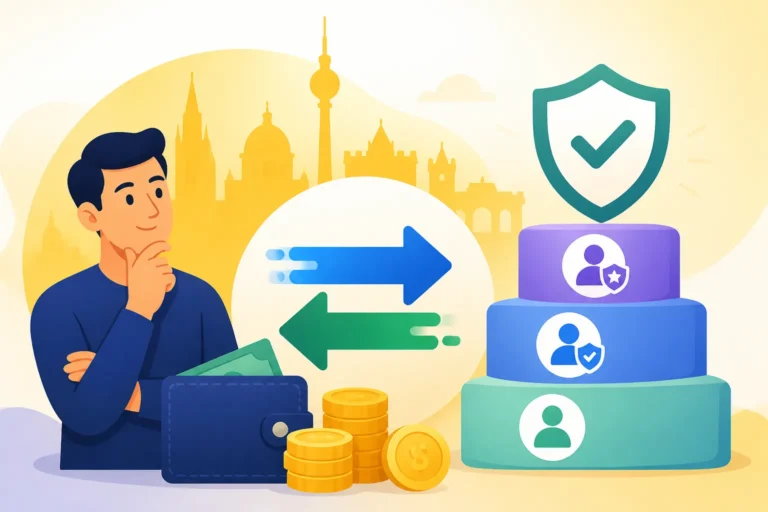
Sending a direct debit to pay my foreign student loan only to realize my German bank swallowed 50 euros in hidden exchange rate markups was a sickening realization. I remember working extra weekend shifts just to cover those invisible bank fees. This guide demystifies cross-border remittances so you can send your hard-earned euros home without getting ripped off.
Disclosure: This post may contain affiliate links. We may earn a commission at no extra cost to you if you make a purchase through these links. Read full disclosure.
The Hidden Costs of Traditional SWIFT Transfers
When expats arrive in Germany, they instinctively use their newly opened local checking account to wire money back home. This immediately triggers a traditional SWIFT transfer. SWIFT is essentially an archaic messaging system that banks use to pass your money along a digital chain of intermediary correspondent banks. Every single bank that touches your money takes a cut, and you are the one left paying the bill.
Understanding Correspondent Banks and Fees
You will rarely know exactly how much the final transfer will cost until the money actually lands in your home country. Traditional German savings banks process millions of these transfers, yet they maintain incredibly opaque fee structures. This unpredictability makes budgeting for your monthly obligations abroad incredibly difficult, especially when you are already trying to balance the notoriously high Cost of Living in Germany Breakdown of Expenses Rent Food Transport.
The upfront wire fee is only the beginning of the theft. Traditional banks force you to choose how the transfer fees are split using three specific codes: OUR (you pay all fees), BEN (the beneficiary pays all fees out of the principal), or SHARE (the fees are split). If you choose SHARE, the person receiving the money inevitably gets significantly less than you intended to send. When you finally receive your monthly statement, decoding these hidden SWIFT fees requires a deep understanding of the local banking jargon mapped out in Understanding German Bank Statements Fees and Transactions Explained.
Exchange Rate Markups and the Spread
The real financial damage of a traditional bank transfer is hidden entirely in the exchange rate. When your euros arrive at the foreign bank, they are converted using a “bank rate” rather than the real, mid-market exchange rate you see when you search the currency pair online.
Traditional banks pad this exchange rate with a hidden three to five percent markup. If you are sending a thousand euros home, the bank silently pockets thirty to fifty euros just on the conversion spread. If you are doing this monthly, these invisible fees completely destroy the careful margins you set up in Cross Border Banking Managing Your Home Country Account While in Germany. You are bleeding money purely for the privilege of moving your own capital.
The Waiting Game Across Time Zones
Because the SWIFT network relies on physical banking staff opening and closing institutional clearinghouses across different global time zones, standard international wires are agonizingly slow. If you initiate a transfer on a Friday afternoon in Berlin, the money might not hit a bank account in Australia, India, or the United States until the following Wednesday or Thursday.
If you are sending emergency funds to a family member or trying to hit a strict mortgage payment deadline back home, this lag can trigger massive late fees on the receiving end. The German banking system does not offer expedited international clearing outside the SEPA zone without charging premium, triple-digit fees. This slow, archaic system actively forces savvy expats to look for modern, digitized alternatives.

Modern Remittance Options for Expats in Germany
The modern expat strategy completely bypasses the SWIFT network by utilizing peer-to-peer financial technology. By stripping out the intermediary banks, you regain control over your money, your exchange rates, and your timeline.
Utilizing FinTech for the Mid Market Rate
Platforms like Wise have completely revolutionized how money moves across borders. Instead of physically moving euros across the ocean, Wise maintains massive local bank accounts in almost every country on earth.
When you want to send euros to British pounds, you simply send your euros to the German IBAN provided by Wise. Wise then uses its UK reserves to instantly deposit pounds into your recipient’s British account. Because the money never actually crosses a border, there are no intermediary banks to pay. More importantly, Wise gives you the exact, real-time mid-market exchange rate. You pay a tiny, transparent upfront fee, ensuring your family receives exactly the amount you intended to send.
Local Mobile Banking Integrations
If you want to streamline your life, you can consolidate these tools directly into your daily checking account. Legacy German banks fiercely refuse to integrate with third-party fintech apps because it cannibalizes their lucrative wire fees. However, modern digital banks have embraced open APIs to serve their highly mobile, international customer base.
If you open your primary account with N26, you do not even need to open a separate remittance app. Because N26 has seamlessly integrated the backend infrastructure of Wise directly into their smartphone app, you can execute a low-cost, mid-market international transfer straight from your main checking balance in seconds. This level of automation is an absolute lifesaver for expats juggling dual financial lives, a dynamic explored deeply in Mobile Banking Apps in Germany N26 Revolut and More.
Cash Pickup vs Digital Wallets
Not every expat is sending money to a recipient with a fully modernized, digital bank account. If you are remitting funds to a developing economy where the local infrastructure relies heavily on physical cash, standard digital transfers will not work.
In these scenarios, you must use legacy remittance giants like Western Union or MoneyGram, which allow your family to walk into a local post office or kiosk and pick up physical cash within minutes. However, these services charge astronomical percentage fees for the convenience of cash-in-hand delivery. You must aggressively compare their daily exchange rate markups before hitting send, as the upfront fee often masks a terrible currency conversion rate.
| Transfer Method | Speed | Exchange Rate Quality | Best Use Case |
| Traditional Bank SWIFT | 3 to 5 Days | Poor (High markup) | Very large corporate invoices demanding SWIFT |
| FinTech e.g. Wise | Instant to 1 Day | Excellent (Mid-market) | Monthly remittances, paying foreign debt |
| Mobile Bank e.g. N26 | Instant to 1 Day | Excellent (Mid-market) | Seamless daily transfers from a primary account |
| Cash Pickup Services | Minutes | Terrible (High markup) | Unbanked recipients needing physical cash |
German Tax and Regulatory Reporting for Large Transfers
If you are moving significant capital out of Germany—perhaps to buy a house back home or to repatriate years of savings—you will trigger strict federal reporting laws. Germany continuously monitors capital outflows to balance its economic statistics.
The AWV Reporting Mandate
To track macroeconomic shifts, the German Central Bank (Bundesbank) enforces the Außenwirtschaftsverordnung (AWV) reporting requirement. If you transfer any amount exceeding 12,500 euros out of Germany (or into Germany) in a single transaction, you are legally required to report it.
You must call the Bundesbank hotline by the seventh day of the month following the transfer to declare the transaction. This is purely a statistical reporting requirement, not a tax declaration. The government simply needs to know where the money went. Failing to make this simple five-minute phone call can result in devastating fines. Understanding the mechanics of moving bulk capital legally is essential, a process detailed in Moving Money to Germany Declaring Savings and Large Transfers.
Sending Money to Dependents and Tax Deductions
Expats who send money home to support elderly parents, disabled relatives, or children living outside the European Union are often completely unaware that the German state might subsidize their generosity.
Under German tax law, financial support sent to legally recognized dependents abroad can often be claimed as an extraordinary financial burden (Unterhaltsleistungen). This can drastically reduce your taxable income in Germany, potentially resulting in a massive tax refund. To even attempt these deductions, you must first ensure your foundational registration and tax IDs are perfectly aligned, a hurdle detailed in German Bureaucracy 101 Understanding the Anmeldung Schufa and Tax ID.
The tax office (Finanzamt) is brutally strict about the paper trail. You must prove the money actually left your German account and arrived in your dependent’s account. You cannot claim cash handed to a relative at the airport. You must submit flawless digital transfer receipts, translated birth certificates proving the familial relationship, and signed declarations from the recipient’s local government proving they are in financial need. Decoding exactly where to input these deductions requires deeply studying Understanding Your Tax Assessment Steuerbescheid After You File in Germany.
Repatriating Wealth and Global Investing
Expats do not just send money home to pay bills; they send it home to invest. If you are generating a high salary in euros, leaving your surplus cash in a zero-interest German checking account means local inflation is silently destroying your future purchasing power.
Funding Brokerage Accounts Abroad
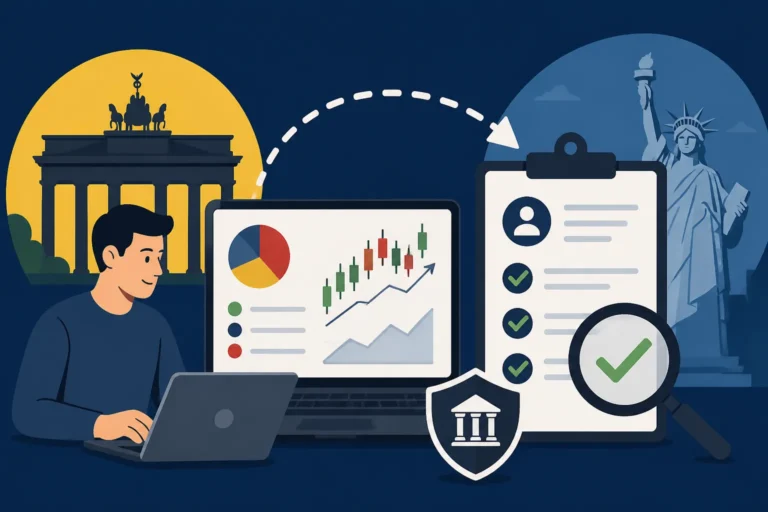
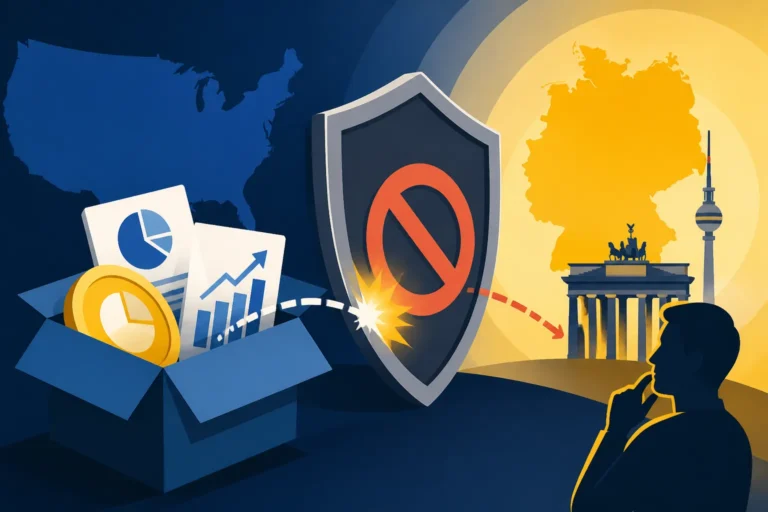
Funding a foreign brokerage account from Germany is highly complex. If you try to wire euros directly into a US-based or Australian account, the receiving broker will often reject the foreign currency entirely or apply a catastrophic conversion fee. To solve this, veteran expats use their N26 account to push euros through Wise, converting them to their home currency at the mid-market rate, and then depositing those funds seamlessly into their foreign brokerage via a local domestic transfer.
Navigating Dual Tax Liabilities
The moment your repatriated money starts generating dividends or capital gains in your home country, you face the wrath of the German tax system. As a resident of Germany, you are subject to unlimited tax liability, meaning Germany taxes your global wealth. If your home-country investments generate yield, you must manually declare it and convert it to euros on your German tax return.
To prevent getting taxed into oblivion or overwhelmed by cross-border accounting, many expats bypass their home-country brokers entirely and consolidate their wealth in a globally compliant platform. By routing your surplus euros directly into Interactive Brokers, you can invest in the global markets with incredibly low execution fees while automatically generating the exact, localized tax documents required by European authorities.
Because Interactive Brokers allows you to hold multi-currency accounts, you can buy international stocks with euros without paying exorbitant banking spreads. Managing your cross-border wealth cleanly ensures you do not trigger a massive audit, a terrifying reality decoded in Taxing Worldwide Income How Germany Taxes Foreign Income and Assets. By mastering the flow of your capital, you protect your hard-earned euros and ensure your wealth compounds efficiently, regardless of which border it crosses.
References
Primary sources official
- Deutsche Bundesbank AWV Meldepflicht: The official central bank guidelines detailing the 12,500 EUR threshold for reporting cross-border transfers, exemptions for standard goods, and the required hotline reporting procedures. https://www.bundesbank.de/en/tasks/statistics/reporting-requirements/reporting-requirements-foreign-trade-and-payments-regulation-awv–613586
- BaFin Federal Financial Supervisory Authority: Consumer protection guidelines regarding the fees, legal execution times, and transparency requirements for banks executing international transfers (Auslandsüberweisungen). https://www.bafin.de/EN/Verbraucher/Bank/Zahlungsverkehr/Auslandsueberweisung/auslandsueberweisung_node_en.html
Other helpful sources
- Make it in Germany Bank Account: The federal portal for skilled workers explaining the basic logistics of German current accounts and the typical costs associated with transferring funds outside the SEPA zone. https://www.make-it-in-germany.com/en/living-in-germany/money-insurance/bank-account
- Finanztip Auslandsüberweisung: Germany’s leading independent financial advice portal providing a deep breakdown of the OUR, BEN, and SHARE fee structures used by traditional banks in international wires. https://www.finanztip.de/auslandsueberweisung/
Disclaimer
The information provided in this article is for general informational and educational purposes only and does not constitute professional financial, tax, or legal advice. German tax laws regarding the deduction of dependent support (Unterhaltsleistungen), unlimited tax liability on global income, and the strict AWV-Meldepflicht reporting requirements for transfers exceeding 12,500 EUR are highly complex and strictly enforced by the Bundesbank and the Finanzamt. Failing to declare large capital transfers can result in massive financial penalties.