Why Are German Apartments Often Unfurnished? Understanding the Culture
Walking into your first German apartment viewing and realizing there are no light fixtures, appliances, or even a kitchen sink is a traumatic expat rite of passage. I remember staring at bare wires hanging from my ceiling, completely bewildered. This guide explains why German rentals are entirely empty and provides practical steps to survive the furnishing process.
Disclosure: This post may contain affiliate links. We may earn a commission at no extra cost to you if you make a purchase through these links. Read full disclosure.
The Shock of the Bare German Apartment
Missing Kitchens and Hanging Wires
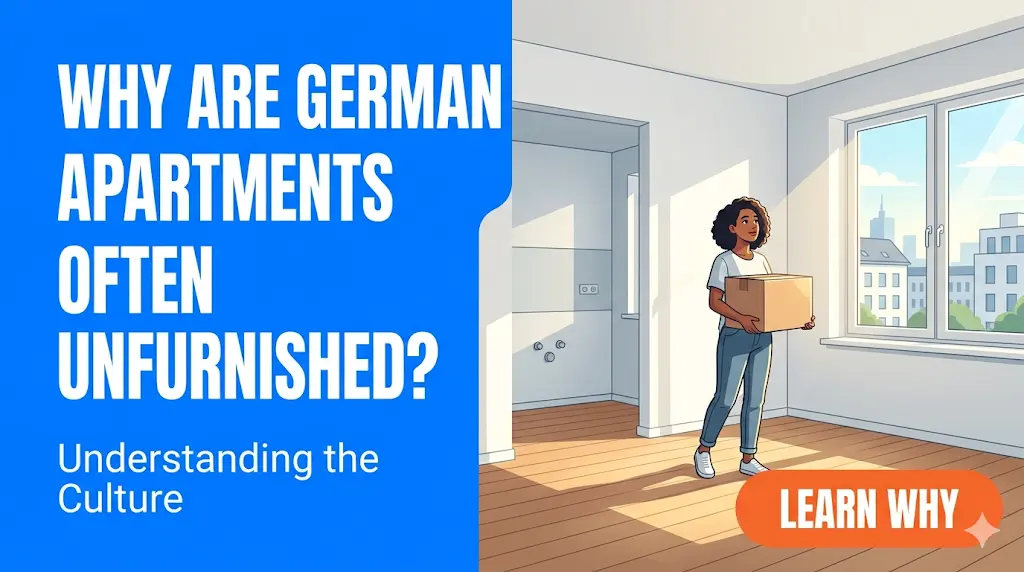
When an apartment listing in North America or the UK says “unfurnished,” it generally means there is no bed, sofa, or dining table. The kitchen, however, is considered a fundamental part of the building’s infrastructure. In Germany, the definition of unfurnished is taken to an absolute, literal extreme. When you rent a standard German apartment, you are renting an empty concrete box.
There are no light fixtures on the ceiling, only a small cluster of exposed, live wires waiting for you to install a lamp. There are no built-in closets or wardrobes. Most shockingly, there is often absolutely no kitchen. You will walk into a room designated as the kitchen and find nothing but bare walls, a tiled floor, and two pipes sticking out of the wall for hot and cold water.
The financial shock of this discovery cannot be overstated. Expats arrive expecting to pay a deposit and their first month of rent, only to realize they must immediately drop several thousand euros to buy and install kitchen cabinets, an oven, a refrigerator, and a sink before they can even boil water. This massive upfront capital requirement heavily distorts your initial financial planning, making it crucial to thoroughly review the Cost of Living in Germany: A Realistic Budget for Expats before signing a traditional lease.
Negotiating the Abstand for Existing Kitchens
Because installing a brand-new kitchen is expensive and time-consuming, a massive secondary market exists around selling used kitchens to the next tenant. You will frequently see apartment listings mentioning an “Einbauküche” (built-in kitchen, or EBK) that must be purchased from the current outgoing tenant. This payment is known as the “Abstand” (takeover fee).
The Abstand is a notorious source of frustration for foreigners. The current tenant holds immense power in highly competitive housing markets like Berlin or Munich. They will often inform the landlord that they will only recommend a prospective tenant who agrees to pay their Abstand. You might find yourself effectively forced to pay €3,000 for a ten-year-old, heavily worn IKEA kitchen just to secure the apartment lease.
While this feels remarkably like extortion, it is a deeply ingrained, completely legal part of the German housing market. If you are desperate for an apartment, you swallow the cost. If the requested Abstand is astronomically high, you can attempt to negotiate, but you risk the current tenant simply choosing another applicant who is willing to pay the full price. Deciphering what is legal and what is standard practice in these handovers is complex, requiring a deep understanding of Understanding German Rental Contracts: Key Terms and Conditions.
Cultural Reasons Behind Empty Rentals
Long Term Leasing and Renting for Life
To understand why this incredibly inconvenient system exists, you have to understand the German psyche regarding housing. In many countries, renting is viewed as a temporary stepping stone on the way to homeownership. In Germany, homeownership rates are among the lowest in the developed world, hovering around 50 percent. Renting is not a failure; it is the absolute cultural norm.
Germans rent apartments for decades. It is incredibly common for families to live in the exact same rented apartment for twenty or thirty years. Because they stay for so long, they view the rented space as their true, permanent home. If you are going to live somewhere for two decades, you do not want a cheap, generic “landlord special” kitchen. You want a high-quality kitchen customized to your specific cooking habits, aesthetic preferences, and physical height.
Therefore, the empty apartment is actually viewed as a blank canvas. It is a feature, not a bug. It allows the long-term German tenant complete creative freedom to build the exact home they want. For expats who are only planning to stay for two or three years, this long-term cultural mindset clashes violently with their short-term, highly mobile reality, leading to severe friction and culture shock.
Strong Tenant Rights and Personalization
The empty apartment phenomenon is heavily reinforced by Germany’s incredibly strong pro-tenant legal framework. Under the German Civil Code (BGB), tenants enjoy immense protections against eviction and rent increases. Alongside these protections comes a clear division of responsibility between the landlord and the tenant regarding maintenance.
If a landlord provides an apartment with a built-in refrigerator, oven, and washing machine, the landlord is legally responsible for maintaining and repairing those appliances if they break down over the next ten years. German landlords despise unpredictable maintenance costs. By providing an entirely empty apartment, the landlord assumes zero liability for appliances. If your oven breaks, it is your oven, and you must fix it.
This strict division also grants the tenant incredible autonomy. Because the landlord does not own the fixtures, the tenant has the right to drill holes in the walls, install heavy shelving, paint the rooms entirely different colors, and lay down their own laminate flooring, provided they return the apartment to its original, neutral state when they eventually move out. Navigating the rigid handover protocols requires meticulous record-keeping, much like the administrative hurdles detailed in Bureaucracy Basics: Understanding Bescheinigung Anträge and Other Paperwork.
Surviving the Setup Process as an Expat
Utilizing Furnished Temporary Housing
If you are moving to Germany for a job or studies and do not speak fluent German or possess a local credit history (SCHUFA), trying to rent and equip an empty apartment during your first month is a nearly impossible task. You will not have the tools, the transportation, or the language skills to negotiate a kitchen installation with a local contractor.
This is exactly why smart expats bypass the traditional market completely during their transition phase by utilizing furnished housing platforms. Booking a move-in-ready flat on Wunderflats is a massive strategic advantage. When you arrive with nothing but two suitcases, a Wunderflats apartment provides a fully equipped kitchen, a comfortable bed, proper lighting, and active internet from day one. You skip the trauma of living out of boxes and eating takeout for six weeks while waiting for a kitchen delivery.
More importantly, Wunderflats landlords are accustomed to international tenants and provide the legally required confirmation document so you can formally register your presence in the city. Having a stable, fully functional home base allows you to sort out your Registering Your Address Anmeldung Step by Step Guide without the crippling stress of an empty apartment. Once your probation period at work is over and you understand the local neighborhoods, you can safely transition from your Wunderflats rental into a long-term, unfurnished lease on your own timeline.
Equipping Your Empty Flat Quickly
If you do eventually take the plunge and sign a lease for a traditional, bare German apartment, you must be prepared for the immediate logistical assault. The very first thing you will notice is the darkness. Because there are no light fixtures, you must install them yourself. Do not attempt to wire complex chandeliers immediately. Simply order basic, cheap construction light bulbs with standardized hanging sockets on Amazon Germany so you can at least see what you are doing on move-in day.
You will also realize immediately that you need a vast array of tools. German apartments do not come with built-in closets, meaning you will be assembling an astonishing amount of flat-pack furniture. Buying a high-quality cordless power drill on Amazon Germany is arguably the most important purchase you will make in your first week. Trying to assemble three wardrobes and a bed frame with a manual screwdriver will break your spirit.
Finally, kitchen deliveries in Germany are notoriously slow. If you buy a new kitchen from a major retailer, it can take six to eight weeks for it to be manufactured, delivered, and installed. To survive this two-month period without a stove, you must improvise. Purchasing a portable, plug-in induction cooktop and a cheap mini-fridge from Amazon Germany allows you to cook basic, healthy meals in your empty kitchen space while you wait for the contractors. Managing this chaotic period also means you need to ensure your basic utilities are active, a process you can master by reading A Guide to German Utilities: Setting Up Electricity Gas and Water.
Comparing Housing Options for New Arrivals
To visualize the massive difference in lifestyle and upfront capital required, here is a breakdown of what you can expect when choosing between a traditional German lease and an expat-focused furnished option:
| Feature | Traditional Unfurnished Apartment | Furnished Apartment (Wunderflats) |
| Kitchen Included | Rarely (Must buy new or pay Abstand) | Yes, fully equipped with appliances |
| Light Fixtures | No (Bare wires on ceiling) | Yes, fully installed |
| Internet & Utilities | Tenant must set up and activate | Pre-activated and included in rent |
| Minimum Lease Term | Often 1 to 2 years minimum | Flexible, often starting at 1 month |
| Upfront Cost | Very High (Deposit + Furniture + Kitchen) | Moderate (Deposit + First month rent) |
When deciding your path, you must also consider the administrative burden of setting up your own Wi-Fi in an empty apartment, which often involves waiting weeks for a technician. If you choose the traditional route, prepare yourself by reading How to Set Up Internet in Germany Without German Skills English Friendly Providers. If you choose the furnished route, you bypass this headache entirely, allowing you to focus on your new job and exploring your new country.
References
Primary sources official
- Make it in Germany (Official Federal Portal) – Housing: https://www.make-it-in-germany.com/en/living-in-germany/housing-mobility/housing
- Federal Ministry of Justice – German Civil Code (BGB) Tenancy Law: https://www.gesetze-im-internet.de/englisch_bgb/englisch_bgb.html#p1931
- Federal Statistical Office (Destatis) – Housing Conditions: https://www.destatis.de/EN/Themes/Society-Environment/Housing/_node.html
Other helpful sources
- German Tenants’ Association (Deutscher Mieterbund): https://www.mieterbund.de/
- Expatica – Renting in Germany: https://www.expatica.com/de/housing/renting/renting-in-germany-103300/
Disclaimer
The information provided in this guide is for general informational purposes only and is based on the real-world experiences of expats navigating the German housing market. Rental laws, the legal obligations surrounding the handover of empty apartments, and the legality of Abstand (takeover fees) are strictly governed by the German Civil Code (BGB) and can vary based on your specific lease agreement. This article does not constitute legal or financial advice. Always carefully review your rental contract, ideally with the assistance of a certified translator or a local tenants’ association (Mieterverein), before signing or paying any upfront fees for furniture or kitchens.