What to Do If Locked Out: Getting a Schlüsseldienst (Locksmith) in Germany
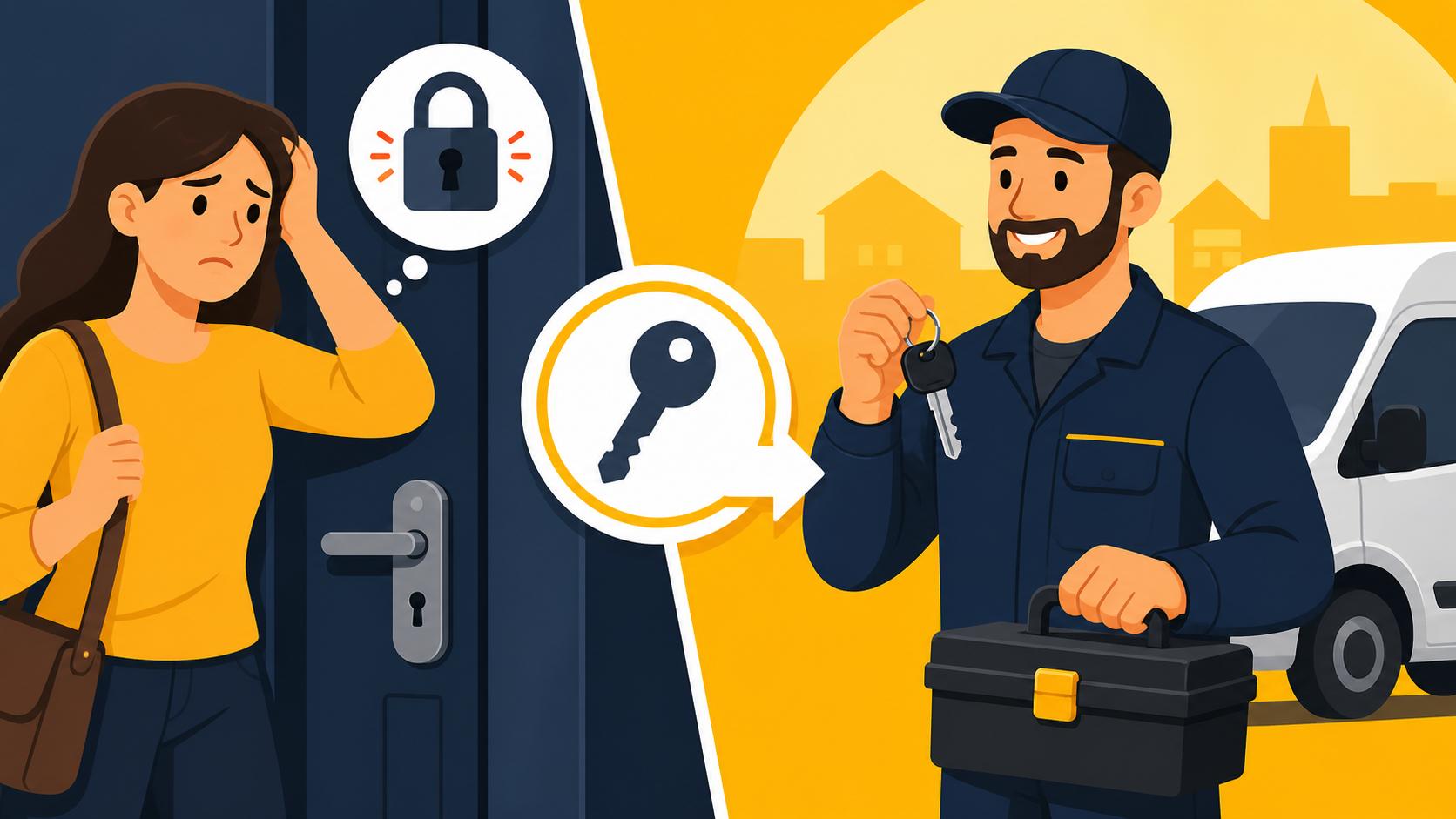
It is 11 p.m. on a Sunday, the door has clicked shut behind you, and your keys are on the kitchen counter. Your phone is at a sliver of battery and the first search result promises a locksmith “in 15 minutes.” This guide covers how to get back inside, how to avoid being overcharged by a Schlüsseldienst, and how to prevent a repeat.
Disclosure: This post may contain affiliate links. We may earn a commission at no extra cost to you if you make a purchase through these links. Read full disclosure.
First Steps When You Are Locked Out in Germany
Panic tends to make people call the first number they see, and that is usually when things go wrong. I have been locked out twice in Germany, once in a Berlin Altbau and once in a newer building outside Cologne. Both times, the most useful thing I did was stand still for two minutes and think before dialling anyone.
Work Out Whether the Door Is Zugefallen or Abgeschlossen
This distinction matters more than anything else. A door that has simply fallen shut and latched is called “zugefallen.” A door that has been locked with the key turned is “abgeschlossen.” Most German apartment doors latch automatically when they close. If you did not turn the key, your door is almost certainly just zugefallen.
A competent locksmith can usually open a latched door without damage in a few minutes, often with a flexible plate or a specialised tool slid past the latch. A properly locked door is a different job. It may require drilling the cylinder, called the Schließzylinder, and fitting a new one. That takes longer and costs more because of the replacement part.
When you call a locksmith, say clearly: “Die Tür ist nur zugefallen, nicht abgeschlossen.” This tells them it should be a quick, non-destructive opening. A reputable locksmith will quote you accordingly. Someone who still insists on drilling a door that was only latched should make you suspicious.
Check the Free Options Before Paying Anyone
Before you call a locksmith, go through the people who might already have a key:
- Your Hausmeister or caretaker. Many larger buildings have one, and their number is often posted near the mailboxes or the entrance.
- Your Hausverwaltung or landlord. Property management offices sometimes have an emergency line outside office hours. Private landlords who live nearby may keep a spare.
- A trusted neighbour or friend. Many Germans leave a spare key with a neighbour, and it is worth doing the same once you settle in.
- Your flatmates or partner. This is obvious, but in a stressful moment people forget that someone else might be twenty minutes away with a key.
- Your furnished rental host. If you found your flat through Wunderflats or a similar furnished rental platform, message your landlord through the platform first. Many hosts of furnished apartments keep spare sets because tenants come and go regularly.
If you rent a furnished place for your first months, ask how spare keys are handled when you check in. For more on that type of tenancy, see Short-Term and Furnished Rentals in Germany.
When to Call 110 or 112 Instead
Some lockouts are emergencies. If a child or a vulnerable person is alone inside, a pot is on the stove, a candle is burning, or someone inside may be unwell, call 112 for the fire brigade or 110 for the police. Do not waste time comparing locksmith quotes. Emergency services can force entry when there is a genuine risk to life or property.
For an ordinary lockout with nobody in danger, the police and fire brigade will generally tell you to call a locksmith. They are not a free door-opening service. For a full rundown of which number covers what, see Public Safety and Emergency Services: Who to Call (Police, Fire, Medical).
How to Find a Trustworthy Schlüsseldienst
This is where many expats get burned. The German locksmith market has a well-known problem with rogue operators, and consumer protection organisations warn about them regularly. Foreigners who are stressed, short on battery and unsure of the language make ideal targets.
Why the Top Search Results Are Often the Worst Choice
When you search “Schlüsseldienst” plus your city, the first results are often paid ads. Some of these belong to nationwide call centres that use local-looking names and numbers but have no workshop in your city. They pass your job to whichever subcontractor is available, sometimes someone driving in from far away. Then they charge for travel, urgency and “special tools” on top of the opening.
The typical pattern looks like this. You are quoted a vague, friendly price on the phone. The technician arrives and opens the door. Then he hands you an invoice several times higher than you expected and insists on immediate cash or card payment, sometimes walking you to an ATM. A frightening number of people pay because it is late and they just want to go to bed.
Signs that a locksmith is more likely to be legitimate:
- A real local street address with a workshop or shop, not just a phone number
- An imprint, or Impressum, on their website showing the business owner and address
- A willingness to name a total price, or a clear price range, on the phone before driving out
- Reviews that mention specific neighbourhoods and real interactions, not generic praise
- Membership in a recognised locksmith trade association or regional guild, which many established businesses display
What to Ask on the Phone Before They Come
Never let a locksmith start driving to you until you have asked the questions below. Write the answers down, or ask for them by text message so you have a record.
- What is the total price for opening a door that is only zugefallen, including travel? Ask for the all-in figure, not just a “starting from” price.
- Are there surcharges for night, weekend or public holiday call-outs? Most legitimate locksmiths add these, which is normal. They should still tell you upfront.
- Where are you based, and how long will it take to arrive? A local business should be able to name its district.
- Can I pay by card, or receive an invoice for bank transfer? Being pressured into cash only is a warning sign.
- Will you open the door without damage? For a latched door, the answer should usually be yes.
If the person on the phone dodges these questions or gets irritated, hang up and call the next one. A few extra minutes on the phone can save you a very painful bill.
Understanding the Shape of Locksmith Costs
I am deliberately not giving price figures here. They vary by city, by time of day and by business, and they change. What I can describe is how the bill is usually built, so you can spot padding.
| Cost component | What it usually covers | What to watch for |
|---|---|---|
| Base fee for opening | Labour for opening the door | Should be clearly lower for a door that is only zugefallen |
| Travel fee | Driving to your address | Inflated “long distance” charges from operators who are not local |
| Time surcharge | Nights, Sundays, public holidays | Should be explained before arrival, not invented afterwards |
| Materials | A new cylinder if drilling was needed | Charged on a door that was only latched and did not need drilling |
| Special tools fee | Rarely justified for standard doors | A vague line item with no explanation |
Weekday daytime openings are almost always the cheapest. If you are not in danger and can stay with a friend, waiting until the morning can make a real difference. Public holidays also count as premium time, and Germany has quite a few of them. A lockout on a holiday Monday is billed like a Sunday.
What to Do During and After the Locksmith Visit
Even with a good locksmith, how you handle the visit and the paperwork afterwards affects your wallet and your relationship with your landlord.
Paying, Invoices and Disputing an Unfair Bill
When the locksmith finishes, ask for a proper itemised invoice, called a Rechnung. It should list each component separately, along with the business name and address. You are entitled to this. Keep it, because your insurer or landlord may need it later.
If the bill is wildly higher than what you were quoted on the phone, you do not have to hand over cash on the spot. Stay calm, say that you will pay by bank transfer against the invoice, and do not let anyone walk you to an ATM. If you feel threatened, call 110. Afterwards, you can contact your regional Verbraucherzentrale, the consumer advice centre, which handles locksmith complaints frequently and can explain your options.
If you do not yet speak much German, this conversation can feel impossible. Keep a translation app ready and use simple phrases such as “Ich zahle per Überweisung” (I will pay by bank transfer). For broader language strategies, see Living in Germany Without Speaking German (Yet): Tips to Get By.
Telling Your Landlord and Handling Lock Changes
If the locksmith only opened a latched door, there is usually nothing to report. If he drilled and replaced the cylinder, you should tell your landlord or Hausverwaltung promptly. Your rental contract may specify that locks belong to the property and that changes require notice. When you move out, you may be expected to return the original cylinder or hand over every key to the new one.
Lost keys are a bigger issue than a simple lockout, especially in buildings with a central locking system called a Zentralschließanlage. In these buildings, one key opens your flat, the front door, the cellar and sometimes the bin area. If you lose a key, the landlord may argue the whole building’s system is compromised and needs replacing. That can be very expensive. This is exactly the scenario where your insurance matters.
It also helps to note how many keys you received at move-in. That number usually appears in the handover document. For how to record it properly, see Apartment Handover Protocol: Documenting Condition When Moving In/Out. Key disputes are also a common reason for deductions at the end of a tenancy, which is covered in How to Get Your Kaution Back at the End of a German Lease. For your wider legal position as a renter, read German Tenant Rights and Laws: What Expats Need to Know.
Does Insurance Cover a Lockout or Lost Keys?
This depends heavily on your policy, so check your own documents rather than assuming.
- Private liability insurance, or Haftpflichtversicherung, can cover the loss of keys that belong to someone else, such as your landlord’s building keys. Many policies include this as an optional or built-in “Schlüsselverlust” component. Coverage limits vary, so check the wording. This tends to be most valuable when a central locking system is involved.
- Household contents insurance, or Hausratversicherung, may cover a lock replacement after a burglary or a break-in attempt. It typically does not pay because you forgot your keys inside.
- Some policies or add-ons include a key or locksmith assistance service. Read the terms carefully, because these are not standard everywhere.
If you do not have liability cover yet, it is one of the most commonly recommended policies in Germany. For a practical walkthrough, see How to Get Haftpflichtversicherung in Germany. To understand how it fits alongside contents cover, see Home and Liability Insurance in Germany (Haftpflicht and Hausrat).
How to Prevent Getting Locked Out Again
Once you have been through this, you will never want to repeat it. A few small habits and purchases make a big difference.
Simple Habits That Save You From Lockouts
The single best habit is to never let the door close behind you without touching your keys first. Many long-term residents in Germany do a “pocket pat” every time they leave. It sounds silly, but the automatic latch on most doors is unforgiving.
Other practical steps:
- Leave a spare key with someone you trust. A neighbour you get along with, a nearby friend or a colleague who lives in your district all work.
- Ask your landlord how spare keys are handled. Some landlords are happy to keep one and others refuse. It is better to know before an emergency.
- Save one or two vetted locksmith numbers now. Research local, well-reviewed businesses while you are calm, and save their numbers in your phone.
- Keep your phone charged when you go out. A dead phone turns a minor lockout into a real problem.
- Take a photo of your key and its number. Many security keys have a code stamped on them or on a card, called a Sicherungskarte, which you need to order copies legally.
Gadgets and Accessories Worth Buying
You can find plenty of useful prevention tools on Amazon Germany, but think about your building rules before installing anything.
- Key trackers attach to your keyring and help you find keys left in a bag or a café.
- A brightly coloured or bulky keyring makes keys harder to forget on a shelf.
- Key safes, or Schlüsseltresore, are small lockboxes with a code. They are popular for holiday rentals. However, mounting one on the building’s exterior usually requires the landlord’s permission and may breach your building rules. Some insurers also take a dim view of keys stored outside. Check your Hausordnung first, and see What is Hausordnung? Navigating Apartment Rules and Regulations.
If you search Amazon Germany for these items, look at reviews from German buyers specifically. Many will mention whether a product suits standard German door hardware.
When a Lock Upgrade Makes Sense
Sometimes a lockout reveals a worn or faulty cylinder, a door that sticks, or a latch that only catches on the third try. If you notice these issues, report them to your landlord in writing. Fixing worn parts is generally the landlord’s responsibility, not yours. Do not replace hardware yourself without agreement.
If your landlord asks you to arrange the repair, use a properly established tradesperson rather than whoever answers an emergency hotline. Any non-urgent work deserves a few quotes. For how to vet them, see How to Find Reliable Tradespeople (Handwerker) in Germany. Doing this calmly, in daylight, on a weekday, is the opposite of the late-night lockout scramble. Your bill will usually reflect that.
Being locked out in a new country feels humiliating, and the language barrier makes it worse. You are not the first expat to stand in a stairwell in socks and wonder what to do, and you will not be the last. With a saved locksmith number, a spare key with a neighbour and the right questions ready, a German lockout becomes an annoying story instead of an expensive one.
Disclaimer
This article is for general informational purposes only and does not constitute professional advice. Laws, prices and regulations vary by location and change over time. Consult a qualified professional for guidance on your specific situation.