The Foreigners’ Office (Ausländerbehörde): How to Deal With It
Walking into a massive, gray administrative building at sunrise only to be told your specific form of health insurance isn't "sufficient" is a rite of passage every expat in Germany dreads. I remember the cold sweat I felt during my first appointment in Berlin when the officer simply pointed at a door and said "nein" without further explanation. This guide solves the mystery of the Ausländerbehörde, giving you the practical strategies and mental fortitude needed to navigate the system successfully.
Disclosure: This post may contain affiliate links. We may earn a commission at no extra cost to you if you make a purchase through these links. Read full disclosure.
Understanding the Role and Reality of the Ausländerbehörde
The Ausländerbehörde, often referred to as the LEA (Landesamt für Einwanderung) in larger cities like Berlin, is the local authority responsible for everything related to your legal stay in Germany. Unlike a central immigration office, these offices are decentralized and managed at the municipal or district level. This means that your experience in a small town in Bavaria might be night-and-day different from an appointment in downtown Frankfurt. While they handle your residence permits, work authorizations, and visa extensions, they also act as the gatekeepers of your German life.
The reality of dealing with these offices is often defined by a stark contrast between high-tech expectations and analog realities. You are moving to one of the most advanced economies in the world, yet you will quickly find that the Ausländerbehörde runs on paper, stamps, and physical signatures. Validating the frustration foreigners feel is easy: the system is currently overwhelmed. Between shifting geopolitical climates and a chronic shortage of administrative staff, the "waiting game" has become a permanent feature of the immigration landscape. Understanding that the person across the desk is likely handling hundreds of cases a week can help you approach the interaction with the necessary patience and precision.
The Sachbearbeiter: Your Primary Point of Contact
In the German system, your file is usually assigned to a specific Sachbearbeiter (case officer). This individual has a significant amount of discretion in how they interpret the guidelines for your specific visa type. One officer might accept a digital bank statement, while another might insist on a stamped original. This inconsistency is one of the most cited frustrations among expats.
Because of this, building a "paper trail" is your best defense. If you receive an email from an officer, print it out and bring it to your next appointment. If they tell you something over the phone, write down the date, time, and the name of the person you spoke with. In my years of living here, I’ve learned that having a physical document to point to is the only way to resolve conflicting instructions from different staff members.
The Decentralized Nature of the System
It is crucial to register at the correct office based on your Meldebescheinigung. You cannot simply go to an office in a neighboring city because the wait times are shorter. Your physical file moves with your registration. If you move from Munich to Hamburg, your physical documents must be mailed between the offices before the new office can fully process your extension. This "file transfer" can take weeks, sometimes months, adding another layer of complexity to your immigration timeline.
Preparing for Your Appointment: Document Mastery
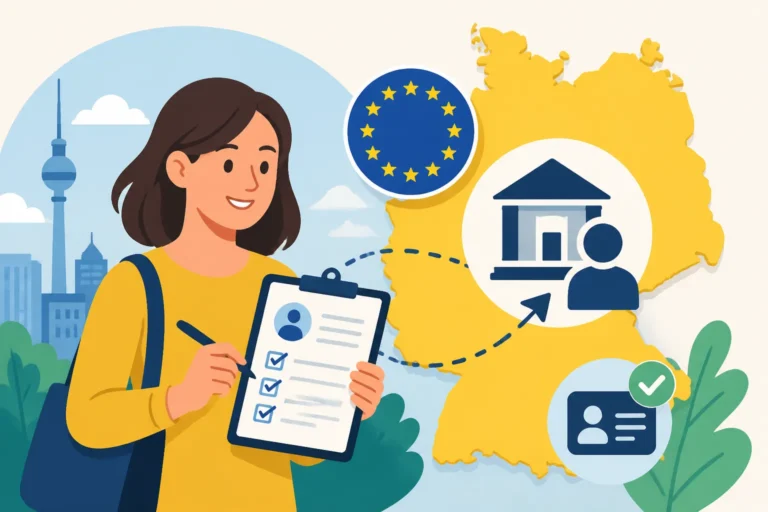
Preparation is the only part of the process you can truly control. When you show up to the Ausländerbehörde, you should view yourself as a professional archivist of your own life. The goal is to make it impossible for the officer to find a reason to send you home. This starts with the "Leitz Ordner"—the classic German ring binder. Organize your documents with tabs, ensuring that every original has at least two photocopies.
The list of requirements can change, but the core remains the same: a valid passport, a current biometric photo (do not use an old one; they will check), proof of health insurance, and proof of financial subsistence. For students, tools like Expatrio are incredibly helpful for setting up a blocked account, which is a non-negotiable requirement for many. Having your financial proof organized through a recognized provider like Expatrio can significantly smoothen the process during the document review phase.
The Essential Paperwork Checklist
While each visa type has specific needs, every applicant should have a baseline of documents ready. Do not wait for the office to ask for these; have them in your folder from day one.
| Document Type | Purpose | Pro-Tip |
|---|---|---|
| Anmeldung | Proof of local residence | Must be dated within the last 3 months. |
| Health Insurance | Proof of coverage | Needs to state it meets § 11 Abs. 1-3 SGB V. |
| Biometric Photo | Identification | Use a machine at the station; don't smile. |
| Financial Proof | Proof you won't need state aid | Bank statements, blocked accounts, or job contracts. |
| Lease Agreement | Proof of living space | Must show the square footage of the apartment. |
Handling Certified Translations and Legalizations
One of the most common reasons for a rejected application is a document that isn't in German. Unless your Sachbearbeiter is exceptionally lenient, birth certificates, marriage licenses, and university degrees must be translated by a state-certified translator. This is where services like Lingoking become essential. Using a certified service like Lingoking ensures that your translations carry the necessary seals to be legally recognized by the German authorities.
Never attempt to translate these documents yourself. Even if you are fluent, the Ausländerbehörde requires the official stamp of a translator registered with the German courts. Furthermore, depending on your home country, you might need an Apostille or a legalization of your original documents. Check the How to Get a Certified Translation for German Immigration guide to ensure you aren't missing a critical legal step that could delay your residency by months.
Navigating the Appointment System and Communication
Securing an appointment (Termin) is often harder than the appointment itself. In cities like Berlin or Munich, new slots often disappear within seconds of being released. The traditional advice of "refreshing the page at 7:00 AM" still holds some weight, but the system is increasingly moving toward digital request forms where you submit your data and wait for them to email you a date.
This waiting period is a source of immense anxiety. What if your current visa expires while you are waiting for an appointment? This is a common scenario, and legally, as long as you have requested an extension before your current permit expires, your status remains valid under the same conditions until the office makes a decision. This "legal fiction" is your safety net, but it is cold comfort when you are trying to travel or prove your right to work to a new employer.
Strategies for Getting an Appointment
If the online portal shows no availability for months, do not panic. Some offices have emergency walk-in hours for those whose visas expire within 48 to 72 hours, though these are becoming rarer. Another strategy is to send a "Fax" or a registered letter (Einschreiben). In the German legal world, a Fax is often treated with more weight than an email because it provides a transmission report that holds up in court as proof of contact.
If you find yourself stuck in a loop of silence, you might need to look into Booking Ausländerbehörde and Visa Appointments in Germany for more localized tips on which days the systems usually update. Persistence is the key; I’ve known expats who spent three hours every morning refreshing the page until a cancellation popped up.
Overcoming the Language Barrier
It is a common misconception that the staff at the Foreigners' Office will speak English. While many do, the official language of the administration is German. Some officers are strictly forbidden from speaking English for liability reasons—if they give you incorrect advice in English, the legal ramifications are complicated.
If your German is not yet at a functional level, bring a translator or a German-speaking friend. This isn't just about understanding the words; it's about cultural navigation. A German speaker knows how to use the formal "Sie" and how to push back politely but firmly when a request seems unreasonable. If you are struggling to communicate, you might find it helpful to look into Finding English-Speaking Doctors just to see how other sectors in Germany handle language barriers, but for the Ausländerbehörde, your best bet is a dedicated translator.
Survival Strategies for the Big Day
When the day of your appointment finally arrives, treat it like a high-stakes job interview. Arrive at least 15 minutes early. In Germany, being "on time" actually means being five minutes early. You will likely have to pass through a security check similar to an airport. Once inside, find the waiting room associated with your "Wartenummer" (waiting number) and watch the screen like a hawk.
The atmosphere in these waiting rooms is often heavy with tension. You'll see families, students, and professionals all clutching their folders. My advice: bring a book or a portable charger and stay off your phone for important calls. When your number flashes, you move to the assigned room. This is the moment of truth.
Arriving and Navigating the Physical Office
Every office has its own flow. Some require you to check in at a kiosk to "activate" your appointment number, while others just expect you to sit and wait. Pay close attention to the signage. If you are in a large city, the building might have multiple entrances (Haus A, Haus B, etc.). Missing your slot because you were in the wrong wing of the building is a mistake you won't get to fix the same day.
Dealing with the Sachbearbeiter
When you enter the room, greet the officer with a formal "Guten Tag." Be polite, concise, and let them lead the interaction. Do not volunteer information that isn't asked for, but have every document ready to slide across the desk the moment they mention it. If they tell you a document is missing, do not get angry. Instead, ask exactly what they need and if you can send it via email or post to avoid a second appointment.
If they are being particularly difficult, remember that you have the right to ask for a written explanation of any rejection. Most officers will soften their stance if they see you are well-prepared and respectful of their time. For those bringing family members, you should check Family Health Insurance: Adding Your Spouse and Kids to Your Plan to ensure your insurance documents already reflect your dependents, as this is a frequent point of contention.
Post-Appointment Realities: Waiting and Bridging
If all goes well, the officer will tell you that your permit is approved. However, you won't walk out with a new card. The electronic residence permit (eAT) is printed by the Federal Printing Office in Berlin and takes anywhere from 4 to 8 weeks to arrive at your local office or your home.
During this interim period, you are in a state of limbo. You may be given a temporary document or told to wait for a PIN letter in the mail. The PIN letter is crucial; it contains the codes for the online functions of your card. Do not throw it away! Even if you don't plan on using the digital ID functions, you need that letter to prove the card has been processed.
Understanding the Fiktionsbescheinigung
If your current visa expires before the new card is ready, the officer will issue a The Fiktionsbescheinigung: Bridging Your Permit in Germany. This is a fold-out paper document that "continues" the legality of your stay. There are different types of Fiktion: one allows you to travel and re-enter Germany (§ 81 Abs. 4), while another only allows you to stay within the country (§ 81 Abs. 3). Always check which box is ticked before you book a flight home for the holidays.
If you are a student, ensure your Health Insurance for Students in Germany: Affordable Options and Requirements is paid up during this entire bridging period. If your insurance lapses, your Fiktionsbescheinigung technically becomes invalid, which can cause a nightmare at the border or during your next extension.
When Things Go Wrong: Delays and Denials
Sometimes, despite your best efforts, the answer is "no" or, more commonly, total silence. If you haven't heard from the office in over three months, you or a lawyer can file an "Untätigkeitsklage" (action for failure to act). This is a legal move that forces the office to make a decision on your file.
In the case of a denial, you usually have one month to file an objection (Widerspruch). This is the time to hire a professional. Do not try to handle a visa denial alone. You will need to provide new evidence or argue why the officer’s interpretation of the law was incorrect. You can also look at How to Track Your German Visa Application Status to see if there are any updates in the digital system before taking legal steps.
Important Considerations for Special Groups
The Ausländerbehörde treats different groups with different levels of scrutiny. If you are here on an EU Blue Card, the process is generally more streamlined because there are clear salary thresholds that prove your "value" to the economy. Freelancers, on the other hand, face the most grueling appointments, as they must prove their business is viable and "of interest" to the local region.
For those moving for study, having a solid financial foundation is key. Using a blocked account through a provider like Expatrio is often the only proof of subsistence that smaller offices will accept. They want to see that you have exactly €11,904 (as of 2026 requirements) ready to support yourself for the year.
Freelancers and the "Artist Visa"
If you are in Berlin, the "Artist Visa" is a legendary but difficult path. You will need letters of intent from German clients, a detailed CV, and a professional portfolio. The Ausländerbehörde will often send your documents to the Chamber of Commerce (IHK) for review. This can add months to the process. Be prepared to show your Health Insurance for Freelancers and Self-Employed: Navigating the System documents, as private insurance for freelancers is scrutinized heavily to ensure it covers pregnancy and older age.
Students and Graduates
If you have just finished your degree, you are eligible for an 18-month job-seeker visa. This is one of the most generous parts of German immigration law. However, the transition from a student permit to a job-seeker permit requires a new appointment and a fresh set of documents. Make sure you don't let your student status expire before you have the job-seeker appointment confirmed.
Final Thoughts on the German Bureaucracy
Dealing with the Ausländerbehörde is a test of your resolve to live in Germany. It is often the first time expats feel the weight of being "foreign." But remember: thousands of people successfully navigate this every month. The keys are organization, patience, and a refusal to take the bureaucracy personally. If you have your translations from Lingoking ready, your financial proof from Expatrio set, and your "Leitz Ordner" organized, you are already ahead of 90% of the people in that waiting room.
Stay persistent, keep your documents updated, and always ask for a "Fiktionsbescheinigung" if your permit is about to expire. You've got this.
Disclaimer
The information provided in this guide is for educational and informational purposes only and does not constitute legal advice. Immigration laws and local office procedures in Germany are subject to frequent changes. Always consult with the official website of your local Ausländerbehörde or a qualified immigration lawyer for the most up-to-date and personalized advice regarding your specific situation.