Dual Citizenship in Germany: What’s Now Allowed
For years, the choice between your home country and Germany felt like an impossible administrative divorce. I remember the anxiety of weighing my identity against my residency status, fearing I’d have to surrender my birth passport just to feel secure in the country I now called home. This guide breaks down the new dual citizenship laws, finally ending that forced choice for expats.
Disclosure: This post may contain affiliate links. We may earn a commission at no extra cost to you if you make a purchase through these links. Read full disclosure.
The Modern Era of German Nationality Law
The landscape of German immigration changed fundamentally in mid-2024. For decades, the German government operated under the principle of avoiding multiple nationalities. If you wanted to become German, you generally had to prove you had renounced your previous citizenship, with only a few exceptions for EU citizens or those from countries where renunciation was legally impossible. This "single citizenship" dogma was a massive hurdle for many of us who felt that our heritage and our new life shouldn't be mutually exclusive.
The recent legislative overhaul, known as the "Modernization of Nationality Law," has officially tossed that old principle into the bin. Germany has finally recognized that it is a modern country of immigration. This shift isn't just about paperwork; it is a profound cultural acknowledgment that you can be 100% committed to the German democratic order while still holding onto the passport of your parents. You no longer have to choose between your roots and your future.
Breaking the Single Nationality Principle
Under the old rules, the "Option Duty" (Optionpflicht) haunted children of immigrants, forcing them to choose one nationality by the age of 23. This created a sense of "conditional belonging" that many expats found alienating. I’ve spoken to dozens of friends who put off their naturalization for a decade because they couldn't bear to lose their connection to home. Now, that barrier is gone. Whether you are from the US, India, Turkey, or Brazil, Germany no longer cares if you keep your original passport.
This change also simplifies the process for the authorities. They no longer have to process thousands of "Retention Permits" (Beibehaltungsgenehmigung), which were notoriously difficult to get and required proving "continuing ties" to Germany while living abroad. For us on the ground, this means less bureaucracy and a much clearer path toward full political participation. To understand how these changes fit into the broader legal context, you should look at Dual Citizenship in Germany (2024 Law Update): What Expats Should Know for a historical perspective.
Why the 2024 Reforms Changed Everything
The core of the reform isn't just about dual nationality; it's about speed and accessibility. The German government realized that the previous eight-year waiting period was out of step with its needs for skilled labor. By shortening the timelines, they are essentially saying, "If you're working here and contributing, we want you to stay." This is a massive win for the expat community.
Furthermore, the reform addressed long-standing injustices for the "Guest Worker" generation, making it easier for those who helped build the country in the 60s and 70s to become citizens without grueling language tests. For the rest of us, it means the goalposts have moved significantly closer. This is particularly relevant if you are just starting your journey and want to know what lies ahead; checking the German Citizenship (Einbürgerung): Requirements Overview can help you map out your long-term plan.
Qualifying for Naturalization under the New Rules
The most headline-grabbing change is the reduction in the residency requirement. Previously, you needed to live in Germany for eight years (or seven with an integration course) before you could even think about applying. Now, the standard requirement has been slashed to five years. This means if you moved here in 2020, you could potentially be eligible to apply right now.
However, "residency" doesn't just mean having a roof over your head. It means being legally resident with a permit that allows for permanent stay. Time spent on a student visa usually counts toward this total, which is a relief for those who spent years in university before entering the workforce. If you are currently a student, tools like Expatrio can be helpful for managing your initial blocked account and health insurance, which sets the foundation for your legal residency years later.
Reduced Residency Requirements
Slashing the wait from eight years to five is a game-changer. In my own journey, that three-year difference felt like an eternity of waiting for the right to vote and the security of a permanent passport. Five years is roughly the time it takes to truly "arrive"—to learn the language, understand the social nuances, and build a career.
It’s important to note that your residency must be uninterrupted. Short vacations are fine, but if you leave Germany for more than six months without permission from the Ausländerbehörde, the "clock" might reset. Always keep your Anmeldung (address registration) up to date. If you're wondering how your current permit stacks up against these timelines, read more about German Citizenship by Naturalization: Eligibility and Application Steps to see where you stand.
The Exceptional Integration Pathway
For those who are truly overachievers, there is an "express" route. If you show "exceptional integration," you can now apply for citizenship after just three years. This is a significantly higher bar than the standard five-year path. To qualify, you generally need to demonstrate C1 level German (rather than the standard B1) and show that you have made a special contribution to society.
Special contributions can include things like extensive volunteer work, high professional achievements, or significant civic engagement. I have a friend who managed this by working as a volunteer firefighter while simultaneously completing a PhD in German. It’s a lot of work, but for those who want that German passport as fast as possible, it’s a valid and rewarding route. For more on how to qualify, check out How Long Until You Can Get Permanent Residence in Germany? as the criteria often overlap.
Essential Requirements Beyond Residency
While the timeline has shortened, the qualitative requirements remain rigorous. Germany doesn't just hand out passports based on time served; you must prove that you are a productive, law-abiding, and integrated member of society. This is where many expats hit a wall, particularly regarding the language and the financial requirements.
The "Self-Sufficiency" rule is perhaps the most scrutinized. You must be able to support yourself and your dependents without relying on social benefits like Bürgergeld. There are very narrow exceptions to this, but generally, if you’re working a stable job and paying your social security contributions, you’re in the clear.
Language Proficiency and the B1 Barrier
The B1 language certificate is the standard requirement. B1 means you can handle most everyday situations—work meetings, doctor appointments, and chatting with neighbors. While it might sound intimidating if you're still stuck at A2, it is a very achievable level with a few months of intensive study.
For the naturalization application, you will need a formal certificate from a recognized provider like the Goethe-Institut or a Telc-certified school. If you are struggling with the nuances of the language requirements, there are specific guides available, such as How to Prove German Language Skills for Citizenship (B1), which can help you find the right path for your level. Remember, your documents, including foreign diplomas, will likely need certified translation. A service like Lingoking is often the easiest way to ensure your foreign qualifications are translated accurately for the German authorities.
Economic Stability and Self-Sufficiency
Financial stability is the bedrock of your application. The authorities will look at your last three to six months of payslips and your pension insurance record (Rentenversicherungsverlauf). They want to see that you have paid into the system and that you aren't a "burden" on the state. For freelancers, this is trickier; you'll need to provide tax assessments (Steuerbescheide) and often a profit-and-loss statement from a tax advisor.
I remember the stress of gathering my pension records, fearing a gap from a month of unemployment years ago would ruin my chances. Generally, as long as you are currently solvent and have a positive prognosis for the future, the occasional past hiccup won't sink your application. If you’re unsure how your income is calculated for immigration purposes, look into How to Prove Income for a German Residence Permit for a detailed breakdown.
The Citizenship Test and Democratic Values
The "Einbürgerungstest" is a 33-question multiple-choice exam covering German history, law, and social life. You need to get 17 questions right to pass. Most people find it surprisingly easy after a bit of cramming with an app. However, the new law has added a deeper emphasis on the "Free Democratic Basic Order."
You must sign a declaration of loyalty to the constitution. Specifically, the new law includes a clear stance against anti-Semitism, racism, and any form of discrimination. Germany takes this very seriously; any evidence of extremist views can lead to an immediate rejection. Preparing for the interview and the test is vital, so consider reading German Citizenship Test and Interview: How to Prepare and Pass to get a feel for the questions you might face.
The Application Process Step-by-Step
The actual process of applying for citizenship is notoriously slow and paper-heavy. In cities like Berlin or Munich, waiting times for an initial appointment can stretch into months, and the processing of the application itself can take over a year. The "Bureaucracy Monster" is real, and you need to be organized to beat it.
The first step is usually a "pre-check" or an initial consultation. Some cities now offer this online. Once you have the green light, you'll receive a massive checklist of documents. My advice? Start a dedicated folder now. Every payslip, every insurance certificate, and every official letter should be saved and categorized.
Gathering the Paperwork
The list of required documents is long and varies slightly by municipality. At a minimum, you will need:
- Your current valid passport and residence permit.
- Your birth certificate (translated and often with an apostille).
- Proof of language skills (B1 certificate).
- Proof of passing the Citizenship Test.
- Employment contract and recent payslips.
- Pension insurance records.
- A "hand-written" CV (in some regions) and a filled-out application form.
Translations are where many people get tripped up. German authorities are extremely picky about who translates your documents. Using a professional service like Lingoking ensures that your birth certificate or marriage license meets the strict German standards for "certified translations" (beglaubigte Übersetzungen). You can find more details on this in the guide on What Documents Do You Need for German Citizenship?.
Dealing with the Einbürgerungsbehörde
The Einbürgerungsbehörde (Naturalization Office) is often understaffed. When you finally submit your application, it goes into a queue. I’ve heard of people waiting 18 months in Berlin just for a case worker to look at their file. The key is patience—and occasionally a polite follow-up.
One tip: make sure your application is "complete" the first time. If they have to write back to you to ask for a missing document, your file goes to the bottom of the pile. This is why cross-referencing your list with resources like How to Prepare for the German Citizenship Test and other procedural guides is so important.
| Requirement | Old Law (Pre-2024) | New Law (Current) |
|---|---|---|
| Standard Residency | 8 Years | 5 Years |
| Fast-Track Residency | 6-7 Years | 3 Years |
| Dual Citizenship | Prohibited (with exceptions) | Allowed for everyone |
| Language Requirement | B1 | B1 (C1 for Fast-Track) |
| Guest Worker Generation | Strict testing | Simplified oral language only |
| Social Benefit Rules | Strict | Strict (with minor exceptions) |
Specific Scenarios and Edge Cases
Not everyone’s path to citizenship follows the same straight line. Life in Germany is full of "ifs" and "buts." Whether you are married to a German or your children were born here, there are specific rules that might make your journey faster—or slightly more complicated.
The concept of "Ius Soli" (citizenship by birth on the territory) has also been updated. Previously, a child born in Germany to foreign parents only became German if one parent had lived here for eight years. That has now been reduced to five years, aligning with the general naturalization rules.
Children Born in Germany
If you’ve lived in Germany for five years and have a permanent right of residence, your child born here is automatically a German citizen at birth. They will also keep your nationality, meaning they start life as dual citizens. This is a huge relief for parents who want their children to have the full benefits of German citizenship without losing their cultural heritage.
For children who weren't born here but moved at a young age, the naturalization process is usually tied to the parents' application. If you apply, you can "co-naturalize" your children for a smaller fee. This is a great way to ensure the whole family gets their "red passports" at the same time. If you’re navigating this as a family, German Citizenship by Naturalization: Eligibility and Application Steps provides a good overview of family applications.
Spouses of German Citizens
If you are married to a German citizen, the residency requirement is even shorter. Generally, you can apply after just three years of living in Germany, provided the marriage has lasted at least two years at the time of application. You still need to meet the language and financial requirements, but the time-save is significant.
I’ve seen many people rush to marry for the visa, but for citizenship, the authorities really do check if the "domestic community" (eheliche Lebensgemeinschaft) is genuine. They might look at shared bank accounts or a joint rental contract. If you're in this position, reading up on Does Marrying a German Citizen Grant Residency or Citizenship? will clarify the distinction between having a permit and getting the passport.
Practical Considerations and Logistics
Once you meet the requirements and have gathered the papers, there are the "real world" factors to consider: cost, timing, and what happens to your old passport. The fee for naturalization is currently €255 per person, with a reduced fee of €51 for each minor child naturalized with a parent. It’s an investment, but considering the lifelong benefits, most find it well worth the cost.
Another thing to remember is that while Germany now allows dual citizenship, your home country might not. Some countries automatically revoke your citizenship if you voluntarily acquire another one. You must check the laws of your country of origin before you take the final oath in Germany.
Costs and Processing Times
The financial cost is more than just the €255 fee. You have to factor in the cost of the Citizenship Test (usually around €25), the language exam (anywhere from €150 to €250), and the cost of certified translations. For a family of four, the total can easily approach €1,000.
As for timing, it’s a marathon, not a sprint. Some smaller towns can process applications in 3-4 months, while big cities are bogged down. My advice is to apply as soon as you hit the five-year mark (or three-year mark if you qualify). The "waiting" period is a great time to ensure your other administrative affairs are in order, perhaps using a service like Expatrio to ensure your insurance coverage remains seamless if you're transitioning between job contracts during the wait.
Keeping Your Original Passport
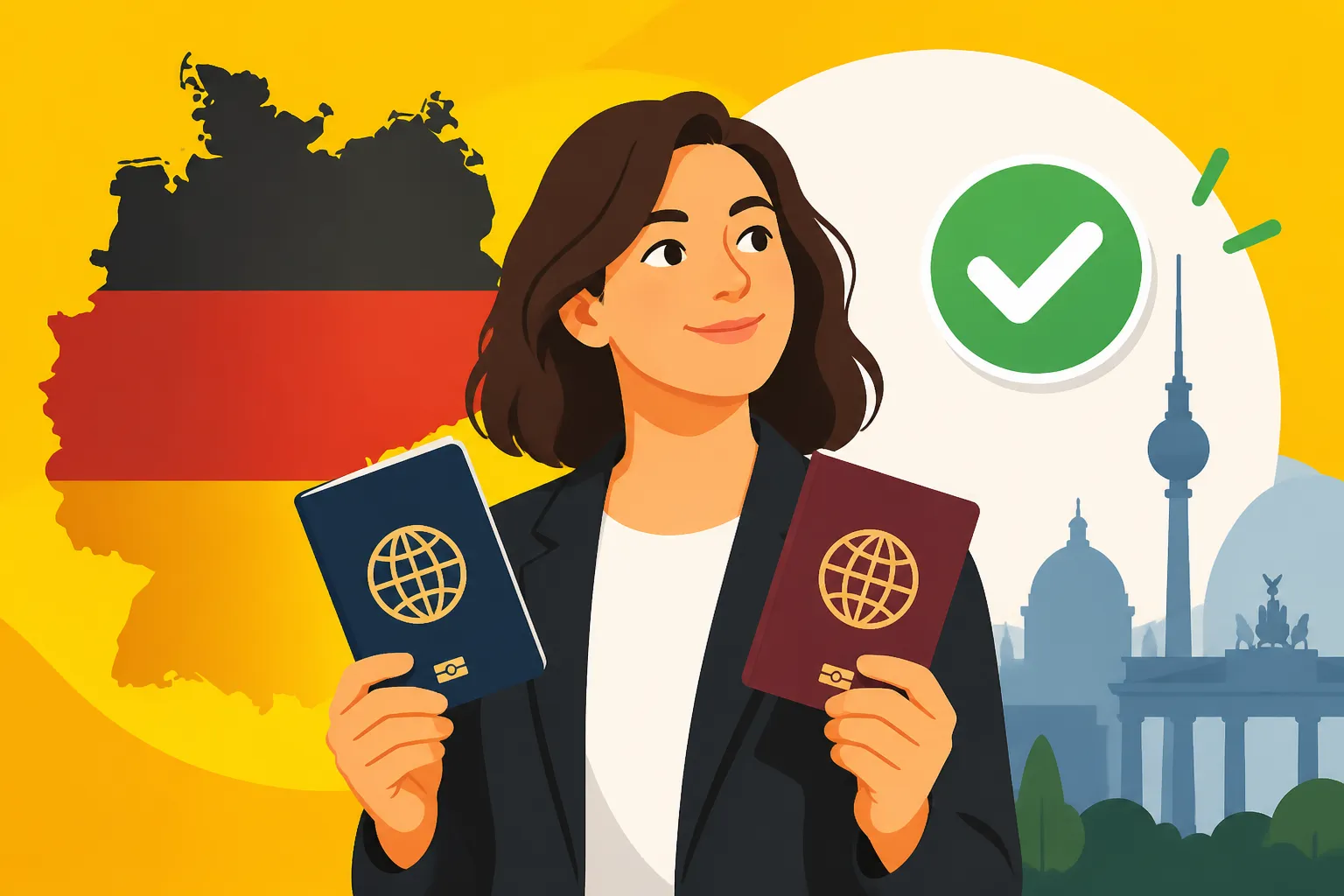
This is the "Holy Grail" of the new law. Once your German application is approved, you will be invited to a ceremony where you receive your Einbürgerungsurkunde (Naturalization Certificate). In the past, you had to bring proof that you had surrendered your old passport. Now, you just show up, take the oath, and you’re done.
You can then go to your local Bürgeramt and apply for a German ID card (Personalausweis) and a German passport. You are officially a dual citizen. You will travel to your home country on that passport and return to Germany on your German one. This freedom of movement and identity is what we all fought for. To make sure you don't accidentally lose your original citizenship due to your home country's laws, consult How to Keep Your Original Nationality When Naturalizing in Germany for a country-by-country perspective.
Disclaimer
The information provided in this article is for general informational purposes only and does not constitute legal advice. While we strive to provide the most up-to-date and accurate information regarding German nationality law, regulations and policies can change frequently. For specific legal questions or complex cases, we strongly recommend consulting with a qualified immigration lawyer or contacting your local Einbürgerungsbehörde.